What is an Indoor Vacuum Circuit Breaker and How Does it Work in Electrical Systems
2026-08-20 16:19:18
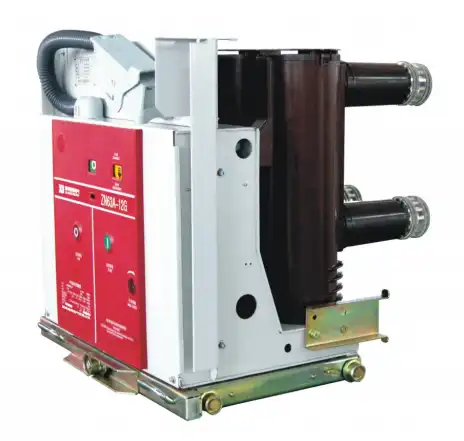
An indoor vacuum circuit breaker is a specialized protective device engineered to interrupt fault currents in medium-voltage electrical systems by extinguishing arcs within a sealed vacuum chamber. Unlike conventional oil or air-based breakers, this technology leverages the dielectric properties of vacuum to quench electrical arcs instantly, enabling rapid disconnection during overloads or short circuits. These breakers are integral to switchgear assemblies in substations, industrial facilities, and power distribution networks where space constraints and safety standards demand compact, maintenance-friendly solutions. Their operational reliability stems from minimal arc energy dissipation and the absence of flammable insulating media, making them suitable for environments ranging from manufacturing plants to renewable energy installations.

Understanding Indoor Vacuum Circuit Breakers: Definition and Operation Principle
Core Design and Arc-Quenching Mechanism
The indoor vacuum circuit breaker works by splitting contacts inside an evacuated box. This makes an electric arc that goes out on its own because there are no ionizing particles present. When there is a problem, the operating mechanism pulls the moving contact away from the fixed contact. This creates an arc in the 10⁻⁶ torr vacuum. In microseconds, the electrical path is gone because the metal mist from the contacts briefly ionizes and then quickly spreads and condenses on the shield around it. For most 12kV circuits, this process takes less than 15 milliseconds and keeps equipment further downstream from getting damaged.
The vacuum interrupter is the device's brain. It is made up of copper-chromium alloy contacts that are sealed in a ceramic or glass case. These materials don't allow welding at high current levels, but they have low contact resistance when they're not being used. The envelope resistance voltage is usually higher than 50kV across a 10mm contact gap. This makes the system reliable even in situations where there is short-term overvoltage, which happens a lot in industrial grids.
Compliance with International Standards
Modern units meet the requirements of IEC 62271-100 and IEEE C37.04 standards, which require strict tests for mechanical longevity, dielectric strength, and the ability to break short circuits. Following these guidelines makes sure that the products can work with global switchgear platforms and are approved by regulators in Asia, the Middle East, and North America. Temperature rise tests make sure that the device works well in temperatures ranging from -40°C to +40°C, so it can be used in both Arctic mining operations and substations in the tropics.
Differentiating Vacuum Technology from Alternatives
Unlike SF6 breakers, which use sulfur hexafluoride gas, which is a strong warming gas, vacuum technology doesn't harm the environment and can match or beat interruption speeds. Although oil circuit breakers have been used for a long time, they can catch fire and need to have their insulating fluid replaced every so often. Air blast breakers need high-pressure blowers, which means they use more extra power. Vacuum interrupters are perfect for OEM integration into small switchgear boxes because they are safe with strong insulation and easy to use since they don't need any upkeep.
Advantages and Performance Comparison of Indoor Vacuum Circuit Breakers
Technical Superiority in Industrial Applications
Since there are no arc-sustaining media, there is almost no contact loss for the indoor vacuum circuit breakers, even after thousands of processes. In the lab, vacuum interrupters show contact wear of less than 0.5 mm per 10,000 mechanical cycles, which is a very small amount compared to the wear seen in air-break systems. The total cost of ownership is directly affected by how long something lasts, since maintenance intervals are longer than five years under normal load conditions.
Low operating force needs lead to gains in energy efficiency. In devices like the ZN39 series, spring-charged mechanisms use less than 200 joules of power per action, which means they use less extra power than hydraulic or gas actuators. Rapid arc extinction also reduces the voltage stress on nearby equipment, protecting the insulation of capacitor banks and transformers that are attached to the same busbar.
Here are the core advantages of these devices:
- Arc Suppression Speed: Cutting off the current completely within one AC cycle keeps wires and busbars from getting damaged by heat. Vacuum has a dielectric recovery strength of more than 20kV per microsecond, which makes it possible to reliably clear asymmetric fault currents with DC components.
- Compact Footprint: Embedded pole designs combine the interrupter, working mechanism, and insulating support into a single unit that takes up 40% less closet room than similar SF6 units. This modularity works well for retrofits where the size of the existing switchgear can't be changed.
- Silent Operation: Sound levels stay below 45dB during switching events. This is very important for sites near residential areas or data centers that have to follow strict noise pollution rules set by the city.
- Seismic Resilience: Strong mounting clamps and low center-of-gravity designs make it possible to operate during Zone 8 earthquakes without tripping. This has been proven by shake-table testing following IEEE 693 procedures.
These performance traits solve common problems in making OEM switchgear, mainly the need for drawer-type withdrawable parts that stay interchangeable in terms of position across production runs.
Benchmarking Against Alternative Technologies
SF6 circuit breakers can also stop, but they add more complexity to the process. Monitoring systems for gas leaks are more expensive, and EU rules on dumping now require specific recycle methods. These worries are taken away by vacuum alternatives, which still achieve the same 31.5kA breaking currents in a 12kV platform. Low atmospheric pressure makes it hard for oil breakers to work at high altitudes because the dielectric strength drops. This isn't a problem for vacuum designs that are rated to 1000m normal elevation, and 4000m operations can be done with alternative plateau-type configurations.
Performance standards have been set by manufacturers like Siemens' VD4 series and ABB's VD4 line. However, regional suppliers like Xi'an Xikai offer similar specs with shorter lead times and more localized expert support. Purchasing teams that work with markets in the Middle East really value pre-certified IEC compliance because it shortens the time it takes to start using a project.
Maintenance, Troubleshooting, and Lifespan of Indoor Vacuum Circuit Breakers
Routine Inspection Protocols
Three important things are measured during preventive maintenance for the indoor vacuum circuit breakers: contact wear, operating mechanism lubrication, and vacuum integrity verification. To keep the right amount of contact pressure, the contact over-travel, or compression distance after the original touch, must be greater than 3 mm. During yearly checks, technicians use feeler gages to make sure this measurement is correct, since erosion below threshold values raises the risk of resistance heating.
Power frequency withstand voltage tests can find vacuum degradation before it leads to a catastrophic failure. When you apply 42kV across open contacts for one minute, you can see if the interrupter is leaking. Any flashover means that moisture got in or the seal failed, so the interrupter needs to be replaced right away. Monitoring partial discharge is harder with gas breakers than with vacuum units, which have simple pass/fail features that make field diagnosis easier.
Addressing Common Operational Issues
"Refusal to close" problems are usually caused by a closing coil voltage that is too low or a mechanical latch that is not aligned properly. Electrical problems can be ruled out by checking the secondary circuit voltage at the magnetic connections while the machine is running, and mechanical freedom can be confirmed by hand-racking tests. Contact welding, which doesn't happen very often in vacuum technology, happens when breaking currents are more than 100 times the maximum capacity. During post-fault checks, contact resistance should be measured. Readings above 100 microohms indicate welding, which means the interrupter needs to be replaced.
When it comes to retractable designs, dust buildup in the guide rails is a common cause of drawing mechanisms getting stuck. Cleaning every three months with non-conductive solvents and applying molybdenum disulfide lubricants keeps the travel smooth across the 600mm insertion depth that is typical for KYN28 cabinets. Anti-misoperation interlocks stop removal under load, but mechanical bypass switches should never be turned off because doing so puts repair workers at risk of arc flash.
Maximizing Equipment Longevity
The 20,000-operation rated mechanical life assumes operation within thermal limits—continuous current at 630A causes the temperature to rise by about 35°C above normal. If the relative humidity goes above 95% without proper cabinet heating, bus connections corrode faster, which puts secondary stress on the interrupter during high-resistance faults. When the elevation is above 1000 meters, elevation derating factors must be used. To stop surface flashovers, external insulation needs a 10% voltage drop for every 500 meters of elevation gain.
If you keep vacuum interrupters away from water and mechanical shock, they can last for more than 30 years. High-creepage porcelain covers in the ZN39 series allow tracking distances of up to 460 mm and keep the cables clean in pollution-level III environments like those found in cement plants and seaside substations. These design choices directly address OEM worries about stability in the field under tough conditions.
Procurement Insights: Selecting and Buying Indoor Vacuum Circuit Breakers
Technical Selection Criteria for OEM Integration
To figure out the breaking capacity of an indoor vacuum circuit breakers system, you have to look at the distribution network's worst-case fault levels. Most 12kV systems that are fed by 10MVA transformers can handle a short-circuit rate of 31.5kA. For networks with multiple parallel sources, 40kA ratings are needed. It's important to know the difference between making and breaking classes. For example, M2 mechanical durability (20,000 operations) works well for switching uses like motor feeders, while normal M1 ratings (10,000 cycles) are enough to protect transformers.
Buying decisions are based on how well a new platform will work with existing ones. To allow for multi-vendor buying strategies, procurement managers define chassis dimensions that meet KYN28 or XGN15 cabinet standards. To avoid expensive panel changes during retrofits, aviation plug pinout compatibility and secondary wire harness setups must be the same as the original designs.
Evaluating Supplier Capabilities
Lead times are what set key partners apart from common providers. Manufacturers who keep common configurations in stock can deliver within three weeks. However, for custom terminal arrangements or voltage ratings that aren't standard, the wait time is up to eight weeks. Just-in-time delivery models need suppliers who can make monthly call-offs based on yearly framework deals. Integrated manufacturers like Xi'an Xikai are different from trade middlemen because they can do this.
Support after the sale includes more than just the guarantee terms. Multilingual technical guides, AutoCAD dimensional models, and access to application engineers 24 hours a day, seven days a week all lower the risks of integration. When suppliers offer factory acceptance testing with customer witness points, it boosts trust. This is especially true for orders over 500 units, since batch consistency affects how well the production line works.
Cost Optimization Strategies
There are usually turning points in bulk prices at 100, 500, and 5,000 units. Making a volume promise can get you better terms, but it's important to accurately predict demand. Having too much inventory can tie up capital, and not having enough can push back project deadlines. Working together with makers to plan ahead lets sellers hold consignment goods at regional distribution centers. This balances cash flow with supply security.
The availability of spare parts must be taken into account when figuring out the total cost of ownership. 40% of the cost of replacing something is the vacuum interrupter. Lifetime costs can be lowered by buying parts separately instead of swapping out whole assemblies. Incentives that are in line with procurement strategies that focus on reliability are aligned with warranty structures that prefer interrupter replacement over full-unit returns.
Spotlight on the ZN39 Indoor Vacuum Circuit Breaker
Engineering for Demanding Environments
Xi'an Xikai's ZN39 series is a great example of an indoor vacuum circuit breaker design that was specifically made for integrating OEM equipment. The unit works in temperatures ranging from -40°C to +40°C and is rated at 12kV. It can be used in both subarctic mining sites and industrial zones in the equator. The daily average humidity tolerance of 95% is possible without adding extra heat. This is because the epoxy separators have hydrophobic coats that keep mist from forming.
When the breaking time is less than 15 milliseconds, the arc energy is limited to levels that can work with safety relays further downstream that are coordinated every 0.1 seconds. The operating mechanism's spring-charged storage holds 450 joules, which is enough for three close-open cycles without needing to be recharged. This is very important during the reopening sequences that happen after transient faults on overhead lines. Mechanical endurance that is confirmed to 20,000 operations is based on the choice of touch materials and the engineering of lubrication, which has been proven through rapid life testing.
Modular Design Philosophy
The architecture is based on serviceability. The interrupter module can be taken apart using four captive bolts, which means it can be replaced in 30 minutes without any special tools. The current transformer cores are built into the support insulator base. This gets rid of the need for external CTs and cuts the cabinet width down to 800 mm. With M12 studs that can take lugs from 50mm² to 240mm² wire sizes, the terminal is flexible enough to let cables enter from either the top or the bottom.
The ZN39-S version has smart tracking features like dry-contact position markers and extra voltage outputs for SCADA integration. IoT-ready models send running counters and the temperature of the environment using Modbus RTU protocols. This lets you plan repair ahead of time for assets that are spread out. These features are useful for procurement teams that want to update old infrastructure without having to completely replace the system.
Application-Specific Configurations
Configurations that allow motor starting currents up to 12 times their rated values are useful for industrial plant deployments. This is necessary for big pump and compressor loads. The device works well with SF6-insulated busbars and fiber-optic current differential schemes, which are used in substations. Commercial building retrofits use the flame-retardant certifications and quiet operation that meet NFPA 70 Article 450 requirements for secondary protection of transformers.
You can change the positions of the terminals, the voltages of the extra circuits (110VDC or 220VAC), and the way the mechanical locks are set up. During the specification phase, Xi'an Xikai's engineering team works together to find the best configurations for regional grid codes. This is done by looking at things like harmonic distortion limits in solar farms and voltage sag immunity for semiconductor fabrication facilities.
Future Trends and Innovations in Indoor Vacuum Circuit Breakers
Material Science Advancements
More research into copper-tungsten contact metals for the indoor vacuum circuit breakers could make them even more resistant to erosion, which could double the electrical life rates. Nano-crystalline layers on contact surfaces lower bond forces during high-current events. This makes the system more reliable in situations where faults happen often. Alumina-zirconia compounds added to ceramic envelope materials make them stronger mechanically while keeping their dielectric qualities at high temperatures.
Using digital tools and predictive analytics
Condition-based repair is possible with embedded sensors that track the journey speed of the contacts and the waveforms of the coil current. Machine learning algorithms look at operational signatures to figure out how a mechanism will break down months before it actually does. When you connect your fleet to the cloud, all of its data is collected in one place. This lets makers issue proactive component changes based on failure modes seen across installed bases.
The circular economy and sustainability
By getting rid of greenhouse gases and harmful dielectrics, vacuum technology naturally helps environmental goals. Manufacturers now put a lot of emphasis on being able to be recycled. Modular designs make it possible to recover copper from contacts and steel from mechanisms. Extended producer responsibility programs make sure that units that are no longer useful are sent back to the factories to be properly disassembled. This closes material loops and lowers the amount of trash that ends up in landfills.
Conclusion
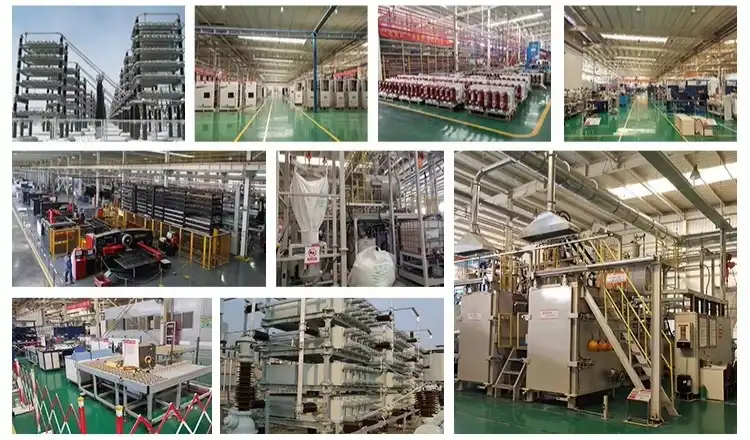
The indoor vacuum circuit breaker is a tried-and-true way to protect medium-voltage systems. It is both easy to use and highly advanced in terms of engineering. OEM switchgear makers and procurement workers are most interested in how quickly it ends an arc, how little upkeep it needs, and how good it is for the environment. Through flexible design and configurability, devices like the ZN39 series show how standardized systems can meet the needs of a wide range of applications. As power grids change to include more renewable energy and smart monitoring, vacuum interruption technology keeps changing to stay relevant for decades to come. When choosing a provider strategically, putting technical support, delivery reliability, and clear lifecycle costs at the top of the list changes these devices from simple purchases to assets that add value to complicated power distribution networks.
FAQ
1.How often should maintenance checks be done on vacuum circuit breakers?
Visual inspections once a year are enough for feeders that aren't very busy, but checks every three months are recommended for motor control uses that do more than 200 tasks per month. Some important parameters are the measurement of contact over-travel, the status of the mechanism's lubrication, and the continuity of the secondary circuit. Every five years, high-potential test sets are used to do vacuum integrity testing on interrupters to make sure they are healthy without having to do any painful procedures.
2.What distinguishes vacuum circuit breakers from SF6 alternatives in practical terms?
Vacuum units get rid of the infrastructure needed to handle gas. There is no need to monitor pressure, find leaks, or meet special recycling requirements. At transmission levels, SF6 breakers have small forms, but they make it harder to follow the rules. At distribution voltages, vacuum technology meets interruption performance while making buying specs easier and lowering environmental risks. This is especially important as rules on emissions are getting stricter.
3.Can these breakers be customized for altitude or extreme temperature deployments?
Standard units can work at elevations up to 1000 meters, but plateau-type models with better insulation on the outside can work at elevations up to 4000 meters without losing power. Temperature ranges from -40°C to +40°C work for most areas, but closet heaters may be needed in places with high humidity all the time. During design reviews, manufacturers give altitude correction factors and thermal test data to make sure that the products will work in the site circumstances.
Partner with Xi'an Xikai for Reliable Indoor Vacuum Circuit Breaker Solutions
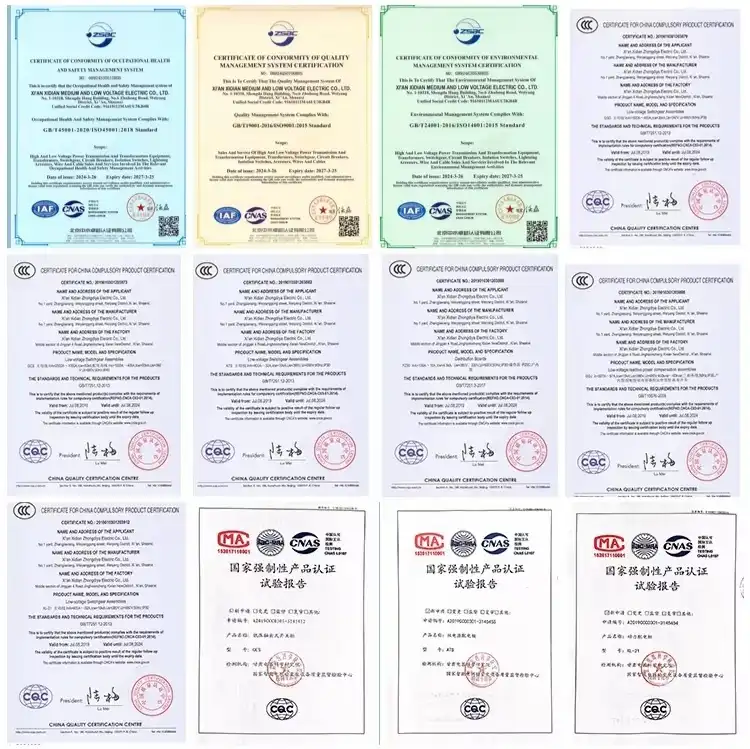
Xi'an Xikai Medium & Low Voltage Electric Co., Ltd. stands ready to support your switchgear integration requirements with proven indoor vacuum circuit breaker technology. Our ZN39 series delivers the mechanical reliability, environmental adaptability, and configurability that OEM manufacturers and distributors demand. With over 15 patents in switchgear innovation and compliance to IEC 62271-100 standards, we provide pre-certified solutions that accelerate your project timelines while meeting stringent quality benchmarks. Contact our technical team at serina@xaxd-electric.com, amber@xaxd-electric.com, or luna@xaxd-electric.com to discuss your specific voltage ratings, breaking capacity needs, and customization options as a trusted indoor vacuum circuit breaker supplier.
References
1. International Electrotechnical Commission. High-Voltage Switchgear and Controlgear – Part 100: Alternating-Current Circuit Breakers. IEC 62271-100:2021.
2. Greenwood, Allan. Vacuum Switchgear. Institution of Engineering and Technology, 2007.
3. IEEE Power and Energy Society. IEEE Application Guide for AC High-Voltage Circuit Breakers Rated on a Symmetrical Current Basis. IEEE C37.010-2016.
4. Slade, Paul G. The Vacuum Interrupter: Theory, Design, and Application. CRC Press, 2017.
5. Smeets, René P.P., et al. Switching in Electrical Transmission and Distribution Systems. John Wiley & Sons, 2015.
6. Zhang, Lijun and Wang, Zhongdong. "Reliability Assessment of Vacuum Circuit Breakers in Medium-Voltage Distribution Networks." Electric Power Systems Research, vol. 185, 2020.