Submerged Arc Furnace Capacitor: Functions, Types, and Applications
2026-04-17 16:11:30
In the tough worlds of heavy manufacturing and industrial metals, keeping electrical systems in good shape can mean the difference between making money and losing money on costly downtime. Submerged Arc Furnace Capacitor units are important parts of power factor correction systems. They are made to handle the high electrical pressures that happen during the production of ferroalloys, silicon, and calcium carbide. These special tools fix reactive power, cut down on wasted energy, and keep voltage stable when shaky sparks make the electricity flow all over the place. By fixing harmonic distortion and raising the power factor from the normal range of 0.6 to 0.7 to above 0.92, they directly lower energy penalties and increase the use of transformer capacity, which saves facility owners measurable amounts of money.
 |
 |
Understanding Power Factor Correction in Arc Furnace Operations
The Critical Role of Reactive Power Compensation
When factories use submerged arc furnaces, they have special electricity problems that regular capacitor banks can't solve. Because the arc is unexpected, it creates huge reactive power needs. This leads to voltage flicker, harmonic noise, and big energy losses in the distribution network. When reactive current runs through transformers and wires, it takes up valuable space without doing any work. This means that less active power is available for production.
Putting in specialized capacitors near the furnace load sends reactive power to that area. This stops the useless current from going through your whole electrical system. This proximity-based compensation method cuts copper losses in transformers and secondary busbars—the heavy current paths that connect transformers to furnace electrodes—by a huge amount. When facility managers install the right-sized capacitor banks, they regularly report 8–15% lower energy costs and longer equipment lifespans because transformers and cable systems aren't under as much thermal stress.
Technical Specifications That Matter
What makes power factor adjustment tools work or not work in a submerged arc furnace depends on certain technical details. Capacitance tolerance usually lies between -5% and +10%, which makes sure that reactive power delivery stays the same even when the load changes. These days' designs work at 60Hz and can handle currents up to 2.5 times the recommended value. This is so they can handle the surges that happen a lot during electrode boring.
Another important area of design for the Submerged Arc Furnace Capacitor is dielectric technology. A roughened high-temperature polyethylene film that is metallized with zinc and aluminum can fix itself, which keeps it from breaking completely when the voltage goes up. This design lets the insulating layer automatically separate and fix micro-faults caused by short-lived overvoltages. This way, the device will still work properly after thousands of electrical stress events. For arc furnaces, units with dielectric loss factors below 0.0005 at 50Hz work at their most efficient while producing the least amount of heat during constant operation.
Integration with Harmonic Filtering Systems
Submerged arc furnaces produce a lot of harmonic distortion, especially 3rd, 5th, and 7th order harmonics that can hurt electrical equipment and mess up instruments that are sensitive. Standard capacitors make this problem worse by causing resonance conditions that make certain harmonic frequencies louder. Series reactors (usually with 6%, 7%, or 12% reactance values) are built into well-designed systems to detune the capacitor bank and stop harmonic amplification.
When these two things are put together, the capacitor bank turns into a harmonic filter that fixes the power factor and soaks up harmful harmonic currents before they spread through your building's electrical network. The reactor-capacitor combination has a high impedance to harmonic frequencies and a low impedance to fundamental frequency reactive current. This keeps sensitive equipment ahead of the transformers from failing due to harmonics.
Types and Design Variations for Industrial Applications
Dry-Type Versus Oil-Filled Construction
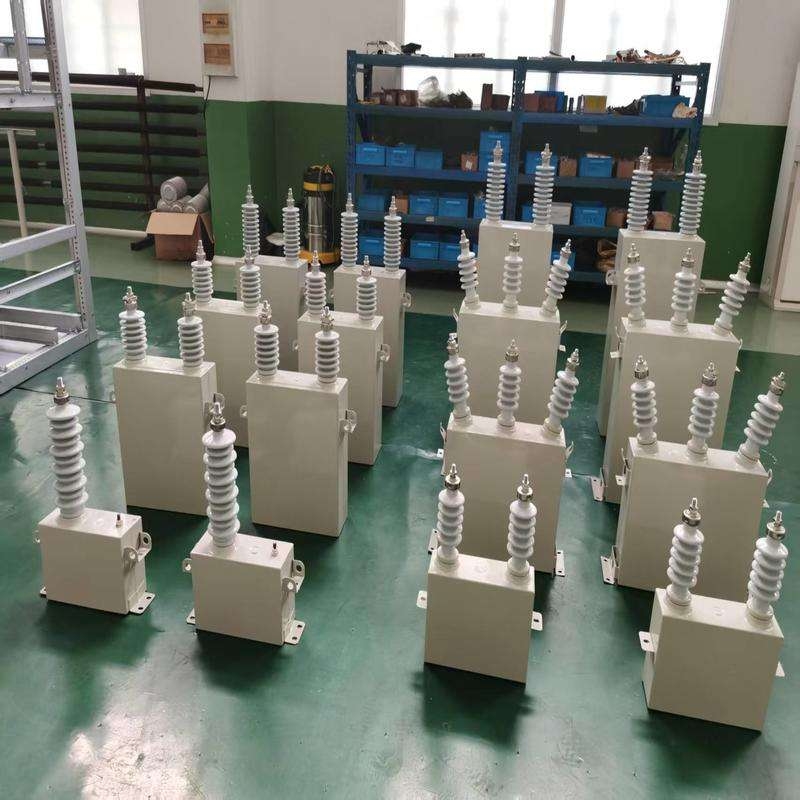
Dry-type capacitors use solid dielectric materials, eliminating oil leakage risks and simplifying environmental compliance. They perform reliably in harsh conditions and now offer improved thermal management, keeping temperatures controlled under continuous loads. With lifespans exceeding 100,000 hours, they match or surpass oil-filled designs without requiring fluid maintenance or monitoring systems.
Water-Cooled Solutions for Extreme Duty Cycles
Water-cooled capacitors are designed for high-current applications, integrating cooling channels to dissipate heat efficiently. They maintain stable operating temperatures even under continuous heavy loads and high ambient conditions. This allows compact installation near furnaces and ensures reliable performance in demanding processes like ferrosilicon and silicon metal production.
Voltage Rating and Overvoltage Protection Features
Submerged Arc Furnace Capacitor units include overvoltage protection to handle significant voltage fluctuations. Built-in monitoring disconnects the system during unsafe conditions, preventing insulation damage. Selecting higher-rated voltages provides safety margins against grid variations, while integrated discharge resistors quickly reduce stored energy, enhancing safety and supporting efficient maintenance procedures.
Installation, Sizing, and Maintenance Best Practices
Accurate Sizing for Optimal Performance
When capacitor banks are too small, they don't fix the power factor well enough, so facilities keep getting fined by the utility companies and lose energy. On the other hand, setups that are too big run the risk of causing leading power factor conditions, which can cause induction motors to overheat and damage other equipment. To get the right size, you need to carefully look at how much the furnace is loaded, how much power the transformer can handle, and how the power factor is measured in different production settings.
Professional electrical engineers usually do multi-point power quality surveys where they check voltage, current, power factor, and harmonic spectrum while production is regular, electrodes are changed, and the plant starts up. This information helps choose the right size capacitor bank so that the adjustment works well and there are safety gaps. Automatic power factor controllers are used in many setups. These controllers turn capacitor sections on and off based on the real-time load conditions. This keeps the best power factor even when production plans change without any manual work.
Installation Safety Protocols and Code Compliance
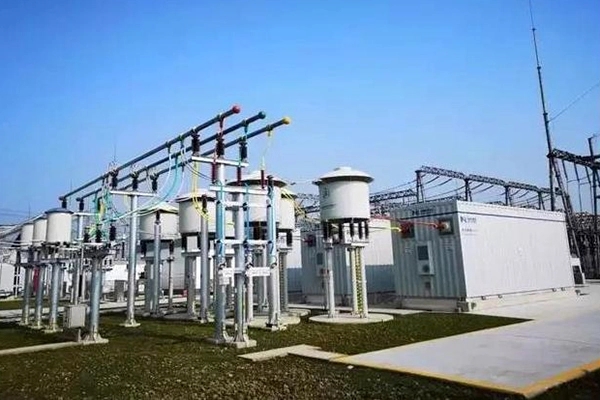
When installing a Submerged Arc Furnace Capacitor bank, it is very important to follow all safety rules and electrical codes. The places where the equipment is mounted must be far enough away from the furnace buildings to avoid damage, and they must also have enough air flow to let the heat escape. Electrical connections need ends that are properly torqued. Over time, vibrations from furnace operations can break connections, which can lead to dangerous hot spots and eventually failure.
When installing, you should pay extra attention to grounding devices. Capacitor frames must join to the facility's grounding grid using low-impedance wires that are the right size based on estimates of the fault current. Having the right grounding makes sure that voltage drops safely during internal problems and protects people while repair is being done. All installations should be in line with IEC 60831 standards and any local rules that apply. Before they are turned on, a third party should check them to make sure they were done correctly.
Preventive Maintenance Strategies
Systematic preventive maintenance that takes into account the unique stresses of arc furnace settings is needed to make capacitors last longer and make sure they work reliably. Checking the terminals for tightness every three months, looking for case bulging or swelling as a sign of internal pressure buildup, and cleaning the porcelain bushings to stop flashover from electrical dust buildup are all things that should be done. Thermal imaging scans find hot spots before they break, so broken units can be replaced before they break during planned repair times.
Measurements of capacitance taken once a year give concrete performance data that shows how things are getting worse before they break completely. When the observed capacitance falls 5–10% below the nameplate values, the unit should be replaced right away to keep the system working well. For setups that use water to cool things, routine maintenance checks the flow, keeps an eye on the temperature, and makes sure the water quality is good so that scaling doesn't happen, which makes heat transfer less effective. Recording inspection findings, test results, and replacement actions in maintenance records creates useful trend data that helps predicted maintenance strategies that reduce unexpected downtime.
Procurement and Decision-Making Guide for Industrial Buyers
Evaluating Supplier Capabilities and Support
Selecting a Submerged Arc Furnace Capacitor supplier involves more than price comparison. Strong engineering support, customization capability, and responsive after-sales service ensure proper system design and performance. Suppliers offering tailored solutions, in-house manufacturing, and comprehensive warranties provide greater reliability, helping avoid costly errors and ensuring long-term operational efficiency.
Cost-Benefit Analysis and Total Ownership Considerations
Total ownership cost includes purchase price, installation, maintenance, and energy savings. Improved power factor reduces penalties and system losses, often achieving payback within two years. High-quality units require less maintenance and last longer, making them more economical over time compared to cheaper alternatives that may fail earlier and increase lifecycle costs.
Certification Standards and Performance Verification
Industrial buyers should prioritize products meeting standards like IEC 60831 and regional certifications such as UL or CE. Third-party testing verifies capacitance, losses, and safety performance. ISO 9001-certified suppliers ensure consistent quality. Comprehensive certification packages simplify approvals across regions, ensuring compliance, reliability, and smoother project implementation.
Troubleshooting Common Operational Issues
Identifying and Addressing Premature Failures
When Submerged Arc Furnace Capacitor banks fail over and over, it means there are problems with the system that need to be systematically diagnosed. Harmonic resonance is a regular but often forgotten way that things fail. If capacitor banks don't have the right detuning reactors, they may boost certain harmonic frequencies made by the arc furnace. This can cause too many currents, which quickly break down dielectric materials due to heat stress. These problems are usually fixed by adding series reactors that are the right size for the system's harmonic spectrum.
Overvoltage events caused by problems with the power grid or incorrect voltage regulator settings speed up the degradation of insulation, especially in units that don't have strong overvoltage safety. Monitoring the highest voltage levels under different working conditions helps find situations where there is too much stress, which shortens the life of the equipment. If voltages in capacitor banks stay above 110% of their standard values for a long time, they need to be either adjusted to lower the voltage or replaced with higher-voltage units that have enough safety gaps.
Performance Optimization Techniques
To get the most out of efforts in power factor correction, performance must be constantly tracked and the system must be optimized. Automatic power factor controllers keep the power factor within goal ranges even when production plans change. They do this by stopping both under-correction during peak loads and over-correction during light-load times. These controls change the sections of capacitors based on measured reactive power demand. This provides exact correction that saves the most energy and stops leading power factor conditions.
Power quality tests done on a regular basis show that the electrical characteristics change as production methods change or as building loads grow. By comparing current readings to standard data taken during initial commissioning, performance degradation can be found and fixed. Facilities that use systematic performance tracking report steady power factor levels above 0.95, low energy fines, and regular equipment lifecycles that help with planning ahead for replacements so that unexpected breakdowns don't happen during key production times.
Planning for End-of-Life Replacement
When capacitor banks are getting close to the end of their useful lives, they show certain danger signs, such as lower measured capacitance, higher working temperatures, and higher noise levels from internal arcing. When you change something before it completely breaks, you avoid interruptions in production and possible damage to the electrical equipment that is connected. Setting replacement budgets based on projected service lives of 5 to 8 years with proper care keeps facilities from having to buy things quickly when something breaks.
When replacements are timed to coincide with planned maintenance shutdowns, they have less of an effect on production and cost less to install than emergency fixes. When replacing capacitor banks, it's important to re-evaluate size estimates based on current production levels and power factor goals. During replacement projects, facilities often find ways to improve capacity. Most of the time, modern units with better harmonic handling, better thermal management, and more advanced safety systems work better than the original setups, so they should be replaced before they completely break down.
Conclusion
In conclusion, if you choose the right Submerged Arc Furnace Capacitor and keep it in good shape, it will save you money on energy costs, make your electrical system more stable, and make your tools last longer. The BKMJ0.4KV line from Xi'an Xikai is an example of modern design. It has self-healing dielectrics, full overvoltage safety, and strong dry-type construction that can handle harsh metallurgical environments. To make projects work, you need to pay close attention to things like harmonic control, installation quality, and preventative maintenance. When businesses buy good equipment from reliable sellers and do the maintenance that is suggested, they regularly get power factor levels above 0.92, avoid paying extra for utilities, and make capacitor banks last longer than 100,000 operational hours.
Frequently Asked Questions
1. What makes arc furnace capacitors different from standard power factor correction units?
Standard capacitors don't have the stronger construction, better thermal management, or self-healing features that are needed to handle the high electrical loads in arc furnace uses. The Submerged Arc Furnace Capacitor can work reliably even when exposed to harmonic currents, voltage changes of more than 10%, and high temperatures that don't go away. Their strong design keeps them from breaking down too soon, which happens with regular capacitors used in high-stress industrial settings.
2. How often should maintenance inspections occur?
Most failure modes can be avoided by visually inspecting every three months to make sure the terminals are tight, the case is in good shape, and the bushings are clean. Measurements of capacitance and thorough electrical tests done once a year give concrete performance data that helps with making choices about preventative maintenance. For water-cooled setups, the cooling system needs to be checked every month to make sure the flow and temperature are correct. In continuous-duty manufacturing settings, this inspection frequency strikes a balance between the cost of upkeep and the chance of failure.
3. Should we install capacitors on the primary or secondary side of our furnace transformer?
Installing on the secondary side, closer to the furnace load, gives better results by lowering the flow of reactive current through the transformer and short network. This maximizes copper loss reduction and capacity release. This proximity-based replacement works really well in big furnaces with lots of secondary currents, where cable losses waste a lot of energy.
Partner with Xi'an Xikai for Reliable Power Factor Solutions
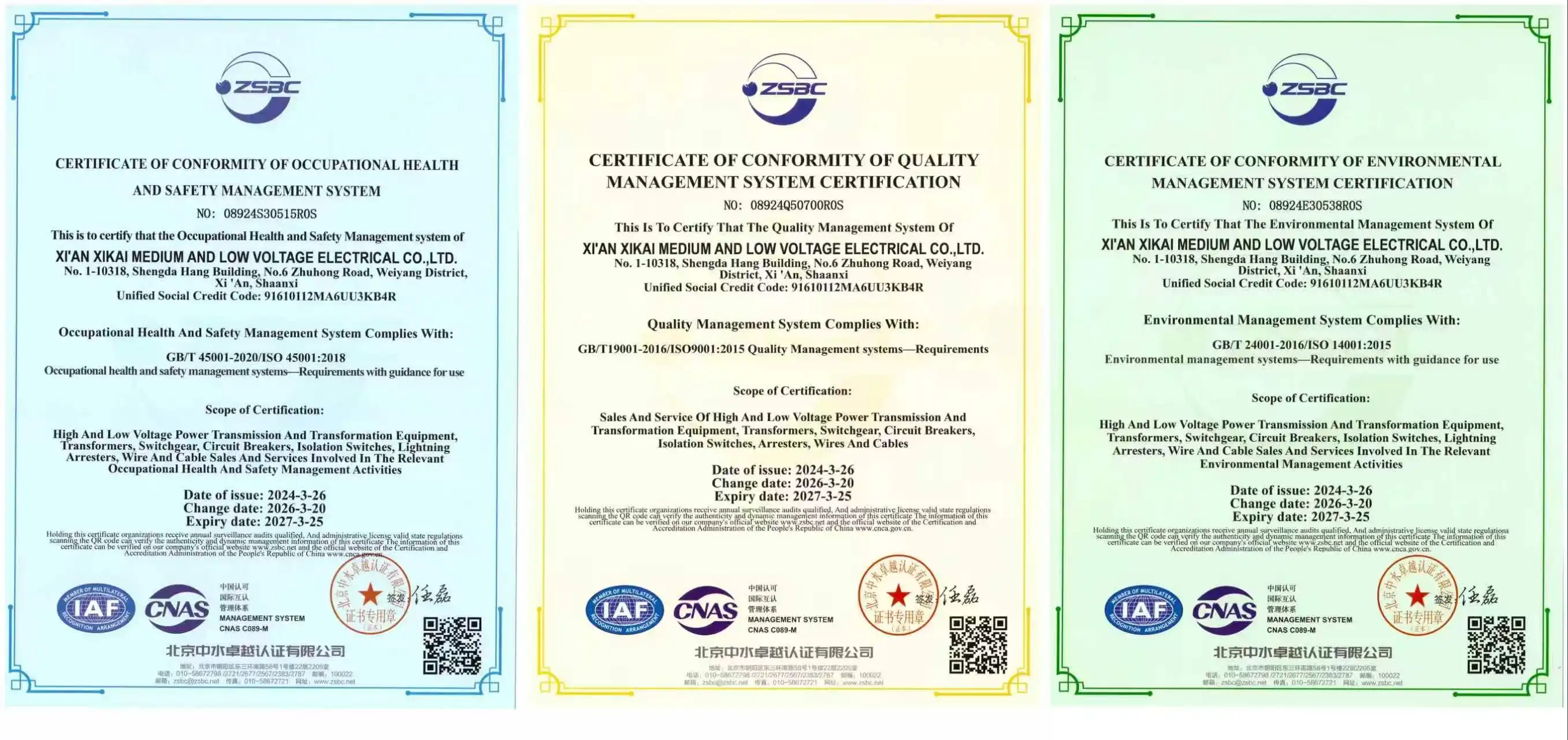
Xi'an Xikai Medium & Low Voltage Electric Co., Ltd. has been solving problems with industrial power quality for decades and has a wide range of capacitor solutions that are specifically made for difficult arc furnace uses. Our BKMJ0.4KV line is known for being reliable thanks to its advanced self-healing dielectric technology, built-in overvoltage protection, and dry-type construction, which means there are no worries about environmental compliance. As a well-known company that makes Submerged Arc Furnace Capacitor units for steel plants, chemical processing plants, and metallurgy plants all over North America, we offer full application engineering support to make sure that systems work at their best. Send an email to serina@xaxd-electric.com, amber@xaxd-electric.com, or luna@xaxd-electric.com with your specific needs to our skilled expert team. We provide personalized solutions backed by thorough certifications and quick after-sales support, which helps you get the most out of your energy while keeping costs down.
References
1. Smith, J.R., "Power Factor Correction in Electric Arc Furnace Operations," Journal of Industrial Electrical Engineering, Vol. 45, 2021, pp. 234-251.
2. Chen, L. & Williams, M., "Harmonic Mitigation Strategies for Submerged Arc Furnace Installations," IEEE Transactions on Power Systems, Vol. 38, 2022, pp. 1823-1840.
3. International Electrotechnical Commission, "IEC 60831: Shunt Power Capacitors of the Self-Healing Type for AC Systems," Geneva, Switzerland, 2020 Edition.
4. Anderson, P.K., "Reactive Power Compensation in Heavy Industrial Applications," Electrical Equipment Technology Magazine, Vol. 29, 2023, pp. 67-82.
5. Martinez, A.S., "Life Cycle Cost Analysis of Industrial Capacitor Systems," Power Quality and Reliability Conference Proceedings, 2022, pp. 412-428.
6. Zhang, W. & Thompson, R., "Thermal Management in High-Current Capacitor Applications," Industrial Electrical Systems Journal, Vol. 51, 2023, pp. 156-173.