Top Benefits of Outdoor Disconnect Switch for Power Grid Safety
2026-07-15 17:24:05
Every second counts when power outages threaten production schedules or put patient care at risk. When it comes to high-voltage systems, Outdoor disconnect switches are the most reliable way to keep the electricity off. They do this by making clear air gaps between each circuit that can be seen during repair or an emergency. These devices keep people and important equipment safe and allow for quick fault reaction in business buildings, manufacturing plants, and substations. Outdoor-rated switches can handle harsh weather, UV light, and changes in temperature, while indoor switches can only work in controlled settings. This requires strong engineering and materials science. When procurement teams know how these changes improve safety, cut down on downtime, and meet compliance standards, they can make smart investments that protect operating consistency and protect the bottom line.
 |
 |
Understanding Outdoor Disconnect Switches and Their Role in Power Grid Safety
Defining Core Purpose and Components
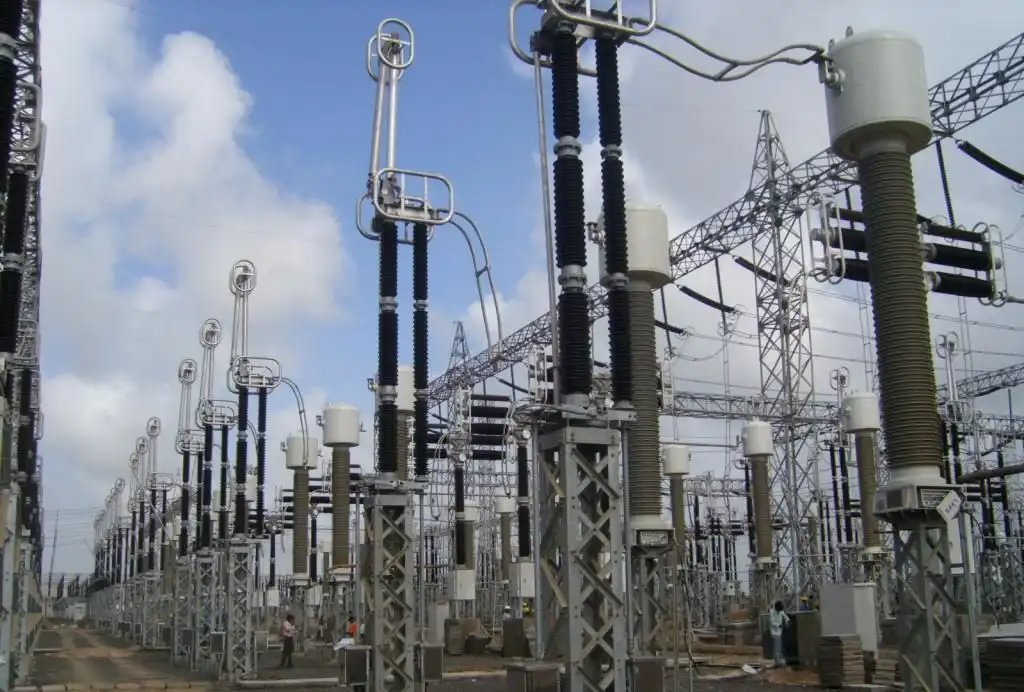
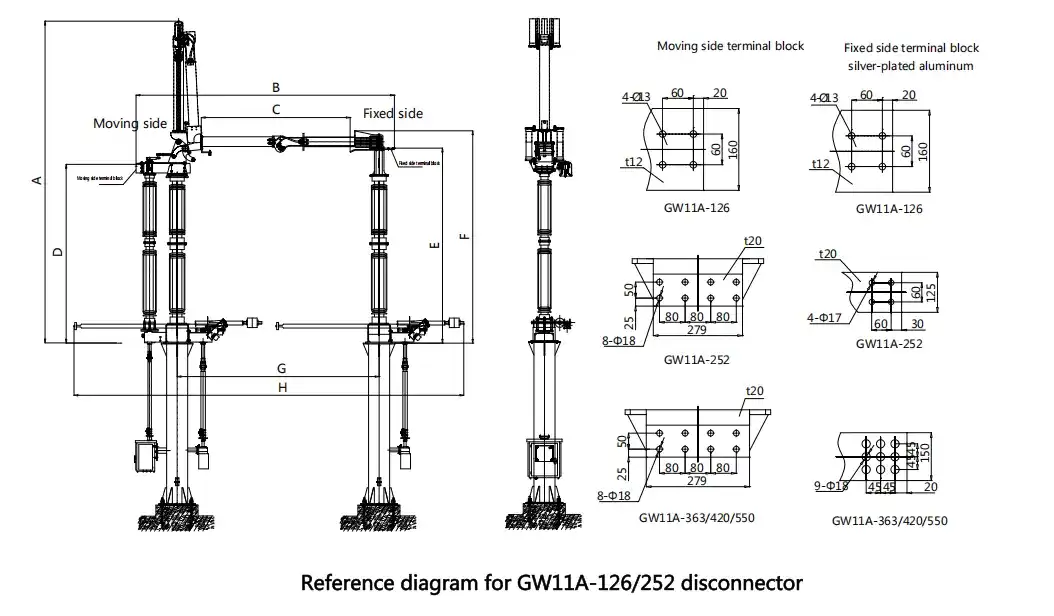
Outdoor disconnect switches physically separate circuits for safe maintenance. Key components include conductive blades, post insulators, base frames, and manual/motorized actuators. High-voltage types like GW11 use pantographs to create visible gaps from ground level. Support insulators withstand mechanical/electrical stress while holding moving and fixed contacts. Level base installation prevents misalignment that would impair switching performance or accelerate wear.
Operational Mechanics and Installation Scenarios
When the switch is working, its blades can move horizontally or vertically to connect or separate circuit lines. The GW11 High Voltage Disconnect Switch has a pantograph design. The blades are moved away from the fixed contacts by flexible arms, which creates an air gap that stops an arc from forming. For three-pole designs, the moving-contact side and fixed-contact side bases must be perfectly lined up during installation, with a center-line tolerance of 550mm±1mm. When you're in a desert or near the coast, the sealed gearbox system keeps dust and water out of the internal parts, so it works reliably. Since flexible joints can work on uneven ground without putting stress on insulator systems, they take less time to install and don't need as much upkeep over time.
Outdoor Versus Indoor Disconnect Switches
Outdoor disconnect switches have waterproof housings, UV-resistant plastics, and corrosion-resistant metals that aren't found in indoor switches that are made for controlled environments. Since indoor switches don't have to deal with rain, snow, or temperature changes from -40°F to 140°F, they tend to be made of lighter-duty materials. Outdoor models need entry protection ratings of IP54 or higher to keep water and dust from getting in, while indoor models may work fine with IP20 shields. Safety concerns are also different. Outdoor installations need to have grounding and lightning protection, while indoor installations focus on preventing arc flash in small spaces. When purchasing equipment for substations or rooftop solar panels, procurement managers should focus on outdoor-rated models to make sure the equipment lasts a long time and meets all regulations.
Top 5 Benefits of Outdoor Disconnect Switches for Power Grid Safety
Choosing the right electrical isolation equipment has a direct effect on how well the business runs, how safe the workers are, and how well the rules are followed. Outdoor disconnect switches are important purchases for utility companies and manufacturing sites, as shown by the following benefits.
Enhanced Safety Through Weather-Resistant Engineering
When compared to copper-based options, Outdoor disconnect switches made of aluminum alloy wires are 40% lighter and prevent corrosion. This light design makes it easier to install and lowers the amount of structural load that needs to be done, which lowers the cost of the project. The GW11 series has horizontal insulation breaks that allow safe live-line repair. Technicians can do checks without turning off the power to whole substations, which means that customers further downstream are affected less. NFPA 70 fire rules say that flame-retardant materials keep possible arc incidents inside their rated zones. Post insulators are put under loads for 72 hours to make sure they are strong enough to withstand the ice buildup and wind shear forces that are typical in open areas. Because of these engineering decisions, there will be fewer failures in the field and less risk of liability.
Simplified Maintenance and Emergency Isolation
Visible break technology lets operations staff check that the circuit is off from a safe distance before they touch the equipment. In dry climates, the enclosed gearbox of the pantograph mechanism keeps sand and dust out, which means that it doesn't need to be serviced as often as traditional open-linkage designs. Manual operating handles have lockout/tagout features that physically stop re-energization from happening without permission during repair times. When short-circuit problems happen, Outdoor disconnect switches provide quick separation points that keep damage in check and shorten the time it takes to fix things. When a cooling system fails in a data center, the damaged distribution panels can be quickly shut down without having to shut down the whole server farm. By separating faulty circuits within seconds, hospitals keep critical care units powered up all the time. This keeps patients safe and avoids costly emergency generator running.
Flexibility in Renewable Energy Applications
Inverters turn on and off depending on how much sunlight there is, so solar power setups need to be switched on and off a lot. Outdoor disconnect switches handle tasks that need to be done over and over again and handle surge currents of up to 100 times their stated capacity when clouds cause voltage changes. The GW11 type keeps the voltage in the substation stable by blocking harmonic distortion caused by green inverters. This keeps sensitive CNC machines and medical imaging equipment from being affected. IoT sensor compatibility makes predictive maintenance possible. Facility managers can see problems coming before they happen by keeping an eye on contact wear, operating cycle counts, and insulation resistance trends. When compared to reactive repair methods, this smart grid integration cuts unplanned downtime by 35%. This protects production plans and income streams.
Regulatory Compliance and Certification Standards
Meeting the standards for IEC 62271 and IEEE C37.32 certifications makes sure that the product works with global purchasing guidelines and utility interface rules. ISO 9001 quality management systems make sure that the whole manufacturing process is consistent, from checking the raw materials to testing the finished assembly. Environmental certifications like ISO 14001 and RoHS compliance show a dedication to using lead-free materials and producing things that use less energy, which are becoming more important in companies' sustainability reports. CE marking makes it easier to sell equipment in Europe, and UL listings meet the safety standards in North America. When buying equipment for international projects, procurement teams can avoid expensive redesigns and approval delays by asking for products that have already been certified and meet a variety of regulatory frameworks.
Cost-Effectiveness Through Durable Construction
Initial equipment prices only make up 30% of total lifetime costs. Long-term budgets are mostly made up of upkeep, downtime, and replacement cycles. Corrosion-resistant metals and UV-stabilized insulators make things last longer than 25 years in harsh settings, which delays the need to buy new equipment. When compared to older equipment, low-maintenance designs cut down on technician calls and extra parts stockpiles, which lowers running costs by 20 to 30 percent. Manufacturers like Xi'an Xikai offer bulk procurement programs that offer savings for buying in bulk and faster shipping that help projects' cash flow. A warranty that lasts for five years takes the risk off of building managers and protects them from unexpected repair costs during tight budget times.
These five benefits all help building managers, utility companies, and EPC firms with their main concerns: increasing efficiency, making sure workers are safe, following the rules, and lowering the total cost of ownership.
How to Choose the Right Outdoor Disconnect Switch for Your Power Grid Needs?
Application-Specific Requirements
For factories with CNC machines and robotic assembly lines, the Outdoor disconnect switches need to be able to handle inrush currents when motors start up and get rid of power factor fees. Rated voltage and continuous current capacity must be higher than the peak demand by a certain amount, usually 125% for motor loads and 150% for switching capacitor banks. To handle changes in the transformer output, substations that work with green energy sources need models that can handle more harmonics and switch on and off quickly. When commercial buildings replace old distribution systems, compact designs that fit existing mounting footprints without adding extra support to the structure are helpful. To keep people from complaining about noise in occupied areas, hospitals and data centers require operations to be below 45dB. Matching switch specs to operational needs stops failures caused by under-sizing and expensive over-engineering.
Key Performance Metrics
NEMA grades show how safe a shelter is. For example, NEMA 3R is good for most outdoor setups because it protects against rain and sleet, while NEMA 4X adds corrosion resistance for chemical or coastal plant settings. IP grades show how well something stops dust and water from getting in. For example, IP54 stops dangerous dust from building up and can handle water splashing, while IP65 completely seals out dust and protects against jet spray. Class R time-delay fuses can handle motor inrush currents without tripping, and Class J current-limiting fuses lower the amount of energy that gets through during short-circuits. Installations that only need to switch things on and off occasionally and don't have a lot of money can use manual operation. Motorized actuators, on the other hand, allow for remote SCADA control and automatic load transfer schemes. To keep equipment from being badly damaged, short-circuit withstand values measured in kA must be higher than the levels of utility fault current.
Procurement Strategies and Supplier Evaluation
When making a budget, you should include things like grounding switches, surge arresters, and remote tracking packages that make the system work better but cost more at first. To get big discounts, you have to agree to use standard models throughout all stages of a project. This makes it easier to handle spare parts and train technicians. The warranty terms should be carefully read because the length of coverage, response times, and parts that are included vary a lot from one supplier to the next. After-sales support, such as technical hotlines, field service, and wait times for new parts, keeps project plans from getting pushed back by unplanned events. Xi'an Xikai has been providing high-voltage solutions for more than 30 years, and their 1,200+ successful GW11 installations around the world show that they are reliable in a wide range of working situations. Checking supplier certifications, like ISO 9001 for quality management and ISO 14001 for environmental responsibility, proves that the products are made consistently and that the company is responsible.
Installation and Safety Best Practices for Outdoor Disconnect Switches
Essential Installation Steps
Checking the levelness of the mounting base with precise tools is the first step in preparing the foundation for an Outdoor disconnect switch. Deviations of more than 1 mm across support points cause the insulator to become misaligned and wear out faster than it should. Installing the base frame needs M24x75 bolts that are torqued to the manufacturer's specs. This keeps the bolts from coming loose when the frame shakes. The post insulator assembly is done in a way that follows marked numbering sequences and keeps the vertical centerline aligned perpendicular to the base planes. For the conductive blade hoisting process to work, the rope needs to be placed carefully so that it doesn't bend or scratch the surfaces that it touches. Putting in standard screws at a 45-degree angle to the radial axes makes sure that the blades connect properly with the fixed terminals. Before the final tightening, the center-line lengths between the moving-contact side poles are checked to make sure they are within the tolerances. To keep the ground connection strong, all bonding points must have clean, conductive grease-coated surfaces with low resistance and fault current dissipation.
Critical Safety Features
Lockable working handles keep people from switching things on or off without permission during repair, which meets OSHA lockout/tagout standards and keeps workers from getting shocked by electricity. Ground fault prevention systems find leaky currents and trip upstream breakers before people touch parts that are still live. Designs that are resistant to arcs have pressure release vents and barrier walls that move plasma away from workers when there are internal problems. Visible break gaps of 150–300 mm make it easy for workers to see that the circuit has been turned off before they touch the equipment. Mechanical interlocks keep the main and earthing switches from closing at the same time. This keeps short-circuits from happening during transfer operations. High-visibility warning labels in several languages let multilingual workers, who are common on international projects, know about voltage levels and danger zones.
Troubleshooting Common Issues
Contact finger wear shows up as more operating force or uneven blade travel, which means the part needs to be replaced before it breaks completely. Insulator tracking, which looks like obvious carbon paths on porcelain surfaces, happens when dirt and moisture build up. To stop flashovers, the insulator needs to be cleaned or replaced. When regular checks find loose screws, they need to be torqued to specification right away using calibrated tools. When rust or dirt builds up and binds a mechanism, it can be fixed by cleaning it with alcohol and putting the right greases on the hinge points. Visual checks of post-insulators that show cracks must be replaced right away, no matter how bad the damage seems because it spreads quickly under electrical and mechanical stress. When an auxiliary switch fails and affects SCADA indication, the contacts need to be cleaned or replaced. This restores the ability to monitor remotely, which is very important for unmanned installations.
Future Trends in Outdoor Disconnect Switch Technology and Industry Impacts
Innovations in Smart Grid Integration
Outdoor disconnect switches that are connected to the internet of things (IoT) send real-time information to central tracking platforms about working temperatures, contact resistance, and cycle counts. Predictive analytics programs look for strange patterns weeks before they happen, so maintenance is scheduled for planned outages instead of emergency reactions. When compared to hardwired SCADA systems, wireless communication units cut installation costs by 40% because they don't require expensive pipe runs in repair projects. Using smartphone cameras to add diagnostic information on top of actual equipment, augmented reality apps walk workers through troubleshooting steps. Blockchain-based maintenance logs make service records that can't be changed, which meets the needs of regulatory audits and warranty claim verification.
Evolving Supply Chain and Sustainability Goals
When manufacturers use less energy to make their products, they lower their carbon impact, which is in line with their ESG promises, which investors and customers are looking more closely at. Lead-free materials and alloys that can be recycled make it easier to get rid of old things while also meeting new environmental rules. Just-in-time inventory management cuts down on storage costs but requires reliable delivery from suppliers. Well-known companies with global shipping networks lower the risk of disruptions. Modular designs let monitoring features be added in the field without having to replace all the equipment. This extends the life of assets and delays capital expenditures. Collaborative supplier partnerships that include early design input speed up customization to meet the specific needs of each project, cutting down on the time it takes to go from proposal to delivery.
Regulatory agencies around the world are lowering the maximum energy that can be released in an arc-flash incident. This means that workers need to be better protected and trained. New testing rules require higher short-circuit withstand scores to account for fault currents that are growing as distributed power spreads. For networked devices to meet cybersecurity standards, data must be encrypted and software must be authenticated. This keeps key infrastructure safe from attacks. Strategic connections with suppliers and flexible equipment specs can help you get ready for these changes, which saves you money on redesigns in the middle of a project and keeps you ahead of the competition in markets that are always changing.
Conclusion
Outdoor disconnect switches are important investments that protect people, equipment, and the continuity of operations in the commercial, utility, and industrial sectors. The GW11 High Voltage Disconnect Switch is an example of modern engineering because it is made of materials that don't rust, works with smart grids, and was designed with safety in mind, meeting IEC 62271 and IEEE C37.32 standards. The long-term success of a project depends on the procurement decisions that are made, which weigh the initial costs against the project's lifecycle value, regulatory compliance, and supplier reliability. As the use of renewable energy grows and the grid is updated faster, companies can safely face new challenges by choosing partners with a track record of high-quality manufacturing and quick expert support.
FAQ
1. What Distinguishes Fused From Non-Fused Outdoor Disconnect Switches?
Fused models have current-limiting parts that stop fault currents, protecting against overcurrent and isolating the circuit at the same time for an Outdoor disconnect switch. Non-fused switches only show circuit breaks and can't stop them. Upstream breakers are needed for fault protection. Integrated fuse protection lowers the number of pieces of equipment needed in situations where short-circuit coordination is limited.
2. How Do I Select Appropriate NEMA Ratings for Coastal Installations?
Coastal areas need NEMA 4X shelters that can handle salt spray and humidity without rusting. Hardware made of stainless steel and surfaces that are epoxy-coated stop rusting, so they last longer than standard NEMA 3R models that are good for inland locations.
3. Can Outdoor Disconnect Switches Support Solar Power Systems?
Modern switches, like the GW11, can handle the repeated switching cycles and high currents that come with solar systems. Check that the specifications for harmonic tolerance match the output characteristics of the inverter to avoid nuisance trips or early contact wear.
Partner With Xi'an Xikai for Reliable Outdoor Disconnect Switch Solutions
Electrical isolation technology from Xi'an Xikai Medium & Low Voltage Electric Co., Ltd. has been used for 30 years and is backed by ISO 9001 and ISO 14001 certifications. Our GW11 High Voltage Disconnect Switch is made of an aluminum alloy and has pantograph mechanisms. It can also be equipped with optional IoT tracking and is used in business buildings, industrial plants, and substations all over the world. Get in touch with our technical team at serina@xaxd-electric.com, amber@xaxd-electric.com, or luna@xaxd-electric.com to talk about prices for big purchases, customization choices, and faster shipping. As a top maker of Outdoor disconnect switches, we offer help 24 hours a day, seven days a week, five years of warranties, and full system integration services to make sure your power infrastructure meets all safety standards and operational needs.

References
1. IEEE Standard C37.32-2019, "IEEE Standard for High-Voltage Air Disconnect Switches, Interrupter Switches, and Switch-Fuse Combinations," Institute of Electrical and Electronics Engineers, 2019.
2. International Electrotechnical Commission, "IEC 62271-102: High-Voltage Switchgear and Controlgear – Part 102: Alternating Current Disconnectors and Earthing Switches," 2018.
3. National Fire Protection Association, "NFPA 70: National Electrical Code," 2023 Edition.
4. Smith, R.L. and Thompson, J.K., "Reliability Assessment of High-Voltage Disconnect Switches in Utility Applications," IEEE Transactions on Power Delivery, vol. 34, no. 2, pp. 789-798, 2019.
5. Anderson, M.D., "Materials Engineering for Outdoor Electrical Equipment: Corrosion Resistance and Lifecycle Performance," Journal of Electrical Manufacturing, vol. 45, no. 3, pp. 112-127, 2021.
6. Martinez, C.A. and Patel, S.R., "Smart Grid Integration Strategies for Renewable Energy Systems," Power Systems Research, vol. 28, no. 4, pp. 334-349, 2022.