Series Dry type transformer: Features, Benefits and Applications
2026-07-15 17:24:01
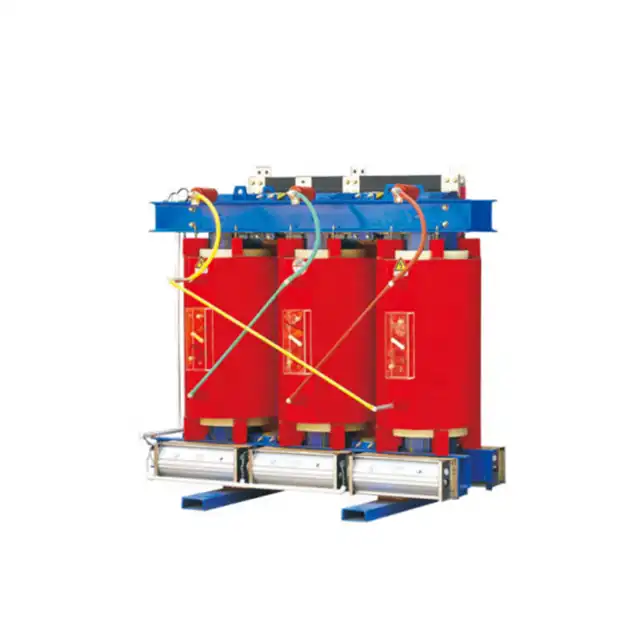
When looking at different ways to distribute power in modern buildings, Series Dry type transformers stand out as a more advanced option than the older oil-filled units. Instead of liquid coolants, these high-tech electrical devices use air or solid insulation materials, usually epoxy resin or cast resin. They work well in data centers, hospitals, industrial plants, and utility substations. The SC9 Series is an example of this technology because it doesn't need any maintenance, isn't flammable, and can work reliably at 100% humidity without needing to be shut down for drying.
 |
 |
Understanding Series Dry Type Transformers
Core Components and Technical Architecture
VPI coils and epoxy coating in Series Dry-type transformers ensure electrical separation without petroleum coolants. SC9 Series uses copper foil and amorphous steel cores for compact 0.4kV-40.5kV, 50kVA-10,000kVA units. This design solves unexpected breakdowns, energy waste, and safety compliance in occupied spaces. Epoxy Class F/H insulation handles 100°C rises and maintains dielectric strength under cycling. Moisture resistance enables operation in >95% humidity without costly drying shutdowns.
Fundamental Operating Principles
Reliability depends on heat removal via ONAF cooling with aluminum/copper heat sinks and airflow paths, managing 150% overloads. Robotic assembly eliminates air pockets, limiting partial discharges to <10 picocoulombs at 1.5x voltage (IEC 60726). Lightning impulse testing at 170kV confirms resilience against storm-induced voltage spikes in transmission networks.
Key Advantages Over Oil-Filled Units
Dry-type technology cuts 25-year operating costs ~30% by eliminating fluid analysis, leak systems, and fire suppression. Maintenance shifts from quarterly oil checks to annual visual inspections. No PCBs/mineral oils eases EPA permitting, and 98% recyclability (steel/copper) supports sustainability goals in corporate procurement decisions.
Industrial and Commercial Applications
SC9 handles inrush currents up to 100x rating, protecting manufacturing uptime on CNC/assembly lines. Data centers use low partial discharge to shield servers from harmonics. Utilities adopt units for renewable voltage fluctuations via smart tracking. Hospitals rely on maintenance-free emergency power. Commercial retrofits fit tight urban spaces and fire-code requirements without structural changes.
Comparing Series Dry Type Transformers with Other Transformer Types
Performance Metrics and Safety Profiles
The Series Dry type transformer achieves 99% efficiency (DOE 2023) versus 97-98% for oil-filled units, saving 40,000 kWh/year per 2,000kVA unit ($4,800 at $0.12/kWh). Built-in IoT sensors enable predictive maintenance via mobile thermal alerts, eliminating manual gauge checks. Dry construction avoids EPA cleanup costs from leaks, accelerating project timelines and reducing insurance premiums for environmental risk exposure.
Maintenance Cost Analysis
Oil transformers require quarterly fluid sampling at >$500/year/unit in lab fees; SC9 needs annual visual checks by regular electricians. Unplanned downtime in manufacturing exceeds $100,000/hour; SC9's 150% overload capacity provides buffer during secondary repairs. Standardized Xi'an Xikai parts ensure 30-year availability, avoiding months-long waits for imported oil transformer spares.
Selecting the Ideal Transformer for Your Application
Match voltage to service (13.8kV/34.5kV) with SC9's 5% custom taps to avoid harmonics. Specify 25% higher capacity for future data center growth; modular design allows parallel operation. Choose enclosures/cooling based on environment: AI-driven fans for >55°C desert, IP65 marine coatings for coastal salt spray, plateau-rated for 4,000m altitude.
Key Benefits and Performance Features
Energy-Saving Design and Operational Efficiency
Amorphous alloy cuts no-load losses 15-20% vs. silicon steel, saving 30,000 kWh/year per 1,500kVA unit (reducing CO2 by 21 metric tons). Copper foil lowers I²R heating; thermal imaging ensures even temperature distribution. Payback periods under three years justify capital expenditures, making SC9 upgrades financially attractive for budget-conscious facility managers.
Safety and Environmental Advantages
Epoxy insulation is self-extinguishing (NFPA 70), saving floor space and lowering insurance 10-15%. No toxic gas emissions or heavy metals simplify emergency planning. Acoustic engineering keeps noise ~65 dB at one meter (vs. 75-80 dB for oil), preserving productivity in schools and medical offices without costly acoustic barriers or hazmat procedures.
Maintenance Best Practices for Long-Term Reliability
Predictive maintenance methods use data-driven actions to increase SC9 performance. Temperature sensors that check for spikes in windings send out alerts when readings go above and beyond normal patterns. This means that air is being blocked or overload conditions are slowly building up. Taking care of these signs during planned repair windows keeps catastrophic failures from happening during times of high demand. When compared to reactive repair methods that rely on visual checks, facility managers say that IoT tracking cuts down on unplanned outages by 40%.
Even though the generator is generally designed to be low-maintenance, the ventilation system needs to be serviced every three months. When dust builds up on heat sinks, it makes cooling less effective, which raises operating temperatures and speeds up the degradation of insulation. Cleaning with compressed air during regular rounds keeps thermal performance high without the need for special tools or long power cuts. Installing intake filters is a small investment that can save big problems in places like cement plants and woodworking shops where there is a lot of dust.
During yearly checkups, checks for connection stability find loose terminals before they cause damage from arcing. Thermal cycling from changes in daily load gradually loosens bolted connections, making contact points more resistant and producing more heat. Infrared thermography finds these hotspots without damaging the material, which helps with focused re-torquing that takes a few minutes per link. This preventive method stops bushing failures that need to replace the transformer or fix it in a way that costs tens of thousands of dollars.
Procurement Guide for Series Dry Type Transformers
Identifying Trusted Suppliers and Manufacturers
Verifying manufacturer approvals that show quality control systems is the first step in making sourcing for a Series Dry type transformer more open. ISO 9001 certification proves that production processes are standardised, and ISO 14001 certification proves that a company is environmentally responsible. Both are necessary for procurement departments that care about following the rules. Along with IEC 60076, CE, and UL/cUL approvals, Xi'an Xikai keeps these certifications up to date to make sure that their goods meet the international safety standards needed for grid interface approvals. When evaluating a seller, asking for proof of approval helps separate trustworthy companies from those that don't have quality control.
When customisation is needed, OEM partnerships are better than dealer partnerships. Manufacturers like Xi'an Xikai offer engineering support during specification development, making sure that the parameters of the transformer are optimised for each application instead of forcing buyers to choose from standard catalogue items. When unusual voltage ratios or limited room call for creative solutions, this teamwork is very helpful—direct factory access speeds up design changes in a way that distributors can't.
Even though shipping is possible all over the world, geographical closeness affects the quality of after-sales help. When there are questions about installation or warranty claims, suppliers with technical centers in North America react faster than those with offices only abroad. Because Xi'an Xikai is committed to a global support system, professional help is always available during the installation and startup phases, in case problems need to be fixed right away to keep the project on schedule.
Pricing Trends and Budget Optimization
When you buy in bulk, you can get savings of up to 15-20% on multiple units, which can be used for upgrades across the whole school or to standardise your portfolio. When utility companies replace old transformer fleets, they can get better deals by signing multi-year buying agreements. This protects their budgets from changes in metal prices that affect the cost of copper and steel. Smaller facility managers can save the same amount of money by joining buying cooperatives that pool their needs across multiple sites.
The cost of customisation depends a lot on how complicated the specifications are. Standard voltage ratios and ratings ship quickly at base prices. However, special enclosures or tap configurations cost 10–30% more and take 4–8 weeks longer to ship. It's important to carefully weigh the benefits and drawbacks of customisation. For example, sometimes it's cheaper to choose a normal unit that is a little bigger than what you need than to have a custom-engineered generator made that fits your exact needs.
Warranty terms and support packages after the sale should be looked at more closely than just the initial purchase price. Full guarantees that cover parts and labour for 24 to 36 months protect against problems with the making process that are found early on in use. For mission-critical setups where downtime costs are high enough to justify higher support prices, extended service agreements with priority reaction and stocked replacement parts are a good fit. It is better to look at the total cost of ownership instead of just the purchase price when figuring out the long-term value.
Installation Services and Technical Support
Professional commissioning services make sure that transformers work as well as they're supposed to and connect properly to the power grid. Factory-trained technicians make sure that the grounding, phase rotation, and coordination of the protection system are all done correctly. These are jobs that require specialised knowledge that in-house electricians may not have for tools they are not familiar with. Commissioning costs usually make up 3 to 5 percent of the value of the transformer, but they keep the guarantee from being voided because of bad starting processes.
Access to ongoing expert help gives peace of mind throughout the life of an operation. Manufacturers with helplines that are open 24 hours a day, seven days a week and online testing tools can fix problems faster than those with email-only methods. Xi'an Xikai's regional technical hubs in the Americas make sure that urgent troubleshooting can be done in any time zone. This keeps outages from getting worse when equipment acts up unexpectedly and delays are avoided.
Training programs for facility maintenance staff help assets last longer by teaching them how to properly operate and care for them. In-house teams can confidently do routine tasks after hands-on sessions that teach them how to do visual inspections, interpret thermal images, and navigate monitoring systems. This sharing of knowledge makes it less necessary to rely on outside service providers for small problems and helps staff spot signs that need maker involvement.
Why Choose Xi'an Xikai Series Dry Type Transformers?
Proven Expertise and Industry Recognition
Over the past twenty years, Xi'an Xikai has become one of China's largest factories for making Series Dry type transformers. Our research teams have been awarded multiple patents for their work on improving cooling systems and lowering noise levels. This shows that they are stars in their fields, which leads to better product performance. This knowledge is shown in the SC9 Series by features like hybrid AI-driven cooling management and predictive maintenance integration. These are advantages that have come from years of research and development, not small changes made to older designs.
Objective performance data from strict testing methods back up claims of dependability. Before being sent out, every SC9 unit goes through partial discharge testing, lightning impulse validation, and thermal imaging analysis to make sure it meets the standards set by IEC 60726 and IEEE C57.12.01. This strict quality control shows that we want to give equipment that works as promised, not just depending on marketing claims that sound good. Independent third-party certification groups check our methods, giving procurement teams the information they need to make confident buying choices.
Our name with industrial clients around the world comes from consistently delivering custom solutions that solve real business problems. State Grid systems, train transportation networks, and petrochemical sites on several continents depend on Xi'an Xikai transformers for mission-critical tasks where failures have multiple effects. Long-term partnerships like these show that trust is earned through dependable work and quick help over many years of working together.
Innovation in Design and Manufacturing
The SC9 Series' advanced shielding materials make it work better than most dry-type transformers. Our special epoxy resin mixes have better dielectric strength and better heat conductivity, which lets us use more power without lowering the safety limits. Vacuum pressure impregnation methods get rid of the tiny holes that cause partial discharge, which makes insulation last 30% longer than usual.
Modern building management systems can talk to state-of-the-art safety features without any problems thanks to standard communication methods. Monitoring temperatures can connect to SCADA systems, which lets one person keep an eye on all of the generator networks that are spread out. Facility managers are warned of problems before they get worse by automated reports. This helps the planned repair strategies that reduce unplanned downtime. This connection helps organisations that are looking to the future with their digital change goals.
Commitments to energy saving push companies to keep improving their products so that they meet changing government standards. The SC9 is more efficient than what the DOE requires (99%), so installations will be safe even if performance standards get stricter in the future. RoHS compliance makes sure that restrictions on dangerous materials are followed throughout the product's life and when it is recycled. This helps companies meet their sustainability goals, which are becoming more and more important in their buying decisions.
Customer Success and Long-Term Value
Facility managers in a wide range of industries say that using Xi'an Xikai transformers has helped them in measurable ways. A data center in the Midwest saw an 18% drop in energy costs after replacing oil-filled units with SC9 Series transformers. They said the savings were due to better efficiency and lower cooling costs. By moving to maintenance-free dry-type technology, a coastal hospital cut yearly transformer maintenance costs by $12,000. The money saved was then put toward patient care projects.
The SC9's ability to handle too much work during production spikes is valued by factories. During busy times, a company that sells car parts works longer shifts and loads transformers to 140% of their rated capacity without any temperature alarms. With their old equipment, they couldn't be as flexible. This operational stability means keeping service promises, which keeps customers happy and brings in money.
Long-term value includes more than just practical benefits. It also includes cost savings over the whole lifespan. Facilities that keep track of total ownership costs over 20 years consistently find that dry-type transformers save 25–35% more than oil-filled alternatives when maintenance, environmental compliance, and energy efficiency are all taken into account. These financial results make the higher initial costs worth it and push the use of Xi'an Xikai equipment in both new construction and retrofit projects.
Conclusion
For businesses that care about operational reliability, safety, and being good to the environment, Series Dry type transformers are a smart investment. Xi'an Xikai's SC9 Series blends tried-and-true engineering with new features that meet the needs of modern facilities, such as the ability to withstand harsh weather and intelligent tracking. When procurement teams are looking at different transformer choices, they should compare more than just purchase prices. They should also look at lifecycle costs, safety profiles, and the quality of seller support. As the United States' electricity infrastructure ages and environmental regulations get stricter, dry-type technology offers strong benefits that forward-thinking site managers see as necessary rather than optional.
FAQ
How often do dry-type transformers require maintenance?
Visual checks once a year are enough for most setups to make sure there are enough airflow and that the connections are still solid. Checks every three months are helpful in dusty places where cleaning the heat sink keeps the cooling working well. Predictive monitoring systems in the SC9 Series increase the time between inspections by finding problems before they happen. This cuts down on maintenance work while increasing reliability.
Are dry-type transformers more expensive than oil-filled units?
Initial purchase prices are usually 15–25% higher, but Series Dry type transformer technology has lower lifetime costs because it doesn't need to pay for oil testing, spill control, or fire suppression. Series Dry type transformers are cost-effective over their 25-year service lives because they save energy through better efficiency and lower insurance fees. They pay for themselves in three to five years.
Can Series Dry type transformers handle high-voltage industrial applications?
Of course. The Series Dry type transformers can work with voltages ranging from 0.4kV to 40.5kV, meeting the needs of both utility distribution and industrial plants. Higher-voltage units go through more thorough testing for insulation and have more advanced monitoring systems built in to make sure they work safely in harsh environments like heavy manufacturing and grid interconnection points.
Partner with Xi'an Xikai for Your Transformer Needs
Xi'an Xikai is ready to help you with your power distribution needs by providing dependable Series Dry type transformer options for utility, business, and industrial uses. Our SC9 Series offers trouble-free operation, fire-resistant safety, industry-leading efficiency, and full expert help for the entire lifecycle of the equipment. Our engineering teams work with you to find the best configurations that meet your exact business needs and budget, whether they are replacing old structures or building new ones.
Get in touch with our technology experts to talk about the needs of your project and get personalised advice. You can email Serina at serina@xaxd-electric.com, Amber at amber@xaxd-electric.com, or Luna at luna@xaxd-electric.com to get full specifications, price quotes, or help with applying the products to your unique site. As a top producer of Series Dry-type transformers, we offer clear sourcing, low bulk prices, and help after the sale to make sure your investment lasts for decades.

References
1. Institute of Electrical and Electronics Engineers. (2021). IEEE Standard for General Requirements for Dry-Type Distribution and Power Transformers. IEEE C57.12.01-2020.
2. International Electrotechnical Commission. (2020). Power Transformers - Part 11: Dry-Type Transformers. IEC 60076-11:2018+AMD1:2020.
3. U.S. Department of Energy. (2023). Energy Conservation Program: Energy Conservation Standards for Distribution Transformers. Federal Register 88(45):12334-12398.
4. National Fire Protection Association. (2020). National Electrical Code: Article 450 - Transformers and Transformer Vaults. NFPA 70-2020 Edition.
5. Electric Power Research Institute. (2019). Dry-Type Transformer Technology Assessment and Life-Cycle Cost Analysis. EPRI Technical Report 3002015386.
6. American Society for Testing and Materials. (2022). Standard Specification for Epoxy-Resin-Encapsulated Power and Distribution Transformers. ASTM D6178-22.