What are Disconnect Switches? – Types and Applications
2026-06-02 15:59:14
Electrical systems need disconnect switches for visual isolation and safe maintenance and repairs. Indoor disconnect switches automatically disconnect circuits from power sources without blocking fault currents like circuit breakers in enclosed switchgear or building electrical rooms. These switches mechanically isolate transformers, motors, and distribution panels, ensuring technicians de-energize before working. Industrial establishments, commercial complexes, and utility substations where operational safety affects business continuity need them to protect persons and equipment.
 |
 |
Understanding Disconnect Switches – Definition and Function
What Is a Disconnect Switch and How Does It Work?
When opened, a disconnect switch breaks an electrical circuit, confirming power separation. These switches work only in no-load circumstances and cannot disrupt live current flow. The open position of movable conductive blades from fixed contact jaws prevents arcing. This design isolates downstream equipment for safe repair, with visible blade position indicators confirming switch status.
Core Benefits for Industrial and Commercial Operations
Facility managers benefit from superior isolation equipment. Technicians may physically test circuit isolation instead of using electronic indications, making maintenance safer. Sectionalizing allows isolated circuit repairs while retaining power to key loads, improving operational flexibility. Data centers can maintain power distribution without disrupting servers. These benefits reduce downtime costs and increase arc flash protection compliance.
Types of Disconnect Switches and Their Applications
Indoor vs. Outdoor Variants – Design and Environment Considerations
Indoor and outdoor isolation technologies differ fundamentally. Indoor disconnect switches aim for small switchgear integration with IP2X or IP4X ratings. Their insulation uses epoxy resin or molded polymer for temperature control. Outdoor designs use IP54+ weatherproofed galvanized steel enclosures to endure rain and dust. UV-stabilized silicone rubber insulators prevent solar damage. Outdoor variants suit transmission substations where environmental robustness matters.
Fused vs. Non-Fused and Manual vs. Motorized Models
Fusible switch assemblies isolate and protect against overcurrent with current-limiting fuses. When fuse elements melt, striker mechanisms trigger switch opening, ideal for backup protection. Non-fused forms isolate without protective devices, minimizing maintenance costs. Manual lever handles suit lower current ratings up to 630A. Motorized actuators enable SCADA integration for remote control, using position feedback sensors and emergency manual override.
Common Indoor Disconnect Switch Categories
Specialized varieties meet industrial and commercial needs:
- Fusible Safety Switches: These panel-mounted assemblies provide isolation, fusing, and NEMA-rated enclosures for 30A to 1200A at 600V or lower. Quick-disconnect fuse clips make maintenance window replacement easy. Due to their overcurrent protection and lockout/tagout, hospitals and commercial facilities often use them for HVAC, pump, and lighting panel equipment disconnects.
- Non-Fusible Isolation Switches: These non-fusible isolation switches, used upstream with molded-case circuit breakers, prioritize mechanical durability above protective functionality. They are installed before motor control centers and variable frequency drives in manufacturing plants where maintenance isolation points must last 10,000 operations. Silver-plated copper blade contacts reduce contact resistance, minimizing heat concerns at 1250A rated currents.
- Surge-Protected Models: Advanced models include metal oxide varistor (MOV) assemblies or integrated arresters to clamp transient overvoltages. Data centers and telecom facilities use this functionality to safeguard server power supply and networking equipment from lightning surges and switching transients. Isolation and surge suppression simplify panel design and reduce device failure.
Disconnect Switches vs. Circuit Breakers – Functional Distinctions
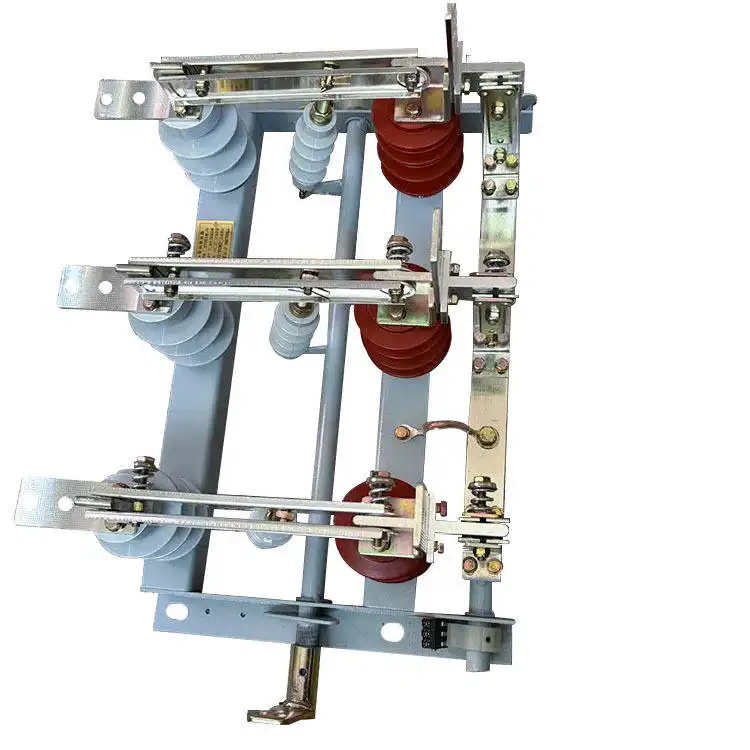
Thermal-magnetic or electronic trip mechanisms in circuit breakers automatically stop fault currents. Disconnect switches produce isolation gaps without interrupting. Opening a disconnector under load causes arcing that ruins contacts. Mechanical interlocks prevent misoperation by opening breakers before switching. Breakers offer active protection, while disconnectors provide proven isolation points downstream. Xi'an Xikai's GN24 illustrates this with integrated earthing switches.
Typical Commercial and Industrial Use Cases
Manufacturing factories use metal-enclosed switchgear with medium-voltage switches for induction motors. Maintenance may be scheduled without shutting down production lines. Data centers use upstream isolation switches for each power channel, allowing UPS replacement without disrupting critical loads. Hospitals use devices in main distribution boards connecting elevators, HVAC chillers, and fire pumps with lockout/tagout for OSHA compliance.
Installation, Wiring, and Maintenance Guidance for Indoor Disconnect Switches
Installation Best Practices and Code Compliance
Installing properly requires reviewing product specs and electrical codes. Indoor disconnect switches must be accessible, show open/closed position, and disconnect all ungrounded wires simultaneously under NEC Article 404. International standards for high-voltage isolation switches include clearances, mechanical durability, and environmental ratings in IEC 62271-102.
The mounting direction greatly impacts mechanical functioning and arc control. Vertical blade variants eliminate gravity-induced contact welding but need higher panels. Although horizontal designs reduce vertical space, they require exact alignment to avoid binding. The GN24's through-wall installation compartmentalizes switchgear's electrified and de-energized zones, improving maintenance safety.
Proper phase sequencing prevents motor spinning and transformer polarity faults. The standard order is Phase A at the top or left, followed by B and C. Terminal connection torque parameters vary by conductor size from 150 to 350 inch-pounds, with thermal cycling requiring frequent re-torquing after initial energization. High-resistance joints in under-torqued connections can cause localized heating and insulation failure.
Interpreting Wiring Diagrams and Connection Requirements
Single-line diagrams indicate disconnect switch positions relative to breakers and loads. Three-line schematics provide phase-specific wiring details. Voltage rating must consider system voltage plus transient overvoltages. Current rating should exceed continuous load by 25% for harmonic content. Position indicator circuits use 24VDC, 48VDC, or 120VAC. Control wire should be separated from power cables to avoid electromagnetic interference.
Maintenance Schedules and Troubleshooting Methods
Quarterly visual examinations should check for overheating, corrosion, and lubrication. Annual inspections include contact resistance measurement and insulation testing. New equipment has contact resistance below 50 micro-ohms, with replacement advised when exceeding 100. Dust and structural settling cause mechanical binding. Lubricate pivot bearings using electrically compatible NLGI Grade 2 lithium-complex greases for smooth operation.
Essential Safety Features for Operational Integrity
Lockout/tagout padlock attachment prevents illegal energization during maintenance per OSHA 29 CFR 1910.147. Mechanical interlocks prevent hazardous operations like load breaking. Arc flash shielding includes correct equipment ratings and NFPA 70E operating distances. Visual blade observation or dependable mechanical indications reduce circuit status guessing. The GN24's mechanical indicators show blade status without electrical test equipment.
How to Choose the Best Indoor Disconnect Switch for Your Business?
Procurement Strategy for Volume Requirements
To determine quantity needs, purchasing managers should inspect current Indoor disconnect switch installations and prospective expansions before developing specifications. Bulk ordering saves 15-25% over individual purchases, and spare parts commonality simplifies inventory management. Budgets should include maintenance consumables, spare contact kits, and projected service intervals, not just the initial purchase price.
Standard catalog goods take 6-12 weeks, whereas unique configurations require engineering (16-24 weeks). Construction project critical path scheduling requires early procurement commitment, especially for factory testing beyond dielectric and mechanical inspections. Due to their larger size, medium-voltage switchgear components require specific treatment during logistics planning.
Comparing Leading Manufacturers
The worldwide market has numerous established producers with unique benefits:
- Siemens: Siemens offers digitally integrated switches with sensors for predictive maintenance and building automation system integration. The 3WL and 3VL series air circuit breakers with integrated disconnect features are ideal for smart building and remote diagnostics.
- Eaton: To improve safety, Eaton invented arc-resistant switchgear, presently used in critical infrastructure. Their medium-voltage vacuum contactors with isolation switches are small alternatives to breaker-disconnector combos.
- Schneider Electric: Schneider Electric leads energy efficiency monitoring with switchgear-integrated power metering. This helps operations track equipment-level electrical expenditures for utility chargebacks or energy management.
- ABB: ABB high-performance switches handle ratings over 4000A for large industrial applications like aluminum smelters and steel rolling mills where electrical needs exceed ordinary equipment.
- GE: GE transmission-class switches fulfill IEEE and ANSI standards used in North American power grids, easing specification compliance for utility-grade projects.
While these manufacturers are reliable, procurement methods should also include specialist suppliers like Xi'an Xikai. State Grid systems and important industrial sectors in China receive solutions from our manufacturing base that fulfill IEC and strict local regulations. Our engineering skills are shown in the GN24 High Voltage Disconnect Switch, which has dual-break insulation for two visible isolation gaps, integrated earthing for safe residual current discharge, and horizontal pantograph mechanisms for 10,000 mechanical cycles. It meets medium-voltage isolation needs in substations, industrial plants, and commercial complexes at 12kV with 400A to 1250A current choices.
Selection Criteria Matching Operational Requirements
Technical specifications must match system and operational requirements. A 15kV switch suits 13.8kV systems, compensating for utility voltage changes and transient overvoltages. If providing motor loads, current rating must exceed continuous load plus expected increase, including beginning currents.
Safety and code compliance depend on short-circuit ratings. Equipment must survive installation fault current without catastrophic failure. Powerful faults can surpass 40kA in utility substations, requiring bracing and containment. If upstream breakers interrupt faults, the GN24 may separate bus circuits under no-load conditions for cost-effective isolation without redundant interrupting.
Environmental considerations including temperature, altitude, pollution, and seismic constraints affect specification. Standard equipment ratings assume mild pollution and installation below 1000 meters. High-altitude facilities need de-rating or better insulation to compensate for lower air dielectric strength. corrosion-resistant coatings and sealed systems avoid salt contamination in coastal sites.
Energy efficiency influences buying decisions more and more. Switches require minimal power, but contact resistance causes significant I²R heating losses in big systems. Over 20–30 year equipment lifecycles, premium contact materials and efficient pressure mechanisms reduce these losses and operational expenses.
Custom and Bulk Order Considerations
Manufacturer relationships enable specification customization for large projects. Avoid costly field alterations by adapting terminal layouts to bus arrangements. Corporate branding and equipment identification are easier with custom paint colors. Pre-shipment testing under site-specific circumstances reduces commissioning issues.
Warranty provisions greatly affect ownership costs. Standard coverage covers manufacturing flaws and premature breakdowns for 12–24 months after installation. Extended warranties of 5-10 years safeguard vital applications with high replacement costs and downtime.
Commodity vendors differ from long-term partners in after-sales assistance. Technical support, spare parts inventory, and field service response times impact how quickly issues are fixed. Xi'an Xikai provides 24/7 technical support with dedicated account agents that understand client facility needs, not generic contact centers. Contact kits, working mechanism parts, and insulator assemblies are among our spare parts inventory for fast equipment repair.
Market Trends and Innovations in Indoor Disconnect Switches
Technological Advancements Reshaping Equipment Capabilities
Traditional mechanical equipment become intelligent assets with continuous health data when monitoring technology is included. Contact assembly temperature sensors detect anomalous heating before insulation damage, enabling predictive maintenance to prevent unexpected failures. Mechanical issues including bearing wear and loose connections are detected via vibration monitoring. Automated substation automation uses Indoor disconnect switches and IEC 61850 communication protocols to conduct switching sequences depending on system circumstances.
Automated control techniques coordinate several switches and breakers for complicated processes. Supervisory control automates six- or eight-step transfer protocols, decreasing operator error and speeding emergency response. Remote operation allows utility control centers to alter distribution networks without deploying field staff, thus lowering storm restoration outage length.
At medium voltages, vacuum interrupters are replacing air-breaks. High-vacuum vacuum switches interrupt currents in sealed glass or ceramic envelopes with contact assemblies. This method removes explosive arc-quenching material, simplifies maintenance by removing contaminated connections, and is small for space-constrained installations.
Eco-Friendly Solutions and Regulatory Evolution
SF6 insulation gas, a strong greenhouse gas 23,500 times larger than CO2, is banned by environmental restrictions. Dielectric and environmental needs are met via dry air, nitrogen, and vacuum insulation. Through optimized electrode geometries and barrier arrangements, the GN24's SF6-free design meets this sustainability requirement while retaining excellent insulating performance.
Switchgear specifications increasingly follow energy efficiency guidelines. Maximum losses for distribution equipment under California Title 24 and related rules drive manufacturers to improve contact designs and low-resistance materials. These regulations minimize cooling loads and electricity costs for facility owners and encourage decarbonization.
The circular economy emphasizes recyclability and repair above disposal in product design. Through periodic refurbishment, modular construction extends equipment lifecycles from 20 to 40 years by replacing components rather than replacing units. Composite materials hinder end-of-life processing, thus recyclable metals and thermoplastics are preferred.
Based on event data and technology, safety requirements evolve. After high-profile incidents, current-limiting technology, quick fault detection, and protective equipment advancements are prioritized for arc flash reduction. Each triennial NFPA 70E update adds rules that affect equipment specifications and operations.
Conclusion
Indoor disconnect switches are essential for safe, dependable electrical system functioning in industrial, commercial, and utility applications. Selection involves careful consideration of voltage and current ratings, climatic conditions, and operating needs to match equipment capabilities with installation needs. Understanding indoor and outdoor versions, fused vs non-fused alternatives, and circuit breaker functioning distinctions helps specify. Code-compliant installation, rigorous maintenance of contact integrity and mechanical operation, and contemporary safety measures safeguard personnel and extend equipment life. Evaluating manufacturers based on technical skills, support infrastructure, and lifetime cost rather than initial pricing creates long-term collaborations that provide value as facilities grow.
FAQ
1. What distinguishes indoor disconnect switches from outdoor models?
Ecological preservation causes the main distinctions. Compact Indoor disconnect switches with IP2X or IP4X enclosures and epoxy or polymer insulation are ideal for regulated electrical room situations. Outdoor switches include IP54+ housings with galvanized steel frames, UV-resistant silicone insulators, and sealed mechanisms that resist temperature, moisture, and pollution. Outdoor designs emphasis durability for exposed installations, whereas inside variants focus space efficiency for switchgear integration.
2. How often should maintenance be performed on isolation switches?
Environment and usage intensity determine inspection frequency. At high-utilization facilities, quarterly visual checks verify operation and check for overheating. Contact resistance, insulation, and mechanical verification should be included in annual thorough examinations. Contact replacement is needed when resistance reaches 100 micro-ohms or wear is obvious.
3. Can disconnect switches be operated under load conditions?
No—load interruption causes destructive arcing that destroys contacts and endangers personnel. These devices only isolate circuits after breakers or contactors deenergize them. Breakers must open before switches are activated in mechanical interlocks to prevent malfunction.
Partner with Xi'an Xikai for Reliable Electrical Isolation Solutions
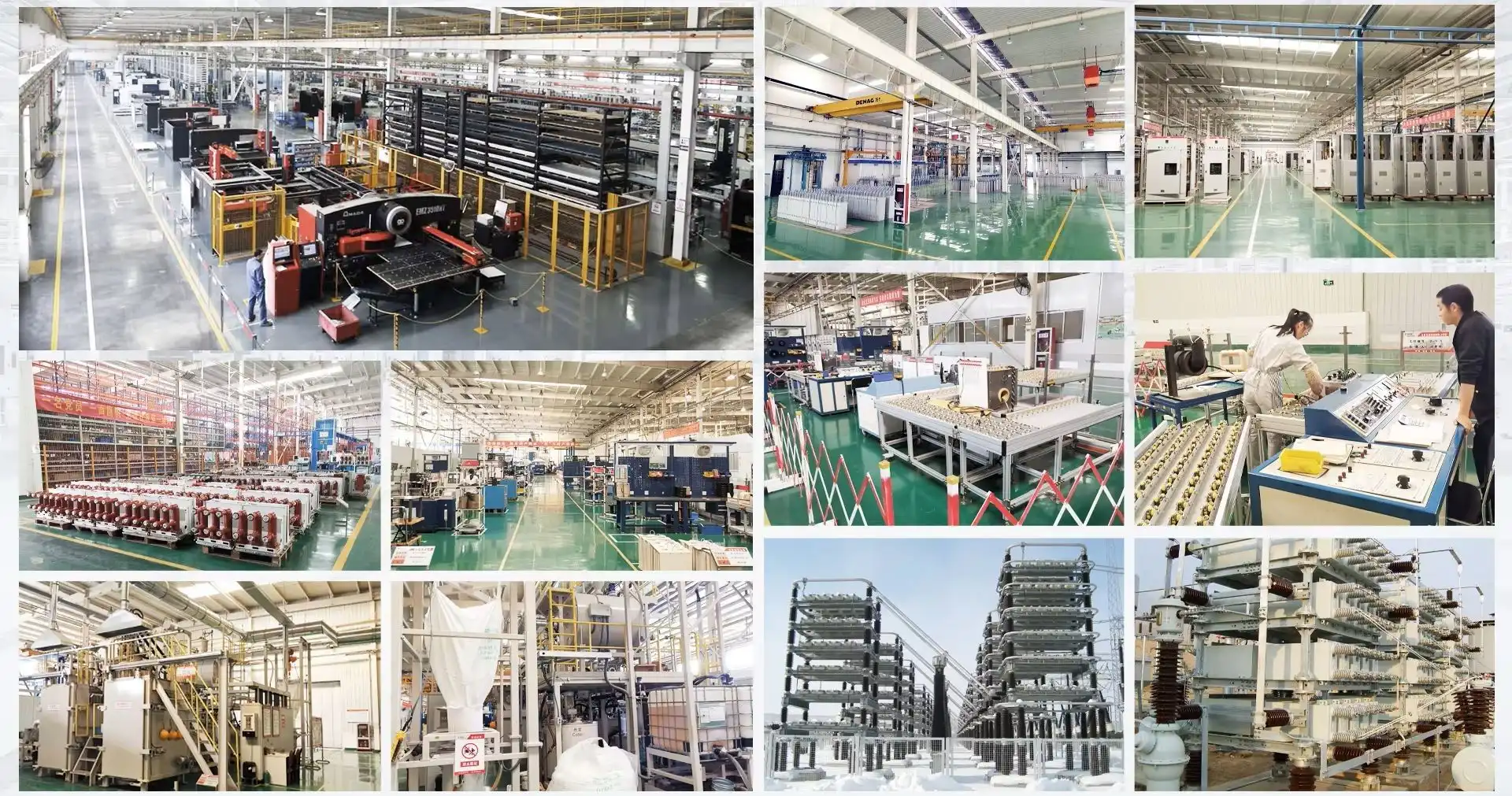
The Indoor disconnect switch manufacturer you choose affects facility safety, uptime, and long-term expenses. After decades serving China's power infrastructure and heavy industry sectors, Xi'an Xikai blends superior engineering with practical understanding of industrial electrical demands. Our GN24 High Voltage Disconnect Switch is reliable in 12kV systems up to 1250A and has integrated earthing and through-wall installation for substation layout simplicity and safety. Procurement managers, facility engineers, and EPC firms may browse our extensive product portfolio and discuss how our solutions meet application needs. Contact our technical staff at serina@xaxd-electric.com, amber@xaxd-electric.com, or luna@xaxd-electric.com for indoor disconnect switch supplier quotes or consultations.
References
1. National Fire Protection Association. NFPA 70: National Electrical Code, 2023 Edition. Quincy: NFPA, 2022.
2. International Electrotechnical Commission. IEC 62271-102: High-voltage switchgear and controlgear - Part 102: Alternating current disconnectors and earthing switches. Geneva: IEC, 2018.
3. Institute of Electrical and Electronics Engineers. IEEE C37.30: IEEE Standard Requirements for High-Voltage Air Switches. New York: IEEE, 2015.
4. Occupational Safety and Health Administration. 29 CFR 1910.147: The Control of Hazardous Energy (Lockout/Tagout). Washington: U.S. Department of Labor, 2021.
5. Swindler, Douglas. Electrical Safety Handbook, 4th Edition. New York: McGraw-Hill Professional, 2020.
6. Das, J.C. Power System Analysis: Short-Circuit Load Flow and Harmonics, 2nd Edition. Boca Raton: CRC Press, 2018.