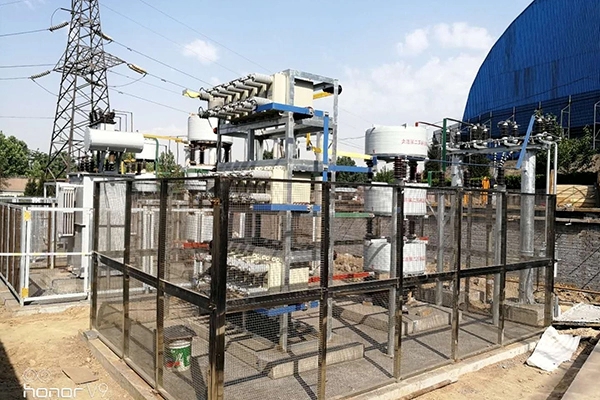
What are effects of Static var generator on power factor?
2026-07-01 16:03:35
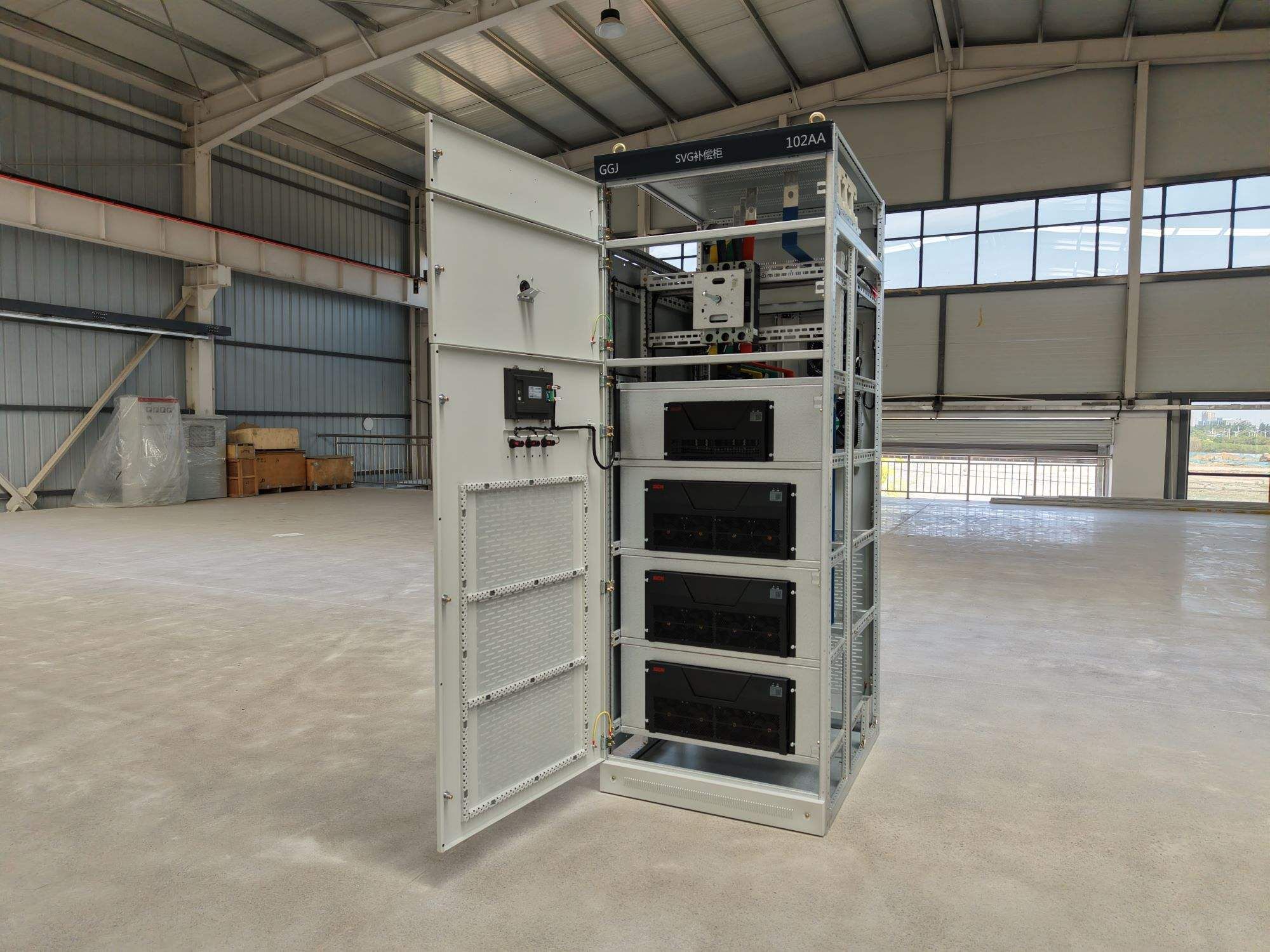
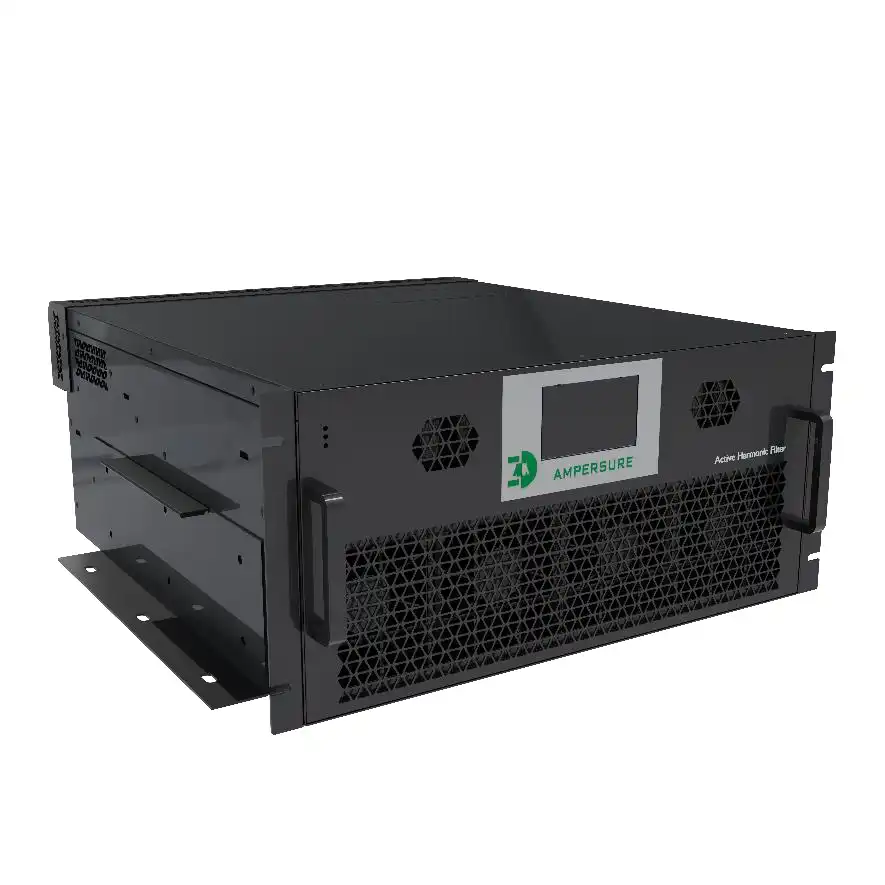
Changing the power factor by actively adding or taking away reactive power in real time, the SVG-Static Var Generator keeps the power factor at or near unity (0.99). This device reacts within 15 milliseconds to changes in load, unlike passive compensation methods. This stops both over-compensation and under-compensation, which are common problems in industrial facilities. Using IGBT-based inverter technology to constantly balance reactive and active power ratios, the SVG-Static Var Generator gets rid of lagging currents from inductive loads, cuts transmission losses by up to 40%, and protects sensitive equipment from voltage instability. It does all of this while taking up 20–30% less space than regular static var compensators.
 |
 |
Introduction
Power factor tells you how well an electrical system turns energy into useful work. In factories, data centers, and hospitals across the US, even small changes from the ideal power factor lead to a chain reaction of issues, including higher electricity bills, overheated transformers, broken equipment, and lost energy that cuts into profits. For every kilowatt-hour that is lost because of a bad power factor, money is wasted and carbon emissions rise.
Today's factories need solutions that can adapt right away to changing loads while keeping the grid stable. Traditional ways of compensating reactive power, like switching capacitor banks in separate steps or using big synchronous condensers, aren't precise or flexible enough for today's fast-paced production settings. SVG-Static Var Generators are the next big thing in power quality management. They use modern power electronics and smart control systems to provide constant, stepless correction. This technology solves the main problems that building managers, utility grid managers, and system designers have when they need reactive power solutions that are reliable, efficient, and flexible.
This guide will show you how static var compensation can turn power factor management from a legal requirement into a strategic operational advantage. It will do this by looking at technical principles, comparing performance, buying options, and realistic ways to put these ideas into action that get real results.
Understanding Power Factor and Reactive Power Challenges
The Hidden Cost of Low Power Factor
Power factor shows the proportion of real power that does work to visible power that flows through electrical circuits. When inductive loads like motors, transformers, and arc burners make up most of a facility's loads, they draw reactive power, which shifts the phase of the voltage and current waves. This misalignment makes the electrical infrastructure carry more current without making more useful output. This puts extra stress on the wires, switchgear, and distribution transformers and can cause utility fees that can raise monthly energy bills by 15 to 25 percent.
A bad power factor not only costs you money, but it also speeds up the wear and tear on your tools. Too much current flow makes heat, which shortens the life of motor and transformer shielding, raises voltage drop across distribution networks, and lowers the infrastructure's useful capacity. When production sites are close to full, they can't add new equipment without spending a lot of money on expensive infrastructure changes. This makes it harder for the business to grow.
Limitations of Conventional Compensation Methods
In the past, flipped capacitor banks that add reactive power in set amounts were used to fix the power factor. These systems have problems like mechanical switching delays (usually 50–100 milliseconds), step response that causes voltage transients, and not being able to keep up with loads that change quickly. When capacitor banks interact with system inductances, they can cause resonance risks that could make harmonic distortion worse instead of better.
Synchronous condensers can be adjusted continuously, but they need a lot of upkeep, make noise and vibrations, have mechanical failure points, and take up a lot of room when they're installed. Because their rotating mass reacts slowly to changing conditions, they can't be used in places where the load changes a lot, like welding, EV charging sites, or intermittently adding green energy. Maintenance teams have a hard time with these old technologies because they are hard to use and have high costs over their lifetime. They also don't meet current standards for power quality.Today's businesses need pay systems that work quietly, answer instantly, don't need much upkeep, and work well with digital tracking platforms. These are all needs that traditional technologies just can't meet.
How SVG Static Var Generators Improve Power Factor
Operating Principles and Real-Time Control
To make accurate reactive current patterns, SVG-Static Var Generators use a voltage source inverter design based on insulated-gate bipolar transistors (IGBTs). The device constantly checks the voltage and current of the system by sampling at very high speeds (microsecond resolution). It then figures out the exact reactive power shortage or overflow and adds compensating current that is 180 degrees out of phase with the reactive component. For dynamic changes, this happens in less than 50 microseconds, and full compensation is reached in less than 15 milliseconds. This is about 5–10 times faster than mechanical options.
The XR-dSVG line from Xi'an Xikai works with 400V input and has a ±20% range, which means it can handle voltage changes that happen a lot in industrial distribution networks. The two-way compensation feature keeps the power factor at 0.99 no matter if loads need capacitive or inductive support. It does this by instantly responding to changing conditions without any help from the user. This constant modulation stops the voltage drops and short-term changes that are bad for switched capacitor systems. This keeps sensitive electronics and machines from breaking down.
Quantifiable Performance Benefits
When manufacturing facilities use static var compensation, they usually see changes right away in a number of operational measures. When reactive current flow goes down, I²R losses go down in distribution systems. This means that, depending on the standard power factor and load features, energy savings of 3 to 8 percent are possible. These saves add up every month, and the system investment is usually paid for by saved energy costs and utility fines within 18 to 36 months.
Using equipment at a better power factor makes it last longer in a measurable way. Motors run cooler and have less wear on their bearings, transformers stay within their ideal temperature ranges, and circuit safety devices trip less often. A semiconductor factory in the southwestern United States saw a 40% drop in motor failures after adding static var compensation. They said that the increase was due to stable voltage profiles and the removal of reactive current stress. The better power quality also lets facilities use all of their generator and circuit capacity, which delays infrastructure growth projects that would have needed six-figure investments in the past.
Modern SVG-Static Var Generators have harmonic filters built in, which is useful for more than just fixing power factor. These devices lower total harmonic distortion below 5% by actively canceling low-order harmonics (3rd, 5th, and 7th). This protects sensitive loads and makes sure they meet IEEE 519 power quality standards without the need for extra filtering equipment.
Comparison: SVG Static Var Generator vs Other Reactive Power Solutions
Technical Performance Analysis
Response time is the most important thing to look at when comparing reactive power adjustment systems for uses with changing loads. Full output change is made by SVG-Static Var Generators in 15 milliseconds, while it takes 50–100 milliseconds for mechanically switched capacitors and 30–50 milliseconds for thyristor-controlled reactors. This speed advantage stops voltage flickering in arc furnace operations, supports stable charging infrastructure for teams of electric vehicles, and makes it easy to add solar inverters that deal with power fluctuations caused by clouds.
Another important factor is the efficiency of the capacity. To handle inductive and capacitive compensation ranges, traditional static var compensators need 20–30% more maximum capacity. However, current SVG-Static Var Generators can do both directions within their nameplate rating. This efficiency directly leads to smaller pieces of equipment, lower installation costs, and easier system design. The modular design of the cascade H-bridge topology also makes adoption scalable, so facilities can put the right amount of equipment at first and add more as their needs change.
Maintenance and Lifecycle Considerations
In regular systems, mechanical parts that switch on and off wear out over time and need to be replaced every 100,000 to 500,000 processes, based on the size of the switching current. SVG-Static Var Generators don't have any moving parts in the power path, so they don't need any mechanical upkeep and have a lot less unexpected downtime. The solid-state design can handle tough industrial settings with changing temperatures, vibrations, and airborne contaminants that damage electrical equipment.
Operational freedom includes ways of controlling operations that aren't possible with passive devices. There are different ways that SVG-Static Var Generators can work, such as with constant reactive current, constant reactive power, constant bus voltage, or constant power factor. System workers choose the right mode based on utility rate structures, load patterns, or grid support needs. This makes sure that performance is optimized for each application. Because it can be programmed, this equipment can be used in demand response programs, in which facilities help keep the power grid stable in return for lower energy rates. This is a new way to make money that people who use traditional compensation equipment can't get.
Procurement Considerations for SVG Static Var Generators
Essential Technical Specifications
When procurement teams look at SVG-Static Var Generators, they should put a high priority on a few key factors that are in line with what the facility needs. The rated compensating capacity needs to be able to handle the highest reaction power demand, plus an extra 15 to 20 percent in case the load grows or conditions change quickly. Input voltage compatibility spanning 400V ±20% provides reliable operation even when grid voltage changes and voltage drops when there is a lot of load. Response times of less than 20 milliseconds are good enough for most industrial uses. Response times of less than 1 millisecond are only used for specific uses, like steel rolling mills or rail movement.
Grid frequency compatibility (50Hz/60Hz) is important for international companies that want to standardize equipment across buildings or for businesses that work in places where the electrical standards are different. Harmonic filtering should be able to deal with the main harmonic orders found in a building's electrical patterns. In industrial settings, these are usually the third through thirteenth harmonics. Communication methods that support Modbus TCP, DNP3, or IEC 61850 make it possible to connect to current SCADA and building management systems. This makes it easier to watch from afar and plan repairs ahead of time.
Manufacturer Selection and Support Infrastructure
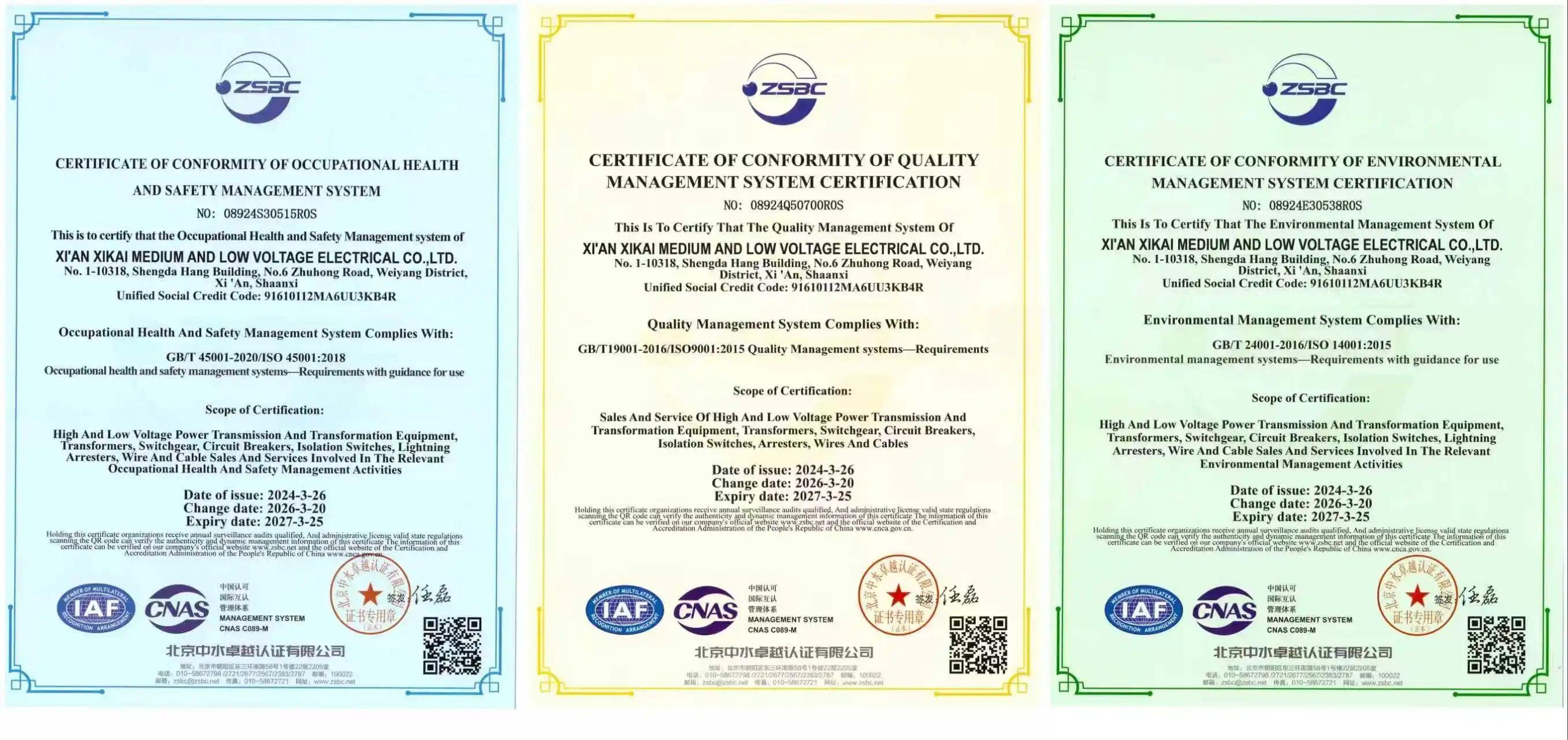
International names like ABB, Siemens, and Schneider Electric have a strong foothold in the market, but regional makers offer better value by combining technical know-how with quick customer service. Manufacturing certifications (ISO 9001 for quality management and ISO 14001 for environmental systems), product compliance with relevant standards (IEC 61000 for electromagnetic compatibility and IEEE 1547 for distributed energy resources), and proof of successful installations in similar applications should all be part of the evaluation process.
After-sales support infrastructure is especially important for power quality equipment that needs help with setup or performance improvement from time to time. Manufacturers who keep regional service centers open, stock critical extra parts, and offer full insurance coverage (usually 18 to 24 months for industrial power electronics) lower operational risk and downtime exposure. Long-term worth is increased by training programs that teach building electrical staff how to do regular diagnostics and parameter changes. This lowers reliance on outside service providers.
Manufacturers with custom engineering skills are different from sellers selling only stock goods because they can make solutions fit specific needs, such as unusual voltage levels, harsh environmental conditions, or connection with existing equipment. Manufacturers keep application engineering teams that can help facilities with specific needs. These teams have experience fixing difficult power quality problems in a wide range of businesses.
Maintenance, Troubleshooting, and Maximizing SVG Performance
Routine Maintenance Best Practices
When compared to electromechanical options, SVG-Static Var Generators don't need as much planned maintenance. However, paying careful attention to a few key areas over time will ensure their best long-term performance. Checking the cooling system's operation every three months should include making sure the fans work, the air filter is clean, and there is enough air flow around equipment cases. By using thermal imaging to look at bus bar connections, wire terminations, and semiconductor heat sinks, you can find hot spots that are starting to form before they get so bad that parts fail.
When you schedule maintenance once a year, you can check the whole system. This includes updating the firmware to fix bugs and improve performance, checking the health of the capacitor banks by measuring their impedance to find degradation before they fail, and making sure that the setpoints for the control parameters are still in line with the changing needs of the facility. By writing down these tasks, you build a maintenance log that can be used to support predictive reliability programs and warranty claims if a part breaks.
Watching the environment is very helpful in tough work settings. Too much dust on the cooling fins, corrosive atmospheres that damage connection gear, or temperature changes that are higher than what the equipment can handle can all make it less reliable. Active climatic controls, like better closing of enclosures, extra cooling, or protective coatings, make equipment last longer and stop it from breaking down too soon, which stops production.
Performance Optimization Strategies
An SVG-Static Var Generator's efficiency and return on investment can be increased in a number of ways, in addition to basic upkeep. Power quality monitors can find specific reactive power trends through load profiling. This lets control methods be fine-tuned to the specifics of a facility. When energy management systems are integrated, the compensation strategy is coordinated with production plans. This is done by changing working modes to reduce demand charges during times of high demand while maintaining power quality during heavy production shifts.
Running multiple units at the same time makes the system more reliable and gives operators more options for gradually increasing capacity. Xi'an Xikai's patented parallel coordination technology lets units share work without any problems and stops flowing currents that would lower efficiency. This design allows N+1 redundancy setups, which means that facilities can keep backup capacity to make sure that compensation keeps going even when equipment is being serviced or a part fails unexpectedly.
Key performance indicators (power factor trending, energy savings tracking, and equipment working hours) are constantly being checked to find ways to improve the system and measure its worth. When performance metrics go down, the root reasons are looked into. For example, if the load characteristics change, control parameters need to be adjusted, or if a component starts to have problems, it needs to be replaced before it fails and stops activities.
Conclusion
SVG-Static Var Generators are tried-and-true technologies that can help sites that are having problems with power factor penalties, machine stress, and energy waste. With millisecond reaction times, constant stepless adjustment, a small footprint, and solid-state dependability, this technology fixes problems that made older compensation technologies unsuitable for today's industrial needs. Static var compensation regularly saves 3–8% of energy, extends the life of equipment, increases electrical capacity, and improves production stability. These benefits quickly support investment through lower running costs and deferred capital expenditures. As more industries get electricity and stricter rules are put in place for power quality, SVG-Static Var Generators will become necessary equipment rather than nice-to-have extras for competitive operations.
FAQ
1.How does a static var generator differ from traditional capacitor banks for power factor correction?
Fixed reactive power is provided by capacitor banks in split steps. They create voltage transients during switching and react slowly (50–100ms) to changes in the load. SVG-Static Var Generators provide constant, stepless correction that responds within 15 milliseconds to keep the power factor accurate even when the load changes. The solid-state design gets rid of mechanical wear points, works quietly, and offers two-way adjustments that can handle both magnetic and capacitive needs without having to change the way the equipment is set up.
2.What return on investment timeline should facilities expect when implementing static var compensation?
The time it takes to get your money back depends on the standard power factor, the utility rate system, and the number of hours the business is open. Facilities that have a power factor below 0.85 and are facing big fines from the utility companies usually get their money back within 18 months just by not having to pay taxes and using less energy. Beyond just saving energy, the total return on investment (ROI) is sped up by the extra value that comes from longer equipment life, more power capacity, and more stable production.
3.Can static var generators handle rapidly changing loads like welding equipment or EV charging stations?
Modern SVG-Static Var Generators are great for loads that change a lot because they have a dynamic reaction time of less than one millisecond. The IGBT-based inverter topology monitors changes in load in real time and makes compensation adjustments within 50 microseconds to avoid voltage flicker and keep the power factor stable during rapid changes in load that would make mechanical switching systems try and fail to find the right compensation levels.
Partner with Xi'an Xikai for Advanced Power Quality Solutions
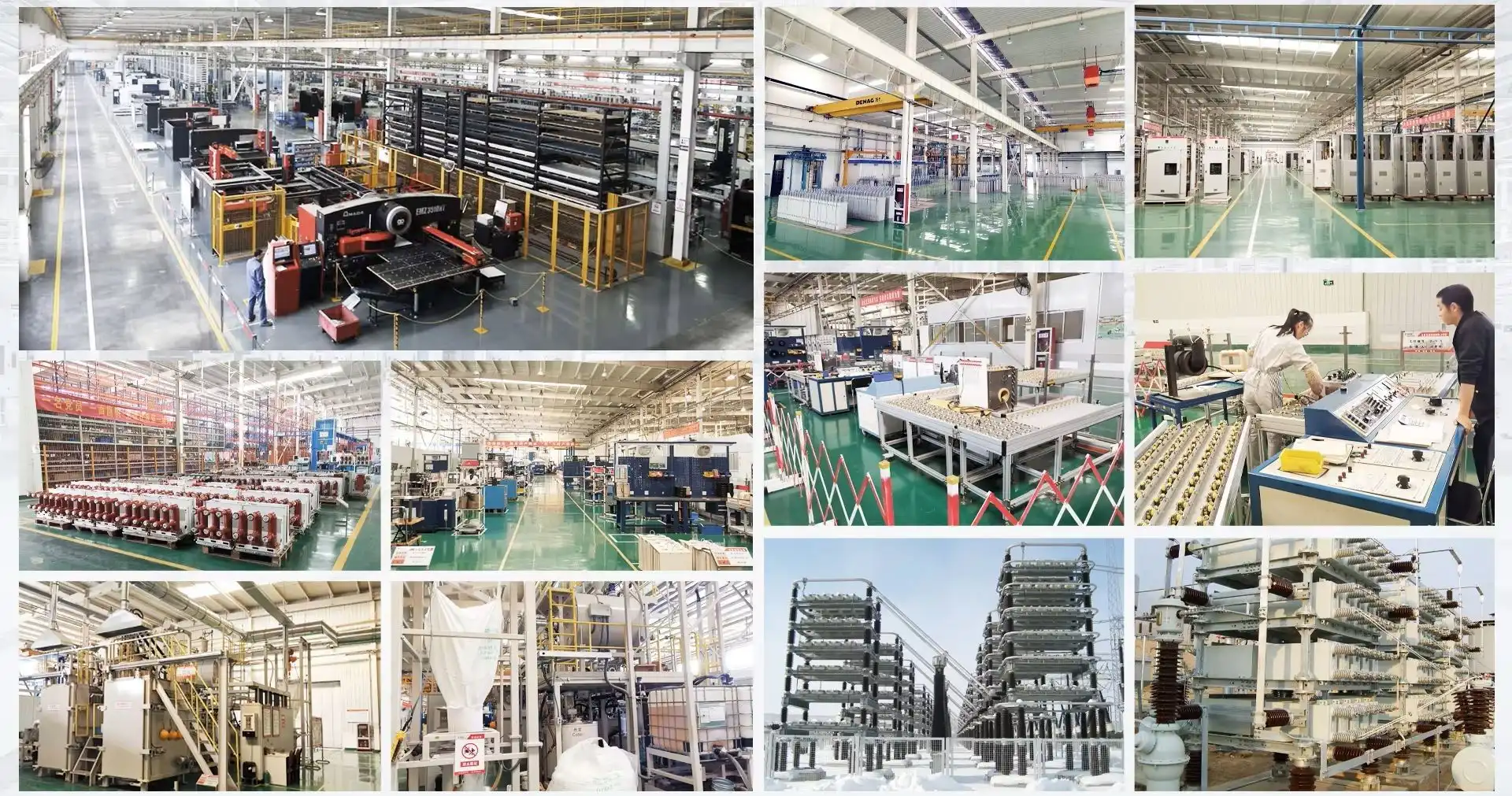
When it comes to reactive power adjustment problems, Xi'an Xikai Medium & Low Voltage Electric Co., Ltd. has decades of experience in power electronics. Our XR-dSVG series SVG-Static Var Generators have a patented cascade topology, smart parallel operation algorithms, and have been proven reliable in demanding industries across North America, including metallurgy, green energy, rail transportation, and chip production. We provide excellent engineering with full support thanks to our ISO 9001/14001 certification, involvement in China's National 863 Program, and more than 15 patents in power quality technology. Send an email to serina@xaxd-electric.com, amber@xaxd-electric.com, or luna@xaxd-electric.com with your specific needs to our expert team. Whether you're looking for an SVG-Static Var Generator for sale directly from the maker or a custom solution for a specific use case, our engineers can help with a thorough system analysis, competitive offers, and full implementation support to make sure you get the best performance from day one.
References
1. IEEE Standards Association. "IEEE Recommended Practice and Requirements for Harmonic Control in Electric Power Systems - IEEE Std 519-2014." Institute of Electrical and Electronics Engineers, 2014.
2. Akagi, Hirofumi, Watanabe, Edson H., and Aredes, Mauricio. "Instantaneous Power Theory and Applications to Power Conditioning." John Wiley & Sons, Second Edition, 2017.
3. Electric Power Research Institute. "Power Quality Implications of Distributed Resources: Voltage Regulation and Power Factor Correction." EPRI Technical Report 1020737, 2015.
4. Singh, Bhim, Chandra, Ambrish, and Al-Haddad, Kamal. "Power Quality: Problems and Mitigation Techniques." John Wiley & Sons, 2015.
5. International Electrotechnical Commission. "Electromagnetic Compatibility (EMC) - Part 3-12: Limits for Harmonic Currents Produced by Equipment Connected to Public Low-Voltage Systems - IEC 61000-3-12." IEC Standards, 2011.
6. Hingorani, Narain G. and Gyugyi, Laszlo. "Understanding FACTS: Concepts and Technology of Flexible AC Transmission Systems." IEEE Press, 2000.