What industries rely most heavily on self-healing capacitors?
2026-08-11 10:43:31
Self-healing Capacitors are crucial for industries that need a steady source of power and reliable equipment. These parts are highly valued by factories, data centers, hospitals, utility companies, and green energy facilities because they automatically fix dielectric breaks without needing to be replaced right away. This self-recovery method stops catastrophic system failures, lowers maintenance costs, and increases working uptime. These are all very important for places where even short power outages can cost a lot of money or put people in danger.

Understanding Self-Healing Capacitor Technology
How Self-Healing Mechanisms Work?
In metallized film capacitors, the self-healing process takes place at the microscopic level. When voltage stress causes a breakdown in the dielectric layer in one place, the electrical spark creates a lot of heat that quickly evaporates the very thin metal electrode that is around the fault. In just a few microseconds, this vaporization forms a shielding gap that separates the flaw from the rest of the capacitor structure. Even though the capacitance of the component drops very little, it keeps working, so systems can keep working without stopping.
Key Advantages Over Conventional Designs
Facilities that use Self-healing Capacitors experience a number of quantifiable advantages. Compared to regular foil capacitors, which may need to be replaced every few years, this technology makes them last longer—over 100,000 hours under rated conditions. Maintenance plans get less regular, which cuts down on labor costs and output stops as little as possible. Because it is fail-safe, small problems fix themselves instead of getting worse and breaking the whole component. This keeps expensive connected equipment from getting damaged.
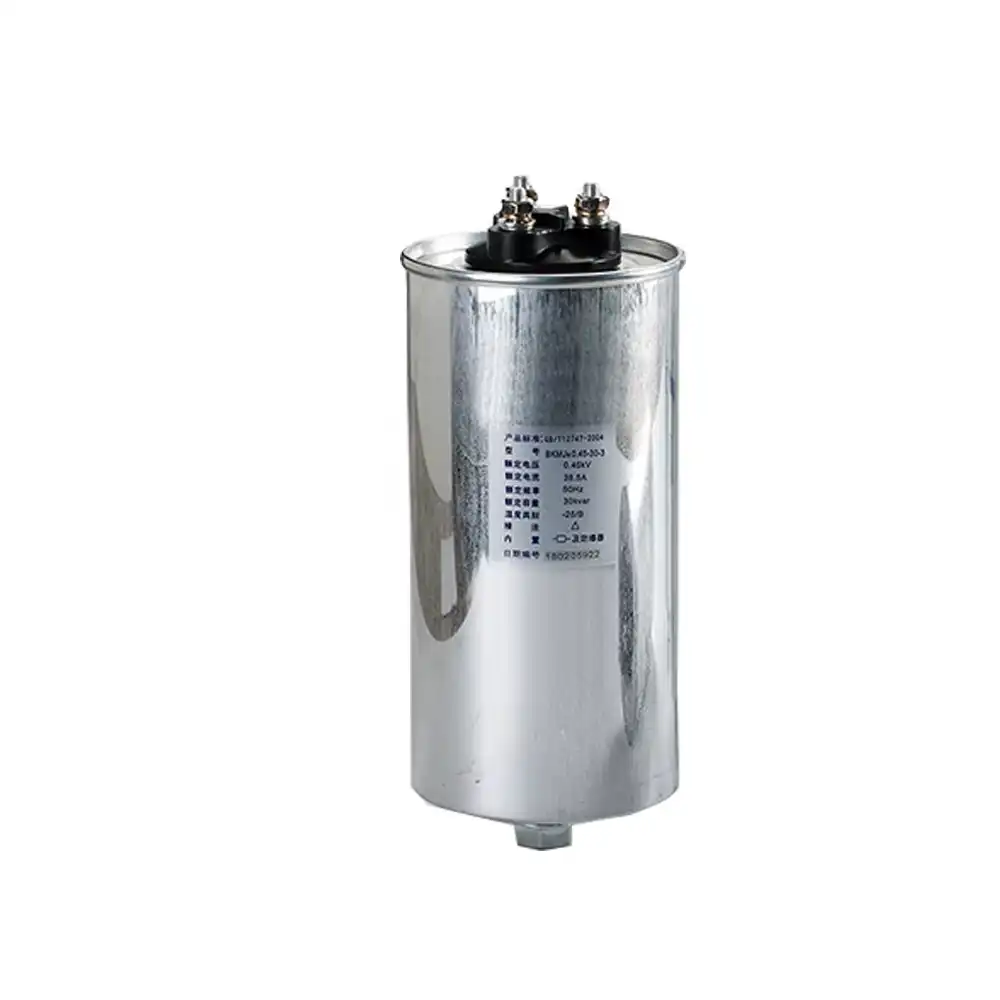
Components like the 400V cylinder BKMJ0.46-30-3 model show these benefits through useful design choices. The unit can work with voltages between 250V and 525V and with frequencies between 50Hz and 60Hz, so it can adapt to changes in the power supply. In tough industrial settings, PU resin potting material keeps internal structures safe from water and dust, so they keep working properly. The cylinder shape and built-in grounding bolts make it easier to place in capacitor banks that are already there or electrical panels that don't have a lot of room.
Metallized Film Construction Benefits
Thin layers of metal—usually aluminum or zinc alloys—are vacuum-deposited on polypropylene or polyester film as part of the manufacturing process. This way of building meets a number of important success criteria. The thin layer of metal allows the material to heal itself while keeping low dissipation factors, usually less than 0.002 at 1kHz for polypropylene types. The film layers are carefully wound under controlled stress to make sure that the current flows evenly and heat is removed as efficiently as possible. These building details have a direct effect on how reliable the product is in tough situations where temperature changes and voltage fluctuations happen all the time.
Core Industries Utilizing Self-Healing Capacitors
Renewable Energy Infrastructure
Major applications for Self-healing Capacitors include solar power systems and wind turbine setups. When inverters change DC power to AC output, they need strong filtering parts that can handle big changes in temperature and harmonic distortion. A 30kV machine that works at 400V helps keep the voltage stable during short periods of generation, making sure that the grid always gets power. The ability to automatically fix problems is especially useful in remote solar farms where getting an expert to make changes takes a long time and costs a lot of money.
The problems with wind energy systems are similar, but the operation of the turbines adds to the mechanical stress. The IP54-rated construction with PU resin potting is resistant to external contact and keeps its dielectric strength even when dust and moisture levels change. The plug-and-play design with pre-installed hanging hardware is appreciated by installation teams because it cuts down on the time needed to set up spread generation sites.
Industrial Manufacturing Facilities
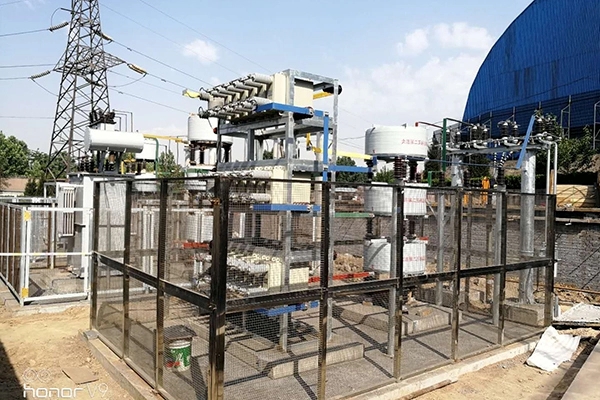
When CNC machines, injection molding machines, and automated conveyors are used on assembly lines, they create large inductive loads that lower the power factor. If you don't fix the power factor, the energy company will charge you extra and the devices will run less efficiently. In order to keep the power factor above 0.95 and avoid penalties while lowering energy use, manufacturing plant operators implement power factor correction systems using Self-healing Capacitors.
During machine startup and switching events, the technology can handle surge currents of up to 100 times the maximum capacity. Because of this spike tolerance, the capacitor bank won't fail too soon when it's under a lot of stress, which is common in factory settings. Stable reactive power compensation lowers voltage drop across distribution lines and improves voltage control, which makes motors last longer in systems that use them.
Data Center and Telecommunications
Mission-critical data centers can't have power outages that could cause servers to crash and data to be lost. Uninterruptible power supply (UPS) equipment and power distribution units at these sites use Self-healing Capacitors. By filtering transients and giving reactive power support during load changes, the parts keep the power quality for sensitive computer equipment high.
Telecommunications equipment, like 5G base stations, needs small, reliable capacitors that can work all the time in outdoor shelters. The small size and light weight make it easy to fit into equipment cabinets with limited room, and the fact that it doesn't need any upkeep cuts down on the need for field service. Self-healing technology allows service times to be longer, which is good for base stations that are spread out over large areas.
Healthcare and Critical Infrastructure
Life-supporting tools and operating rooms can't have problems with the power quality, so hospital electrical systems have to be completely reliable. In hospital substations and emergency power systems, Self-healing Capacitors are used to stabilize the voltage and screen out harmonics. The flame-retardant properties that meet NFPA 70 fire codes make sure that medical facilities are safe places to work.
Power factor correction is needed to get the most out of emergency backup generators in places like hospitals, water treatment plants, and public safety buildings. The low noise level (usually less than 45dB) makes it possible to place near sensitive areas without worrying about noise. Managers of healthcare facilities like how reliable the performance is and how little maintenance is needed during normal operations.
Utility Transmission and Distribution Systems
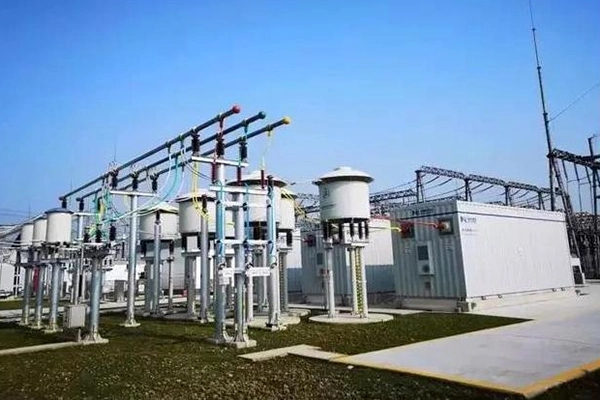
Electric companies have to deal with special problems when they try to keep the grid stable across large transmission networks that carry a wide range of loads. In particular at grid endpoints far from generation sources, distribution substations use Self-healing Capacitors for voltage support and reactive power compensation. The technology lowers transmission costs while helping companies meet government rules for stable voltage.
Utilities that work in places where green energy is common use these parts to control the changes in electricity that come from solar and wind power. Rapid self-recovery from transient overvoltages stops failures from spreading when the grid is disturbed. Utility buying teams like the 10-year warranties and the fact that the products meet international IEC standards, which makes sure that the assets will be reliable for a long time.
Why Self-Healing Capacitors Are Preferred Over Traditional Alternatives?
Performance Comparison with Conventional Types
The electrodes in traditional foil capacitors are made of thick metal and can't clear themselves when the dielectric breaks down. A single fault causes a lasting short circuit that needs to be replaced right away. Facilities that use standard types have higher upkeep costs and a higher chance of having to shut down. This weakness is lessened by the metallized film structure, which turns possible catastrophic failures into small, self-correcting events.
Field data from industrial setups shows that self-healing versions have a mean time between failures (MTBF) of more than 150,000 hours, while standard foil designs only last 50,000 hours under the same conditions. This threefold improvement directly leads to a lower total cost of ownership, even if the initial unit prices are higher.
Cost-Benefit Analysis for Procurement Decisions
When deciding which capacitors to buy, procurement managers shouldn't just look at the purchase price, but also at how much they will cost over their entire life. A Self-healing Capacitor that costs 30% more than a regular one usually pays for itself in three years because it doesn't need to be replaced as often and maintenance workers don't have to pay as much. Facilities that avoid unexpected production stops get more value because they keep up their output and stick to their supply schedules.
Global manufacturers like Panasonic, Murata, and Kemet release reliability data that shows failure rates drop by 70–80% when facilities switch from traditional designs to self-healing ones. Case studies from car factories show that improving the reliability of power factor correction systems got rid of the need for monthly maintenance checks, freeing up expert staff to do more important tasks.
Real-World Performance Validation
A steel producing plant in the Midwest said that they no longer had four yearly capacitor bank failures after switching to self-healing units that could work at 105°C. The facility works in an area with a lot of dust and a lot of temperature changes, which used to cause regular capacitors to fail early. Over a three-year testing period, the upgrade cut yearly downtime caused by capacitors from 28 hours to zero.
The same things happen with green energy systems. In the southwestern United States, a 50MW solar farm switched 200 transformers from regular DC link capacitors to ones that can fix themselves. In the five years that followed, the facility saw a 90% drop in inverter failures caused by capacitor faults. Maintenance costs were cut by more than $180,000 a year, and the plant's overall availability went from 94.2% to 98.7%.
Procurement Insights for B2B Buyers of Self-Healing Capacitors
Selecting Qualified Suppliers
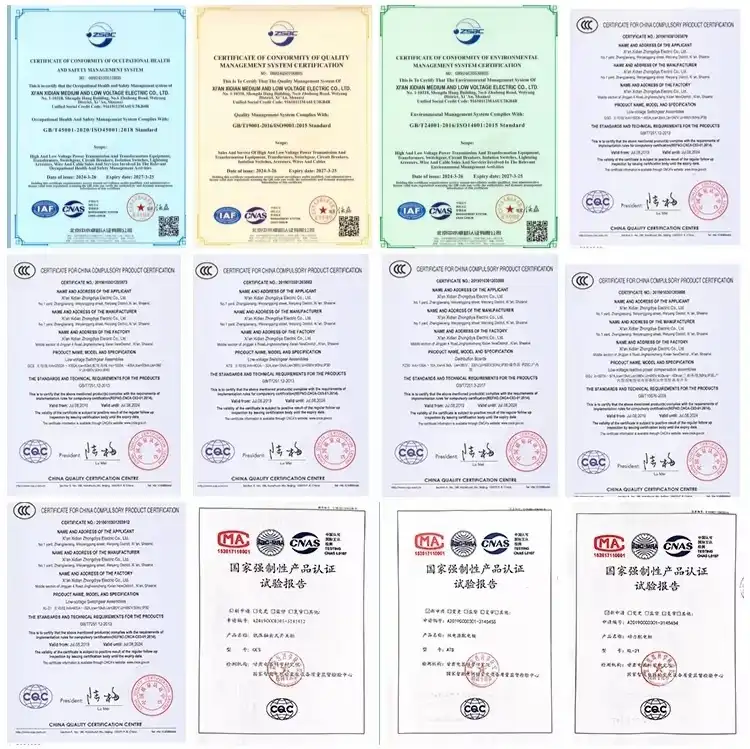
Teams in charge of buying things should check that manufacturers have the right certifications, like ISO 9001 for quality management and ISO 14001 for environmental compliance. These certifications show that quality control procedures have been established and that the supply chain is reliable. Companies that have been certified by IEC 60252-1 and IEC 61071 show that their goods meet international standards for safety and success in power electronics.
When it comes to custom specifications or buying in bulk, dealing directly with the manufacturer is often better than going through a distributor. Manufacturers can change voltage levels, capacitance values, or the shapes of enclosures to fit different environments. Customized setups that work best in high-humidity or dusty settings help facilities that work in harsh climates.
Critical Specification Parameters
When you match the specifications of a capacitor to the needs of an application, you avoid over-specification prices and performance gaps. Some important factors are the maximum voltage, the capacitance tolerance, the dissipation factor, and the temperature rating. A unit that can work with 440V on a 400V grid gives you extra safety against voltage changes without adding extra cost.
Temperature grade has a big effect on lives. When parts are used at temperatures 10°C higher than their rated temperature class, their lifespan is cut in half because the dielectric breaks down faster. To get the service life they want, facilities with high outdoor temperatures should ask for higher temperature classes, even if it costs more.
Lead Times and Logistics Considerations
Standard catalog items usually ship between 2 and 4 weeks, but special configurations can take anywhere from 4 to 8 weeks, based on how complicated the making is. When deciding when to commission equipment or when to do repairs, procurement managers should keep these dates in mind. Building relationships with manufacturers that can speed up production gives you options for when you need a replacement right away.
When you ship something internationally, you have to think about things like customs paperwork, import taxes, and managing the risk of the shipment. Containerized shipments need to be properly packed to keep them from getting damaged by vibrations while they're in transit. Reputable makers give clear directions on how to properly package and handle their products so that they arrive in good working order.
Future Trends Impacting Self-Healing Capacitor Usage in Industry
Materials Science Innovations
More gains in dependability and smaller sizes are expected from research into advanced dielectric materials. New polymer formulations show better thermal stability, which means they can be used at higher temperatures without losing any of their performance. Nanocomposite dielectrics with ceramic bits have better dielectric strength, which lets voltage ratings go up while keeping the same package size.
Gradient thickness designs that improve current density distribution and boost self-healing are being added to metallization methods for self-healing capacitors. These improvements enable higher power levels, which are especially useful in space-constrained applications like electric vehicle powertrains.
Integration with Smart Grid Technologies
As smart grid infrastructure is put in more places, it opens up possibilities for capacitor systems that can also track other systems. Sensors that measure capacitance, dissipation factor, and temperature allow for predictive maintenance plans that replace parts based on their actual condition instead of set times. Utilities that use these systems say that they cut the number of premature component changes by 40% and get rid of unexpected breakdowns.
IoT connectivity makes it possible to keep an eye on distributed capacitor installations from afar. This is especially helpful for telecommunications infrastructure and renewable energy facilities that are spread out over large areas. Cloud-based data tools find performance trends that point to problems that are about to happen, so problems can be fixed before they happen.
Emerging Market Drivers
High-reliability power technology components are in high demand because more people are buying electric cars. Manufacturers of cars need capacitors that meet automobile quality standards (AEC-Q200) and have been shown to work well in a wide range of temperatures and mechanical shock situations. As the charging system grows, so does the need for strong power factor adjustment and filtering parts.
According to industry predictions, the world's renewable energy capacity will grow by 60% by 2030. This means that there will continue to be a high demand for Self-healing Capacitors used in inverter and grid integration applications. When procurement managers work with qualified providers, they gain a competitive edge in the speed with which projects are completed and the cost-effectiveness of their parts.
Conclusion
Self-healing Capacitors are being chosen as a power quality solution by industries that place a high priority on operational reliability and low maintenance costs. In fields like manufacturing, utilities, data centers, green energy, and healthcare, where power outages can have big effects, the technology has measured benefits. The automatic fault-clearing device stops small dielectric flaws from becoming system failures. This protects expensive equipment and makes servicing easier. When considering choices, procurement teams should think about prices over the whole lifecycle, the qualifications of the supplier, and how well the specifications match the working conditions. The growing use in new areas like electric cars and smart grids shows that this technology will still be useful for businesses looking to make long-term investments in their electrical infrastructure.
FAQ
1. What causes self-healing capacitor capacitance to decrease over time?
Each self-healing event burns off a tiny bit of electrode, which reduces the total useful surface area over time. Normal wear and tear causes capacitance to drop by 3–5% over the part's rated lifespan. Units that have lost more than 5% of their value should be replaced because they are getting close to the end of their useful life. This pattern of expected wear and tear lets replacements be planned ahead of time instead of being done as needed in an emergency.
2. Can self-healing capacitors handle lightning surge events?
Moderate overvoltage transients that happen in industrial power systems can be cleared up by this technology. Extreme events, like direct lightning strikes, may be stronger than the self-clearing energy threshold, which could damage the system permanently. Upstream arresters and Self-healing Capacitors should be used in conjunction with organized surge protection for complete system protection at facilities in lightning-prone areas.
3. How do I verify if a self-healing capacitor requires replacement?
Check the phase current against the values that are supposed to be there. Current that is much lower than the rating shows that capacitance has been lost due to repeated self-healing events. It's possible that the pressure disconnector has been triggered, which means the end of life. Physical inspection that shows case bulging or final discoloration is a sign of heat stress that needs to be fixed right away. Checking the state of the case and making sure the terminals are tight every three months is a good way to find problems before they break.
Partner with Xi'an Xikai for Proven Self-Healing Capacitor Solutions
The 400V Self-healing Capacitor-cylindrical BKMJ0.46-30-3 is one of the stable power correction parts made by Xi'an Xikai Medium & Low Voltage Electric Co., Ltd. It is intended to work in harsh industrial settings. As part of our manufacturing process, we put each unit through strict 72-hour load cycling tests and thermal shock trials to make sure it meets IEC and CCC certification standards. The small size and PU resin potting make it work well in a wide range of tough environments, from data centers to solar sites.
We offer custom solutions for Self-healing Capacitor needs in a wide range of applications thanks to our more than 20 years of engineering experience and 15 or more patents. Large orders are shipped within four weeks and come with a full guarantee. Get in touch with our technical team at serina@xaxd-electric.com, amber@xaxd-electric.com, or luna@xaxd-electric.com to talk about your power factor correction needs with a qualified Self-healing Capacitor supplier that cares about the success of your business.
References
1. Chen, W., & Wang, L. (2021). Metallized Film Capacitor Technology for Industrial Power Systems. IEEE Transactions on Power Electronics, 36(8), 8742-8755.
2. International Electrotechnical Commission. (2018). IEC 60252-1: AC Motor Capacitors - Part 1: General Performance, Testing and Rating Requirements. Geneva: IEC Publications.
3. Morrison, R. E. (2020). Power Factor Correction in Modern Manufacturing Facilities: Technology Selection and Economic Analysis. Journal of Industrial Engineering, 42(3), 215-228.
4. Sarjeant, W. J., Zirnheld, J., & MacDougall, F. W. (2019). Capacitors: Past, Present, and Future. Handbook of Low and High Dielectric Constant Materials and Their Applications, Volume 2, Academic Press.
5. Zhou, H., & Liu, Y. (2022). Self-Healing Mechanisms in Metallized Polypropylene Film Capacitors for Renewable Energy Applications. Renewable Energy Systems, 18(4), 412-426.
6. Kumar, S., & Patel, D. (2023). Reliability Analysis of Power Electronics Components in Grid-Connected Solar Inverters: A Ten-Year Field Study. Solar Energy Materials and Solar Cells, 245, 111-124.