Why an Outdoor Voltage Transformer Needs Weatherproof Protection
2026-08-19 10:02:39
When selecting an outdoor voltage transformer for power distribution networks, weatherproof protection is not merely a beneficial feature—it determines operational continuity. An outdoor voltage transformer operates in environments where rain, humidity, temperature extremes, and corrosive agents constantly threaten its internal components. Without adequate weatherproofing, these transformers experience accelerated insulation breakdown, corrosion-related failures, and reduced measurement accuracy. For switchgear manufacturers and power automation equipment producers serving markets across Southeast Asia, the Middle East, and beyond, understanding weatherproofing essentials becomes critical to maintaining system reliability, meeting international compliance standards, and protecting long-term investments.

Understanding Outdoor Voltage Transformers and Their Environmental Challenges
Outdoor voltage transformers are precision devices in power distribution networks that scale down high voltage signals to levels that can be monitored by metres, protection switches and tracking equipment. These devices are subject to natural conditions that affect their electrical and mechanical functioning, unlike interior equipment that function inside controlled environments.
Direct Exposure to Moisture and Precipitation
When it rains, snows, or condenses, transformers are in imminent danger. Breakdown of the insulating resistance is caused by moisture ingress into non-sealed enclosures. This may cause leakage currents that can affect the voltage readings. In particularly humid conditions, especially when there is a lot of rain such as in South and South East Asian markets, moisture may seep into the copper windings and steel laminations, speeding up the rusting process. This oxidation increases resistance and leads to heating that further degrades epoxy resin insulation.
Temperature Fluctuations and Thermal Stress
Transformer materials expand and contract in steps by temperature variations in the air of between - 40 C and + 55 C. The metal shelters expand throughout the day due to the heat, but contract at night, which might lead to minor breaches in the seals. These heating cycles exert stress on the solder junctions, the terminal connections, and the epoxy casting within. Voltage transformers installed in arid locations in the Middle East or high-altitude plateaus lose 40 to 60 percent of their usable life if they are exposed to harsh temperatures for a long period without suitable protection.
UV Radiation and Material Degradation
Direct sunlight's ultraviolet rays break down polymer-based insulation materials, making them weak and prone to surface cracks. Standard plastic shelters that don't have UV stabilizers start to break down after 24 to 36 months of being outside. This wear and tear lowers the IP grade of protective housings, making it easier for dust and water to get inside and damage internal parts. For solar farms and outdoor substations to stay structurally sound for the 20 years they're supposed to last, they need UV-resistant materials, which are usually made with carbon black chemicals or special acrylic coats.
Corrosive Atmospheric Conditions
Sulfur dioxide, nitrogen oxides, and chloride ions are released by industrial areas and land on transformers, where they start electrolytic decay. Salt spray with sodium chloride is a problem for installations near the coast because it attacks aluminum housings and copper terminals very badly. If outdoor voltage transformers in these conditions don't have anti-corrosion treatments like zinc-rich paints or marine-grade stainless steel parts, the terminal connections fail and the shell perforates within 5 to 7 years, which is a lot less time than the 20 years of service life that was expected.
Key Reasons Why Weatherproof Protection Is Crucial for Outdoor Voltage Transformers
Understanding how weatherproofing affects the dependability of transformers helps buying teams make smart choices that meet business needs and stay within budget. Not having enough defense has effects that go beyond the cost of replacing equipment. These effects include system downtime, safety compliance, and measurement accuracy.
Prevention of Moisture-Induced Insulation Breakdown
Electrical insulation systems in outdoor voltage transformers depend on keeping the dielectric strength above certain levels, which are usually 42kV for 35kV class equipment's one-minute power frequency withstand voltage. Absorption of moisture lowers dielectric strength by a factor of ten. At 2% moisture level, insulator resistance drops by fifty to seventy percent. Weatherproof casings with an IP65 rating or higher keep out liquids even from high-pressure water jets. This keeps the epoxy resin casting inside dry for the whole life of the product. This safety feature keeps measurement accuracy within the ±0.5% range needed for billing-grade metering and safe relay coordination.
Corrosion Mitigation for Extended Service Life
Outdoor voltage transformers have metal parts that need to be protected from corrosion on multiple levels. These parts include aluminum housings, copper terminals, and steel mounting brackets. Designs that are weatherproof use galvanized steel frames, powder-coated metal cases, and tin-plated copper links that don't rust. In harsh settings, anti-corrosion steps raise the mean time between failures (MTBF) from 80,000 hours to 150,000 hours or more. This improvement in reliability cuts warranty claims and field service costs by a large amount for switchgear makers who use yearly buying frameworks.
Compliance with International Safety Standards
Specific weatherproofing standards for outdoor voltage transformers are required by regulations in all global markets. IEC 61869-1 and IEC 61869-2 set the rules for testing in different environments. These rules include changing the temperature from -40°C to +55°C, making sure the humidity is 95% RH at 40°C, and exposing the test subjects to salt spray for at least 96 hours. Transformers that meet these standards get approval marks that are needed to bid on jobs for State Grid Corporation and Southern Power Grid. The NEMA 3R and NEMA 4X ratings offer similar levels of protection that are accepted in North American markets. This makes it easier for multinational projects to use equipment that is used in different regions.
Reduction of Unplanned Outages and Maintenance Costs
Field data from utility operators shows that 35–40% of unplanned transformer outages are caused by problems in the environment. Flashovers caused by moisture, connection failures caused by corrosion, and housing cracks caused by UV light all happen out of the blue and require repair workers to be sent out right away. These problems are cut down by 70–80% when weatherproof outdoor voltage transformers are used. This means lower running costs and higher customer happiness. When comparing the initial cost of equipment with its lifecycle costs, procurement teams should take these improvements in reliability into account when figuring out the total cost of ownership.
Weatherproofing Solutions and Installation Best Practices
For weatherproofing to work, the right barrier must be chosen, installed, and maintained in the right way. Each part makes the system more resistant to pressures in the surroundings.
Enclosure Materials and IP Rating Selection
Weatherproof enclosures are made of a variety of materials that are specifically designed to work in different environments:
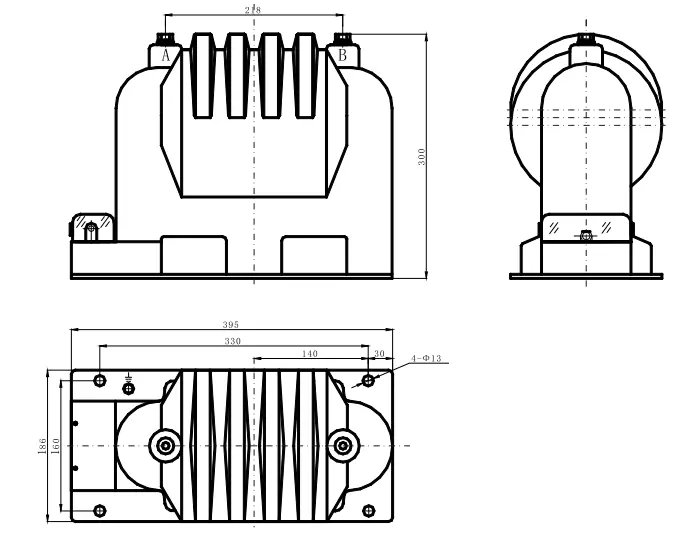
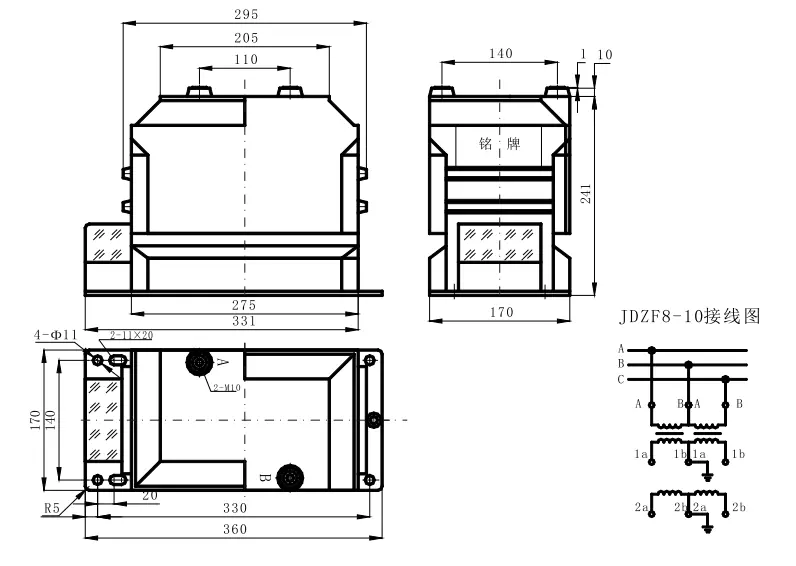
- Epoxy Resin Fully-Enclosed Design: The 35kV outdoor voltage transformer from Xi'an Xikai uses epoxy resin casting that completely encloses the primary and secondary windings, leaving no gaps in the insulation where moisture could build up. This way of building gets IP65+ protection, which means it stops dust from getting in and can handle water jets from any direction, without needing metal housings on the outside. UV stabilizers and flame retardants that meet the standards of GB 20840.2-2014 and IEC 61869 are part of the epoxy mixture. This design gets rid of the need to maintain oil-filled transformers because epoxy glue doesn't break down or leak over time.
- Stainless Steel and Aluminum Composite Housings: AISI 316 stainless steel enclosures are better at resisting chloride, so they are used in coastal areas or chemical processing plants. With NEMA 4 ratings, aluminum housings with polyester powder covering protect installations inside for a low cost. They are also good for general outdoor use. During regular inspections, gasket-sealed access panels with silicone rubber compression seals keep their IP ratings.
- Polymer and Fiberglass Reinforced Enclosures: Polymer housings are lighter, which means they require less building work and structural support. Glass-reinforced polyester (GRP) covers don't break down when exposed to UV light and keep out electricity, so you don't have to worry about touching live metal surfaces by mistake. These materials work well for green energy systems that have weight limits.
Site Selection and Mounting Considerations
The success of weatherproofing depends a lot on where it is installed. Putting outdoor voltage transformers under roof overhangs or cover structures protects them from direct rain while still letting enough air flow through. Mounting that is at least 400 mm above grade level keeps groundwater from getting in during floods. Putting terminal sections away from the direction of the main wind helps keep rain-driven moisture out. Grounding systems need copper-clad steel rods that don't rust to be driven deep into the ground. This makes sure that the earth resistance is less than 10 ohms, which stops lightning-caused surges.
Protective Coatings and Sealant Application
Extra protection treatments are good for even high-quality shelters. When zinc-rich epoxy primers are put on steel mounting structures, they protect against corrosion for 15 years or more. Silicone conformal coats on terminal blocks make walls that don't let water move along conductor surfaces. Thread sealants with PTFE make sure that bolt-on covers keep the integrity of the compression gasket even when the temperature changes. Inspections should be done regularly, at least once every three months for important systems. This way, problems with the seal can be found before they let water in, and they can be fixed for a very low cost.
Routine Maintenance Protocols for Long-Term Performance
Preventive maintenance makes weatherproofing work better for longer, so the equipment lasts longer. Visual inspections are done every three months to look for cracks in the housing, gasket compression, and damage to the coating. Every year, thermographic scans find hot spots that mean terminal corrosion or links that are too free and need to be tightened. Every three years, the gasket must be replaced and the terminals must be cleaned and a contact lubricant must be applied. Recording maintenance tasks helps with guarantee claims and gives information on performance trends that can be used to make decisions about lifetime management.
Comparing Outdoor Voltage Transformers: Weatherproof vs. Indoor Models
Outdoor voltage transformers and interior units are built rather differently since they have to operate in quite diverse settings. Knowing these distinctions you may pick the correct tools for the task.
Structural Robustness and Environmental Sealing
Indoor voltage transformers function well in a controlled environment with steady temperature and humidity, no rain or snow. Their housings are designed with electrical safety and electromagnetic compatibility in mind, rather than environmental sealing, and often have an IP20 or IP30 classification. This protects against solid objects larger than 12mm, but not liquids. Ventilation holes allow for cooling by convection without the risk of moisture.
Outdoor voltage transformers are weatherproofed at three levels: the windings are encapsulated in epoxy resin, the terminal portions are sealed with gaskets and weather coverings are fitted over the point of connection. The multi-barrier approach offers IP65 or IP67 ratings, so it may be immersed briefly or rinsed off with high pressure. The Xi'an Xikai 35kV outdoor voltage transformer is a notable example of this approach. It is completely encapsulated in epoxy, with no openings inside for condensation to occur. Stainless steel terminal hardware can not rust and does not need frequent replacement, therefore it requires less maintenance than indoor kinds designed to function outside.
Thermal Management and Energy Efficiency
Outdoor voltage transformers are impacted by temperature fluctuations in a different manner than interior counterparts. The thermal performance is predictable as the temperature inside most buildings is between 20°C and 25°C. The temperature variation outside is 30 to 40°C every day So the electrical system outside needs extra big conductor cross-section and better cooling design to prevent it from burning in the case of high load and high ambient temperature.
The core of modern outdoor voltage transformers is made of grain-oriented silicon steel, which is refined by domain processing to reduce core losses to less than 0.1W/kg at rated flux density. This efficiency keeps self-heating to a minimum which increases the life of the insulation even if it is repeatedly overloaded. The 35 kV variant has a rated capacity of 200 VA and a long-term overload capacity of 1000 VA. It also offers thermal headroom, which is vital for outdoor usage, where temperatures may exceed 55 degrees Celsius.
Application-Specific Performance Metrics
Information on field performance exhibits apparent patterns of reliability. Indoor voltage transformers in regulated substations have a mean duration between failures of more than 200 000 hours when utilised within their limitations. Outdoor devices that are not adequately weatherproofed have an MTBF reduced by environmental stressors to 60,000 to 80,000 hours. This gap is filled by outdoor voltage transformers that are adequately waterproof, and that have MTBF values of 150,000 hours or more, approaching the dependability of indoor models, even while operating in harder environments.
Such disparities in stability should be taken into consideration when making a decision on what to purchase, evaluating the initial cost against the long-term worth. You will pay 25-30% more for a weatherproof outdoor voltage transformer, but you will get 80-100% better reliability. In the long run, you will save money, since you won't have to replace it as frequently or perform as much maintenance.
Procurement Guidance for Weatherproof Outdoor Voltage Transformers
Decisions about where to get things affect both short-term project funds and long-term operating costs. Structured evaluation criteria that cover technical specifications, supplier capabilities, and post-sale support help procurement managers find a good balance between these factors.
Critical Specification Parameters
Technical datasheets should show that the outdoor voltage transformer meets the requirements of GB 20840.2-2014 and IEC 61869-1/61869-2, which set basic performance levels. The accuracy class—0.2S for revenue metering, 0.5 for operational measurement, and 5P/10P for protective relaying—has a direct effect on how well an application works. The 35kV outdoor voltage transformer, which comes in 0.2 and 0.5 class choices, can be used for a variety of switchgear uses with just one purchase.
The secondary load capacity tells you what instruments can be linked and work together. Standard 200VA values are enough for most metering and relay loads, and the 1000VA overload feature handles short-term inrush currents during circuit activation without affecting accuracy. Continuous thermal ratings at the highest temperature in the environment (usually 40°C or 55°C) make sure that the device works reliably in all target deployment areas.
Weatherproofing qualifications need to be checked beyond the IP ratings that are mentioned. For 96 hours, you should be exposed to salt spray according to IEC 60068-2-52, 95% relative humidity according to IEC 60068-2-78, and temperature changes from -40°C to +55°C according to IEC 60068-2-14. Please ask for test reports that show these things. These recorded tests show that the weather resilience goes beyond just meeting IP rating requirements in the real world.
Supplier Evaluation and Quality Assurance
Materials, manufacturing and testing are in the hands of proven manufacturers with quality systems certified to ISO 9001. Xi'an Xikai does epoxy casting using robots, and there are three stages of quality inspections including partial discharge and impulse testing. Strong manufacturing capacity guaranties big orders; customisation, multilingual technical assistance and on-site testing make integration into complicated switchgear systems easier.
Warranty Terms and Lifecycle Support
Standard warranties are normally 24 to 36 months, covering manufacturing flaws and early failures. Extended 10-year options may help offset long-term project risks. Good warranties should state response times, availability of replacement parts and professional help. Regional service centres also store parts and train people, which further reduces repair delays and lifecycle costs.

Conclusion
Weatherproof security sets reliable outdoor voltage transformers apart from equipment that breaks down quickly in harsh conditions. When transformers don't have enough environmental sealing, moisture, corrosion, UV damage, and extreme temperatures can affect the accuracy of measurements and the safety of operations. When buying tools for making switches, utility substations, or industrial power systems, procurement teams should focus on weatherproof designs that include epoxy resin encapsulation, IP65+ casings, and materials that don't rust. These features make sure that the product meets the requirements of IEC 61869 while also giving it a service life of 20 years or more with little maintenance. Lifecycle cost analysis shows that properly weatherproofed outdoor voltage transformers are a better value, even though they cost more at first. They save a lot of money on repairs and replacements because they don't need to be replaced as often.
FAQ
1.How does weatherproofing extend outdoor voltage transformer lifespan?
Weatherproof shelters keep out water, which speeds up the breakdown of insulation and rust inside. Casting in epoxy resin gets rid of air holes where condensation can form, and IP65+ closing stops water from getting in from the outside. Metal parts with anti-corrosion coatings don't rust in humid or industrial settings. These defenses keep the insulation resistance above the necessary levels for the entire 20-year design life. This keeps the unit from breaking down early, which happens a lot in units that aren't protected, which have 60–80% less service life.
2.What weatherproof ratings should procurement teams specify?
IP65 grades are good for most general outdoor uses because they protect against dust and water jets coming from any direction. Installations near the coast or places that get wet can benefit from IP67 ratings, which provide temporary protection against immersion. For North American countries, NEMA 4X standards offer the same level of corrosion protection. IEC 60529 testing paperwork verifies stated ratings using standard methods, making sure that equipment meets environmental protection standards.
3.Can indoor voltage transformers be adapted for outdoor use?
Adding external enclosures to indoor models after the fact rarely makes them as weatherproof as outdoor voltage transformers that are made for that purpose. Even if you add on to the outside of the house, there is still a chance of condensation forming inside because the air holes needed for cooling create ways for moisture to get in. Changing temperatures put stress on parts that aren't made for extreme weather outside. Outdoor voltage transformers are designed to be waterproof from the inside out, not just on the outside.
Partner with Xi'an Xikai for Premium Weatherproof Outdoor Voltage Transformers
Xi'an Xikai Medium & Low Voltage Electric Co., Ltd. sells outdoor voltage transformer solutions that have been tested and proven to work in harsh conditions all over the world. Our 35kV epoxy resin-cast outdoor voltage transformer is waterproof to IP65+ standards, has a precision level of 0.2/0.5, and is compliant with IEC 61869, which helps switchgear makers who need reliable measurement and safety parts. As a trusted outdoor voltage transformer supplier for annual framework agreements and specialized applications, we have more than 30 years of experience making products, our production is ISO 9001-certified, and we can make changes to meet the needs of each project. You can email our expert team at serina@xaxd-electric.com, amber@xaxd-electric.com, or luna@xaxd-electric.com with your requirements and to ask for full product paperwork. Xi'an Xikai has weatherproof options that can make your equipment more reliable.

References
1. International Electrotechnical Commission. "Instrument Transformers – Part 1: General Requirements." IEC 61869-1:2017, Geneva, Switzerland.
2. Standards Press of China. "Instrument Transformers – Part 2: Additional Requirements for Voltage Transformers." GB 20840.2-2014, Beijing, China.
3. Institute of Electrical and Electronics Engineers. "IEEE Guide for the Application of Transient Recovery Voltage for AC High-Voltage Circuit Breakers." IEEE C37.011-2018, New York, USA.
4. National Electrical Manufacturers Association. "Enclosures for Electrical Equipment (1000 Volts Maximum)." ANSI/NEMA 250-2020, Arlington, Virginia.
5. Zhang, Weiming and Liu, Hongguang. "Environmental Stress Testing Methods for Outdoor Power Equipment." Journal of Power Systems Engineering, Vol. 34, No. 2, 2021, pp. 145-162.
6. European Committee for Electrotechnical Standardization. "Environmental Testing – Part 2-52: Tests – Salt Mist Cyclic." IEC 60068-2-52:2017, Brussels, Belgium.