
What Is a 3 Phase Capacitor Bank? Working Principle Explained?
2026-04-02 16:53:07
Power quality and energy waste may hurt your business's profitability and dependability. This may be fixed using a 3 Phase Capacitor Bank. These capacitor units, which may be connected in a Star or Delta configuration, supply reactive power that utility and industrial networks don't use. These banks reduce electricity expenditures, distribution losses, and building voltage by increasing power factor and compensating for inductive loads from motors, transformers, and HVAC systems. Knowing how to buy, size, and maintain this equipment may save your company money and boost efficiency.
Understanding the Basics of 3 Phase Capacitor Banks
 |
 |
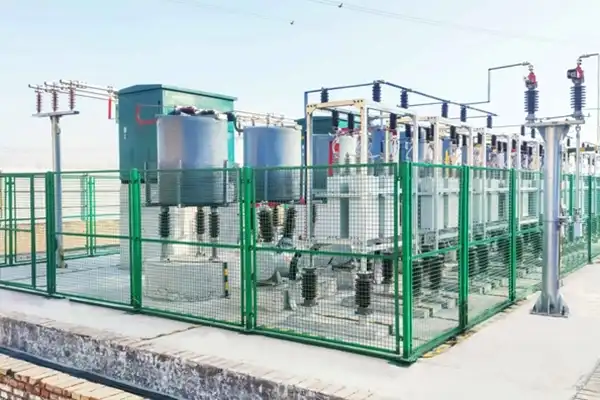
Reactive power adjustment influences your bottom line quickly, despite its ambiguity. The 3 Phase Capacitor Bank creates a leading reactive current to counterbalance inductive equipment's following reactive current. Machines, transformers, welding gear, and large motors create reactive power-dependent magnetic fields. This power goes through your electrical system but does nothing. Waste causes high utility bills, cable heating, and inadequate transformers and switchgear. Single-phase capacitor banks handle one power source phase. 3 Phase Capacitor Banks work equally on all phases. Balanced systems reduce losses and control reactive power better than single-phase. Power factor is 1.0 using a 3 Phase Capacitor Bank in your power distribution system. This means much of your system's power works, not only magnetic fields.
Core Components and Architecture
Learn how these systems work to understand why quality matters when choosing them. Each 3 Phase Capacitor Bank comprises interconnected parts. Self-repairing metallized polypropylene film capacitors store and release electricity. Load-dependent contacts toggle capacitors. Harmonic resonance may damage sensitive electronics and capacitors in detuned systems. Reactors prevent it. Overcurrent and short circuit protection devices are fuses and circuit breakers. Intelligent monitoring systems give real-time capacitance, temperature, and operational status data in many current installations. All of these aspects must work well together for system reliability. Choose vendors based on component requirements and manufacturing standards to guarantee your facility's lifetime and performance.
Working Principle Explained
Its main motivation is AC voltage and current relationships. Current is less than voltage for inductive loads. Power factor drops. Through capacitors, current flows faster than voltage. Leading current from a 3 Phase Capacitor Bank balances motor and transformer trailing currents after attaching an inductive load. This modification reduces reactive current from the electric supplier. Distribution system current decreases. Reduced current leads to lower I²R loss in transformers and cables, lower distribution line voltage drop, and more infrastructure space. Extra manufacturing equipment may be installed without changing transformers or switchgear. Improvement depends on power factor and capacitor count. Power factors under 0.85 improve, and 0.90 operations may be improved to 0.95 or greater.
Benefits and Applications of 3 Phase Capacitor Banks in Industrial Settings
Financial advantages of reactive power compensation go beyond avoiding low power factor penalties. Many US utilities levy substantial fees for power factors below 0.90 or 0.95. Saving penalties is important, but operational improvements are more useful over time. Installed energy savings start immediately. Less energy use means lower reactive power costs from the utility. Reduced current and heat in cables, transformers, and switchgear minimize distribution losses. A properly sized 3 Phase Capacitor Bank may save 8–15% of energy in high-motor-load industrial operations. Data centers with numerous HVAC and UPS systems benefit. More stable voltage protects delicate computer equipment.
Real-World Applications Across Industries
1. Manufacturers use apps regularly. Power factor decreases in assembly lines with many three-phase motors, CNC machining centers, injection molding machines, and conveyors. A 3 Phase Capacitor Bank at the motor control center or huge motor terminals compensates the upstream distribution network locally. Steel mills and car factories utilize correctly set up banks for heavy welding since it creates reactive power demand and harmonic distortion.
2. Commercial buildings provide particular opportunities and problems. Hospitals need voltage stability and harmonic mitigation to protect medical equipment from power quality concerns. Automatic power factor correction panels that adapt capacitance to load help large HVAC systems that turn on and off often. Retail malls and office complexes save money and lengthen lighting and HVAC life by improving power quality.
3. Grid-integrated renewable energy projects increasingly employ 3 Phase Capacitor Banks. Inverters produce harmonics between solar and wind farms and the grid. Filter capacitor banks help these facilities meet utility interconnection and grid stability requirements when properly built. For difficult situations, Xi'an Xidian offers 10kV three-phase filter capacitors that may be used inside or outdoors in -40°C to +45°C.
4. Substations and utility transmission systems employ medium-voltage 3 Phase Capacitor Banks to maintain voltage and reduce transmission losses over long distances. Surge currents, intense weather, and decades without maintenance are all challenges for these systems. Waterproof (IP54+), earthquake-resistant (level 8), and able to operate at 2,000 meters, our 10kV system is suited for use throughout the US.
Measurable Performance Improvements
Better power quality reduces costs and improves equipment dependability. Voltage stability keeps motors cool and reduces insulation stress, increasing their lifetime. Power factor modification minimizes reactive components, enabling fully loaded transformers to handle more load. Stable voltage and minimal harmonic distortion reduce false trips and extend the life of sensitive electronics. Gains production uptime. A 3 Phase Capacitor Bank eliminates beginning voltage sag. Operators say motor-driven systems need less maintenance and have fewer mysterious equipment failures. Even if they don't save energy, reliability advantages are essential in data centers because downtime costs a lot per minute.
Practical Guide to 3 Phase Capacitor Bank Sizing, Calculation, and Maintenance
A 3 Phase Capacitor Bank's size matters most. Small banks cannot provide predicted benefits. Instead, utility penalties and excess losses cost them. Large banks' high power factor may increase losses and damage equipment. Know how much reactive power a facility needs in various operating situations to size it. The basic calculation starts with your current and target power factors. Power quality analyzers and utility meters measure kW and kVA demand. Split kW by kVA for power factor. Apply the formula: kVAR = kW × tan(arccos(PF)) to calculate reactive power usage. Your 3 Phase Capacitor Bank must control the reactive power difference between present and desired power factors.
Example Calculation Walkthrough
Consider an 800-kW plant with a 0.75 power factor. The current demand is 1,067 kVA (800 kW ÷ 0.75). Need 707 kVAR reactive power. The power factor of 0.95 demands 263 kVAR more. For 444 kVAR (707-263), remove the target. Use the next common size 450 kVAR 3 Phase Capacitor Bank to fix this. This simple example assumes steady load. Real-world loads fluctuate daily and weekly. Autopower factor adjustment outperforms 3 Phase Capacitor Banks. Real-time power factor measurements turn APFC panels' capacitor stages on and off. The optimal adjustment during load changes is maintained. Fast switching may shorten capacitor life, however the control algorithms keep power factor within the desired range.
Maintenance Requirements and Best Practices
A 3 Phase Capacitor Bank needs less maintenance than other electrical equipment. However, regular inspection and maintenance will keep them functioning. Annual maintenance should involve visual inspection for physical deterioration, oil leakage (in older oil-filled devices), or internal collapse. Terminals may break due to thermal cycling, thus electrical connections should be checked and adjusted. The best capacitor health indicator is capacitance. Time reduces dielectric capacitance. Measurements over 10% from the nameplate rating recommend capacitor replacement. Temperature monitoring may give valuable data. Too-hot capacitors may overheat harmonically, lose airflow, or fail internally. Protection devices are checked to ensure they work when needed.
Comparing 3 Phase Capacitor Banks: Choosing the Best Solution for Your Needs
The 3 Phase Capacitor Bank decision tree comprises technical and commercial aspects. Industrial and commercial three-phase systems are more balanced and efficient than single-phase ones. However, the three-phase category demands significant decisions that affect initial investment and long-term performance.
Fixed or automated 3 Phase Capacitor Banks are the first important decision. Fixed banks' reactive power adjustment benefits consistent-load buildings. A facility with constant operations and little load change may benefit from a fixed bank of the right size. Cheaper installation and no switching contactors mean it won't fail. In low-demand periods like weekends, nights, or sluggish production, the fixed bank may overcompensate, causing a leading power factor that decreases system efficiency. Auto PFCs fix this using microprocessor-based power factor relays and staged capacitor switching. To maintain desired range, these systems monitor power factor in real time and activate capacitor stages. APFC panels function well when loads vary, shift workers use equipment differently, or equipment is cycled. Consider investing in control systems and contactors since they increase correction in all operating conditions and minimize overcompensation fines.
Standard vs. Detuned Configurations
Detuned or regular 3 Phase Capacitor Banks depend on the harmonic environment. Since capacitors are bus-connected, conventional banks don't require series reactors. Pure capacitance increases power factor, but at certain frequencies, they may resonance with the system's inductance. Standard banks are the cheapest option for low harmonic-generating loads since they are easy to install and maintain. Series reactors in harmonic or detuned filter banks resonate below the 5th harmonic frequency, around 210 Hz for 60 Hz systems. Here, the bank adjusts power factor without raising harmonics. Detuned banks need higher kVAR ratings because the reactor absorbs reactive power. Detune facilities with numerous VFDs, DC motor drives, welding operations, or other nonlinear loads to avoid harmonic failures.
Indoor vs. Outdoor Installation Considerations
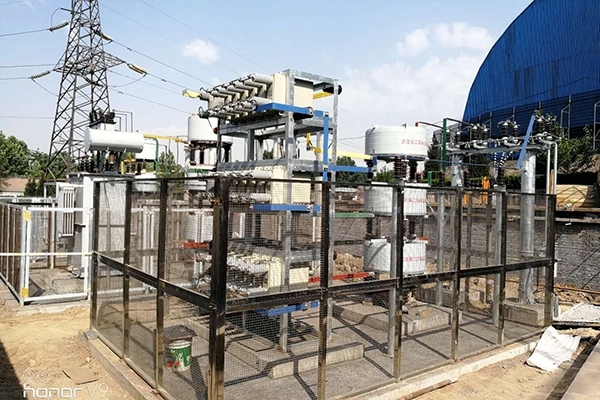
Environmental rules determine whether a 3 Phase Capacitor Bank is inside or outside. Temperature and humidity control make indoor capacitors last longer and need less maintenance. Smaller, cheaper enclosures without weatherproofing. Many buildings are tiny, thus ventilation must be managed to minimize heat accumulation and aging. Environmentally friendly outside installations save up inside space. In cold climates, space heaters prevent condensation in weatherproof and UV-resistant enclosures. Our outdoor-rated 10kV 3 Phase Capacitor Banks can withstand 35 m/s winds, -40°C to +45°C temperatures, and 10mm ice. The IP54+ enclosures are dust- and water-resistant and quiet below 45dB, making them suited for companies and homes.
Procurement Considerations: How to Buy and Install a 3 Phase Capacitor Bank
A successful 3 Phase Capacitor Bank procurement goes beyond purchasing from the lowest bidder. The purchase price, installation, maintenance, and system reliability make up the total cost of ownership. Expert facility managers and engineers select suppliers based on technical experience, product quality, compliance certifications, and after-sales support. Document application requirements before asking quotes. Include voltage, frequency (50 or 60 Hz), kVAR capacity, configuration (fixed or automatic), detuning, environmental conditions, and industry certifications. If you offer detailed criteria, suppliers may supply personalized solutions instead of generic ones that may not meet your needs. While standard solutions may be faster and cheaper for simpler purposes, tailored systems work best.
Evaluating Supplier Credentials
Certified suppliers and high-quality products show their talents. ISO 9001 certification means the company uses quality management systems for product planning, production, and testing. IEC 60871, IEEE 18, and UL 810 power capacitors fulfill international standards. Quality is assured via testing processes. Reputable outdoor equipment manufacturers test dielectric strength, heat cycling, partial discharge, and seismic modeling. Every Xi'an Xidian 3 Phase Capacitor Bank is rigorously tested to assure operation. Extreme temperature, electrical stress, and third-party verification are used in these tests. We're one of China's biggest medium- and low-voltage electrical equipment manufacturers and ISO 9001-certified from raw materials to assembly.
Installation and Commissioning
Professional installation guarantees the 3 Phase Capacitor Bank works, is safe, and fulfills requirements. Grounding and spacing banks prevents arc flashes. Coordinating protective devices and control systems with switchgear takes caution. Commissioning checks phasing, protection devices, and automated system control logic. Your supplier should include electrical schematics, mechanical drawings, a bill of materials, and equipment usage instructions. Your maintenance staff should know how things work and how to fix them. Warranty terms should specify how to get service, how long it lasts, and what's covered. Extended warranties may help critical applications if downtime costs justify it.
Conclusion
A 3 Phase Capacitor Bank upgrades your electrical system cheaply. Rapid energy savings, lower electricity bills, more reliable equipment, and better system capacity deliver a considerable ROI within 18–36 months. Beyond economics, stable voltage, decreased harmonic distortion, and fewer distribution losses improve operations. Production and equipment are safeguarded. The right size, structure, and installation may provide you these benefits for approximately 15 years. As energy costs grow and utilities tighten power quality criteria, reactive power compensation becomes an integral part of any competitive organization or industry.
FAQ
1. What determines the optimal size for a 3 phase capacitor bank in my facility?
Ideal size depends on current power factor, desired power factor, total kW demand, and load behavior. Measure reactive power and compute capacitance, which is 0.95 for most utility rate systems, to obtain kVAR. Real-time capacitance systems outperform fixed-size banks for load changes.
2. How do detuned capacitor banks differ from standard configurations?
In detuned banks, series reactors avoid capacitance and system inductance harmonic resonance. Detune variable frequency drives and other non-linear loads that exceed 3–5% THD to avoid capacitor failure and system damage. Standard banks work well without significant harmonics.
3. What maintenance do capacitor banks require?
Visual inspection, electrical connection retightening, capacitance measurement for degradation, and protective device testing should be done annually. Good ventilation minimizes overheating, which increases aging. Quality metallized film dielectric capacitor banks should last 15–20 years with little maintenance.
Ready to Optimize Your Power System with Xi'an Xidian?
The right 3 Phase Capacitor Bank supplier will determine your investment's success. Every project benefits from Xi'an Xidian's decades of product quality knowledge. In numerous contexts, their superb engineering and reliability have been tested. Our 10kV three-phase filter capacitors exceed international standards, resist harsh conditions, and come with extensive technical support. Our tailored solutions meet facility operators, utility companies, and EPC firms' needs countrywide. Contact our specialists today at serina@xaxd-electric.com, amber@xaxd-electric.com, or luna@xaxd-electric.com right now to talk about your needs and get a detailed technical proposal from a reputable 3 Phase Capacitor Bank manufacturer.
References
1. IEEE Standards Association. (2013). "IEEE Standard for Shunt Power Capacitors." IEEE Std 18-2012, Institute of Electrical and Electronics Engineers.
2. International Electrotechnical Commission. (2014). "Shunt Capacitors for A.C. Power Systems Having a Rated Voltage Above 1000 V - Part 1: General." IEC 60871-1:2014.
3. Das, J.C. (2015). "Power System Harmonics and Passive Filter Designs." IEEE Press Series on Power Engineering, John Wiley & Sons.
4. Dugan, R.C., McGranaghan, M.F., Santoso, S., and Beaty, H.W. (2012). "Electrical Power Systems Quality, Third Edition." McGraw-Hill Education.
5. National Electrical Manufacturers Association. (2016). "Power Factor Correction Capacitors Application Guide." NEMA Standards Publication CP 1-2016.
6. Arrillaga, J. and Watson, N.R. (2003). "Power System Harmonics, Second Edition." John Wiley & Sons Ltd, Chichester, England.
_1774321455861.png)

