What Is a Filter Reactor? Understanding the Core Principle Behind the “Stabilizer” of Modern Power Systems
2026-04-17 16:11:21
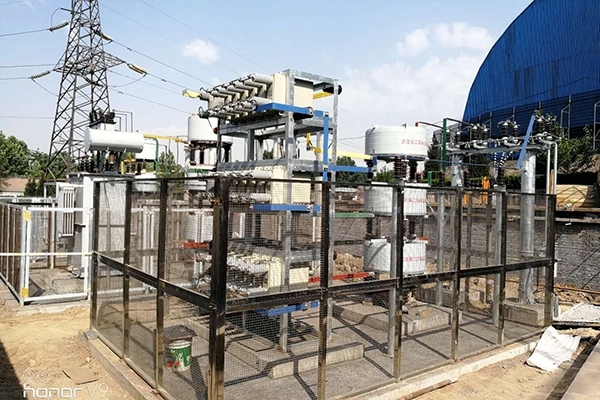
An inductive Filter Reactor blocks hazardous harmonics and protects electrical equipment in contemporary power systems. These particular devices employ electromagnetic induction to link in series with capacitor banks to create tuned circuits that halt resonance, limit voltage variations, and stabilize power quality. Filter reactors target certain harmonic orders with reactance rates of 7%, 14%, or 27%, unlike inductors. This makes them crucial stabilizers in industrial and commercial electrical infrastructure where non-linear loads endanger operations.
The Fundamental Concepts of Filter Reactors
To understand how these gadgets function, examine at their fundamental electric properties and assembly. The design aims to create a regulated impedance barrier that blocks high-frequency noise but allows power flow at the fundamental frequency.
How Electromagnetic Induction Stabilizes Power Quality
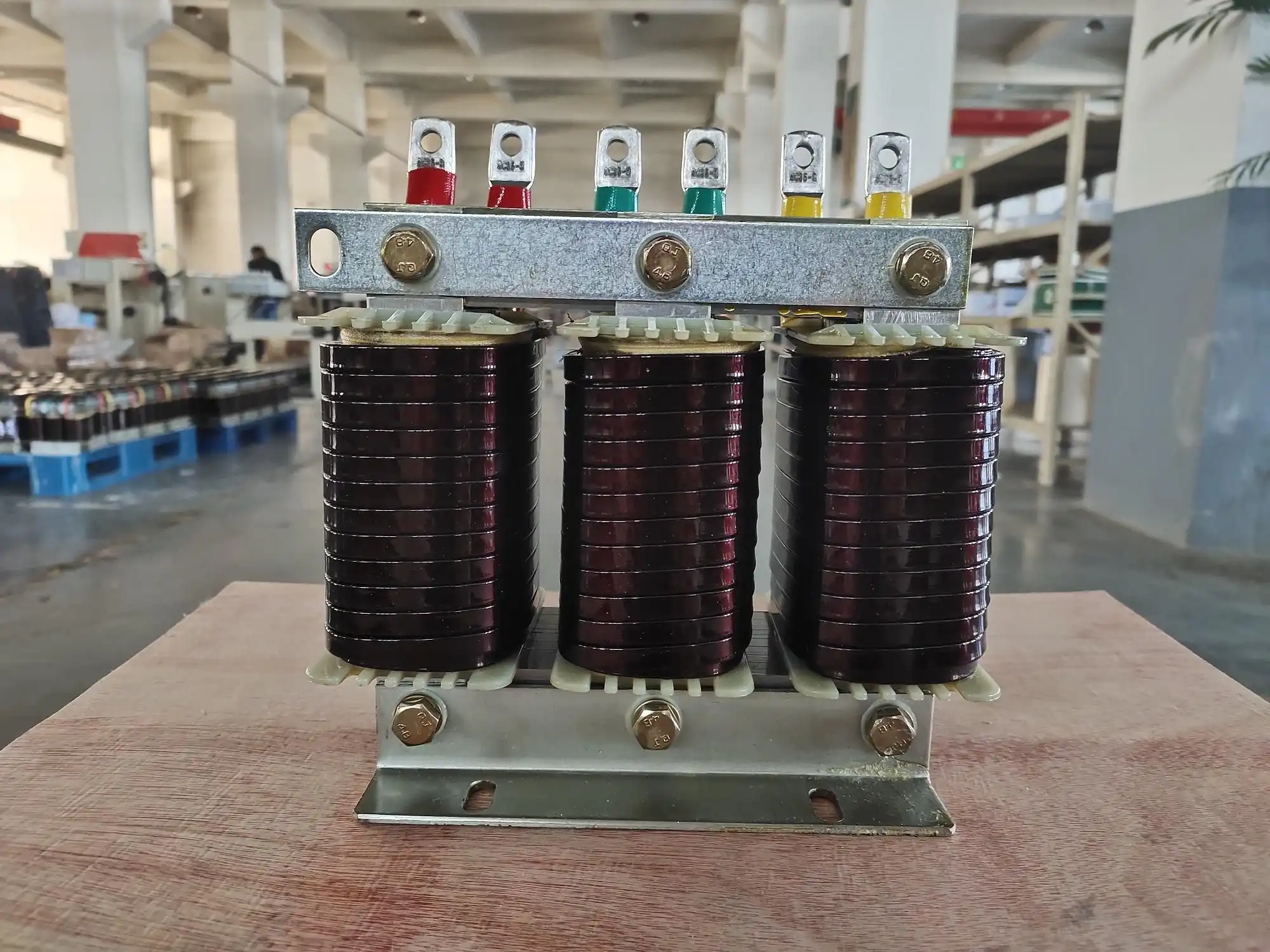
Electricity flowing through a Filter Reactor's tightly wound copper windings creates a magnetic field within its iron core. This magnetic field resists current changes. This is inductive reactance. This resistance helps strategically when harmonics from variable frequency drives, welding equipment, or switching power sources disrupt power systems. The reactor's inductance matches harmonic frequencies. This creates a high-impedance channel to protect delicate electronics from undesired currents. A "detuned circuit" includes the reactor and capacitor bank. This setup's resonance frequency is below your facility's primary harmonic orders, generally 189Hz for 7% reactance designs in 50Hz systems.
Precision Engineering: Core and Winding Construction
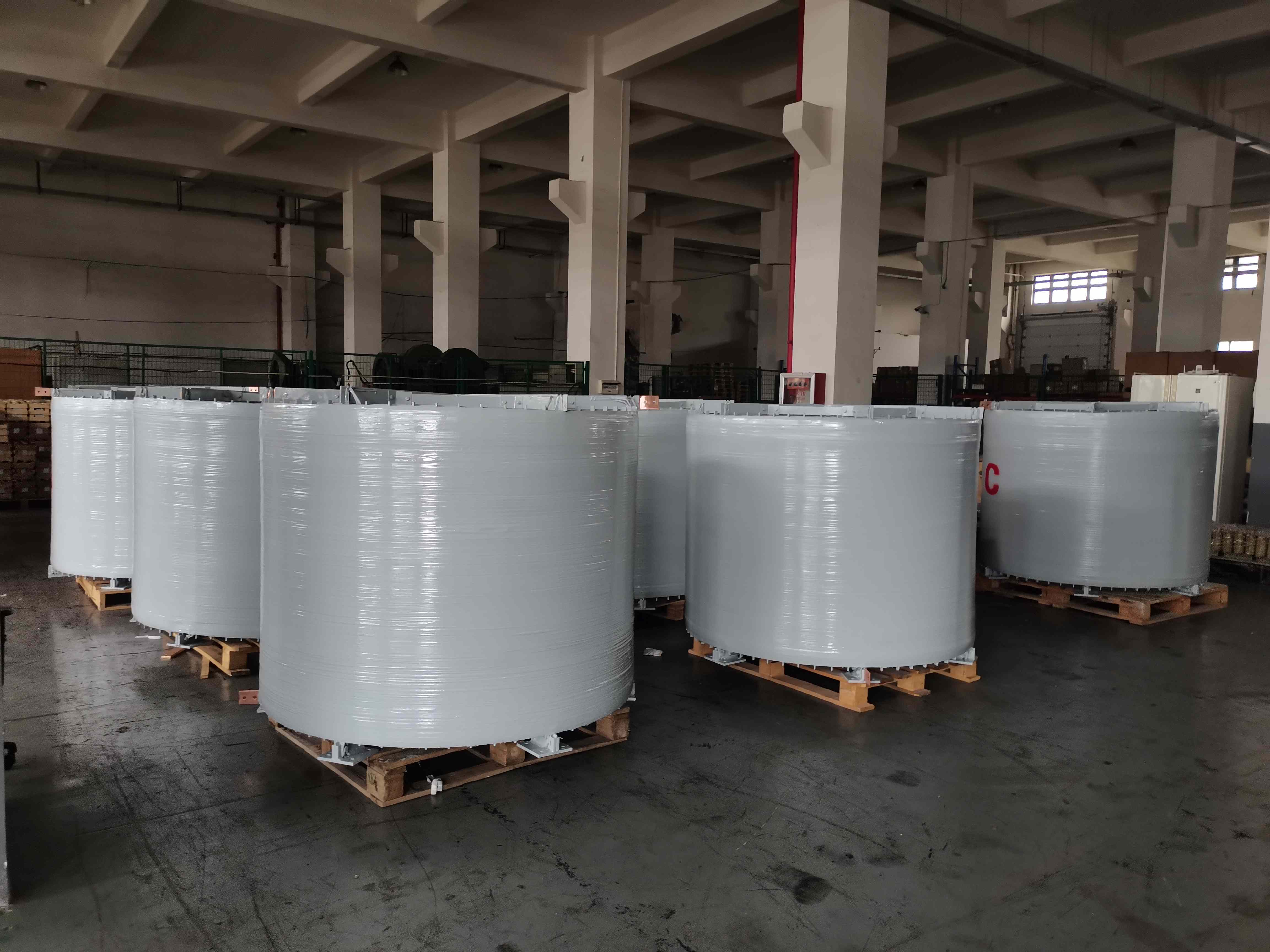
How these devices are created affects their performance. Foreign cold-rolled silicon steel laminations for the magnetic core and epoxy-laminated glass gaps to separate them are how Xi'an Xikai makes its goods. This segmentation maintains air gaps throughout the core structure, which is crucial for maintaining linear inductance even during current spikes. The air holes prevent magnetic saturation, which occurs when the core can't combat current variations and the reactor stops operating when it needs protection.
Class H/C enamel-coated flat copper wire is tightly coiled to prevent electromagnetic shaking and noise when the gadget is working. Due to this wrapping approach and the insulation system's thermal grade, the system can operate even in hot electrical rooms. The system is pre-baked, vacuum impregnated with specific resins, and heat-cured. Core laminations and windings are joined in this production stage to create a structure that can endure electromagnetic stress and remain chemically and moisture-free.
Reactance Rates and Harmonic Targeting
Different industrial contexts create different harmonic patterns, therefore reactor specifications must be modified. A 7% reactance rate setting prevents harmonics above the 5th order (250Hz and above at 50Hz fundamental), making it suitable for mild harmonic content from industrial drives. In office buildings with plenty of single-phase electrical loads, third harmonic content may cause lower-order difficulties, therefore a 14% reactance rate reduces the tuning frequency. Industrial processes and arc furnace operations may cause second harmonics, however the strongest version with 27% reactance cures them.
Challenges in Power Systems Addressed by Filter Reactors
Modern electrical infrastructure has unprecedented power quality issues. These issues endanger business efficiency and equipment lifespan. Many individuals employ non-linear loads, which draw current in non-sinusoidal patterns, causing several issues. Older electrical systems handled smooth waves, but these patterns are distinct.
Harmonic Distortion and Equipment Vulnerability
LED lights, UPS, and speed-changing motors draw electricity in bursts instead of sine waves. Harmonic frequencies go through your electrical distribution system as pulsating currents. Three-phase systems prioritize the 5th (250Hz) and 7th (350Hz) harmonics. However, systems with several single-phase loads struggle with the 3rd harmonic (150Hz).
The rhythmic currents are harmful. Transformers lose more hysteresis and eddy current, generating too much heat that accelerates insulation deterioration. Motor torques induce bearing wear and vibrations. Electronic controls and programmable logic controllers might malfunction due to interference. Capacitor banks used to boost power factor are particularly sensitive because harmonic currents boil the dielectric, reducing capacitor life.
Resonance: The Hidden System Threat
Parallel resonance between capacitor banks and transformer and power line inductive reactance is a major power quality problem. Fixed capacitance and system inductance determine each electrical system's natural harmonic frequency. A severe amplification occurs when this resonant frequency hits a load harmonic frequency. At harmonic frequencies, harmonic currents flow at 10 to 20 times the disturbance due to low resistance. This amplification damages capacitors in minutes and overloads safety mechanisms. It may also create voltage distortion of above 20%, exceeding IEEE 519's 5% limit.
Filter Reactors lower the resonant frequency below the system's lowest harmonic frequency, eliminating this hazard. By connecting regulated inductance to capacitor banks in series, we create a resonance point at 200Hz (7% reactors) or 135Hz (14% reactors), the lowest harmonic energy frequencies. This detuning method converts a dangerous resonance into a stable power factor correction device.
Voltage Fluctuations and Transient Protection
In addition to harmonics, rotational loads, electrical supply variations, and building power sources affect industrial facility voltage. A large motor begins with a brief voltage drop. Switching capacitor banks alters voltage. Variability arises from renewable energy. These voltage variations stress equipment insulation and cause sensitive electrical loads to trip without justification. When filter reactors are large enough, inductive resistance smooths transients. This reduces high voltages and extends equipment life.
Filter Reactor Design Principles and Best Practices
For the best performance, you need to do a thorough study and make sure that the specifications you choose are a good fit for your electrical surroundings. The first step in the planning process is to understand your system's features and find the places where power quality is being compromised.
System Analysis and Reactor Sizing
Effective Filter Reactor design starts with harmonic analysis and impedance calculation to determine THD and current levels. Proper sizing balances reactive power needs and thermal limits, preventing overheating or overvoltage. Accurate engineering ensures stable inductance and reliable performance under varying load conditions.
Integration Strategies for Maximum Effectiveness
Filter Reactor performance depends on proper system integration. Placement at main switchboards offers full-site protection, while distributed setups target specific harmonic sources. A hybrid approach balances efficiency and flexibility, optimizing protection across different loads and improving long-term operational reliability.
Performance Monitoring and Validation
Filter Reactor systems require thermal management, validation testing, and continuous monitoring. Post-installation checks confirm reduced harmonics and stable voltage levels. Ongoing trend analysis helps detect system changes early, enabling preventive maintenance and ensuring consistent performance, safety, and extended equipment lifespan.
Comparing Filter Reactors to Alternative Solutions
When engineers and buying managers face problems with power quality, they have a number of technology choices to choose from. When you know the pros and cons of each method, you can make choices that are in line with your budget and operational needs.
Active Harmonic Filters: Precision with Complexity
Active filters deliver excellent harmonic reduction using real-time power electronics but come with higher costs, complexity, and maintenance needs. Compared to these systems, Filter Reactor solutions offer a simpler, more cost-effective option for most industrial applications with stable and reliable performance.
Passive LC Filters: Targeted but Inflexible
Passive LC filters target specific harmonics effectively but lack flexibility when system conditions change. They require precise tuning and may detune over time. Filter Reactor designs avoid resonance risks by providing broader harmonic mitigation and more stable performance across varying loads.
Selection Criteria for Value in the Long Term
Filter Reactor systems provide strong long-term value due to simple design, low maintenance, and high reliability. With no moving parts, they reduce failure risks and downtime. Their modular scalability allows easy expansion, making them cost-efficient solutions for evolving industrial power systems.
Integrating Filter Reactors in Modern Power Systems: Trends and Future Outlook
Industrial automation, the use of renewable energy, and efforts to go digital are all speeding up the changes in the electricity distribution environment. As these trends continue, filter reactor technology gets better by adding new features that deal with new power quality problems and help with operating intelligence.
Smart Monitoring and Predictive Maintenance
Usually, Filter Reactors work as passive safety devices that don't give any operating input. Some new designs combine temperature monitors, tracking of current, and wireless contact features that turn these parts into smart system parts. Embedded sensors constantly check the temperature of the windings and notify site managers when temperatures get too high, which can be a sign of harmonic overloading or air issues. Current tracking makes sure that load sharing is working right in setups with more than one reactor and finds performance problems caused by parts getting older.
This monitoring data is sent to industrial IoT platforms and building management systems so that tactics for planned repair can be used. Instead of scheduling checks based on time, no matter how the equipment is actually working, repair tasks are planned based on how the equipment is actually working. When conditions are good, facilities can go longer between upkeep periods, which saves money on labor costs. Equipment that has to handle rough job cycles gets more care before it breaks. The operating data is also useful for system improvement because it shows where the power factor correction settings can be changed or loads can be moved around to make the system more efficient generally.
Renewable Energy Integration Challenges
Solar photovoltaic arrays and wind generation create two-way power flow and inverter-generated harmonics that test the usual assumptions used in designing power delivery systems. Grid-tie inverters that switch between 10kHz and 20kHz create high-frequency harmonics that don't always work well with standard power factor adjustment tools. For green energy uses, filter reactors have better high-frequency performance. They do this by changing the core shapes and winding configurations so that they still work well at these higher frequencies.
Microgrids and scattered energy resources make things even more complicated. When these systems switch between being linked to the grid and being isolated, their resistance changes dramatically, which changes the way harmonic resonances behave. Leading makers are currently working on adaptive filter reactor systems that will change their effective inductance based on the mode of operation they identify. This will keep the detuning at its best in all situations.
Standards Evolution and Compliance Requirements
As companies and businesses become more aware of how bad power quality can hurt the economy, rules governing it keep getting stricter. IEEE 519-2014 sets limits on harmonic current and voltage disturbance at the point where two utility lines are connected. If facility managers go over these limits, they could be fined by utilities and have their equipment warranties voided by makers. Similar rules are set by European standards, such as the IEC 61000 series, which also includes extra limits on direct emissions and protection.
More and more people are using tools that reduce harmonics to make sure they meet these changing standards. When used correctly, filter reactors can reduce harmonic distortion to well within regulation limits and are a cost-effective way to meet compliance requirements. More and more, it's important to show proof of better power quality during site checks and equipment warranty claims. Our engineering team creates thorough power quality reports that show the current situation, guess how things will work after installation, and make sure that all regulations are followed. These reports help your facility's business and risk management goals.
Altitude and the Ability to Adapt to the Environment
Industrial growth around the world is happening more and more in difficult places where standard tools can't do its job. Mining activities, telecommunications centers, and power distribution infrastructure that are higher than 1,000 meters have less dense air, which makes convective cooling and dielectric strength less effective. For these uses, standard electrical equipment often needs to be derated or engineered to fit.
Xi'an Xikai is an expert in making electricity tools for plateaus that can work reliably at heights of up to 4,000 meters. Our designs for filter reactors include better insulation and better temperature control so they keep working at full capacity even though cooling is less effective at higher elevations. This skill is especially useful for foreign projects in hilly areas and high-plateau industrial zones, where the safety and cost of the project depend on how well the equipment works.
Conclusion
Filter Reactors are important parts of modern electrical systems because they keep equipment safe and make sure that operations don't stop when there are problems with the power quality in industrial facilities. Because they are inactive, they effectively block harmonics and protect against resonance without the added complexity and upkeep of active options. When you fit the right specifications for the reactor to the system's harmonic profiles, you get the best security at the lowest cost. With the addition of more computer loads and green energy, electrical systems are becoming more complicated. This is where well-designed filter reactors come in handy. Filter reactors are an important part of complete power quality plans for organizations that care about power reliability and equipment life.
Frequently Asked Questions
1. What distinguishes a 7% filter reactor from a 14% configuration?
The % shows the reactor's impedance compared to the capacitor bank. This impedance sets the combined circuit's setting frequency. In 50Hz systems, a 7% Filter Reactor makes a resonant frequency of about 189Hz, which protects against 5th harmonics (250Hz) and higher orders. This setup works well for places where standard three-phase drives produce a modest amount of harmonic material. A 14% reactor lowers the resonance frequency to about 134Hz, protecting against 3rd harmonic (150Hz) disturbances that happen a lot in buildings with big single-phase electrical loads. The choice is based on the harmonic analysis results, which show which frequencies are most common in your electrical surroundings.
2. How does reactor installation affect existing capacitor banks?
The voltage across the capacitor goes up when you add a filter reactor because of the voltage drop across the reactor's inductance. The formula for this voltage rise is capacitor voltage = system voltage / (1 - reactance percentage). Existing capacitors must have the right voltage grade to handle this increase. For 400V systems, this usually means capacitors rated at 440V or 525V. To add reactors to systems that already have capacitors, the voltage ratings of the capacitors must be checked, and if the values are found to be inadequate, the capacitors may need to be replaced.
3. Can filter reactors eliminate all harmonic problems?
Most of the time, filter reactors lower voltage THD from 10-15% to below 5%. This is because they stop resonance-related amplification and reduce harmonic distortion by a large amount. But they don't completely get rid of harmonics; instead, they work to reduce their effects on the system. Extreme harmonic sources, like arc furnaces, welding, or big six-pulse drives that use more than 30% of the transformer's capacity, may need extra protection like active filters, isolation transformers, or drive input reactors. In-depth studies of power quality show whether filter reactors are enough to protect things or if other technologies are needed to make the security work better.
Partner with Xi'an Xikai for Proven Filter Reactor Solutions
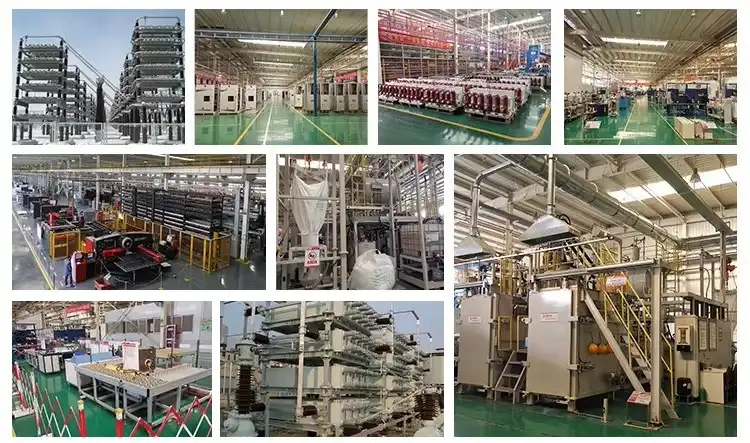
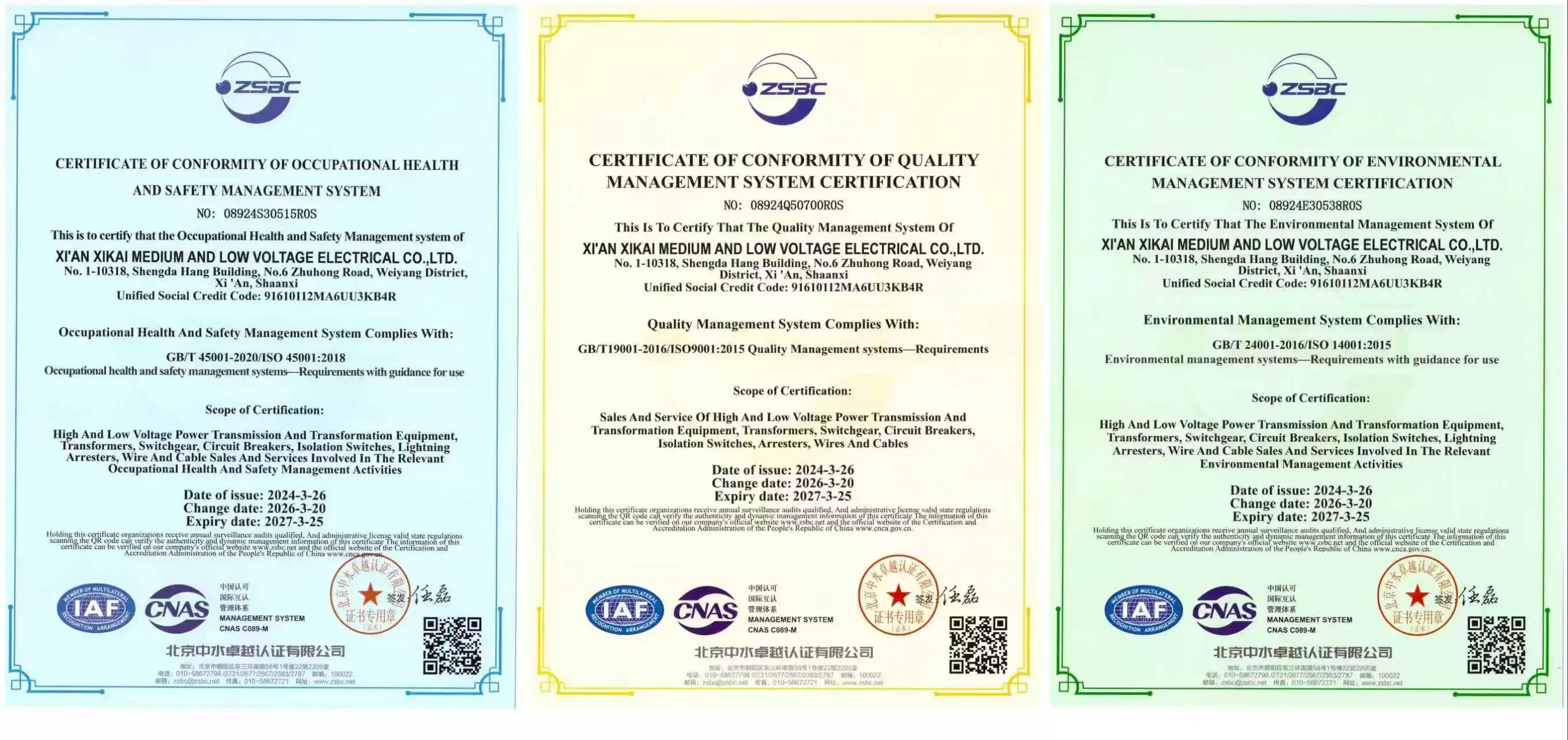
It takes technical know-how and solid manufacturing quality to choose the right harmonic mitigation tools for your building. Xi'an Xikai brings decades of knowledge in power distribution to every project. They offer full Filter Reactor options that are designed to work with medium and low voltage systems. Our product line includes three-phase and single-phase models with reactance choices of 7%, 14%, and 27%, so you can be sure that they will perfectly match your harmonic profile. Vacuum impregnation methods and foreign silicon steel materials are used to make high-quality products that are very reliable in harsh industrial settings. Our expert team is ready to look at your power quality problems and suggest the best ways to fix them, whether you run a factory, a data center, or the infrastructure for a utility company. Contact our filter reactor experts at serina@xaxd-electric.com, amber@xaxd-electric.com, or luna@xaxd-electric.com to talk about your project needs and find out why top centers around the world choose Xi'an Xikai as their filter reactor maker of choice.
References
1. IEEE Standard 519-2014, "IEEE Recommended Practice and Requirements for Harmonic Control in Electric Power Systems," Institute of Electrical and Electronics Engineers, 2014.
2. Sankaran, C., "Power Quality," CRC Press, 2017, Chapter 6: Harmonic Filters and Reactors.
3. Dugan, R.C., McGranaghan, M.F., Santoso, S., and Beaty, H.W., "Electrical Power Systems Quality, Third Edition," McGraw-Hill Education, 2012.
4. International Electrotechnical Commission, "IEC 61000-2-2: Electromagnetic Compatibility (EMC) - Part 2-2: Environment - Compatibility Levels for Low-Frequency Conducted Disturbances," 2002.
5. Arrillaga, J. and Watson, N.R., "Power System Harmonics, Second Edition," John Wiley & Sons, 2003, Chapter 8: Passive Filters.
6. Das, J.C., "Passive Filters - Potentialities and Limitations," IEEE Transactions on Industry Applications, Volume 40, Issue 1, 2004, pages 232-241.