What Is a Harmonic Mitigation Capacitor and How Does It Work?
2026-08-28 16:50:26
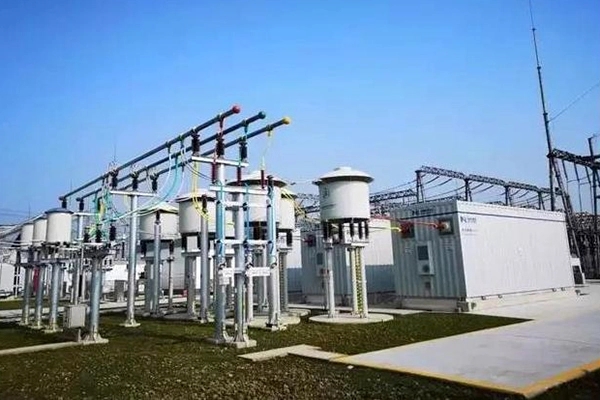
A harmonic mitigation capacitor is a specialized power quality component engineered to operate reliably in electrical environments contaminated by harmonic distortion. Unlike conventional power factor correction capacitors that risk premature failure when exposed to non-linear loads like variable frequency drives or LED lighting systems, these robust devices work in series with detuned reactors to form LC filter circuits. This configuration shifts system resonance away from dominant harmonic frequencies—typically the 5th and 7th orders—preventing dangerous voltage amplification and current overload. By blocking harmonic currents while allowing fundamental frequency power to flow efficiently, harmonic mitigation capacitors protect sensitive equipment, reduce energy losses, and ensure stable power factor correction across industrial installations.


Understanding Harmonic Mitigation Capacitors
The Core Function in Modern Power Systems
Non-linear loads that change the clean sinusoidal waveform of electricity are a constant problem for modern factories. When welding machines, variable speed drives, or switched-mode power supplies work, they draw electricity in short, strong pulses instead of smooth curves. This behavior adds harmonic frequencies to the distribution network, which changes the voltage in a way that makes equipment less effective and causes unnecessary circuit breaker trips.
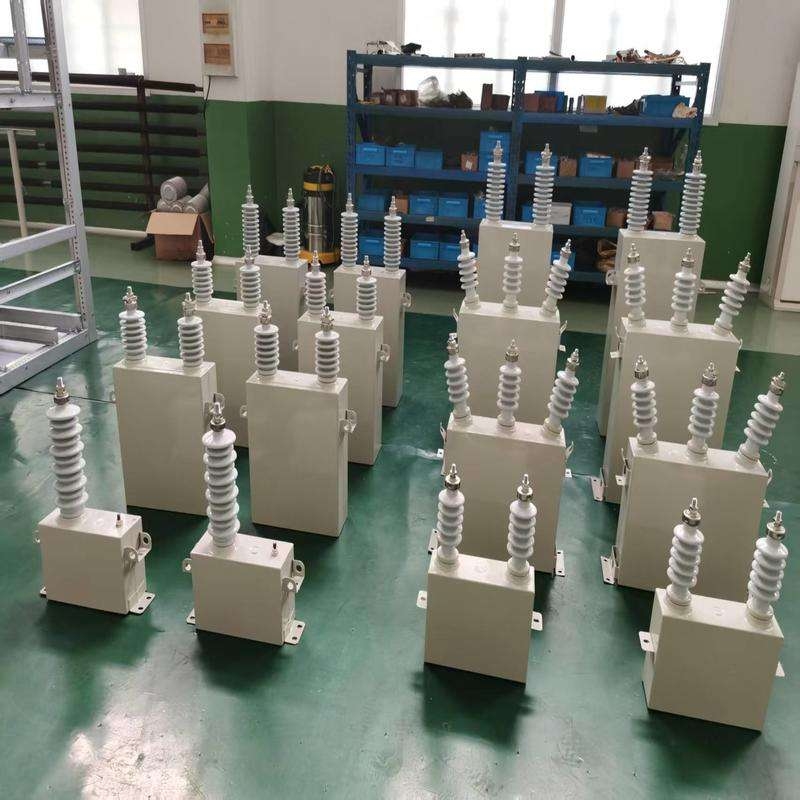
This problem is solved by harmonic mitigation capacitors, which are made in a very different way than regular capacitors. They are made of segmented metalized polypropylene film with reinforced edge metallization, which lets them handle inrush currents that are more than 200 times their nominal rating. When the temperature is high, up to 55°C, the dielectric material works consistently. At temperatures that high, regular units would break down faster. Internal overpressure disconnectors protect against failure by cutting off the part from the mains before the case breaks or a fire starts.
How These Capacitors Differ from Standard Units
When you look at power levels, the difference becomes clear. When used in detuned configurations, capacitors rated for 480V or 525V are usually needed for a system that runs at 400V. This margin makes up for the rise in voltage across the series reactor and the extra RMS stress caused by harmonic content. The higher grade stops the dielectric breakdown that would happen in months in normal units in the same conditions.
Another important difference is the ability to handle power. Harmonic-rich environments heat up in ways that go far beyond what the nameplate ratings say. These special capacitors use better materials that can get rid of heat faster and better convection paths to keep the safe working temperatures stable even when they are under constant harmonic loading. By following the IEC 60831-1/2 standards, you can be sure that the parts will last under Total Harmonic Distortion situations that would destroy other options.
Types and Their Industrial Applications
Most of the time, capacitor banks that are detuned are set up by combining capacitors with reactors to make resonance frequencies lower than the lowest expected harmonic. Higher frequencies and the fifth harmonic are kept at bay by a 7% detuning factor that resonates at about 189Hz in 50Hz systems. Installations with a lot of third harmonic content need to be detuned by 14%, which moves the resonance frequency to about 134Hz. To handle the voltage rise, the capacitor voltage value needs to go up by the same amount as the detuning percentage.
For full reduction, hybrid systems use both detuned capacitor banks and active harmonic filters. Passive parts handle compensating for bulk reactive power and filtering major harmonic orders, while active parts focus on particular frequencies that cause problems. This method works better in places like data centers and phone exchanges where server loads change all the time and harmonic patterns are always changing.
Why Use Harmonic Mitigation Capacitors? Benefits & Applications
Tangible Operational Advantages
How good the power is has a direct effect on your bottom line. Equipment that works in places with a lot of harmonics has a 30–40% shorter useful life because the motor windings, transformer cores, and wire insulation get too hot. Harmonic mitigation capacitors stop resonance conditions that make distortion worse, so these losses are lower. Total Harmonic Distortion can go from 25 to 30 percent to 5 to 8 percent with a properly designed detuned system. This makes installations compliant with IEEE 519 standards and keeps them from getting fined by the utility company.
Gains in energy saving show up in a number of different ways. Getting rid of harmonic currents lowers I²R losses in transformers and distribution lines, which add up to big saves for big facilities. Demand charges, which can make up 20 to 30 percent of electricity costs in factories, go away when the power factor is fixed to 0.95 or higher. In medium-voltage settings, the combination has payback times of 18 to 24 months.
It is possible to measure how much operational efficiency goes up when harmonic stress goes down. By using the right capacitor-reactor combinations, 60–70% less plastic case circuit breakers trip unnecessarily. This is a problem that often happens in places with a lot of VFD setups. When voltage distortion is lower, programmable logic controls, servo drives, and other sensitive electronics that break down when waveform quality drops last longer between failures.
Critical Application Scenarios
Heavy industrial manufacturing is the most difficult place to work. Arc furnaces are used in steel mills and aluminum smelters. These furnaces produce a lot of harmonic noise and need a lot of reacting power. When used in these conditions, high-voltage single-phase filter capacitors must be able to handle surge currents of up to 100 times their maximum capacity while still keeping their exact tuning parameters. The parts allow for power factor adjustment without causing resonance conditions that could make harmonics too loud to be useful.
Traction substations for trains have special problems to deal with. Along with harmonic injection from train power converters, single-phase loads on electric rail lines cause a lot of imbalance. Filter capacitors made for these uses have discharge resistors to make sure they de-energize safely and are built to last thru vibrations and changes in temperature. Putting them in place keeps the voltage in the substation stable and keeps communication systems that are sensitive to harmonic distortion from being harmed.
Adding renewable energy requires specific capacitor solutions. In order to stay in line with grid code, solar and wind farms need dynamic help to keep their power conversion equipment from introducing harmonics. When used with the right reactors, filter capacitors make the connection between transformers and the utility network smooth. This lets more green energy be used without lowering the quality of power for customers nearby.
Comparison with Alternative Solutions
Active harmonic filters work better than passive ones, but they cost a lot more at first—usually three to four times as much as inactive systems of the same type. Their electrical parts need to be maintained and replaced over time, which raises the total cost of ownership. When properly defined, detuned capacitor banks provide reliable, maintenance-free running for more than 15 to 20 years.
Standard power factor adjustment capacitors are cheaper up front, but they end up being expensive when they break down quickly and need to be replaced a lot. The hidden costs keep going up: calls for emergency service, lost production while repairs are being made, and damage to upstream switchgear from catastrophic capacitor failures. By using the right engineering and materials, harmonic-duty units get rid of these risks.
How to Size and Install a Harmonic Mitigation Capacitor
Essential Sizing Considerations
To choose the right harmonic mitigation capacitor, you need to do an accurate harmonic analysis. You need precise readings of the harmonic spectrum at the location where the work is going to happen. Specifically, you need to know how strong the 5th, 7th, 11th, and 13th harmonic currents are. Based on this information, we can tell if 7% or 14% detuning is right and if any other mitigation steps are needed for the best results.
Reactive power needs are determined by the features of the load. When choosing the right size capacitor bank, you need to think about both the reactive demand at the fundamental frequency and the voltage rise that comes from connecting a series reactor. To get the 500 kVAR of compensation it needs at the fundamental frequency, a facility needs about 535 kVAR of capacitance in a 7% detuned configuration. This is after reactor losses are taken into account.
System resistance has a big effect on how well filters work. The risk of parallel resonance is affected by the short-circuit capacity at the placement point and the features of the utility system. Engineers need to make sure that the detuning frequency they choose is between harmonic orders and away from system resonances that could make distortion worse instead of better.
Installation Best Practices
A long service life is guaranteed by good ventilation. Enclosures for capacitors need enough wind to get rid of the heat that fundamental and harmonic currents produce. Ambient temperatures above the design limits speed up dielectric aging by a factor of ten. A 10°C rise can cut the predicted lifespan in half. For installations in hot places or electrical rooms that don't get enough air flow, forced air cooling or parts that are too big and work below their maximum thermal stress are helpful.
Protection cooperation stops operations that are annoying. When capacitor banks are turned on, fuses or circuit breakers must be able to handle inrush currents of 20 to 30 times the maximum current for 0.5 to 2 milliseconds while still protecting against internal faults. Backup protection at the upstream level should work together correctly to separate broken parts of the software from healthy ones.
Picking out switching devices needs to be done with care. Inrush currents put a lot of stress on contactors that power capacitor banks, so they need to have special rates for capacitive loads. Back-to-back switching, which involves turning on capacitors while still having voltage left over from the last process, can create transients greater than 3 per unit voltage. High-voltage single-phase filter capacitors have discharge resistors built in that lower the voltage to a safe level in seconds. This lets the equipment switch on and off more often without damaging it.
Comparing Harmonic Mitigation Capacitors: Making the Right Choice
Key Evaluation Criteria
The dielectric loss factor (tan ε) shows how efficient and heated something is inside. Dissipation factors below 0.0005 are achieved by high-quality capacitors, which reduces energy loss and heat stress. In high-voltage situations, this parameter is very important because even small losses create a lot of heat that breaks down insulation over time. When manufacturers give you approved test results, it shows that they are sure of the quality of their products.
The performance of partial discharge shows that the production is excellent. When you test the corona inception voltage at 1.5 times the maximum voltage, the partial discharge values should be less than 10 picocoulombs. Higher numbers mean that there are flaws in the structure of the dielectric that will spread over time and cause it to fail before it should. This standard tells the difference between consumer-grade parts and industrial-grade parts that can handle tough jobs.
Reliability limits are set by the ability to handle overload. Good capacitors can handle 130% of their maximum power all the time and 150% for short periods of time without breaking down. A current surge capacity of 180% for a set amount of time and 200% for a set amount of time ensures a good safety factor when normal harmonic loading is present. These gaps protect your investment when things in the system don't go as planned.
Supplier Selection Factors
Technical support is what sets suppliers who understand your application apart from those who are just selling products. Is it possible for the maker to help with harmonic analysis? Do they offer custom solutions with reasonable lead times? For example, do they offer changed terminal configurations, specialized voltage ratings, or thermal designs? These services are worth more than the price of a product.
Process control is proven by manufacturing approval. ISO 9001 quality management and ISO 14001 environmental compliance show how to consistently make products of high quality. Facilities with several foreign patents show that they are constantly investing in new technology rather than making the same things over and over again.
Project plans are affected by how reliable deliveries are. Regional warehouse networks make it easier to meet urgent needs more quickly. When suppliers keep stock in key areas, they lower their risks when there are problems with foreign shipping. For important applications, dual-source strategies protect against interruptions in the supply chain to find the best harmonic mitigation capacitor provider.
Understanding Cost Structures
Initial price is only one part of the total cost of owning. It costs more to buy a capacitor bank that needs to be replaced every 3–5 years because the harmonic rates aren't good enough than to buy units that are properly rated and last 15-20 years. Failure costs, like emergency service, production downtime, and damage to other equipment, are much higher than the extra money that needs to be spent on the right parts.
Structures that use volume prices encourage smart purchasing. Building ties with qualified providers lets you get better prices on return orders and make sure that the quality stays the same. When buying in bulk for multiple projects or yearly needs, you can usually save 10–15 percent compared to buying on the spot.

Conclusion
Harmonic mitigation capacitors are an important part of modern industrial electrical systems that deal with loads that don't behave in a straight line. Because they are made with special materials, like strengthened dielectrics, better heat management, and safety features, they can work reliably in situations that would destroy regular power factor correction equipment. When put correctly and with the right detuning reactors, these parts lower harmonic distortion, make devices last longer, and save energy in a way that can be measured. By knowing the technical differences between capacitor types, application needs, and provider capabilities, you can make buying choices that protect your building's electrical infrastructure and lower running costs.
FAQ
1.What distinguishes a harmonic mitigation capacitor from standard power factor correction capacitors?
The main difference is in how they are built and how much voltage they can handle. Harmonic mitigation capacitor units have a strengthened metalized film that can handle the high voltages and currents that harmonics bring. To handle the voltage rise from series reactors, they work at higher rated voltages (480V or 525V units in 400V systems). Most capacitors don't have this extra space, so they break quickly when they're under harmonic stress.
2.Can I install these capacitors without series reactors?
It is certainly possible to do that, but it would waste their unique skills and miss the main point. The capacitor and reactor work together to make the detuned filter that stops resonance. Putting in harmonic-rated capacitors by themselves gives them longer life than regular ones, but it doesn't get rid of harmonics or resonance risk. The system method gets the best results.
3.How often do harmonic mitigation capacitors require maintenance?
When properly stated, units work for 15 to 20 years without any repairs. Checking for case distortion or leakage and measuring capacitance to make sure values stay above 90–95% of factory readings should be done once a year. If the capacitance drops below this point, the detuning frequency moves, which could lead to resonance conditions that need to be fixed before a catastrophic failure happens.
4.What signals indicate imminent capacitor failure?
Capacitance loss from self-healing events can be seen when current consumption goes down. Case bulge means that dielectric has broken down and caused pressure to build up inside the case. When pressure disconnectors are turned on, they make open wires that need to be replaced right away. Temperature tracking that shows steady rises over time says that materials lose more heat as they age. By taking action on these signs, you can avoid unexpected outages.
Xi'an Xikai: Your Partner for Advanced Harmonic Mitigation Solutions
To find the best harmonic mitigation capacitor provider, you need to look at their scientific know-how, the quality of their products, and their ability to provide long-term support. Xi'an Xikai Medium & Low Voltage Electric Co., Ltd. has decades of experience working with difficult industrial uses, so they know how to solve all kinds of power quality problems. In tough settings, our high-voltage single-phase filter capacitors have been shown to work reliably in train traction substations, aluminum smelting plants, and renewable energy installations.
The engineering team at Xi'an Xikai can make solutions that are unique to your needs in terms of harmonic shape and reaction power. We know that each location has its own set of limitations, such as voltage levels, room limitations, environmental conditions, and budget limits. As part of our design process, we use thorough harmonic analysis and thermal modeling to make sure that parts work well within their limits and meet IEEE and IEC standards. Talking to a technical expert can help you avoid common mistakes in designing capacitor banks that cause them to fail early or not work well.
Our output standards are based on success in manufacturing. Automatic argon arc welding makes tanks completely leak-proof, even when the temperatures change very quickly. Each capacitor has discharge resistors built in to make it safe to handle and speed up switching cycles. Internal fuse technology automatically separates faulty parts, stopping failures that could spread and affect whole banks. Before being sent to your facility, every unit goes thru a lot of tests, such as 72-hour load cycling, thermal shock trials, and impulse voltage verification. Email serina@xaxd-electric.com, amber@xaxd-electric.com, or luna@xaxd-electric.com to talk about the needs of your project with our expert sales team.

References
1. Institute of Electrical and Electronics Engineers, "IEEE Recommended Practice and Requirements for Harmonic Control in Electric Power Systems," IEEE Standard 519-2022, 2022.
2. International Electrotechnical Commission, "Shunt Capacitors for A.C. Power Systems Having a Rated Voltage Above 1000 V - Part 1: General," IEC 60871-1, 2014.
3. McGranaghan, M. and Beaulieu, G., "Update on IEC 61642 Standard: Harmonic Sources and Their Interaction with Power Systems," Electrotek Concepts Inc., Technical Paper, 2018.
4. Sankaran, C., "Power Quality," CRC Press, Boca Raton, Florida, Chapter 4: Harmonics and Interharmonics, 2017.
5. Wakileh, G.J., "Power Systems Harmonics: Fundamentals, Analysis and Filter Design," Springer-Verlag Berlin Heidelberg, Second Edition, 2021.
6. Arrillaga, J. and Watson, N.R., "Power System Harmonics," John Wiley & Sons Ltd, Chichester, United Kingdom, Third Edition, 2019.
_1783415937807.jpg)