Why Use a Line Current Limiting Reactor in Industrial Systems?
2026-08-28 16:50:23
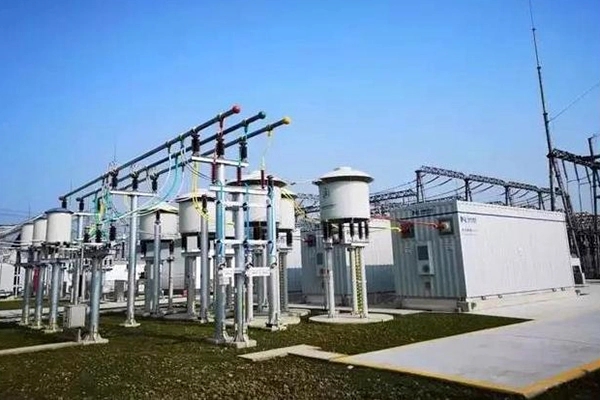
Industrial power systems face constant threats from short-circuit faults that can destroy equipment worth millions and halt production lines instantly. A line current limiting reactor addresses this critical vulnerability by introducing controlled impedance into electrical networks, reducing fault currents to manageable levels before they damage transformers, circuit breakers, and downstream machinery. These reactors serve as protective barriers during electrical disturbances, maintaining system stability when sudden faults occur. For EPC contractors managing 110-330kV substations and design institutes specifying equipment for large-scale infrastructure, these devices represent an essential safeguard that balances protection requirements with operational efficiency. Their deployment prevents catastrophic failures while allowing existing switchgear to remain functional despite rising fault levels from grid expansion.


Understanding Current Limiting Reactors and Their Core Functions
Industrial electrical networks require sophisticated protection mechanisms that respond predictably during abnormal conditions. Current limiting devices achieve this through precise engineering principles that distinguish them from conventional protection equipment.
What Makes These Reactors Essential for Fault Protection
A line current limiting reactor functions as a series-connected inductive component especially designed to manage short-circuit currents in transmission and distribution networks. When installed in power lines, it increases system impedance intentionally, providing a controlled resistance path that limits fault current magnitude. During normal operations, the reactor introduces minimal voltage drop, but during short-circuit events, its impedance rises instantly to limit current flow to levels within the interrupting capacity of existing circuit breakers. This capability proves critical when utilities add generation capacity or parallel transformers, situations where fault levels naturally increase beyond original switchgear ratings.
The operational principle centers on introducing reactance (measured in ohms or percentage impedance) calculated to cap prospective fault currents. Unlike inactive devices that simply stop circuits, these reactors actively shape current behavior during transient events. The technology solves some of the world's biggest problems, like how to handle more faults as a network grows without having to replace working circuit breakers, how to avoid having to spend too much money on upgrading switchgear, and how to stop voltage drops that hurt the quality of power for important industrial loads.
Different Reactor Types for Varied Applications
Air-core dry-type reactors remove magnetic saturation problems by using spiral-wound aluminum or copper coils without iron cores. This design provides linear inductance properties even under highest fault currents, usually handling stress levels topping 50kA. This way of thinking is shown by the XKGKL series, which uses epoxy-impregnated fiberglass encapsulation to keep impedance values constant even when there are short circuits with huge electrodynamic forces.
Iron-core versions offer compact footprints suitable for space-constrained applications, though they show magnetic saturation at high current levels. Adjustable reactors provide adjustable impedance for systems with variable safety needs, whereas specialty reactors target specific uses like harmonic filtering in capacitor banks or inrush current limits for motor starters. Each configuration is designed to handle a different set of operating situations, such as heavy industrial plants that need to be very strong mechanically or renewable energy systems that need to follow strict grid rules about harmonic distortion and fault ride-through capabilities.
How Reactors Differ from Circuit Breakers and Fuses
Circuit breakers stop the flow of current when there is a problem, and fuses give up their lives to protect open circuits. Reactors, on the other hand, continuously limit the amount of current without stopping power supply. Because of this fundamental difference, they work together instead of against each other as solutions. A reactor lowers the fault current that circuit breakers have to interrupt. This makes the breakers last longer and stops mechanical wear from repeated high-current switching events.
When there is a sustained overcurrent, the fuse melts, so it needs to be replaced after every use. Reactors can handle many fault events without breaking down, so they always provide protection. Surge breakers deal with voltage spikes caused by lightning or switching transients. They do this by focusing on a different type of failure than short-circuit problems. Combining these technologies in the best way possible is called optimal system design. Reactors control the size of the fault current, breakers isolate the system, and surge devices handle short-term overvoltages. When procurement workers understand these different jobs, they can come up with protection plans that cover all possible failure modes.
Benefits of Implementing Current Limiting Technology
Protection gear pays for itself by making systems more reliable and efficient in ways that can be measured. Line current limiting reactor solutions have a number of benefits that have a direct effect on the cost of the project and the life of the equipment.
Superior Equipment Protection and Extended Asset Lifespan
When there is a fault, putting reactors in series with important equipment lowers the mechanical and heat stress. Transformers have smaller through-fault currents, which means that windings and insulators don't deform as much. When circuit breakers work within their stated stopping capacity, they avoid the damage from arcing and contact erosion that happens when they stop currents that are too high. This protection makes equipment last a lot longer. Transformers that are properly protected usually last 30 years or more, while units that aren't protected may break down within 15 years of repeated fault stress.
The XKGKL series does this with H-class insulation that can withstand temperatures up to 180°C and aluminum windings that don't rust and stay strong in dusty, humid, and temperature-changing environments. When compared to standard iron-core designs, the air-core building cuts energy waste by 30% because it doesn't lose any iron. These features work together to make protection equipment that doesn't need much upkeep and keeps expensive primary equipment from wearing out faster.
Enhanced Power Quality and System Stability
When faults happen, voltage drops that happen during faults make production equipment not work, control systems lose data, and sensitive loads trip for no reason. Limiting the size of the fault current lowers the drop in voltage across the system's impedance when there are disturbances. This keeps the power stable for equipment that isn't directly affected by the fault. This keeps problems in one area from affecting a lot of equipment at once. It is very helpful for factories that use CNC machines, automated assembly lines, and tools for making semiconductors because the voltage regulation is better now.
Reactors also dampen switching transients and reduce harmonic distortion when integrated with capacitor banks or renewable energy inverters. When wind or solar farms join to utility grids, there are places called "points of common coupling." This is where reactors handle fault contributions from generation sources and make sure that grid rules about maximum harmonic levels and fault ride-through capabilities are followed. This dual purpose is very important for green energy projects that want to connect to the grid and get permission from grid owners to do so.
Economic Advantages Through Downtime Prevention
Uncontrolled fault currents break down equipment and stop production for no clear reason. In the steel or petrochemical industries, a single unexpected loss can cost hundreds of thousands of dollars an hour in lost production and costs to get back up and running. Putting in current-limiting reactors is an investment that can be used to avoid these terrible costs. The devices keep the existing switchgear working even tho the network has changed. Without them, expensive breaker replacements would have to be done, which could cost millions of dollars in large substations.
Because protected equipment wears out less, maintenance costs go down. The time between replacing circuit breaker contacts gets longer, transformer oil research shows fewer degradation products, and wire insulation keeps its dielectric strength for longer. Over the course of decades, these real benefits add up to a return on investment that is many times greater than the cost of buying the reactor in the first place. Procurement experts evaluating total cost of ownership find that current limiting solutions consistently show favorable economics compared to reactive methods that fix failures after they occur.
Application Scenarios Across Industrial Sectors
Different fields have their own electricity problems that need special safety plans. Customized specs let line current limiting reactors work in a wide range of operating environments.
Grid Expansion and Substation Modernization
When utilities connect multiple transformers together or add new generation capacity, they run into rising fault levels that are higher than the ratings for interrupting switchgear. Putting reactors in series with feeders or bus-ties lowers the possible fault currents. This lets you keep working circuit breakers that would have to be replaced, which would be expensive. This method works especially well in urban substations where replacing all the equipment would take too much time and room, and the station needs to keep running.
The XKGKL reactor series handles these situations with modular designs that can handle different voltage levels and impedance levels. IoT-enabled tracking makes the smart grid compatible, which lets it work with automated control systems that change the network setup to be the most efficient at any given time. Utility companies that serve areas with a lot of people can run their systems quietly (below 45dB), which helps them follow noise regulations and keep important infrastructure running in residential areas.
Heavy Industrial Power Systems
Electrical transients are very bad in places like steel mills that use arc furnaces and petrochemical plants that use big motor drives. When a motor starts up, the inrush current can be 6 to 10 times the rated current. This puts a lot of stress on the supply networks and causes voltage drops that lower the quality of the production. Reactors control these short-term changes in size while also handling short-circuit faults caused by on-site producing equipment.
Industries that use a lot of energy like the air-core design because it can handle surge currents up to 100 times the maximum capacity without getting too hot. The linear impedance feature makes sure that performance stays stable even in harsh fault situations that are typical in heavy industrial settings. The equipment can be used in difficult construction sites, such as foundries with dusty air or facilities in areas that are prone to earthquakes, thanks to custom coats that protect against seismic activity and dust.
Renewable Energy Integration Challenges
In completely different ways than synchronous engines, wind and solar farms add fault current to power networks. Inverter-based resources have fault contributions that change quickly and are controlled by algorithms instead of electromagnetic induction. Reactors put in place at common coupling points handle these faults' changing patterns while reducing switching transients caused by inverter operation.
In order to follow the grid code, renewable installations must show that they can handle faults and limit harmonic injection. To meet these needs, current-limiting reactors help by controlling the size of the fault current and filtering harmonic frequencies when set up as detuned combinations of reactors and capacitors. The XKGKL series can be used for these purposes because it has impedance settings that can be changed and encapsulation designs that can withstand being outside in harsh conditions, such as solar installations in the desert that experience big changes in temperature and wind farms in the ocean that have to deal with salt spray corrosion.
Procurement Considerations and Technical Selection Criteria
Specifying appropriate line current limiting reactor equipment requires understanding technical parameters, quality standards, and manufacturer capabilities that ensure long-term reliability.
Critical Technical Parameters for Decision-Making
A number of important electrical and mechanical qualities must be included in the procurement requirements. How well fault current limitation works is based on the reactance value, which can be shown as a percentage impedance or absolute ohms. Design engineers figure out how much resistance is needed by looking at system fault levels with and without the reactor. They make sure that the lower current is within the capacity of the circuit breaker to stop while keeping the voltage drop at a safe level for normal operations.
The Basic Impulse Level (BIL) number shows how well the device can handle spikes in the air and switching overvoltages. In places where lightning strikes often, substations need higher BIL ratings, usually 170kV for 72.5kV systems or 350kV for 145kV uses. Short-time current withstand capability makes sure that the reactor can handle full fault current for as long as the protective relay coordination needs it to, which is usually between one and three seconds. Type tests that use temperature and mechanical stress to validate this survival show that it really does happen.
Linear inductance stops magnetic saturation, which would lower resistance just when the most security is needed. Iron-core designs need careful flux density control, while air-core designs naturally have linear properties. Testing for temperature rise shows that the cooling design keeps the insulation from wearing down under full-load operation for a long time, which is important for equipment that will be used for more than 30 years.
Quality Assurance and Compliance Standards
Manufacturers with a good reputation follow international rules for designing and testing reactors. IEC 60076-6 and IEEE C57.16 spell out the building rules, test methods, and performance standards that make sure everything works together and is reliable. Buyers should check if a maker has ISO 9001 certification for quality management systems and ISO 14001 certification for environmental compliance. These certifications show that the company takes a planned approach to controlling production and being environmentally friendly.
Strict testing protocols give people faith in the way equipment works in harsh situations. Insulation flaws that could cause the system to fail early can be found by partial discharge tests. Temperature rise studies show that the thermal design works well. Lightning impulse voltage withstand tests (BIL verification) show that the system can handle short-term overvoltages. Short-time current resistance tests show that the mechanical integrity is still there even when huge forces are applied during a fault.
The XKGKL series goes thru these thorough tests and has certifications to back them up, such as 3C approval for low-voltage models and NFPA 70 fire code compliance thru flame-resistant materials. Vibration resistance is a key issue in seismic areas or sites close to machines that make constant vibrations. Patented coil fixation technology handles this issue. These quality standards tell the difference between trustworthy manufacturers and those who sell weak protection gear that breaks down during critical fault events.
Evaluating Manufacturers and Supply Partners
Supplier selection affects project success through technical support, manufacturing capacity, lead times, and after-sales service. Global companies such as ABB, Siemens, and Schneider Electric offer broad networks, while Xi’an Xikai provides reactor expertise and patents. Buyers should assess technical documentation, relevant projects, responsiveness, and support from design through commissioning.
Advanced Design and Maintenance Practices
Effective line current limiting reactor deployment requires attention to installation details and ongoing operational monitoring that maximizes protection effectiveness and equipment longevity.
Inductance Calculation and Impedance Optimization
Reactor impedance is optimized through short-circuit modeling to balance fault-current limitation with minimal voltage drop and power loss during normal operation. Engineers should include margins for future network growth. Customized designs may incorporate adjustable taps, protective enclosures, or integrated monitoring systems to meet changing loads and demanding installation requirements.
Installation Requirements and Stray Field Management
Proper reactor placement requires adequate clearance to control stray magnetic fields and protect sensitive equipment. The XKGKL series minimizes external fields through optimized coil design. Outdoor installations need UV, pollution, and temperature protection from -50°C to +55°C, while indoor and seismic sites require fire, noise, flexible connections, and strong structural support.
Routine Inspection and Preventive Maintenance
Regular inspections help maintain long-term reliability by identifying cracked insulation, corrosion, burning, and thermal hotspots. Resistance, inductance, and insulation tests verify electrical and dielectric performance within acceptable limits. Preventive maintenance is typically scheduled every 3–5 years indoors and 1–3 years outdoors, detecting problems early and supporting service lives exceeding 30 years.

Conclusion
Line current limiting reactors are an important safety measure for industrial power systems that are facing rising fault levels due to network and generation growth. Because they lower short-circuit currents, they protect expensive equipment, keep the power quality stable, and keep costly downtime from happening without having to replace all the switches. The XKGKL dry-type air-core design is a great example of modern reactor technology because it has linear impedance characteristics, uses little energy, and lasts a long time in harsh environments. To make the right choice, you need to know about technical factors such as BIL rating, impedance values, and mechanical strength standards. You should also work with makers that can show you quality certifications and full technical support. As industrial systems get more complicated and expectations for reliability rise, these reactors will continue to be necessary for EPC contractors, design institutes, and facility operators who want to protect their investments in critical infrastructure.
FAQ
1.How Do You Determine Whether Your System Needs Current Limiting Protection?
Do a short-circuit study that figures out the possible fault currents at key points in the network. Compare these numbers to the ratings for circuit breakers that are already in use. When fault currents reach more than 80% of the breaker's capacity, there isn't enough safety margin, protection is needed. This requirement is usually set off by changes to the network, like adding a generator or connecting two or more production units.
2.What Distinguishes Current Limiting Reactors from Standard Circuit Breakers?
Thru managed resistance, line current limiting reactors constantly limit the size of the fault current without stopping power delivery. When faults are found, circuit breakers stop the flow of electricity, isolating the trouble spots. Breakers last longer because reactors lower the amount of power they have to stop. Breakers separate circuits, and reactors control the amount of power flowing thru them.
3.Can Reactors Retrofit into Existing Substations?
Retrofitting is possible if there is enough room for the reactor to be installed and the existing equipment can handle series impedance. Engineers need to make sure that the voltage drop that happens during normal operation is still acceptable and that the coordination of protection changes as needed. Many utilities have successfully retrofitted reactors to handle rising fault levels without having to rebuild the whole substation.
Partner with Xi'an Xikai for Reliable Current Limiting Solutions
The Xi'an Xikai Medium & Low Voltage Electric Co., Ltd. makes high-performance line current limiting reactors that are made for tough substation uses. Our XKGKL series has been used in more than 50 infrastructure projects around the world and has been proven to be reliable. It has ISO 9001/14001 certification and has been thru extensive type testing to meet IEC and IEEE standards. As a leading line current limiting reactor manufacturer, we can make solutions that are specific to your voltage class, impedance needs, and environmental conditions. Our technical team helps with everything, from the first planning meeting to completion and service after the sale. You can email our application engineers at serina@xaxd-electric.com, amber@xaxd-electric.com, or luna@xaxd-electric.com to talk about your project needs and get detailed technical proposals that are tailored to your substation protection needs.

References
1. International Electrotechnical Commission, "Power transformers - Part 6: Reactors," IEC Standard 60076-6, 2007.
2. Institute of Electrical and Electronics Engineers, "IEEE Standard for Requirements, Terminology, and Test Code for Dry-Type Air-Core Series-Connected Reactors," IEEE Standard C57.16, 2011.
3. Chen, W., and Liu, H., "Application of Current-Limiting Reactors in High Voltage Substations," Electric Power Systems Research, vol. 142, pp. 78-86, 2017.
4. Blackburn, J.L., and Domin, T.J., "Protective Relaying: Principles and Applications," 4th Edition, CRC Press, 2014.
5. Zhang, Y., Wang, J., and Li, M., "Design and Testing of Air-Core Reactors for Fault Current Limitation in Smart Grids," IEEE Transactions on Power Delivery, vol. 33, no. 4, pp. 1856-1864, 2018.
6. National Electrical Manufacturers Association, "Application Guide for Current-Limiting Reactors," NEMA Publication PE 5, 2016.