Why an Indoor Vacuum Circuit Breaker Enhances Electrical Safety
2026-08-20 16:19:20
An indoor vacuum circuit breaker significantly enhances electrical safety by extinguishing arcs within a sealed vacuum chamber, eliminating fire hazards associated with traditional oil or gas breakers. Unlike SF6 breakers that rely on greenhouse gases or air breakers prone to arc plasma exposure, vacuum technology isolates fault currents instantly—within 15 milliseconds—minimizing equipment damage and personnel risk. The absence of flammable materials and superior dielectric strength make these devices indispensable for protecting critical infrastructure in industrial plants, commercial complexes, and power distribution networks where safety cannot be compromised.

Understanding Indoor Vacuum Circuit Breakers and Their Core Safety Functions
How Vacuum Technology Transforms Arc Interruption
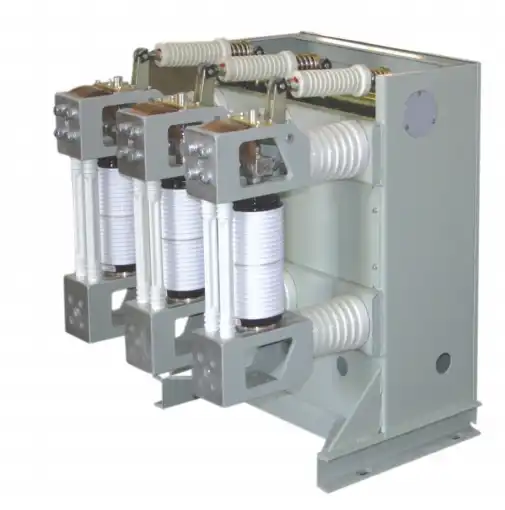
Vacuum circuit breakers work by separating contacts inside a chamber that is hermetically sealed and nearly vacuum-like. If fault current flows, an electric arc forms between contacts that are open. This arc goes out quickly because of the vacuum, stopping the flow of heat energy before it can spread. Compared to older technologies, this one works very differently: oil breakers pose a fire risk, and SF6 units damage the environment by releasing greenhouse gasses.
This idea is shown by the ZN39 line from Xi'an Xikai, which has a maximum voltage of 12kV and a breaking time of less than 15 milliseconds. These units work reliably in temperatures ranging from -40°C to +40°C, and they can handle up to 95% daily average relative humidity, which is high enough to damage most insulation systems. Mechanical processes that are repeated more than 20,000 times show durability, which lowers the cost of replacements and unplanned breaks over the product's lifetime.
Critical Safety Features Embedded in Modern Designs
Today's vacuum breakers have more than one layer of protection, not just arc extinction. Embedded pole construction covers the vacuum interrupter in epoxy resin, protecting its internal parts from water, dust, and hits from the outside. This is necessary in industrial settings where conductive particles are common. High-creepage ceramic bands keep the insulation in place when air-insulated designs fail by stopping surface tracking when it's wet.
Built-in anti-misoperation interlocks stop switching sequences that could be dangerous. These mechanical fail-safes make sure that grounding switches can't close while the indoor vacuum circuit breaker is on and that breakers can't open when they're not supposed to. When combined with spring-operated systems that maintain constant contact speeds regardless of human force, these features get rid of faults caused by operators, which used to lead to arc flashes and equipment damage.
Comparing Vacuum Technology to SF6 and Air Circuit Breakers
Environmental and Business Benefits
Even tho SF6 gas breakers work well at high levels, they are very bad for the environment. SF6 is a very strong greenhouse gas that can warm the Earth 23,500 times more than CO2. Regulatory pressure in Europe and North America is making it harder to use SF6, so it's smart to look for cleaner options. Vacuum breakers get rid of this risk completely—no gas leaks, no damage to the atmosphere, and no expensive repair processes that involve handling gas.
Air circuit breakers need to be serviced often because oxygen in the air wears away at the contacts. When faults happen over and over again, arc chutes break down, so they need to be inspected and parts replaced on a frequent basis. With vacuum technology, these consumables are no longer needed. The sealed environment protects the contact surfaces, increasing the electrical endurance to E2 level, which means it can break full short-circuit currents multiple times without any help. When compared to air breaker installations, maintenance costs drop by about 40% over 20 years of use.
Performance Metrics That Matter for B2B Procurement
Breaking capacity tells you how safely a breaker can stop fault currents. The ZN39 indoor vacuum circuit breaker can handle surge currents of up to 100 times its rating capacity. This protects equipment further down the line during transient faults that happen when industrial motors start up or when renewable energy is added. Compared to air breakers, which can only handle 50kA at 12kV, vacuum units can stop more currents while still fitting into smaller spaces, making them ideal for retrofitting switchgear.
Contact resistance has a direct effect on how well energy is used and how heat is managed. Aerospace-grade alloys in vacuum interrupters keep resistance below 50 microohms, which means that I²R losses are kept to a minimum while the device is working normally. Oxidized contacts on air breakers can go over 200 microohms, creating hotspots that cause unnecessary trips or speed up insulation failure. When figuring out return on investment, procurement managers must compare these differences in efficiency to the starting price while looking at the total cost of ownership.
Maintenance Strategies and Lifespan Optimization
Routine Inspection Protocols for Safety Compliance
Visual and functional checks should be done every six months as the first step in good upkeep. Check the outside of the insulators for cracks, signs of moisture damage, and surface contamination. Check the readings on the mechanical counter against the maintenance logs to see how much life is left in the machine. Contact over-travel readings, which are necessary to keep the right contact pressure, should be recorded using special gages during yearly shutdowns.
In more modern types, the modular spring-operated system makes it easier to change parts. Technicians can replace worn springs or operating coils inside enclosures during scheduled maintenance windows, which isn't possible with older designs that required the whole unit to be taken apart. This way of thinking about design cuts the mean time to fix (MTTR) from 48 hours to less than 8 hours. This keeps production running in places where every minute of power outage costs thousands of dollars in lost output.
Troubleshooting Common Performance Issues
The most common operating fault is "refusal to close." Root reasons include electromagnet power that isn't strong enough (below 65% of its rated value), energy storage springs that don't work, or anti-jumping circuits that are turned on. For secondary circuit troubleshooting, the control voltage at the terminals must be checked, and the mechanical latch points must be checked for wear or obstructions.
For vacuum interrupter end-of-life detection, power frequency withstand voltage testing is needed. When checking the stability of a vacuum, you need special tools, unlike with gas breakers where pressure gages give you clear feedback. Visual proof comes from contact wear markers, which are usually 3 mm burn mark limits on dynamic contact rods. However, annual dielectric tests are still the best way to be sure. To avoid catastrophic fails that could put whole distribution networks at risk, procurement teams should discuss repair contracts that include regular testing.
Strategic Applications Across Industrial and Commercial Sectors
Industrial Plants and Heavy Manufacturing
In places that make metal, circuit breakers are put under a lot of stress because they have to switch on and off a lot of times, deal with harmonic loads from variable frequency drives, and handle sudden currents from arc furnaces. Vacuum breakers with an M2 mechanical life rating (10,000 to 20,000 processes) work better than other options in these tough job cycles. The ZN39's seismic reinforcement—important in places that are prone to earthquakes—prevents mechanical misalignment that leads to contact welding when there is a fault.
To keep from scraping workpieces and damaging the machine, CNC machining centers need power that doesn't go out. Vacuum breakers quickly clear faults, which keeps sensitive servo drives and programmable logic controllers safe from voltage drops. The action is very quiet (under 45dB), which is different from the mechanical clatter of air breakers and helps with OSHA noise compliance in production areas that are already occupied.
Renewable Energy Integration and Grid Stabilization
Variable generation patterns, transient currents during grid synchronization, and rural sites that make servicing hard to get to are some of the problems that wind farms that use 12kV collection voltages have to deal with. The electrical durability (E2 class) of indoor vacuum circuit breaker vacuum breakers can handle repeated switching without breaking down. This is very important for controlling inverter harmonics and irregular generation patterns. The ZN39-S series is compatible with the Internet of Things (IoT), which lets you check on its condition in real time by sending information about contact wear and mechanical status to centralized SCADA systems. This cuts down on site visits and makes predictive maintenance schedules more effective.
Commercial Buildings and Critical Infrastructure
Power outages are not tolerated at all in hospitals and data centers. Tier IV data centers that need to be online 99.995% of the time use vacuum breakers in the main power lines. These breakers have fixed pole designs that stop flashovers caused by changes in HVAC humidity. NFPA 70 fire rules are met because there are no flammable materials present, so there is no need for a suppression system that would add to the cost of building.
Updating old oil-filled breakers in underground parking substations meets fire safety requirements while keeping the switchgear areas that are already there. The small size and standard frame (800mm or 1000mm wide) of vacuum units make them drop-in compatible with KYN28 cabinets, which cuts down on installation time. Manufacturers like Xi'an Xikai offer multilingual manuals and CAD files that speed up the training of contractors and the acceptance of permits, both of which are important for business projects that need to be finished quickly.
Making the Rational Choice: Procurement Decision Factors
Matching Technical Specifications to Application Needs
It's important that the voltage and current values match the worst-case fault situations, not just the nominal loads. For a 12kV distribution network with expected short-circuit currents of 31.5kA, the breakers need to be rated accordingly; units that are too small could fail catastrophically during faults. External insulation is affected by altitude derating. For installations above 2000m, normal units rated for 1000m altitude need to be changed to "plateau-type" designs with different epoxy pole sizes to avoid flashovers in thinner air.
Supplier Evaluation and After-Sales Support
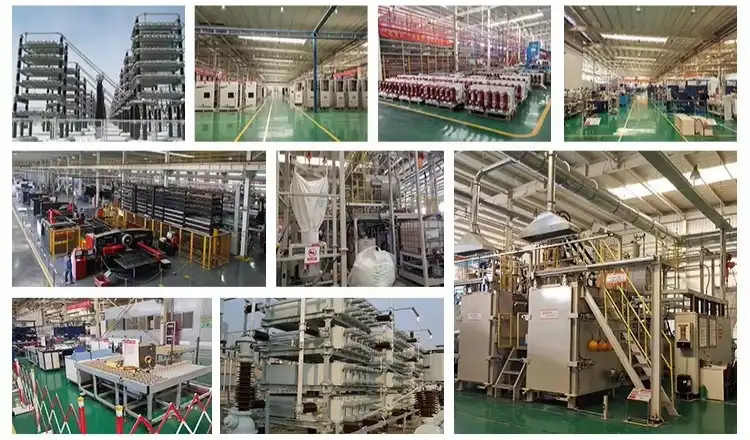
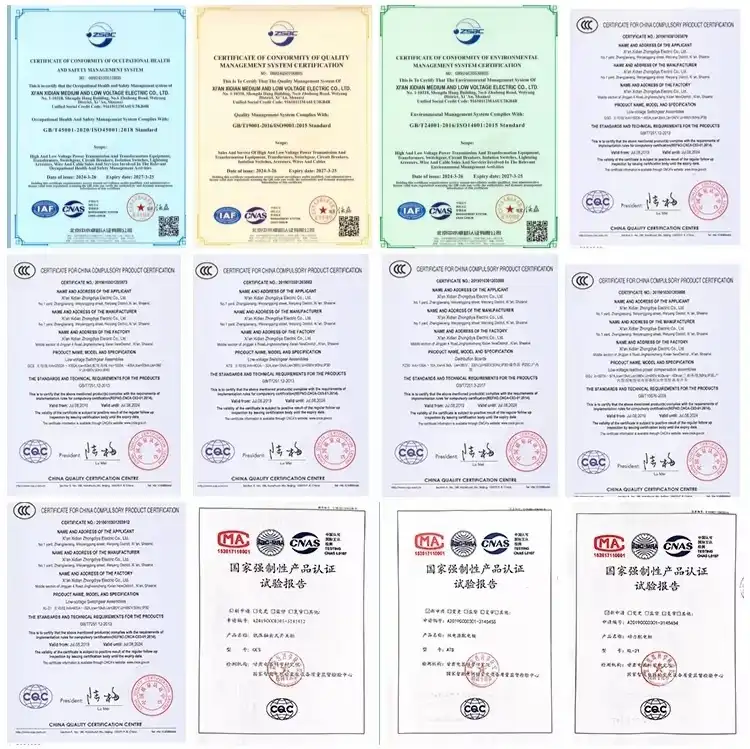
Reliability is linked to a brand's image. Quality control at well-known makers starts with choosing the right raw materials. These include aerospace-grade contact alloys, automated assembly that cuts down on human mistake, and three stages of testing that simulate decades of use. Xi'an Xikai's work on the National 863 Program and 15 or more patents in switchgear technology show that he can come up with new ideas that make products last longer.
Warranty terms show how confident the maker is. Standard two-year warranties cover problems with the way the product was made, but longer warranties that cover issues with the vacuum interrupter's stability and mechanical wear give you more peace of mind. When downtime costs are higher than the cost of the equipment itself, providers stand out in markets with 24-7 expert hotlines, multilingual paperwork, and just-in-time delivery of spare parts. Large-scale infrastructure projects and distributor inventory planning can be accommodated by bulk order flexibility, such as competitive pricing for orders of 5,000 units or more and just-in-time (JIT) delivery in less than eight weeks.
Conclusion
Indoor vacuum circuit breakers are a big step forward in electrical safety because they quickly stop arcs, are good for the environment, and don't need much upkeep. The sealed vacuum environment gets rid of the fire risks that come with oil designs and the greenhouse gas issues that come with SF6 technology. It also provides better interrupting performance in smaller enclosures. Strategic uses in heavy industry, renewable energy, and critical infrastructure show how flexible vacuum technology is. When buying something, people have to think about the technical specs, the possible problems that could happen with the application, the supplier's reputation, and the overall cost over its entire life. If you follow the right maintenance steps and work with a provider that offers great after-sales service, vacuum breakers will last for decades, saving people and equipment and making sure that mission-critical electrical systems keep running.
FAQ
1.What inspection intervals maintain safety compliance for vacuum breakers?
Every six months, do visual checks to make sure there are no cracks in the insulators and that the mechanical counter readings are correct. During yearly shutdowns, readings of contact over-travel and power frequency withstand voltage tests should be done to check the stability of the vacuum. Compare all of your findings to the manufacturer's instructions to get a good idea of when the replacement will be needed.
2.How do I recognize when a vacuum interrupter requires replacement?
Vacuum stability needs dielectric testing, but gas breakers have pressure signs that can be seen. Keep an eye out for contact wear that goes over 3 mm on dynamic rods, sudden rises in contact resistance, or failures during power frequency withstand voltage tests. These signals mean that there is vacuum leakage or contact erosion that needs to be fixed right away.
3.Can vacuum breakers integrate with modern smart monitoring systems?
Modern models, like the ZN39-S series, have connection interfaces that are ready for the Internet of Things and handle the Modbus and IEC 61850 protocols. Predictive maintenance plans use real-time information on mechanical operations, contact temperature, and spring tension to cut down on unplanned downtime by using condition-based servicing instead of time-based schedules.
Partner With Xi'an Xikai for Proven Indoor Vacuum Circuit Breaker Solutions
If you choose the right indoor vacuum circuit breaker supplier, you can be sure that it will work for a long time and meet international safety standards. Xi'an Xikai Medium & Low Voltage Electric Co., Ltd. is one of the biggest companies in China that makes indoor vacuum circuit breakers. They sell state-of-the-art ZN39 series units that are made according to ISO-certified standards and tested three times. Our plateau-type equipment can work at heights of up to 4,000 meters, so it can be used in a wide range of locations. We offer unique solutions that are made to fit your power requirements and the conditions where you work. Our work has been tested and proven to work in State Grid systems, steel metallurgy, and green energy projects. You can email our expert team at serina@xaxd-electric.com, amber@xaxd-electric.com, or luna@xaxd-electric.com to talk about your needs, ask for CAD files, or set up plant tours.
References
1. IEEE Standard C37.04-2018, "IEEE Standard for Ratings and Requirements for AC High-Voltage Circuit Breakers with Rated Maximum Voltage Above 1000 V," Institute of Electrical and Electronics Engineers, 2018.
2. IEC 62271-100:2021, "High-voltage switchgear and controlgear – Part 100: Alternating-current circuit-breakers," International Electrotechnical Commission, 2021.
3. Slade, Paul G., "The Vacuum Interrupter: Theory, Design, and Application," CRC Press, 2nd Edition, 2017.
4. GB/T 1984-2014, "High-voltage alternating current circuit-breakers," Standardization Administration of China, 2014.
5. Greenwood, Allan N., "Vacuum Switchgear," Institution of Engineering and Technology (IET), 1994.
6. Fink, Donald G., and Beaty, H. Wayne, "Standard Handbook for Electrical Engineers," McGraw-Hill Education, 17th Edition, 2018.