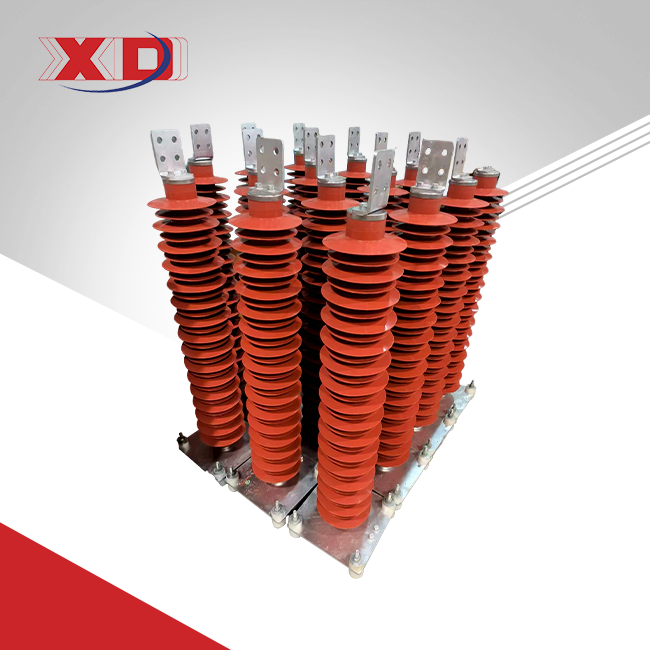
YH10W-102/266W Lightning Arrester Polymeric MOA for AC system
What is the difference between iron-core and air-core reactors?
2026-04-03 11:29:41
Understanding reactor technology is important for managing complicated electrical systems in factories, data centers, or high-voltage substations to make sure they work reliably and save money. The main difference between iron-core and air-core reactors is how they are built and how magnetic they are. Iron-core reactors use ferromagnetic materials that can become magnetically saturated when loads change, which could affect the stability of the inductance. Air-core reactors, especially the Dry-type Air Core Shunt Reactor, don't have this saturation risk at all because they only use air as the magnetic medium. They have better thermal management and linear performance characteristics. When procurement professionals look at investments in electrical infrastructure, this difference has a direct effect on how often maintenance needs to be done, how safe the environment is, and how much it will cost to run in the long run.
 |
 |
Understanding Reactor Types: Iron-Core vs Air-Core
To choose the right reactor technology, you need to know how differences in construction affect how well the reactor works. Choosing between these two types of reactors changes everything, from the size of the footprint needed to the schedule for maintenance.
Fundamental Construction Principles
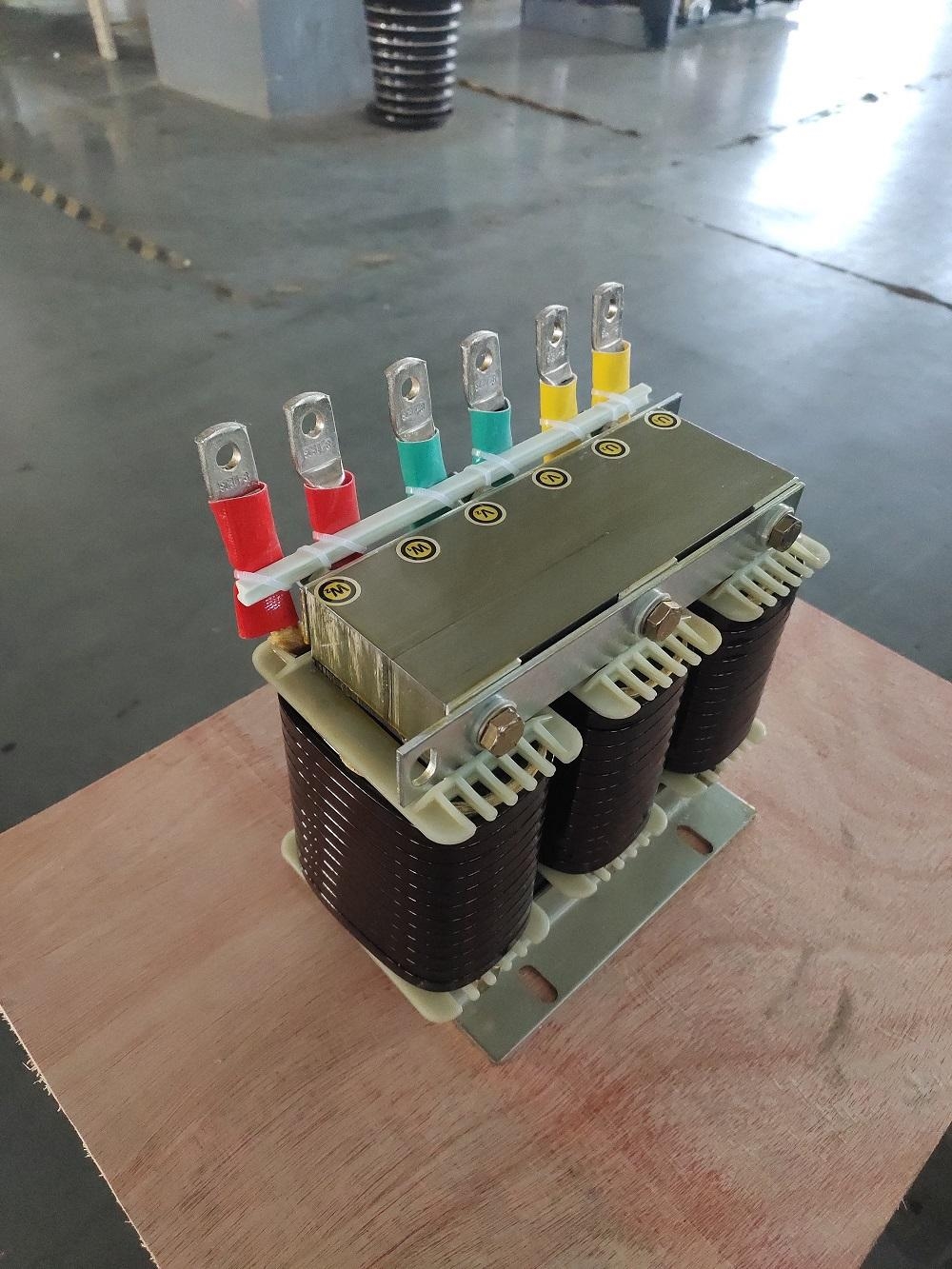
Iron-core reactors use copper or aluminum windings around laminated silicon steel cores. The ferromagnetic core concentrates magnetic flux, giving higher inductance in a smaller package. They remain common in industrial plants due to compact size and reliable performance under stable, predictable load conditions.
Material Properties and Operational Characteristics
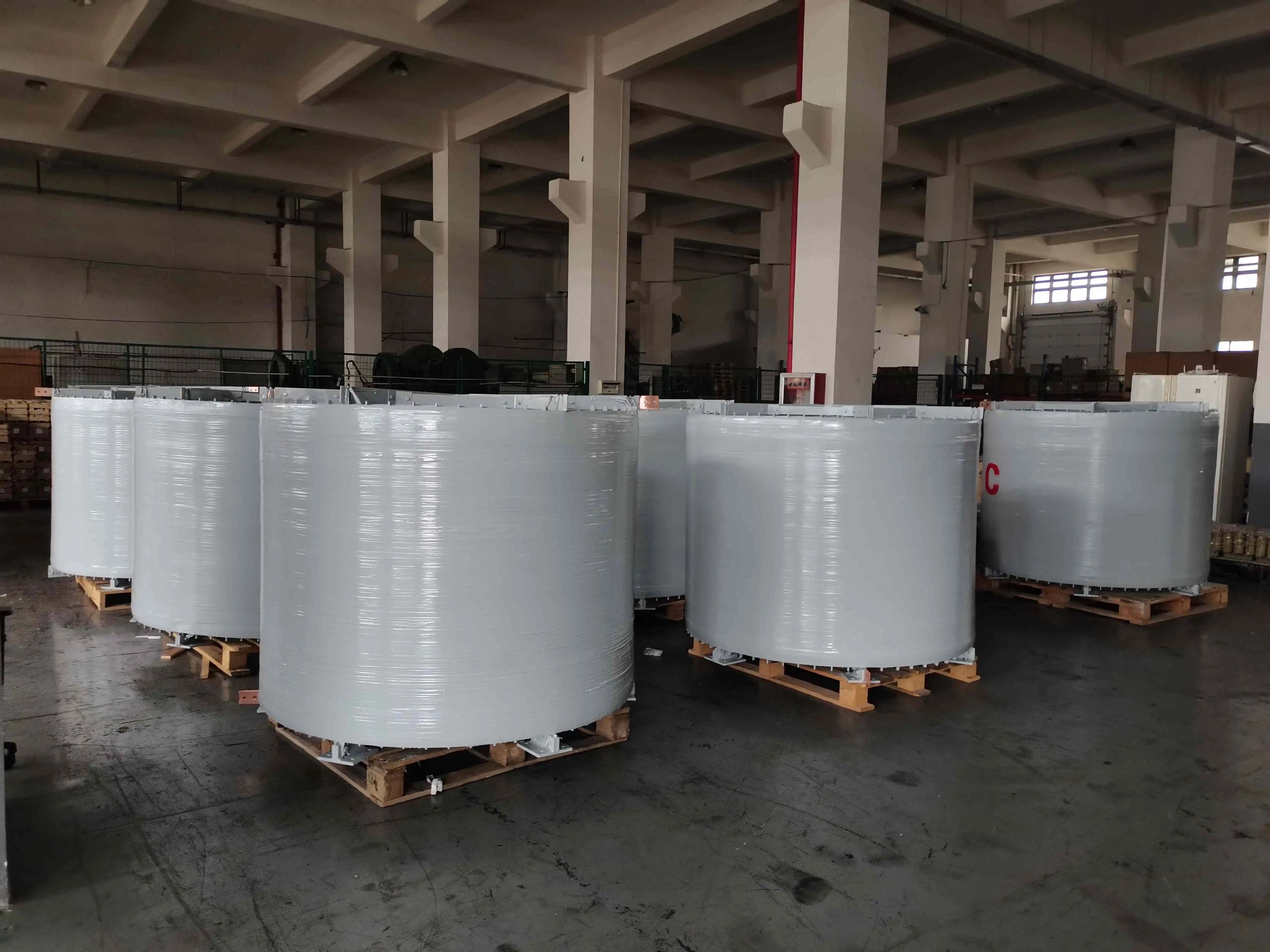
Air-core reactors avoid ferromagnetic materials, using cylindrical windings in epoxy-resin fiberglass. Inductance is determined by coil shape, and natural or forced air cooling eliminates insulating oil, reducing fire risk, preventing soil contamination, and simplifying maintenance.
Voltage Ratings and Application Scope
Iron-core units suit medium-voltage (up to 35 kV) indoor substations with space limits. Air-core shunt reactors handle 110–500 kV, connecting in parallel on transformers’ low-voltage sides. Epoxy insulation tolerates high-voltage stress, while air cooling prevents thermal hotspots, maintaining long-term performance.
Core Differences and Their Impact on Performance
When procurement teams understand how magnetic properties affect real-world performance, they can better predict how Dry-type Air Core Shunt Reactor will operate and estimate their maintenance needs across the full lifecycle. This knowledge helps in selecting the right reactor type, planning inspections, and managing total ownership costs while ensuring reliability and system protection.
Magnetic Saturation and System Stability
Magnetic saturation limits iron-core reactor performance. During faults or switching transients, current exceeds the ferromagnetic core’s capacity, sharply reducing permeability and inductance when current-limiting is most needed. Protection schemes must account for this nonlinear behavior, often requiring larger equipment or additional safety devices, increasing costs and complexity in power system management.
Thermal Management Strategies
Air-core reactors avoid saturation entirely. Without ferromagnetic materials, inductance remains linear even during ground faults or energization events, keeping current-limiting consistent. This predictable behavior simplifies protection coordination, improves reliability, and is ideal for transmission networks handling fault currents above 40 kA, reducing risks and operational challenges compared to iron-core designs.
Maintenance Requirements and Total Cost of Ownership
Thermal and maintenance demands differ by reactor type. Oil-filled iron-core reactors need regular oil testing, insulation monitoring, and replacement, raising costs over decades. Air-core dry-type reactors use epoxy-coated aluminum coils with natural convection cooling, eliminating oil, reducing fire risk, and cutting annual maintenance by ~60%, allowing quick visual inspections and lowering total lifecycle costs for facilities.
Dry-Type Air Core Shunt Reactors: Advantages and Applications
Modern power systems are using air-core technology more and more for tasks that need to be reliable, safe for the environment, and flexible in how they are used. These traits are in line with how grid needs are changing as utilities add variable renewable generation and power up transportation networks.
Environmental and Safety Benefits
Eliminating insulating oil solves a number of safety and environmental problems at the same time. If tanks for traditional oil-filled equipment break during earthquakes or other equipment failures, they could contaminate the environment. Cleanup costs and fines from the government can be higher than the value of the original equipment, putting facility operators in a lot of financial danger. Strict environmental rules mean that oil-free designs are better for urban substations that are close to residential areas.
To deal with these problems, air-core reactors are built in a way that makes them naturally safe. The epoxy-encapsulated windings don't contain any flammable liquids, which makes the risk of fire much lower. Designs without SF6 avoid using strong greenhouse gases, which is in line with companies' commitments to sustainability and regulatory trends in California and the European Union. Aluminum windings that can be recycled and modular construction help recover materials at the end of their useful lives, which supports circular economy efforts. As companies keep an eye on Scope 2 emissions and try to get LEED certification for their buildings, these environmental benefits become more important in their buying decisions.
Performance in Dynamic Load Environments
Adding renewable energy causes changes in voltage and reactive power that are hard for standard grid equipment to handle. When the wind speed changes, wind turbines cause real power to swing quickly, and solar inverters add harmonics. In these changing conditions, traditional reactive compensation had a hard time keeping the voltage stable, and it sometimes took expensive STATCOM installations to get good performance.
Because of how it was built, the BKGKL Dry-type Air Core Shunt Reactor from Xi'an Xidian can handle these problems. Here are some of the best things about this device:
- Linear Impedance Response: Keeps inductance constant across the entire current range, allowing for predictable compensation even when load changes or fault conditions happen.
- Harmonic Tolerance: Aluminum windings and air insulation can handle harmonic currents without creating hotspots. This helps keep the power quality high in factories that use variable frequency drives.
- Transient Voltage Suppression: It soaks up capacitive charging currents when the line is turned on, stopping Ferranti effect overvoltages that damage transformer insulation.
- Modular Scalability: Standard-rated blocks let you connect multiple units in parallel to meet your MVAR needs, so you can handle future load growth without having to buy all new equipment.
These features are especially useful in offshore wind collector substations, where long submarine cables create a lot of capacitive reactive power. The installation of the reactor at the point of common coupling keeps the grid code in line and protects equipment on the offshore platform from overvoltage stress. More and more, engineering firms that are building these facilities are specifying air-core technology to cut down on maintenance needs offshore and increase availability.
Compliance with International Standards
For global purchasing, equipment must meet different regional standards without having to be customized, which can be expensive. The BKGKL series solves this problem by already meeting the requirements for CE marking (European Union), UL/cUL listing (North America), and GOST-R certification (Commonwealth of Independent States). This approach to multiple standards makes it easier for multinational companies to standardize equipment across regions.
Performance characteristics match IEEE, IEC, and GB standards for rated voltage, temperature rise, partial discharge limits, and seismic withstand, in addition to safety certifications. Third-party testing labs confirm that the impedance is correct 100% of the time and that the partial discharge levels are less than 10 picocoulombs, which is a lot lower than the 50 pC threshold that speeds up insulation aging. The ISO 9001 and ISO 14001 certifications show that the systems for controlling the manufacturing process and managing the environment are mature. These quality guarantees lower the risk of procurement and make it easier for organizations with strict supplier qualification protocols to approve specifications.
How to Choose the Right Reactor for Your Needs: A Procurement Guide?
To choose the right reactor, you have to carefully weigh technical needs against economic factors. This means looking at things like operational parameters and the supplier's abilities in a planned way.
Building a Reliable Specification from System Analysis
Specifying a reactor starts with analyzing the electrical system. Load flow studies determine reactive power needs, short-circuit calculations verify fault current capacity, and voltage regulation studies define acceptable voltage ranges. Seasonal load changes and planned generation dispatch are considered to ensure reliable operation under all conditions.
Adapting Reactor Design to Environmental Challenges
Environmental factors strongly influence design. High-altitude sites require derating due to lower air density. Coastal installations need corrosion protection, with IP55 enclosures shielding against water and salt. Seismic areas demand robust anchorage; Xi'an Xidian offers Zone 4 configurations that resist 0.4 g horizontal acceleration without structural damage.
Evaluating Long-Term Value and Supplier Capabilities
Total cost of ownership goes beyond purchase price. Dry-type air-core reactors cost 15–25% more upfront but save on energy, maintenance, and disposal. Fully assembled units reduce installation time and crane use, lowering EPC costs. Supplier evaluation should include certifications, production scale, after-sales support, and rigorous testing like automated winding accuracy, partial discharge, and impedance verification.
Installation, Safety, and Maintenance of Dry-Type Air Core Shunt Reactors
Following the right installation and maintenance procedures will make sure that the equipment works well and safely for as long as it is used.
Site Preparation and Installation Best Practices
Preparing the site properly is the first step to a successful reactor installation. Building codes say that foundation designs must take into account both static weight and seismic loads. To keep bus connections from moving out of place, concrete pads need to be left to cure for 28 days before they can be used. Leaving at least 1.5 meters of space around the reactor on all sides for natural convection cooling makes sure there is enough air flow.
Procedures for making electrical connections follow well-known safety rules. Check the alignment of the buswork before the final bolt-up to keep the terminals from being mechanically stressed. Use calibrated tools to torque all connections to the manufacturer's specifications. Connections that aren't tight enough create hotspots that cause them to fail early. Depending on where they are installed, grounding conductors must meet NEC or IEC standards, which usually call for more than one ground connection for high MVAR ratings.
Safety Features and Regulatory Compliance
Modern designs for reactors include many safety features that keep equipment and people safe. Thermal monitoring systems keep an eye on the temperatures of the windings and sound alarms before the insulation's life is threatened by temperature limits. Current imbalance detection finds internal turn-to-turn faults that need to be disconnected right away. Enclosure designs that meet IP protection ratings keep people from touching powered parts by accident while still letting enough air flow through to keep things cool.
The BKGKL Dry-type Air Core Shunt Reactor series meets strict safety standards that apply to all major markets. UL listing shows that the product meets the requirements of the NFPA 70 National Electrical Code, which governs the installation of electrical equipment in US buildings. The CE mark shows that the product meets the standards for electromagnetic compatibility and the EU Low Voltage Directive. These certifications make it easier to get permission for installations and meet the requirements of insurance companies.
Preventive Maintenance Programs
Setting up regular inspection schedules for equipment increases its useful life and stops it from breaking down without warning. Visual inspections done every three months find environmental contamination, mechanical damage, or animal entry. Check for discoloration that means the surface is too hot, cracks in epoxy surfaces that mean the stress is being changed by heat, or corrosion on aluminum surfaces that are near the coast.
Every year, thermographic surveys map out how temperatures are spread out across winding surfaces. Infrared imaging can find connection hotspots, blocked airflow paths, or damaged insulation inside a system before it fails completely. To find new problems, compare thermal patterns to baseline commissioning data. With this approach to predictive maintenance, planned interventions can happen during planned outages instead of having to be made in an emergency.
Conclusion
Knowing the differences in how Dry-type Air Core Shunt Reactor work and how they affect the economy helps people make smart purchasing decisions that match the equipment's abilities with the needs of the application. Modern grid problems can be solved by air-core technology, especially dry-type configurations, which prevents magnetic saturation, makes maintenance easier, and is safer for the environment. The BKGKL series is a great example of these benefits because it has been used for years in high-voltage transmission applications and meets all international safety standards. When procurement professionals look at reactor technology, they shouldn't just look at the initial acquisition costs. They should also look at the total lifecycle costs, the technical capabilities of the supplier, and the long-term support infrastructure. This all-around approach makes sure that investments in electrical infrastructure keep giving back over many decades of service.
FAQ
1. What are the main operational differences between iron-core and air-core reactors?
Iron-core reactors use ferromagnetic cores that can become magnetically saturated when there is a lot of current flowing through them. This temporarily lowers the inductance when the ability to limit current is needed the most. Air-core designs keep their linear impedance properties no matter how much current they have. This means they work reliably even when there are faults, switching transients, or changes in variable renewable generation. This linearity makes it easier to coordinate protections and makes voltage stability better in transmission systems with moving loads.
2. Can existing oil-filled reactors be replaced with dry-type air-core units?
Replacement may or may not be possible depending on the site's limitations and electrical needs. Due to their lower inductance density and lack of ferromagnetic flux concentration, air-core reactors usually need bigger footprints. Check to see if the existing foundations can handle differences in size and that the clearance requirements meet the need for air flow. Electrically, make sure that the new unit matches the MVAR rating, voltage class, and connection layout of the old one. Environmental benefits and less maintenance often make retrofit projects worth it, even if they need to make physical changes.
3. How do I verify supplier quality and manufacturing reliability?
Ask for proof of ISO 9001 certification that shows the quality management system is mature. Ask for type test reports from approved labs that show the product meets IEEE, IEC, or GB standards. Reference installations in similar applications provide operational validation; contact current customers to see how responsive after-sales support is. When you visit a factory, you can see what it can make, how it tests things, and how it controls the process. Xi'an Xidian keeps a lot of testing equipment, like impedance verification systems and partial discharge chambers, to make sure that every BKGKL reactor meets strict quality standards before it is shipped.
Partner with Xi'an Xidian for Reliable Reactor Solutions
With its tried-and-true Dry-type Air Core Shunt Reactor technology, Xi'an Xidian is ready to help you with your important power infrastructure needs. Our BKGKL series gives modern transmission systems the performance, dependability, and safety in the environment that they need. As a company that has been making dry-type air core shunt reactors for more than 25 years, we know the problems that utility operators, industrial facility managers, and system integrators face in their daily work. Our engineering team works with customers to come up with the best solutions for each site's specific needs, such as desert environments that need IP55 protection, seismic zones that need Zone 4 rated mounting, or the integration of IoT devices for monitoring. You can email our technical experts at serina@xaxd-electric.com, amber@xaxd-electric.com, or luna@xaxd-electric.com to talk about how Xi'an Xidian's new reactor technology can make your system more stable while lowering its lifecycle costs. We offer full support from the initial specification stage through decades of operational service. Our services are backed by global certifications and have been proven reliable in over 30 countries.
References
1. IEEE Standards Association. IEEE Standard for Shunt Reactors Rated Over 500 kVA. IEEE Std C57.21-2008, Institute of Electrical and Electronics Engineers, 2008.
2. Harlow, James H. Electric Power Transformer Engineering. 3rd ed., CRC Press, 2012, pp. 487-523.
3. International Electrotechnical Commission. Reactors – Part 1: General Requirements. IEC 60289-1:2015, International Electrotechnical Commission, 2015.
4. Kulkarni, S.V., and S.A. Khaparde. Transformer Engineering: Design, Technology, and Diagnostics. 2nd ed., CRC Press, 2013, pp. 654-689.
5. Gross, Charles A., and Elham B. Makram. "Comparison of Shunt Reactor Technologies for EHV and UHV Transmission Systems." IEEE Transactions on Power Delivery, vol. 28, no. 3, 2013, pp. 1742-1750.
6. National Electrical Manufacturers Association. Dry-Type and Oil-Immersed Shunt Reactors for Power Systems. NEMA TR-96-2017, National Electrical Manufacturers Association, 2017.
_1774404811357.png)