
When to Use Capacitor Voltage Transformers in High Voltage Systems
2026-06-11 15:56:53
Picking the best voltage measuring tool for high-voltage networks has a direct effect on how safe, reliable, and cost-effective they are. If your system works above 66kV, needs accurate metering for revenue-grade accuracy, and needs to be able to handle natural problems like pollution or high temperatures, a capacitive voltage transformer is the best choice. CVTs use capacitor divider technology to provide reliable performance while lowering installation costs by up to 40% in transmission-class applications. This is in contrast to traditional electromagnetic voltage transformers that become too expensive at higher voltages.
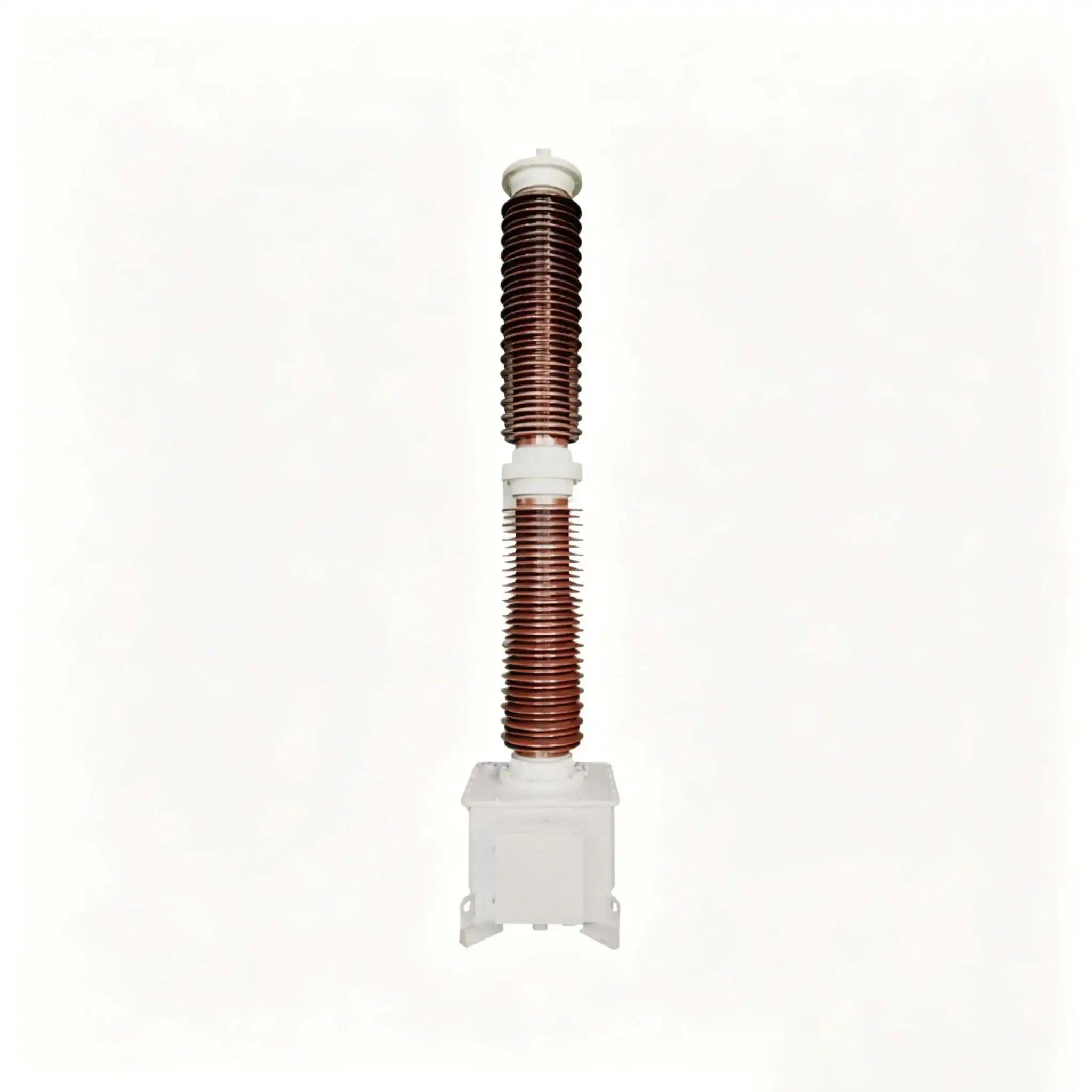
Understanding Capacitor Voltage Transformers in High Voltage Systems
How Capacitive Voltage Transformers Work
With a smart yet beautiful design, capacitive voltage transformers turn high transmission voltages into signals that can be handled and measured. The gadget steps down the main voltage with a capacitor divider stack, then uses an electromagnetic transformer and a damping circuit in the middle. Because of this setup, CVTs are needed for both metering and safe transmission because they accurately show voltage over a wide frequency range.
The voltage divider is made up of several high-voltage capacitor units that are linked in series to make a specific voltage division ratio. This voltage is lowered even more by an intermediate transformer, which makes it normal secondary levels, which for measurement purposes are usually 110V or 115V. The damping circuit is an important new feature in current CVT design that stops ferroresonance effects and makes the transient reaction better when switching operations or fault conditions happen.
Advantages Over Traditional Electromagnetic Transformers
Comparing CVTs to inductive potential transformers shows their practical and financial benefits. Electromagnetic transformers beyond 110kV need complex insulation and large core-and-coil modules. This increases their weight, space, and material expenses. Our 110kV capacitive voltage transformer is 60% lighter than electromagnetic solutions yet maintains 0.1-class income counting precision.
CVTs also perform well in challenging situations. For substations along the coast or in industrial locations with salt spray, chemical fumes, or flying particles, the greater creepage distance—more than 25 mm per kV—improves pollution resistance. Advanced insulating materials provide it with considerable electric strength, so it can perform successfully even when briefly overvoltaged by 1.5 times its usual voltage.
CVTs simplify field maintenance. No oil-filled joints mean no leaks and fewer environmental dangers. Hermetically sealed internal parts prevent dampness, extending service life to almost 30 years with no maintenance. Utility businesses with substantial transport networks have reduced total cost of ownership due to these characteristics.
Critical Applications in Power System Protection
Accurate and quick voltage signals are needed for protective relays to find problems and separate faulty areas. With the right amount of damping, CVTs can achieve 3PT1-level rapid responsiveness, which means that the residual voltage stays below 2% when the voltage changes quickly. This quick settling time makes sure that it works with current numerical relays that run security algorithms in milliseconds.
Revenue metering systems need to be very precise over many years of use. Our devices stay accurate to within 0.1 classes for as long as they are used. This is possible thanks to unique damping technology and temperature-compensated capacitor elements. On-site recalibration lets utilities check the accuracy of measurements without taking equipment out of service, which keeps income loss from metering errors to a minimum.
When to Choose Capacitor Voltage Transformers: A Decision-Support Framework
System Voltage Level Assessment
When choosing measurement transformers, voltage class is the most important thing to think about. Above 66kV, capacitive voltage transformers are more cost-effective, and they are the standard option for 110kV, 220kV, and higher transmission lines. At these voltage levels, the compact capacitor stack design takes up a lot less room than bulky electromagnetic options. This is especially helpful in urban substations where the cost of real estate affects the project's profitability.
Most of the time, conventional voltage transformers are better for manufacturing companies that use 35kV or less power because they are easier to install and cost less at first. However, data centers and hospitals that are installing 110kV substations on-site to improve power stability are increasingly choosing CVTs because they work better with sensitive digital loads and handle transients better.
Accuracy and Performance Requirements
Different uses have different requirements for accuracy. For utility bills, revenue metering needs to be accurate to within 0.2 classes or better to avoid financial disagreements and follow the rules. Protection circuits can handle bigger error margins (usually 3P class), but they need very fast transient reaction to keep relays from misbehaving while the fault is being cleared.
Our 110kV capacitive voltage transformer has two output ratings: 0.1-class for measuring and 3P for safety. This means you don't need two different measuring tools. This unified method minimizes the size of the center while still meeting all IEC 61869 and IEEE standards, which are widely used in North America and around the world.
Environmental and Installation Constraints
Location and weather factors have a big impact on the choice of breaker. Salt fog speeds up the breakdown of insulation in coastal utility systems, which requires equipment with longer creepage distances and slippery surface treatments. Our CVTs have anti-pollution coats that meet IEC 60815 standards and have been tested and shown to work in marine settings on four continents.
Facilities in areas that are prone to earthquakes need to think about seismic issues. Xi'an Xikai designs meet the standards for seismic qualification set by IEEE 693; they have stronger mounting frames and flexible connections that can handle ground motion without breaking or losing their electrical integrity. This feature is very important for California substations and industrial buildings that are near the Pacific earthquake belt.
Procurement Considerations and Market Standards
Leading equipment makers like Siemens, ABB, and Schneider Electric use decades of field performance data to set quality standards. Procurement managers should check that sellers have the right certifications, such as IEC 61869, CE marking for European markets, and UL listings for systems that fall under the National Electrical Code.
Customization choices affect how long a job takes and how much it costs. Standard catalog items usually ship within 8 to 12 weeks. However, customized solutions with unique voltage ratios, mounting options, or extra outputs need 16 to 20 weeks of wait time. Xi'an Xikai can keep up with both standard and special orders because it has over 40 patents in CVT damping and insulation technology.
Warranty terms and help after the sale are what set trusted partners apart from transactional sellers. As part of our dedication, we offer expert support 24 hours a day, seven days a week, detailed installation instructions, and quick logistics for spare parts. The national grid operators in Asia, Europe, and Africa, who are in charge of thousands of CVT systems, accept this service model.
Installation, Testing, and Maintenance of Capacitor Voltage Transformers
Installation Procedures and Safety Protocols
The right way to install a capacitive voltage transformer starts with preparing the base and making sure the grounding system works. The attachment pad needs to be strong enough to support the 110kV units' 450 kg standing load and stay level within 0.5 degrees to keep stress from being spread out unevenly. Grounding lines need to have less than a 1-ohm resistance to earth, which can be checked by checking for fall-of-potential before the power is turned on.
Specifications for primary connection torque stop both loose contacts that cause heat and over-tightening that harms leads. Our assembly guides say that the main clamps should have 100–120 N·m of torque, which should be applied with calibrated tools and checked with infrared thermography during commissioning. To keep cross-circuit interference from happening, metering and protection circuits are kept on different wires for secondary wiring that follows color-coded terminal blocks.
Testing and Commissioning Methodologies
As part of factory acceptance testing, the partial discharge is measured, the insulation resistance is checked, and the accuracy is proven across the entire working range. Each device goes through 12 or more quality checks, such as X-rays of the capacitor parts and environmental modeling rooms that mimic temperature changes from -40°C to +55°C. Our partial discharge performance is below 5 picocoulombs, which is well below IEC limits, as confirmed by our KEMA Labs approval.
Before putting tools into service, field setup tests make sure that the installation is correct. A 5kV megohmmeter should show that the insulation resistance between the main and ground is more than 10,000 megohms. Turns ratio testing makes sure that the voltage transformation is correct, and load testing makes sure that the linked metering and relay circuits have enough space. These steps are in line with the standards for utility testing used across the entire US power business.
Preventative Maintenance and Lifespan Extension
CVTs don't need as much regular care as oil-filled equipment, but regular checks make them more reliable. Visual exams are done once a year to look for ceramic cracks, darkening at the ends of the teeth that could mean they are too hot, and seal integrity. Insulation resistance trends find patterns of wear and tear before they affect performance. This lets replacements happen during planned blackouts instead of having to be done when the power goes out.
Dielectric loss readings, shown as tanµ or power factor, show when something inside is breaking down before it gets too bad. When new, our devices keep tan´ below 0.08%, and if numbers go above 0.15%, care rules make an investigation happen. This proactive approach, along with our hermetically sealed design that keeps moisture out, means that our products usually have a service life of 30 years or more in harsh transmission settings.
Troubleshooting and Risk Management in Using CVTs
Common Fault Modes and Diagnostic Approaches
Capacitive voltage transformers fail mostly due to insulation deterioration. Long-term voltage stress, heat ageing, or leaky designs may cause this. This is indicated by rising dielectric loss factors, dropping insulation resistance, and internal partial discharge activity detected by ultrasonic sensors or radio-frequency tracking gear.
Frequency response anomalies reduce measurement accuracy when internal component values exceed design restrictions. As capacitor elements age, the voltage division ratio changes, and electromagnetic transformer windings degrade the secondary output. These issues are caught before they influence revenue metering or cause protective relays to fail during system disruptions by regularly testing their correctness against reference standards.
Ferroresonance may occur when CVT capacitive reactance matches system inductance in certain network topologies. If the damper circuit is properly built, this doesn't happen during normal operation. The ferroresonance suppression stabilises operation with shifting loads. Transient computer simulations and high-voltage laboratory testing before product introduction proved this.
Compliance and Regulatory Risk Mitigation
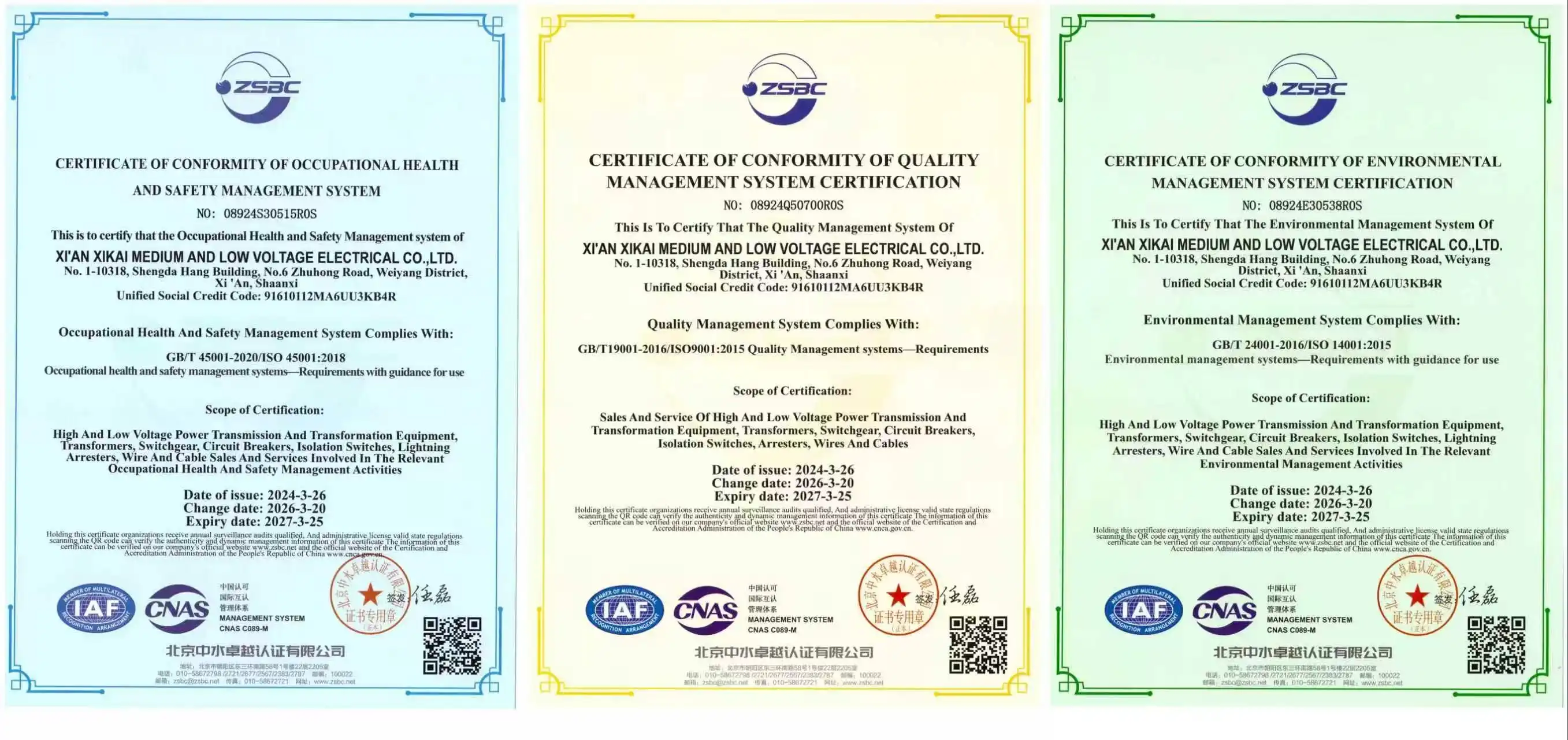
You avoid regulatory audits and responsibility by following international standards. IEC 61869 governs voltage transformer design, testing, and operation in over 80 countries. IEEE C57.13 standardises North American locations. Without these certificates, utility procurement assessments and project inspections by the proper authorities may reject your equipment.
Safety rules include environmental issues as well as electrical performance. RoHS compliance restricts production using hazardous materials, while ISO 14001 certification verifies an environmental management system. Procurement personnel may be certain that suppliers fulfil regulators' and the company's sustainability objectives with these certifications.
Documentation standards across an item aid risk management. Test results, regular test certifications, maintenance instructions with flowcharts for repairing issues, and spare parts catalogues with images of how to assemble the components are in our thorough technical files. This documentation helps facility managers comply with OSHA, NFPA 70E, and utility-specific maintenance protocols.
Future Trends and Innovations in Capacitive Voltage Transformer Technology
Digital Integration and Smart Grid Compatibility
Modern power grids need more than just inactive voltage sensors; they need smart devices that send data to management control systems in real time. The newest capacitive voltage transformers have digital output units that convert analog data to the IEC 61850 protocol. This makes it possible for them to work seamlessly with automation platforms for substations. This digital change makes connecting easier and increases the quality of data for more advanced grid analytics.
IoT-enabled tracking systems built into voltage transformers keep an eye on things like temperature, partial discharge activity, and the health of the insulator. Predictive maintenance programs look at these streams of data to figure out how long something is still useful and how often it should be inspected. When utilities use these smart sensors, they say that maintenance costs go down by 20 to 30 percent and machine availability goes up through condition-based intervention methods.
Advanced Materials and New Ways of Making Things
Nanocomposite dielectrics research could lead to even better CVT performance and dependability. When compared to regular insulation systems, these designed materials are stronger electrically, lose less dielectric, and last longer when heated up. Leading makers have done field tests that show a 15% drop in the partial discharge inception voltage and longer service life predictions.
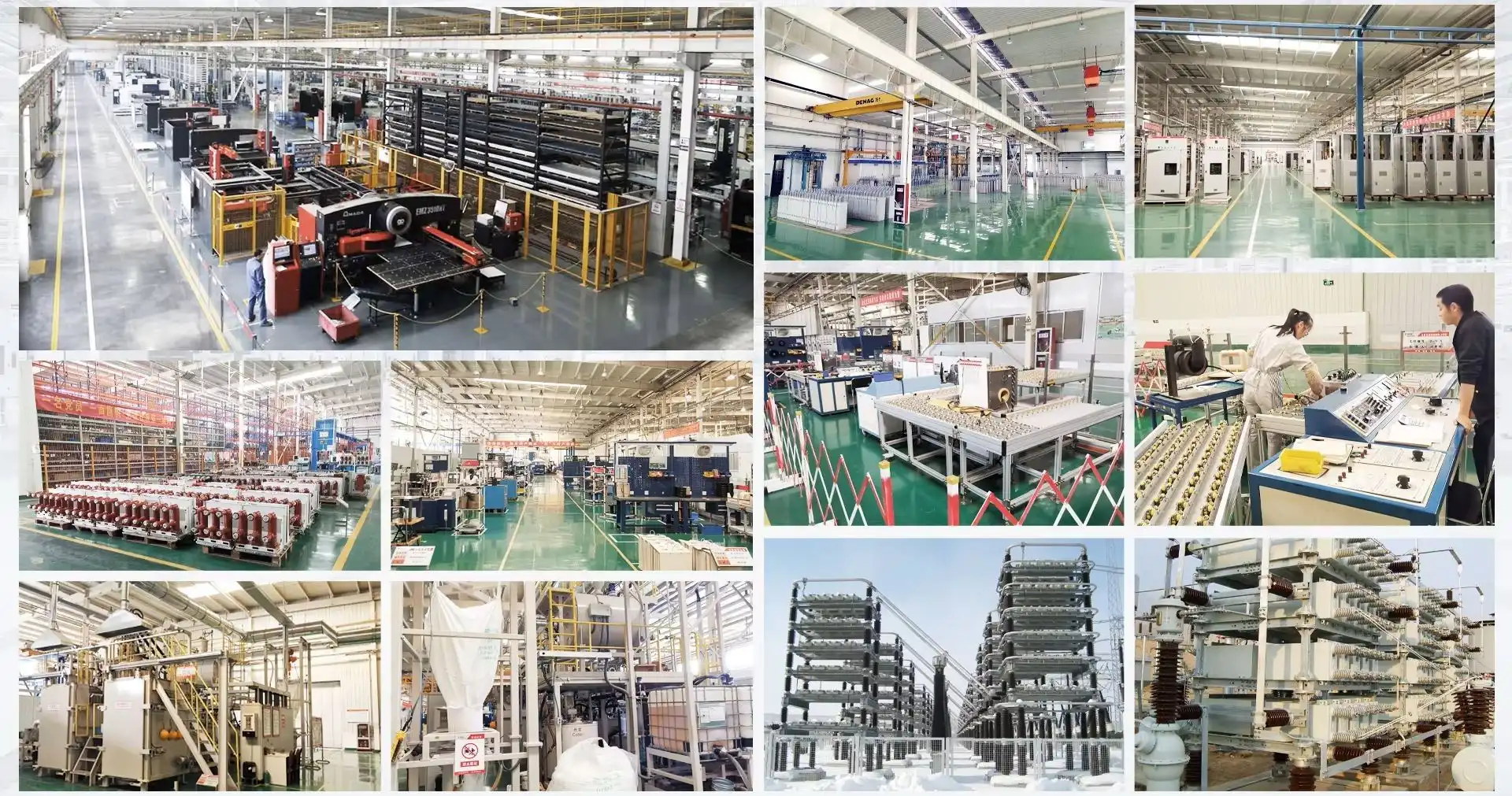
Automation in manufacturing improves accuracy while lowering the cost of production. Computer-controlled winding tools make sure that capacitor elements are built evenly, and automatic vacuum casting gets rid of any holes in the epoxy insulation. Xi'an Xikai's investment in Industry 4.0 technologies, such as robotic assembly lines and quality inspections powered by AI, helps us keep our place as one of China's biggest manufacturing bases for medium and low-voltage electrical equipment.
Renewable Energy Integration Challenges
Voltage measurement devices have to deal with some unique problems when wind and solar power are used. Harmonic instability and high-frequency transients that aren't present in standard synchronous generation are added by inverter-based resources. To keep their accuracy when power quality problems happen, CVTs that serve substations with a lot of green energy need better frequency response and strong dampers.
When energy storage devices charge and discharge, power moves in both directions and voltage changes quickly. Our engineering team works with people who make battery storage to make sure that the CVT works well in these changing situations. This makes sure that the measurements are correct whether the substation sends power to the transmission grid or takes it in during charging. This application knowledge helps with the switch to clean energy while keeping the grid reliable for businesses and industries that count on it.
Conclusion
Selecting capacitive voltage transformers for high-voltage applications requires balancing technical performance, environmental resilience, and long-term economics. CVTs excel in transmission-class systems above 110kV where their compact design, superior pollution resistance, and minimal maintenance requirements deliver compelling value. Understanding how capacitor divider technology, damping optimization, and digital integration capabilities address specific operational challenges enables informed procurement decisions. As power networks evolve toward smart grid architectures integrating renewable resources, partnering with innovative manufacturers offering customized solutions, comprehensive support, and proven field performance becomes increasingly critical to infrastructure resilience.
FAQ
1. What distinguishes CVTs from electromagnetic voltage transformers?
Instead of electromagnetic induction, capacitive voltage transformers lower the voltage with capacitor divider circuits. With this basic difference, cable levels above 110kV are lighter, take up less space, and cost less. When the distribution voltage is less than 35kV, electromagnetic transformers are better because their easier design saves money.
2. How often do CVTs require maintenance?
Routine maintenance intervals typically span 3-5 years, involving visual inspections and insulation resistance testing. The hermetically sealed construction eliminates oil sampling and moisture checks required for conventional transformers. Dielectric loss measurements performed every 5-7 years identify internal degradation before it affects performance, supporting predictive maintenance strategies that minimize unplanned outages.
3. Can CVTs serve both transmission and distribution networks?
While technically feasible across voltage ranges, CVTs prove most cost-effective in transmission applications above 66kV. Distribution systems at 35kV and below typically achieve better economics with conventional voltage transformers due to lower complexity and reduced installation requirements.
Partner with Xi'an Xikai for Reliable Voltage Measurement Solutions
Xi'an Xikai Medium & Low Voltage Electric Co., Ltd. stands ready to support your high-voltage infrastructure requirements with proven capacitive voltage transformer solutions. Our 110kV CVT combines 3PT1-level transient response, extended creepage distances exceeding 25mm/kV, and 30+ year service life backed by comprehensive warranties. Whether you're upgrading aging substation equipment, designing new transmission facilities, or integrating renewable generation, our technical team provides customized recommendations aligned with your operational priorities and budget constraints. Contact our experienced specialists at serina@xaxd-electric.com, amber@xaxd-electric.com, or luna@xaxd-electric.com to discuss your project specifications and receive detailed quotations from a trusted capacitive voltage transformer manufacturer serving utilities and industrial facilities worldwide.
References
1. International Electrotechnical Commission. "Instrument Transformers - Part 5: Additional Requirements for Capacitor Voltage Transformers." IEC 61869-5:2018 Standard Documentation, 2018.
2. IEEE Power and Energy Society. "Standard Requirements for Instrument Transformers." IEEE C57.13-2016 Technical Specifications, Institute of Electrical and Electronics Engineers, 2016.
3. Zhang, Wei and Liu, Jianhua. "Transient Performance Analysis of Capacitor Voltage Transformers in Smart Grid Applications." Electric Power Systems Research Journal, vol. 195, 2021, pp. 107-118.
4. Blackburn, J. Lewis and Domin, Thomas J. "Protective Relaying: Principles and Applications." CRC Press, 4th Edition, 2014, Chapter 8: Voltage Sensing for Protection Systems.
5. Cigré Working Group A3.23. "Capacitive Voltage Transformers: Transient Overreach Concerns and Solutions for Distance Protection." Technical Brochure 508, International Council on Large Electric Systems, 2012.
6. Anderson, Paul M. "Power System Protection." IEEE Press Series on Power Engineering, Wiley-Interscience, 1999, Section 4.3: Voltage Transformers for High Voltage Networks.
_1774322334531.png)
