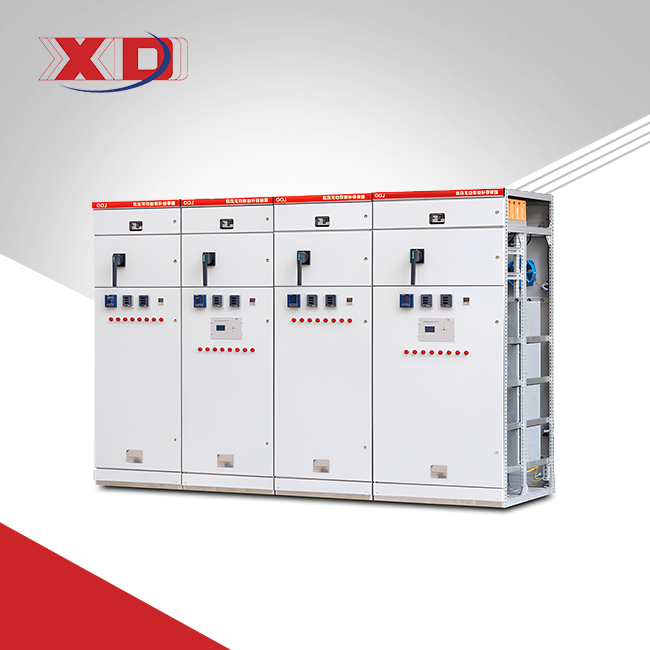
GGJ Low Voltage Reactive Power Intelligent Compensation Device
Why High Voltage Disconnect Switch is Critical in Power Systems
2026-04-29 16:36:21
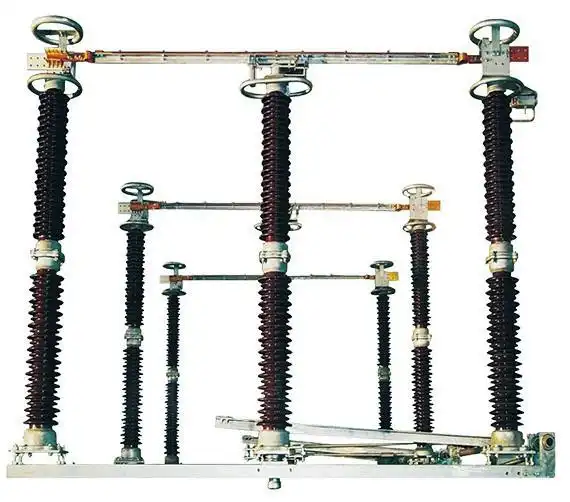
The High Voltage Disconnect Switch is an important safety measure for power systems that need to be completely reliable. This device makes sure that there is safe electrical isolation during repairs and emergencies, which protects both people and important infrastructure. Circuit breakers stop fault currents, but disconnect switches physically separate energized circuits from equipment by making air gaps that can be seen. With their strong aluminum alloy construction, self-lubricating bushings, and enclosed transmission systems, they provide maintenance-free performance for more than 30 years and meet IEC 62271 and IEEE C37.32 standards for global use.
 |
 |
Understanding High Voltage Disconnect Switches
What Defines a High Voltage Disconnect Switch?
A High Voltage Disconnect Switch is a break that can be seen in power networks with a rating of more than 1kV. The mechanical operation of the device physically separates the conductors, leaving a gap that can be seen to confirm that the electricity has been turned off. This visual confirmation is very important during maintenance tasks where making sure that circuits don't have any residual voltage is a must for worker safety. Modern isolating switches use aluminum alloy conductors that make the switches 40% lighter while still being resistant to corrosion in harsh outdoor conditions.
Core Functions in Electrical Isolation
The main job is to safely turn off circuits before maintenance teams can work on transformers, busbars, or transmission lines. Protective devices react to electrical faults, but these switches only work when there is no or very little load on them. Their mechanical interlocks keep the main and earthing blades from closing at the same time. This is an important safety feature that keeps short circuits from happening while the switches are in use. The enclosed transmission mechanism keeps dust, sand, and water from getting into the internal parts. This makes sure that the system works reliably in temperatures ranging from -40°C to +85°C.
Operating Mechanisms and Design Types
There are different mechanical configurations for different installation needs and preferred operations. Vertical break designs turn the blades upward, which works well in small substations with limited horizontal space. Horizontal rotating types, like our GW7B-363 series, are better for outdoor installations because they are easier to see and maintain. Gang-operated mechanisms let you switch between three phases at the same time with a single manual handle. Motor-operated versions can connect to SCADA systems so you can control them from afar. Our outdoor disconnectors use a pantograph mechanism that keeps the contact pressure constant during the switching cycle while the blades move smoothly.
These differences in design are meant to help facility operators with certain problems. Motor-operated switches cut switching time by 70% compared to manual operation, which is helpful for factories with limited downtime. When circuits need to be changed often, data centers like gang-operated designs that make sure phases are in sync. When procurement teams know about these operational differences, they can match equipment specs to the conditions on the site instead of just choosing based on voltage ratings.
Why High Voltage Disconnect Switches are Critical in Power Systems?
Enabling Safe Maintenance Operations
High Voltage Disconnect Switches play a critical role in enabling safe maintenance by providing visible and verifiable circuit isolation. They create a physical separation point that confirms the absence of electrical potential, supporting OSHA 1910.269 lockout/tagout compliance. Mechanical locking systems allow the use of standard padlocks to prevent accidental re-energization during maintenance activities. This is particularly important in hospitals and data centers, where unexpected downtime can impact patient care or digital infrastructure. Reliable isolation ensures both personnel safety and system stability during planned maintenance procedures across critical facilities.
Preventing Fault Propagation Across Networks
Isolating switches are strategically placed to divide electrical networks into sections that are easier to manage. When there is a problem in one circuit, it doesn't affect the sections next to it, so the problem is limited to the smallest area possible. This sectionalizing feature is used by utility companies to keep the grid stable during routine maintenance or emergency repairs. The hot-dip galvanized bases on our equipment protect the mechanical integrity even when they are exposed to industrial pollutants or salt spray from the coast. This means that the equipment will continue to work reliably for decades. This durability is very important for people who work with transmission systems because they can't stand for structural damage that could make isolation less effective.
Distinct Advantages Over Circuit Breakers
While circuit breakers are designed to interrupt fault currents, disconnect switches provide cost-effective isolation for maintenance purposes. They are simpler in design, require less maintenance, and do not include arc-quenching systems or SF6 gas handling requirements. Compared to oil-filled breakers, modern disconnect switches with self-lubricating bushings reduce maintenance needs by approximately 60%. This simplicity makes them attractive for distribution systems with limited maintenance resources. Circuit breakers handle protection, while disconnect switches provide safe isolation, making both essential components in properly engineered electrical substations and industrial power systems.
Selecting the Right High Voltage Disconnect Switch for Your Needs
Critical Selection Parameters
Selecting a High Voltage Disconnect Switch requires evaluating both electrical ratings and environmental conditions. Coastal environments demand corrosion-resistant materials beyond standard galvanization, while aluminum alloy conductors maintain conductivity under harsh salt exposure. Industrial chemical plants require stainless steel and copper alloy components for chemical resistance. Altitude also impacts performance, as installations above 2,000 meters require insulation derating due to reduced air density and dielectric strength. Proper material selection ensures long-term reliability, safe operation, and stable electrical performance under varying environmental and industrial conditions.
Comparing Leading Equipment Solutions
Different global manufacturers offer varied engineering approaches to disconnect switch design. European suppliers emphasize modular standardization, while Asian manufacturers focus on customization flexibility. Companies like ABB and Siemens integrate equipment into digital substation ecosystems, supporting smart grid development. Eaton and Schneider Electric provide strong regional service networks across North America, ensuring rapid maintenance support and spare parts availability. Balanced solutions such as the GW7B-363 combine IEC-compliant standardization with customizable configurations, offering adaptability for different grid architectures, operational requirements, and long-term infrastructure planning needs.
Avoiding Common Specification Mistakes
Procurement errors often arise from incorrect assessment of operational requirements. Over-specifying motorized systems for low-frequency switching increases unnecessary costs, while manual systems in high-duty environments reduce efficiency and increase labor demand. Environmental factors such as pollution levels also influence creepage distance requirements beyond standard IEC 60815-1 tables. Conductive dust or chemical exposure requires enhanced insulation design. Proper site evaluation ensures accurate specification selection, reducing lifecycle costs and improving operational efficiency by aligning equipment design with actual field conditions and maintenance expectations.
Maintenance, Safety, and Operational Best Practices
Establishing Preventive Maintenance Schedules
The reliability of a High Voltage Disconnect Switch depends on structured inspection schedules adapted to operating conditions and environment. Our equipment typically requires inspection every 2,000 operations or 24 months, longer than oil-filled alternatives. Maintenance includes visual checks for contact wear, blade alignment measurement using gauge tools, and contact resistance testing with a micro-ohmmeter. Environmental conditions significantly adjust intervals: desert installations require 18-month cycles due to dust accumulation, while coastal areas require annual corrosion inspections. Site-specific schedules are determined using measurable factors such as humidity and particle concentration to ensure optimized preventive maintenance planning.
Implementing Lockout/Tagout Procedures
Electrical safety procedures prevent accidental energization during maintenance operations. Our systems include mechanical locking points compatible with standard padlocks, enabling multi-person lockout during complex tasks. Horizontal visible isolation improves safety by allowing ground-level confirmation of blade position, reducing climbing risks and improving efficiency. Electrical interlocks further enhance safety by preventing circuit breaker closure unless disconnect switches are fully engaged. This coordination prevents dangerous switching errors and equipment damage, especially in complex utility switching operations requiring multiple configurations and strict procedural control for operational safety compliance standards.
Troubleshooting Common Operational Issues
Contact heating is the most common operational issue, typically caused by loose connections or surface contamination rather than structural failure. Thermographic inspections detect temperature anomalies early, allowing corrective maintenance during planned outages. Flexible joint designs simplify re-torquing compared to rigid busbar systems. A temperature rise exceeding 10°C above ambient baseline indicates required intervention. Mechanical binding may occur due to ice or debris, though enclosed transmission systems significantly reduce this risk. Operators must avoid forced operation and instead isolate circuits, inspect mechanisms, and remove obstructions under proper safety procedures and guidance.
Procurement and Integration: Streamlining Your Buying Process
Identifying Credible Suppliers
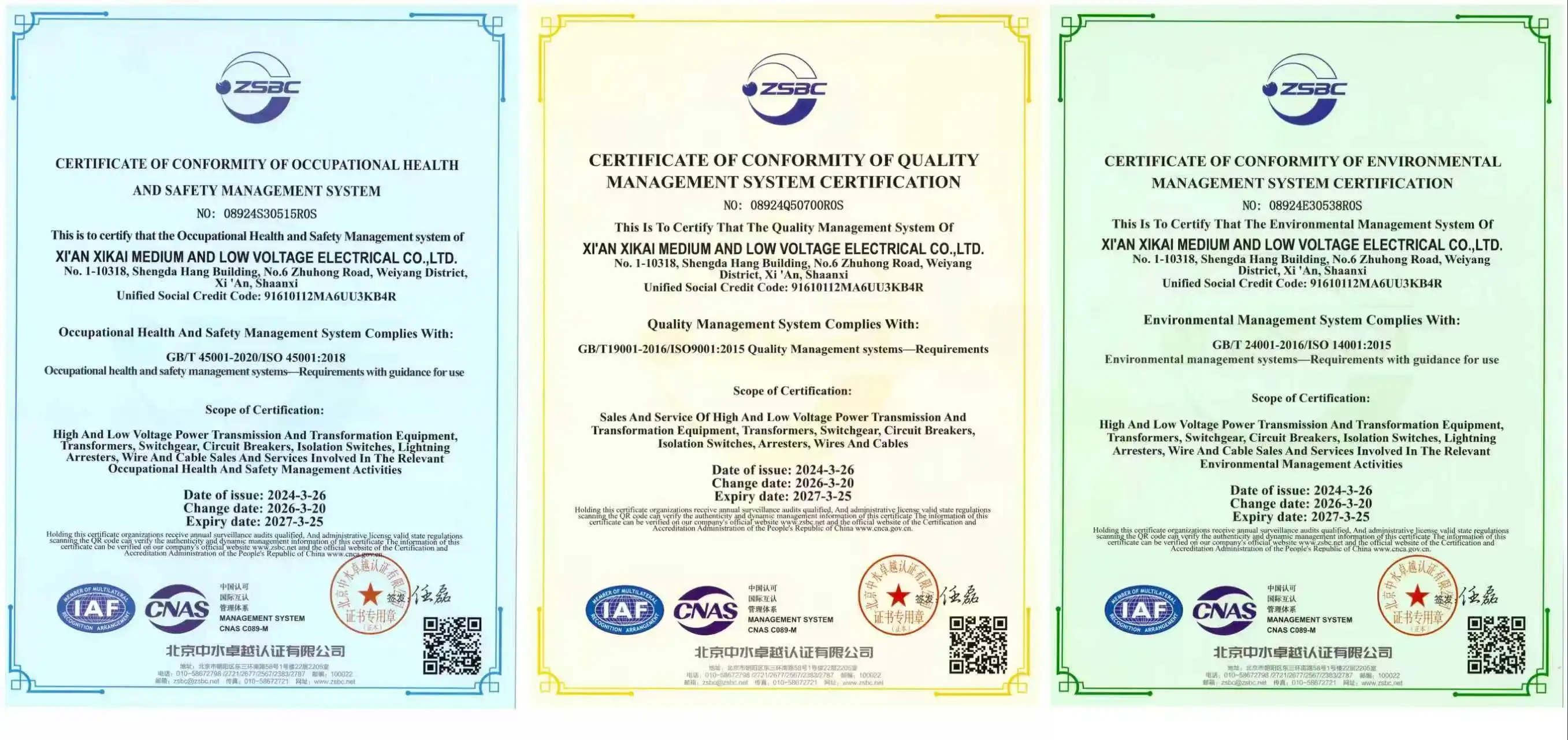
Global sourcing for High Voltage Disconnect Switch can help you save money, but it also raises concerns about the authenticity and consistency of the products you buy. Independent certifications of the manufacturer's credentials give you peace of mind that the equipment meets the stated specifications. Our ISO 9001 quality management certification shows that we have systematic controls over production, and our CE marking shows that we follow the safety rules set by the European Union. RoHS compliance gets rid of worries about dangerous materials that make it harder to get rid of old equipment. Instead of believing what the manufacturer says, EPC firms should ask for test reports that can be tracked back to accredited laboratories. Thermal rise tests, dielectric withstand verification, and mechanical endurance data all back up performance claims.
Customization Options for Specific Applications
Catalog products cover 80% of typical installations, but sometimes custom solutions are needed because of the way the site is set up. Our engineering team changes the layout of the blades to work with non-standard busbar arrangements so that custom structural steel is not needed. Adding earthing switches to standard isolator designs gets rid of the need for separate grounding equipment. This lowers the cost of installation and makes the switching process easier. These customization options are useful for retrofit projects that need to connect new equipment to infrastructure that is decades old and didn't have modern standardization built in.
Lead times for custom equipment are usually 4 to 6 weeks longer than standard production schedules. This is a fair trade-off when customization means no changes being made in the field that could damage the equipment. When manufacturers talk about project timelines early on in the procurement process, they can plan custom production without delaying critical paths for the project. Our project management teams make sure that delivery times work with EPC construction schedules so that equipment arrives when installation crews reach important electrical milestones and doesn't just sit there accumulating damage risks.
After-Sales Support and Long-Term Partnerships
When you buy equipment, it's the start of a relationship with a supplier, not the end. Full after-sales support includes overseeing the installation, helping with the commissioning process, and teaching facility staff how to do maintenance. We give you detailed installation manuals with torque specs and blade adjustment steps, but for more complicated projects, having a factory technician there during the initial power-up is best. This hands-on help cuts down on the time needed to set up the equipment and makes sure that installers understand its unique needs, which may be different from what they've seen with other brands.
Long-term operational costs depend on how easy it is to get spare parts. Wear parts like contact tips and operating mechanism bearings are kept in stock so that domestic orders can be filled within 72 hours. Strategic recommendations for parts stocking help facility managers balance the costs of keeping inventory with the costs of possible downtime. Key parts should be stored on-site, while less-important items can be quickly shipped from the factory. Building relationships with manufacturers that stay responsive over the course of decades of equipment life gives procurement departments confidence that the equipment they choose today won't become a maintenance burden tomorrow because it's outdated or suppliers are merging.
Conclusion
One cannot say enough about how important isolation equipment is to the reliability of the power system. High Voltage Disconnect Switches that are properly installed and maintained are the basis of safe and flexible electrical operations. This is true for both manufacturing plants that need little downtime and utility networks that serve thousands of customers. Knowing the differences between types of equipment, choosing the right specifications for the site conditions, and setting up disciplined maintenance protocols will make sure that these parts last for decades. Our all-around approach combines tried-and-true designs with the ability to make changes as needed. It's backed by certifications and support systems that procurement teams depend on for important infrastructure projects. As smart grid and renewable energy technologies make electrical systems more complicated, the basic need for reliable isolation equipment stays the same. This is an example of how good engineering principles can last through changing market trends.
FAQ
1. What is the difference between a disconnect switch and a circuit breaker?
Circuit breakers automatically cut off fault currents when they sense an overload or short-circuit. They do this by using arc-quenching mechanisms that are rated for how much current they can stop. Disconnect switches only work when there is no or very little load on them. They make physical isolation gaps for maintenance safety rather than protection. Both devices are important to power systems, but they do different important jobs.
2. How often should High Voltage Disconnect Switches undergo maintenance?
Depending on the environment and how often the system is used, inspections are usually done every 18 to 24 months. Installations in deserts and along the coast need to be checked more often because of the dust and corrosion that builds up there. Instead of just using calendar schedules, facilities that do more than 2,000 operations a year should use condition-based monitoring.
3. Can disconnect switches be operated under load?
It's not usually possible for isolation switches to break the load. When you try to open circuits that are already live, dangerous arcing happens that damages contacts and puts people in danger. Before using disconnect switches, you should always turn off circuits using the right circuit breakers, unless the model has a load-break rating that has been tested and confirmed to meet IEEE C37.32 standards.
Partner with Xi'an Xikai for Reliable High Voltage Solutions
Xi'an Xikai Medium & Low Voltage Electric Co., Ltd. delivers proven High Voltage Disconnect Switch solutions backed by three decades of engineering excellence serving power infrastructure projects worldwide. Our aluminum alloy conductor designs reduce installation costs while our self-lubricating mechanisms cut maintenance requirements by 60%, directly supporting your operational uptime objectives. With certifications spanning IEC, IEEE, CE, and RoHS standards, our equipment meets stringent North American compliance requirements for utility and industrial applications.
As a trusted high voltage disconnect switch manufacturer, we understand that each project carries unique technical requirements and schedule constraints. Our engineering teams collaborate with EPC firms and facility operators to optimize equipment specifications, ensuring compatibility with existing infrastructure while accommodating future expansion needs. Contact our technical specialists at serina@xaxd-electric.com, amber@xaxd-electric.com, or luna@xaxd-electric.com to discuss your specific application requirements. We provide detailed product documentation, custom engineering support, and responsive after-sales service that transforms equipment procurement from a transactional necessity into a strategic partnership.
References
1. Institute of Electrical and Electronics Engineers, "IEEE Standard for High-Voltage Switchgear and Controlgear - Standard Common Clauses," IEEE C37.100-2021, 2021.
2. International Electrotechnical Commission, "High-voltage switchgear and controlgear - Part 102: Alternating current disconnectors and earthing switches," IEC 62271-102:2018, 2018.
3. National Fire Protection Association, "Standard for Electrical Safety in the Workplace," NFPA 70E-2021, Quincy, Massachusetts, 2020.
4. Occupational Safety and Health Administration, "Electric Power Generation, Transmission, and Distribution," 29 CFR 1910.269, U.S. Department of Labor, 2014.
5. Flurscheim, Charles H., "Power Circuit Breaker Theory and Design," Institution of Engineering and Technology, London, 1982.
6. Smeets, René P. P., et al., "Switching in Electrical Transmission and Distribution Systems," John Wiley & Sons, Chichester, United Kingdom, 2015.