All You Need to Know About Indoor Disconnect Switches
2026-07-02 15:57:33
What stands between a controlled shutdown and catastrophic machine failure when a sudden electrical fault happens in your building? During repair, emergency reaction, or regular checks, an Indoor disconnect switch acts as the most important safety barrier in electrical distribution systems, cutting off the circuit clearly. With these tools, techs can physically remove energized parts from loads further downstream. This creates a state of verifiable zero-energy that keeps people and property safe. Facility managers, utility workers, and building professionals who are responsible for keeping operations running while putting safety first need to know how isolation equipment works, how to choose the right equipment, and how to use it correctly. This guide talks about everything buying teams need to know about these important electrical parts in order to make smart decisions.
 |
 |
Understanding Indoor Disconnect Switches
Core Functions and Operating Principles
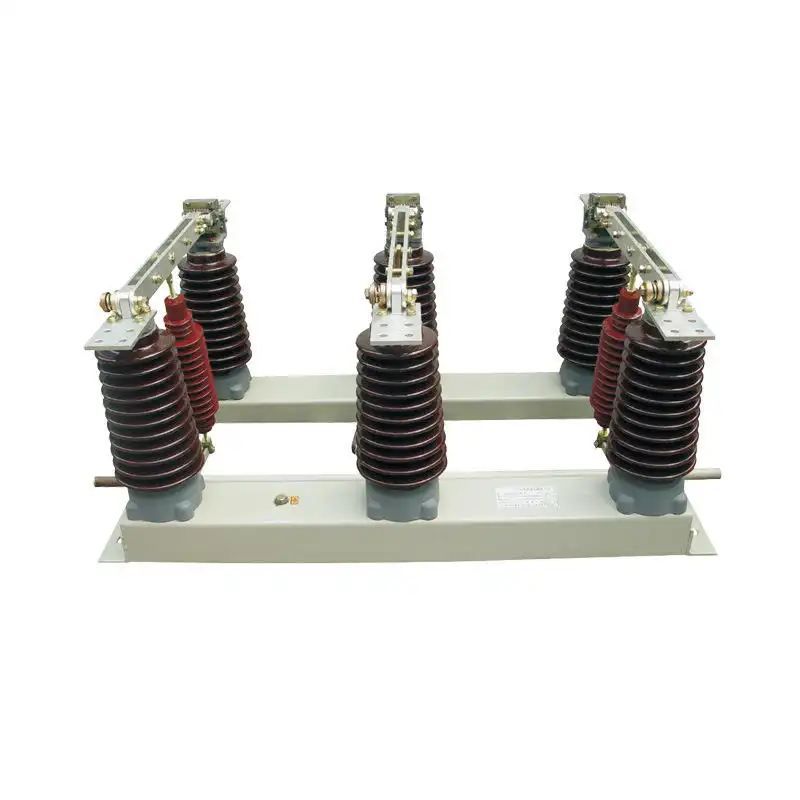
Isolation equipment interrupts current by creating a physical air gap in the circuit while upstream power remains energized. Unlike protection devices, it operates only under no-load conditions, requiring circuits to be de-energized before operation. Mechanisms include swing contacts, knife switches, or rotary blades that visibly separate conductors, supporting OSHA lockout/tagout compliance. Air gap distance increases with voltage level, from millimeters in low-voltage systems to centimeters in high-voltage units like GN27 (40.5 kV). Safety features include mechanical interlocks preventing load operation and grounding functions for residual charge discharge, ensuring safe maintenance and long-term mechanical durability.
Indoor Versus Outdoor Designs
When it comes to design, indoor and outdoor separation tools are very different because of the environment. Indoor units are usually made of lighter materials and don't put as much stress on weatherproofing. They use phenolic resin insulators and painted steel frames, for example. They're rated for controlled settings with mild temperature changes and little UV light, water, or dirt contact. Installation areas like switching rooms, data center electrical caves, and distribution areas in factories give these devices the safety they need.Outdoor versions have UV-resistant plastics, sealed gears, and hardware that is protected against corrosion so they can handle high temperatures, rain, and dirt. Their insulators have to keep their dielectric strength even if industrial pollution or salt spray from the coast get on the surface. The GN27 high-voltage Indoor disconnect switch solves these problems by coming in pollution-resistant styles and high-altitude styles made for placements up to 4,000 meters, where less dense air makes insulation less effective.
Key Component Anatomy
Indoor disconnect switches include numerous crucial aspects that function together. The contact system needs low resistance when closed and appropriate space between contacts when open. This applies to fixed bus connections with moveable blades or swing-type contacts. Contact regions are commonly silver-plated to prevent oxidation and ensure reliable power transmission. The GN27's revolutionary swing-contact design increases connection point surface area and reduces mechanical wear and stress, making them last longer and better.Insulating structures experience mechanical and electrical stress. Dielectric strength allows composite or high-strength porcelain materials to tolerate maximum voltage and safety gaps. A hand lever, motor drive, or pneumatic actuator moves the blade when the operator does. Standardized working interfaces make it easy to incorporate new equipment into old switchgear and allow you to retrofit new equipment. The Xi'an Xikai works with the CS6-2 mechanism.
Selection and Decision-Making for Indoor Disconnect Switches
Electrical Specification Requirements
First, consider some electrical basics to pick the proper item. The voltage must be greater than the system's standard voltage to accommodate for short-term overvoltages. Since contact resistance increases over time, the current grade should manage a stable load and safety factor. The GN27's 630A and 1250A variants can manage varied loads in 40.5kV distribution networks. True indoor disconnect switches can't stop current since they lack breaking capability. Overload protection fuses are integrated into several combo devices.The device can withstand power frequency and lightning surge voltages without flashover due to insulation coordination. IEC 62271-102 and IEEE C37.32 provide equipment test parameters to ensure safety gaps. The short-circuit withstand power of a device indicates how much fault current it can absorb while keeping closed until upstream protection comes in. Maker datasheets provide these specifications, which should be validated against engineering study system failure levels.
Fused Versus Non-Fused Configurations
Indoor disconnect switches without fuses can only detach, thus they require overcurrent protection with circuit breakers or fuses. Separating duties makes things simpler and cheaper, but it requires numerous devices. Fused disconnect switches feature housing-mounted current-limiting fuses. They defend against separation and short circuits as a single unit. The FZRN21-40.5D series uses fuse holders with mechanical connections that activate the switch quickly when a fuse blows.How you wish to safeguard items should guide your setup choice. Fused switches are used in transformer cores for inexpensive backup safety that works with downstream breakers. Motor circuits may employ unfused switches and motor safety relays to detect overloads and malfunctions. Maintenance requirements vary. Fused devices require their fuses changed often, whereas non-fused types merely need their contacts and mechanisms maintained. Our technical team can assist you choose the ideal arrangement for your application based on safety and lifetime costs.
Comparing Leading Manufacturers
Long-term value depends on product reliability, spare parts availability, and technical support. Leading manufacturers maintain advanced testing laboratories to ensure compliance with international standards and consistent quality. Their engineering teams provide application support and recommend enhancements such as position indicators, auxiliary contacts, and motorized operators. Procurement evaluations should consider production capacity, certifications, and proven installation performance. Xi’an Xikai, a major Chinese manufacturer of medium- and low-voltage equipment, supplies switchgear and vacuum circuit breakers widely used in State Grid, industrial, petrochemical, and renewable energy projects, with strong engineering support improving integration and commissioning efficiency.
Installation, Safety, and Maintenance
Pre-Installation Verification and Procedures
A successful installation starts with a clean location and equipment evaluation. Mechanical support and distance from equipment and buildings are required for mounting surfaces. Environment temperature, humidity, and pressure should be within specified values. Workers check that the equipment satisfies specifications and that shipment hasn't damaged the insulators, mechanisms, or enclosures before turning it on.Installation begins with mechanical attachment using floor supports, wall clips, or incorporating the Indoor disconnect switch into existing switches. The GN27 may be installed horizontally, vertically, or inclinedly at substations and industrial sites. Once the device is in position, torque-controlled electrical connections provide the proper contact pressure without overtightening. Carefully routing motorized operator, position marker, and interlock control wires prevents them from blocking moving parts. NEC Article 490 and IEC 60694 require pre-commissioning tests such contact resistance and high-potential shielding to ensure system functionality.
Critical Safety Features and Compliance
Lockout/tagout, the most basic safety feature, allows workers keep the switch open using padlocks to prevent accidental closure. Multiple locking points enable team-based repair with separate worker safety. When the building has a visible break, operators may examine the air gap without equipment. This satisfies NEC disconnecting means sight criteria.Removing arc flash danger requires additional thinking. Failures occur even when they should not be utilized loaded. According to incident energy estimations, NFPA 70E guidelines govern equipment marking, approach limitations, and PPE selection. Mechanical interlocks prevent unsafe acts like shutting a grounding switch when the main break is open. Xi'an Xikai incorporates these safety measures into conventional designs and may modify them to meet building safety regulations.
Maintenance Best Practices and Troubleshooting
Preventive maintenance ensures safety and extends equipment life. Annual inspections should include checking insulators for cracks or tracking, verifying mechanical operation for binding or excessive force, and measuring contact resistance to detect degradation. Routine tasks include cleaning insulator surfaces to remove contamination, tightening electrical connections, and lubricating mechanisms per manufacturer guidelines. Common faults such as contact burning stem from corrosion or poor pressure and can be resolved through cleaning, conductive grease, or replacement. Mechanism binding is corrected via lubrication and adjustment. Temperature-rise testing confirms thermal stability, while GN27 modular design enables fast part replacement and reduced downtime.
Procurement and Supply Chain Considerations for B2B Buyers
Distribution Channels and Vendor Selection
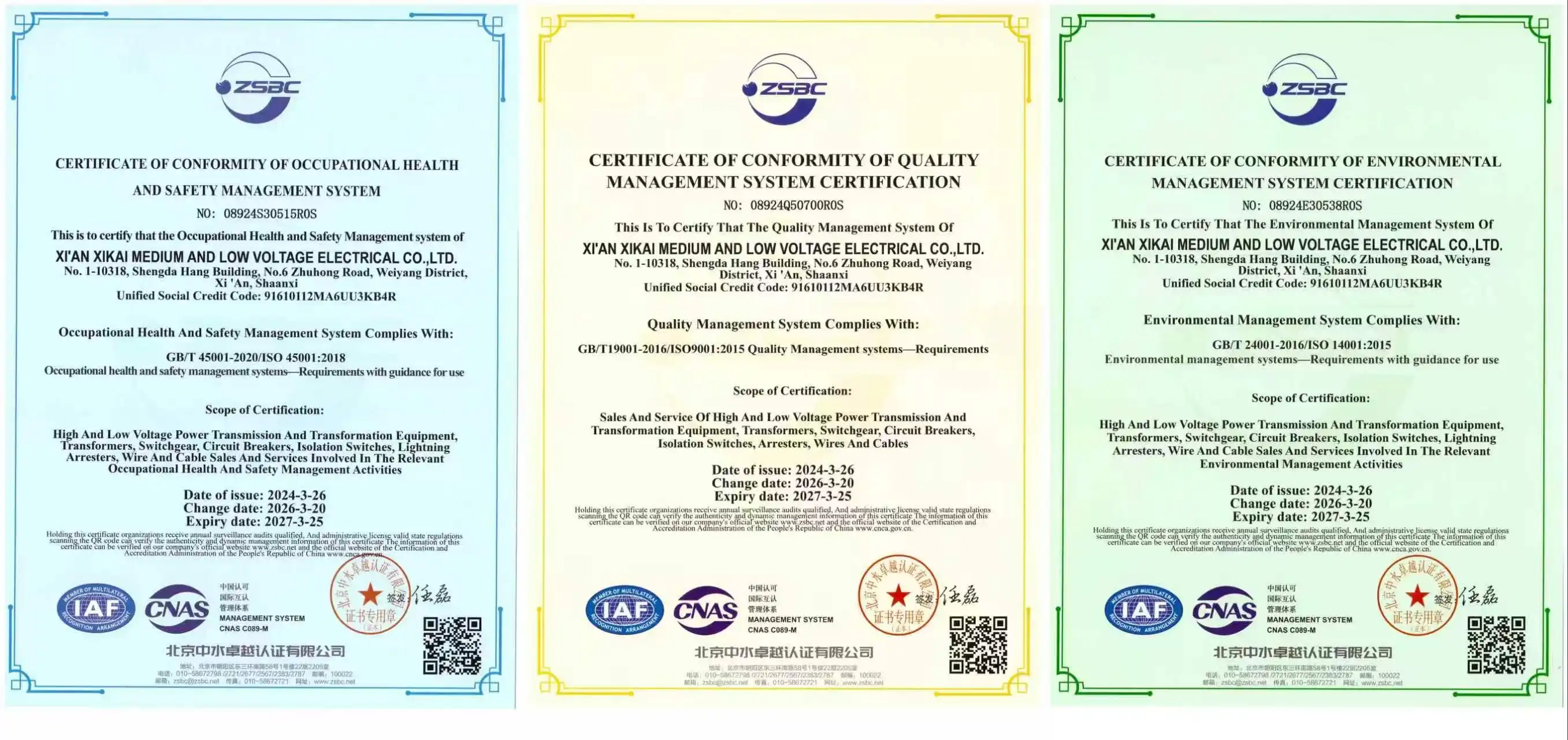
Indoor disconnect switches must be purchased from dependable, technical, and supply chain-savvy vendors. Working directly with a manufacturer may improve pricing, customisation, and engineering. Authorized wholesalers have local stock, reduced wait times, and established service networks to assist you acquire replacements fast. Online industrial marketplaces provide additional supplier options, but certificates and product legitimacy must be evaluated.When considering partners, verify their quality management processes. ISO 9001 accreditation indicates procedures are built to provide consistent results. Review case studies or reference projects from previous app usage. For 50 years, Xi'an Xikai has provided utilities in over 30 nations, proving it can satisfy severe criteria in a variety of working situations. Open supply chains are essential when time is short. Knowing factory wait times, inventory regulations, and expediting options helps purchasing teams estimate project deadlines.
Bulk Purchasing and Negotiation Strategies
Large installations with comparable equipment may receive better terms and cheaper pricing. When requesting bids, include quantities, delivery dates, and any revisions for staged projects. Companies may offer different rates to attract large purchases over individual sales. Negotiating payment terms may assist manage cash flow, particularly for multi-budget projects.Along with the unit price, consider the whole cost of ownership, including shipping, tariffs, replacement parts, and professional support. When buying overseas, you must consider Incoterms, customs clearance, and currency exchange risk. The documentation and shipping assistance from Xi'an Xikai's worldwide supply line expertise helps companies overcome these issues. Choosing fundamental packages for continuing requirements simplifies future purchases and ensures better pricing via agreed quantities.
Datasheet Interpretation and Specification Verification
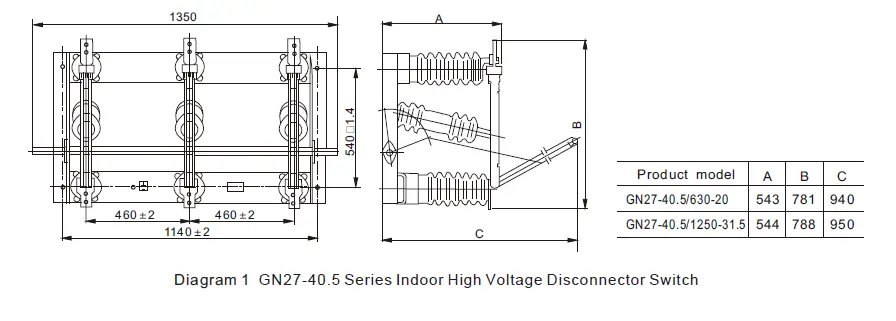
Technical datasheets must be carefully interpreted to ensure accurate specification alignment. Rated voltage is derived from insulation levels such as power-frequency and impulse withstand values, while rated current indicates thermal capacity, potentially affected by installation and cooling conditions. Mechanical life ratings estimate operational cycles before major maintenance. IEC 60815 defines environmental limits including temperature, humidity, altitude, and pollution levels; high-altitude designs above 1,000 m require adaptation due to reduced cooling efficiency. Dimensional drawings support installation planning, while certifications and third-party test reports should be verified to confirm compliance and performance.
Industry Trends and Future Outlook
Smart Technology Integration
In the electrical distribution industry, digitalization is converting passive equipment into smart system pieces. Modern indoor disconnect switches contain sensors that measure contact temperature, operation counters that track mechanical life, and location markers for remote monitoring. This data enters supervisory control and data gathering systems. This allows condition-based maintenance techniques to replace time-based schedules with real-time machine health indicators.Internet of Things connectivity helps you monitor remote assets in real time. Utility managers of vast networks and industrial operators with multiple locations benefit from this. Predictive analytics prevent unexpected interruptions and save maintenance dollars by detecting wear and tear trends. Xi'an Xikai is cognizant of these evolving demands and is creating smart grid-ready products that can function with either factory-built intelligent features or later-added tracking systems. Companies investing in infrastructure should consider future-proofing it with digitally integrated devices, even if they won't utilize them right away.
Regulatory Evolution and Compliance Requirements
Electrical codes change with safety research, technology, and event analysis. The National Electrical Code now emphasizes arc flash risk assessment, affecting equipment selection and installation. A closer convergence of International Electrotechnical Commission standards simplifies cross-border requirements but needs producers to comply with numerous regulatory systems. Environmental rules limit hazardous materials and require end-of-life disposal, encouraging sustainable materials. Xi'an Xikai's eco-friendly production meets these standards. Supplier compliance with local rules is crucial for procurement teams, particularly for equipment used across jurisdictions.
Modular and Customizable Solutions
Modern power infrastructure must accommodate shifting demands, expansion, and green energy sources. Modular equipment lets initial installations fit current demands and easily expand on as needs evolve. Standardized connections between parts from various manufacturers reduce vendor lock-in and make replacement parts easy to get.Customization solves issues in particular applications that conventional items can't. High voltages, strange mounting configurations, extreme weather, and bespoke control systems may need engineered solutions. More than 100 variations of 34 products are available from Xi'an Xikai. These provide basic options for most purposes, while the company's technical talents enable customization. The fact that the GN27 comes in pollution-resistant and high-altitude variants indicates that the corporation can tailor goods to diverse clients.
Conclusion
To choose the right Indoor disconnect switches, you need to carefully look at the technical specs, safety features, and provider skills. Knowing the main differences between device types, setup options, and application needs helps you make smart purchasing choices that balance short-term costs with long-term benefits. Quality of installation and ongoing repair have a direct effect on reliability. This means that following the right processes and getting preventative care are important investments for keeping operations running. As smart technology and stricter safety standards make delivery systems change, it becomes more useful to work with experienced manufacturers who can show they are innovative, follow the rules, and help customers. By putting these factors at the top of their list of priorities, businesses set themselves up to keep their electrical infrastructure safe and efficient so it can support current operations and grow as needed in the future.
FAQ
1.Can Indoor disconnect switches work in rooms with a lot of humidity?
Standard designs work with normal levels of humidity inside, but places with a lot of wetness, like chemical processing areas or plants near the coast, need extra care. Metal parts with corrosion-resistant coatings and systems that are protected keep them from breaking down. Even when they get wet on the outside, insulator materials keep their dielectric strength. However, conductive contamination can be removed by cleaning them regularly. Make sure that the goods you've chosen have the right environmental ratings for the situations where they will be installed.
2.What makes fused disconnect switches different from non-fused ones in terms of how they work?
Non-fused units can only isolate, so they need separate overcurrent safety devices. Fused setups have current-limiting parts that offer switching and short-circuit safety all in one. The choice depends on how you want to protect the system and how you need to coordinate things. When cheap backup protection is needed, like in generator primaries, fused switches work best. On the other hand, non-fused designs work well when problem detection and interruption are handled by protective relays.
3.How do rules about obedience affect buying things across borders?
Different places use different electricity codes. In North America, it's the NEC, around the world it's the IEC, and in other places it's country-specific rules. Equipment must meet standards for where it will be installed, not where it was made. Manufacturers with a good reputation keep their certifications up to date across all major standards, but buying teams should check specific compliance paperwork. For each market, voltage rates, test levels, and safety measures may need to be changed.
Partner with Xi'an Xikai for Reliable High-Voltage Isolation Solutions
With extensive Indoor disconnect switch options backed by fifty years of manufacturing quality, Xi'an Xikai Medium & Low Voltage Electric Co., Ltd. is ready to assist you with your electrical infrastructure projects. Our engineering team helps with applications to make sure you choose the best product for your working environment, whether you need standard settings or custom solutions to solve specific problems. The GN27 high-voltage disconnect switch line shows our dedication to new ideas with features like a swing-contact design that reduces wear and flexible placement that works with limited space. Get in touch with our skilled Indoor disconnect switch sources at serina@xaxd-electric.com, amber@xaxd-electric.com, or luna@xaxd-electric.com to talk about your needs and get accurate quotes. We offer fast shipping, low bulk prices, and expert support for the entire lifecycle of your equipment. This way, we can make sure that your facility stays safe and reliable, which is essential for its working success.
References
1. National Electrical Manufacturers Association, "Application Guide for High-Voltage Disconnect Switches in Distribution Systems," NEMA Standards Publication SG 4-2018.
2. International Electrotechnical Commission, "High-voltage switchgear and controlgear – Part 102: Alternating current disconnectors and earthing switches," IEC 62271-102:2018.
3. Institute of Electrical and Electronics Engineers, "IEEE Standard for High-Voltage Switches," IEEE C37.32-2021.
4. National Fire Protection Association, "Standard for Electrical Safety in the Workplace," NFPA 70E-2021 Edition.
5. Electric Power Research Institute, "Maintenance Guide for High-Voltage Circuit Switching Devices," EPRI Technical Report 3002018644, December 2020.
6. Schneider Electric, "Medium Voltage Switchgear Technical Guide," Technical Publication PT-057-EN, 2022 Edition.