Choosing the Right Indoor Disconnect Switch for Your Panel
2026-08-27 15:10:33
Selecting an appropriate indoor disconnect switch for electrical panel installations demands careful attention to technical specifications, operational environment, and long-term reliability. These devices provide essential electrical isolation, enabling safe maintenance work and emergency disconnection in substation and switchgear applications. The right choice balances dimensional compatibility with your cabinet layout, contact resistance performance, and mechanism durability—three factors that directly impact both installation efficiency and operational safety throughout the equipment's lifecycle.


Understanding Indoor Disconnect Switches: Features and Functions
High-voltage isolation switches are important safety features in modern electrical distribution systems. They physically separate repair areas from circuits that are on and create a gap that can be seen. Unlike circuit breakers, which are meant to stop fault currents, these switches only work when there is no load on them. This makes them a reliable place to disconnect power so that equipment further down the line can be serviced.
Core Functions and Operational Principles
Setting up a safe place to work is the main goal. The indoor disconnect switch makes a clear break in the electrical line so that repair teams can work on circuit breakers, transformers, or bus systems. The gap that can be seen, which is usually done thru inspection windows, shows that there is no voltage, which is what OSHA and NFPA 70E standards require for safety. The mechanical separation makes these devices different from solid-state isolation ways. They provide fail-safe security even if the control system fails.
Types and Configuration Options
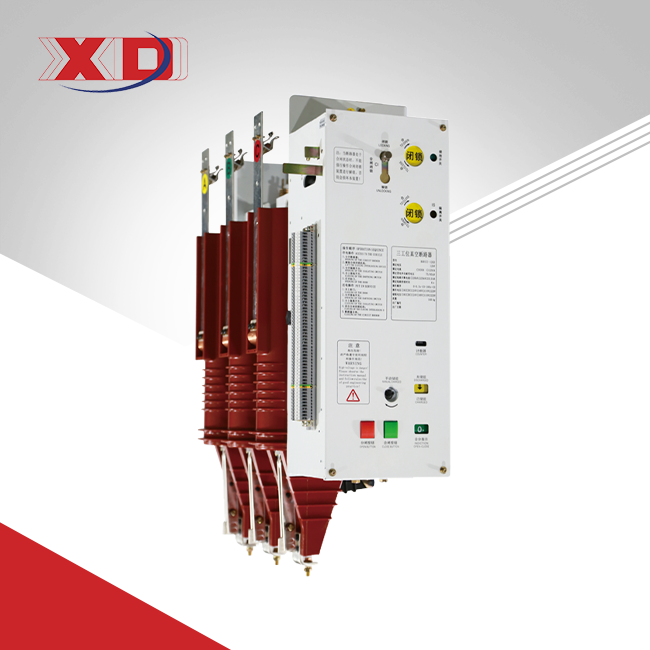
According to manufacturing standards, there are several groups based on how they need to be installed. Fixed-mounted types are attached directly to switchgear frames and have small sizes that make them ideal for indoor substations with limited room. Through-wall versions let you connect different areas of metal-enclosed switchgear, which makes flexible panel designs easier. The GN19 series from Xi'an Xikai is a good example of this because it has a rated voltage capacity of 12kV and current choices ranging from 400A to 1250A, so it can handle a wide range of load needs, from distribution lines to industrial motor circuits.
Safety Protocols and Interlocking Mechanisms
Safety in operations rests on technical interlocks that stop things from going wrong. These systems literally stop switches from moving when the circuit breakers that are connected to them are closed. This gets rid of the risk of arc flashes that can happen when people try to break the load. Devices like the GN19 have manual lever systems that need to be pressed down on purpose. This makes it less likely that they will be operated by mistake during regular checks. Spring-loaded latching systems keep the open position without the user having to keep working at it. This solves a problem that many electrical engineers have when they have to manage multiple step separation processes.
Comparing Indoor Disconnect Switches: Making the Right Choice
When making a purchase choice, it's helpful to know how indoor disconnect switches are different from other technologies and how different types solve specific application problems.
Environmental Suitability and Design Variations
Indoor-rated equipment works in controlled settings with mild temperature changes and low exposure to contamination. When looking at insulation materials and corrosion protection, the difference between indoor and outdoor-rated switches becomes very important. Indoor units use small epoxy resin separators that are designed to save room rather than to withstand the weather. Specialized versions, on the other hand, deal with difficult indoor conditions. For example, pollution-resistant coatings keep out conductive dust in cement plants, and high-altitude models make up for the lower dielectric strength in thin air by keeping performance up to 4,000 meters above sea level, as part of Xi'an Xikai's customization options.
Performance Metrics: Contact Resistance and Thermal Stability
Under maximum current, contact loop resistance has a direct effect on heat performance. Standards in the industry usually say that silver-faced contacts can't have values higher than 50 micro-ohms at 12kV voltage classes. When this limit is crossed, localized heating happens, which speeds up oxidation and could lead to thermal runaway. A micro-ohm meter checks the quality of the production and the right contact pressure during acceptance testing. In rotary mechanisms, the blade-and-jaw design makes sure that the pressure is evenly spread across the contact surface. This keeps the resistance low for the full rated mechanical life, which is often more than 10,000 operation cycles.
Selection Criteria Aligned with Panel Specifications
Several factors must be taken into account in order to find the right device for your needs. The rated voltage must be higher than the operating voltage of the system by a margin big enough to account for short-term overvoltages. The current rate should be enough to handle a constant load, taking into account the ambient temperature derating. For example, a 630A switch may need to be upgraded to a 1000A switch when it is placed in an industrial setting with high temperatures. The switch's ability to stay physically intact during fault conditions is rated by its short-time withstand current and peak withstand current. These are usually set at 20kA to 31.5kA for 4 seconds and 50kA to 80kA peak values, respectively. These ratings make sure that the structure stays strong even after protection devices fix problems further down the line.
Evaluating Manufacturers and Product Reliability
Comprehensive testing methods used by well-known producers show compliance. You should see proof that the product has been tested for dielectric withstand at 42kV for one minute, mechanical endurance thru thousands of operation cycles, and weather simulations that include salt fog exposure according to IEC 60068-2-52 standards. Brands that sell to utility and commercial markets usually have ISO 9001 approval, which means that they control quality all the way thru production. Regional makers like Xi'an Xikai follow international standards while also adapting to the needs of their unique markets. They can make products that are more resistant to pollution or fit installations on plateaus, which global standard products might not be able to do.
Installation and Maintenance Best Practices for Indoor Disconnect Switches
Installing and maintaining indoor disconnect switches correctly has a direct effect on both safety and how long it lasts. Project managers who are in charge of building substations or upgrading facilities must follow these steps.
Installation Guidelines and Compliance Requirements
Before mounting, the foundation's safety and alignment limits must be checked. The switch frame needs to be attached to supporting structures that can handle mechanical forces during operation and possible earthquakes. Electrical connections need to be torqued according to the manufacturer's instructions. Terminals that are too loose create high-resistance joints that cause the circuit to overheat, while terminals that are too tight damage the conductor strands or crack the mounting hardware. The minimum distances between live parts and grounded objects must meet the requirements set out in IEC 62271-102 and GB 1985. When sites are higher than 1,000 meters, altitude derating must be taken into account. Before they are turned on, interlocking systems need to be functionally checked to make sure that the switch can't open while the breakers that go with it are still closed.
Routine Maintenance and Inspection Intervals
Preventive care keeps safety gaps high and extends the life of equipment. As part of yearly inspections, insulator surfaces should be cleaned to get rid of conductive dust buildup, mechanical linkages should be checked for wear or looseness, and contact alignment should be confirmed by looking at them visually if possible. Contact resistance tests find wear and tear before temperature problems happen; rising resistance trends mean that the contacts need to be cleaned or replaced. According to the manufacturer's instructions, lubricating the pivot points and working gears keeps them from binding and makes sure the machine runs smoothly. The manual system in switches like the GN19 works better when the lever sections are greasing every so often. This keeps the features that operations staff like, which make the work easier.
Troubleshooting Common Issues
Contact overheating is usually caused by rust, worn-out springs that lower contact pressure, or being out of line. To fix these problems, you need to take the parts apart, clean them with the right industrial chemicals, and put on electrical contact grease made for high-current uses. Testing for temperature rise under rated current load confirms that the problem has been fixed; for silver-faced designs, the contact temperature should not go above 65°C above ambient. When machinery stops working properly, it's usually because of buildup of dirt or worn-out grease in the links. This means that all the moving parts need to be cleaned and oiled again. When troubleshooting shows damage that can't be fixed in the field, calling maker help makes sure that the right parts are used for the restoration.
Procurement Insights: Where and How to Buy Indoor Disconnect Switches
To make the buying process for indoor disconnect switches go smoothly, you need to know about sourcing channels, calculate the total cost of ownership, and build relationships with suppliers who can meet your long-term project needs.
Sourcing Channels and Supplier Evaluation
There are three main ways that procurement workers can find suppliers. When the size of the project allows it, working directly with the maker can be helpful. For example, when you buy 5 to 50 units of a substation in bulk, you can get better prices and more customization options, like voltage signs or special altitude ratings. Regional wholesalers offer localized supplies and faster shipping for smaller amounts or pressing replacement needs, but the cost per unit is higher. International sourcing gives you more choices, but you need to be very careful when looking at legal paperwork, shipping operations, and the ability to provide after-sales support across long distances.
Cost Considerations Beyond Unit Price
The purchase price is only one part of a total cost study. Other parts include how hard it is to install, how much upkeep is needed, and how long the product will last. Premium-priced switches with better contact materials and strong mechanical designs require less upkeep and longer service intervals, which lowers the total cost of ownership over a 20-year operating horizon. Dimensional compatibility with current switchgear means that expensive panel modifications are not needed. A small design that fits straight into standard cabinet holes saves a lot of installation work compared to models that need structural changes. Costs further down the line are affected by things like warranty coverage and the availability of spare parts. This is especially true for important projects where extended downtime costs a lot of money.
Bulk Purchasing and Project-Based Procurement
Adding on to an industrial facility or building a substation usually involves a lot of identical units, which can lead to volume discounts. A lot of the time, manufacturers set their prices so that the lowest level is 10 units and the next levels are 25 and 50 units. In addition to saving money, ordering in bulk lets you keep your maintenance schedules and spare parts inventory consistent across all of your electrical infrastructure. Project managers should make sure that the timing of purchases matches the schedule for construction, and that there is enough time for any customization needs, like coatings that don't pollute or high-altitude adaptations that take an extra two to four weeks to make.
Finalizing Your Choice: A Decision-Support Framework
Systematic evaluation makes sure that the indoor disconnect switch you choose meets both the needs of the current installation and the long-term operating goals.
Matching Technical Specifications to Application Needs
Load study is the first step in getting the right size. Figure out the ongoing current needs while taking future growth into account. Choosing the next standard rating above the loads you've estimated gives you thermal margin. Even tho the conditions inside your installation are controlled, the environment does affect it. For example, equipment in cement plants, chemical plants, or coastal industrial zones is exposed to conductive dust or salt-filled air, which needs treatments that are resistant to pollution. Because of limitations on room, retrofit projects need to carefully measure the space inside existing switchgear and check the results against manufacturer's plans before committing. The small size of current indoor isolation switches meets the needs for saving room that are common in upgrading substations in cities and remodeling industrial facilities.
Supplier Performance and After-Sales Support
A supplier's skills are just as important to the success of a project as the product specifications. Check how immediate technical support is by asking questions before you buy. Companies that show they know a lot about the application and can give quick, useful answers usually keep up that level of service after the sale. The length of the warranty shows how confident the maker is in the product's durability. Full coverage for 18 to 24 months shows that quality control is strong. After-sales support should include having spare parts on hand with acceptable wait times, being able to provide field service to help with commissioning, and giving professional training to maintenance staff. Regional service networks help companies like Xi'an Xikai set up these support systems, which are especially useful for installations in specific places like plateaus or heavy industrial zones.
Future-Proofing and Lifecycle Planning
Investing in electrical infrastructure can last for decades, so adaptability and serviceability are very important when choosing what to buy. Future updates can be made to modular designs without having to replace the whole thing. For example, switches that accept optional voltage indicators or current transformers allow for phased improvements in capability as tracking needs change. Standardizing on manufacturers with consistent product lines makes managing parts over the long term easier and lowers the amount of training that needs to be done when employes leave. Think about how long the manufacturer has been in business and how stable they are. Stable companies have parts and technical support available for as long as your equipment works.

Conclusion
To choose the right indoor disconnect switch, you have to think about technical needs, the surroundings, and the supplier's abilities. The separation device needs to meet the voltage and current requirements of your panel and also be compatible in size, have solid contact performance, and work mechanically for a long time. To get the best results, procurement professionals look at the total costs of ownership, make sure that relevant standards are being met, and build relationships with manufacturers that offer full support. This article gives you a decision strategy that includes technical matching, evaluating suppliers, and lifetime planning. This helps you make an informed choice that meets both the needs of the current project and the goals for the long term.
FAQ
1.What voltage ratings are typical for indoor disconnect switches used in medium-voltage panels?
Most indoor isolation switches for medium-voltage uses can handle values of 12kV, 24kV, or 40.5kV, which are the voltages found in most distribution systems. Most industrial and commercial installations are in the 12kV class, which has rated currents ranging from 400A to 1250A. Higher voltage classes are for utility substations and other industry uses that need higher distribution voltages.
2.Can these switches operate under load conditions?
No, indoor disconnect switches are off-load devices that must never be opened while current is flowing. When you try to stop the load current, you cause dangerous arcing that breaks equipment and poses serious safety risks. Interlocking systems stop working until the circuit breakers that are connected to them are reset. This makes sure that the system is safely isolated.
3.How often should maintenance inspections occur?
How often you inspect relies on how often your business runs and the weather outside. Comprehensive checks once a year are good for most uses because they include cleaning the insulator, lubricating the moving parts, and measuring the contact resistance. Installations that are in harsh settings or that have more than 100 mechanical operations a year can benefit from checks every six months to find wear before it leads to failure.
Partner with Xi'an Xikai for Your Indoor Disconnect Switch Requirements
When it comes to electrical isolation needs in substations and factories, Xi'an Xikai Medium & Low Voltage Electric Co., Ltd. has everything you need. Our GN19 indoor disconnect switch series works reliably at 12kV and can handle currents up to 1250A. It can be customized for high-altitude use, resistance to pollution, and an indicator for the voltage. As a top company that makes indoor disconnect switches, we keep our ISO 9001 certification and put our products thru a lot of strict quality tests, such as checking their dielectric withstand and mechanical endurance over 10,000 cycles. Send an email to serina@xaxd-electric.com, amber@xaxd-electric.com, or luna@xaxd-electric.com with the details of your project. To make sure the implementation goes smoothly, we offer reasonable bulk price, detailed application engineering help, and full after-sales service.

References
1. IEEE Standards Association. "IEEE Guide for Indoor AC Substations Design and Construction." IEEE Standard 1379, 2020 Edition.
2. International Electrotechnical Commission. "High-voltage switchgear and controlgear - Part 102: Alternating current disconnectors and earthing switches." IEC 62271-102, 2018.
3. Smith, Robert J. "Medium Voltage Switchgear: Selection, Operation and Maintenance." Technical Publishing Press, 2019.
4. National Fire Protection Association. "Standard for Electrical Safety in the Workplace." NFPA 70E, 2021 Edition.
5. Zhang, Wei and Li, Ming. "Modern Substation Equipment Technology: Design Principles and Application Guidelines." China Electric Power Press, 2020.
6. Electric Power Research Institute. "Switchgear Reliability Analysis: Indoor Isolation Devices in Distribution Systems." EPRI Technical Report 3002018331, 2021.