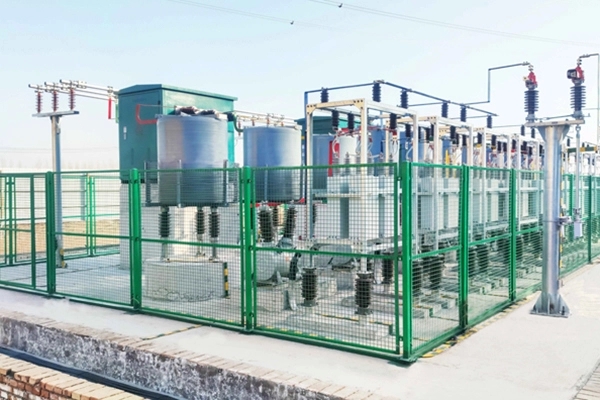
How Capacitive Voltage Transformer (CVT) works? Explained
2026-07-30 10:12:54
A capacitive voltage transformer operates by dividing high voltage through a series of capacitors arranged in a voltage divider configuration, stepping down transmission-level voltages to manageable levels for measurement and protection devices. The capacitor stack reduces voltage proportionally, with an intermediate electromagnetic unit further transforming it to standard secondary outputs—typically 110V or 120V—suitable for metering equipment and protective relays. This dual-stage reduction ensures accurate voltage representation while maintaining signal integrity across demanding industrial applications, making CVTs essential for grid stability and operational safety.


What is a Capacitive Voltage Transformer?
To understand instrument transformer technology, you must first understand the unique role these gadgets play in keeping an eye on power systems. Instrument transformers are different from other types of transformers because they only focus on measuring accurately and conditioning signals.
Core Function and Components
High-voltage signals are changed by capacitive voltage transformers into low-voltage outputs that measuring tools and safety systems can safely handle. The design of the device is made up of three main parts that work together. The capacitor voltage divider is the first stage. It is made up of several capacitor units that are linked in series to handle energies from 35kV to 800kV. The intermediate voltage is lowered even more to standard secondary levels by an electromagnetic unit, which is basically a step-down transformer. The tertiary winding lets power line carriers talk to each other, which supports remote monitoring that utilities are relying on more and more for managing the grid.
Advantages Over Electromagnetic Alternatives
When people in charge of transmission systems look at ways to measure voltage, capacitive voltage transformers are clearly better than standard inductive voltage transformers. Capacitive design greatly reduces size and weight; a 345kV capacitive voltage transformer usually weighs 40% less than its electromagnetic counterpart. This makes installation easier in substations with limited space. As the voltage rate goes up, cost efficiency goes up. At extra-high voltage levels above 230kV, material costs go down for capacitive voltage transformers, but they need more copper and steel for inductive transformers. In communication applications, where the tertiary winding couples well with power line carrier frequencies, signal quality benefits show up. This is because separate coupling capacitors are not needed.
How Does a Capacitive Voltage Transformer Work?
The working principle depends on capacitive voltage division, an idea that has its roots in basic electrical theory but has been improved over many years of engineering progress.
Capacitive Voltage Division Principle
A lot of energy from the power lines is connected to the capacitor stack's top terminal. Each capacitor unit lowers the total voltage. Capacitors split voltage in a way that is opposite to how much capacitance they have. Carefully designed capacitance ratios make sure that the intermediate tap point provides a steady voltage, usually between 5kV and 20kV based on the system rating. This middle voltage goes into the electromagnetic unit, which makes the final secondary output by acting like a normal step-down transformer. Accurate voltage scaling depends on keeping capacitance values fixed over time and changes in temperature. Vacuum impregnation and hermetic sealing are two quality production methods that do this.
Accuracy Classes and Precision Factors
IEC 61869-2 standards divide capacitive voltage transformers into four accuracy classes: 0.2, 0.5, 1.0, and 3P for safety uses. These classes show the highest voltage error percentages that are allowed under rated conditions. To get 0.2-class accuracy, which is needed for revenue metering where precise billing is important, you need very good insulation and electromagnetic protection to keep random capacitance effects and outside interference to a minimum. The accuracy of measurements is affected by the temperature coefficients of the materials used in capacitors, the resistance of the connection, and the characteristics of the load. Tougher accuracy requirements help places that need to be up all the time, like data centers that handle secret computing loads, avoid voltage errors that cause equipment to shut down unnecessarily.
Maintenance Requirements for Reliability
For operational performance to be maintained over 25-year service lifetimes, systematic maintenance protocols are needed. As part of regular inspections, megohmmeter tests should be used to check the resistance of insulation and look for degradation that happens before big fails. Monitoring for partial discharge finds shielding weaknesses before they become a problem for the stability of the system. Oil-filled capacitive voltage transformers need to have their dielectric oil analysed on a regular basis to look for moisture or contamination. Gas-insulated types, on the other hand, need to have their SF6 gas density checked. Some ways to fix problems in industrial settings are to check the secondary voltage against reference standards and confirm the burden impedance. This makes sure that the safety switches get the right signal levels so they can find faults correctly.
Advantages and Applications of Capacitive Voltage Transformers
The value proposition goes beyond just measuring voltage and includes a wide range of system benefits that improve grid performance and operating costs.
Key Performance Advantages
To work properly, modern high-voltage networks need measurement solutions that are both accurate and easy to set up. Here are the main reasons why capacitive voltage transformers are being used more and more in transmission infrastructure:
- High Measurement Accuracy at Elevated Voltages: Our 69-72.5kV models meet the IEC 61869-2 accuracy class requirements with ±0.2% accuracy, and they keep their measurements accurate from -40°C to +55°C. This level of accuracy makes sure that revenue meters are accurate enough to meet legal standards and gives safety systems accurate voltage references for figuring out what the fault is.
- Lightweight Design Benefits: Compared to electromagnetic voltage transformers with the same ratings, capacitive voltage transformer designs lower installation weight by about 35–45%. This makes mechanical support structures easier to build and allows retrofits in substations with limited structural capacity. Logistics for transportation get better, and foundation needs go down, which lowers the overall cost of the project.
- Cost-Effectiveness at Higher Voltages: When transmission systems work above 115kV, the economic benefits become clear. This is because capacitor shielding is cheaper than the large copper windings needed for inductive designs. Lifecycle cost analysis shows that capacitive voltage transformers are more cost-effective than other transmission systems because they need less maintenance and last longer.
- Communication Capability: The built-in tertiary winding makes it possible for power line carriers to talk to each other without the need for extra coupling equipment. This lets modern digital substation architectures integrate SCADA and do real-time diagnostics. This feature helps utility efforts to change to a smart grid, where being able to see data makes operations more efficient.
Real-World Applications
Capacitive voltage transformers are very important in a lot of different types of power systems. Capacitive voltage transformers are used to control line voltage in high-voltage transmission networks that work at 69kV to 765kV. This information is sent to energy management systems that make the best use of load sharing. Smart grid integration projects use the communication features to send information about the state of the grid, which helps with planned repair plans that lower the number of unexpected power outages. In factories with their own substations, capacitive voltage transformers are used to organise protection plans and make sure that circuit breakers correctly respond to fault conditions without tripping for no reason, which stops production lines. When digital substations replace traditional designs, they need to have capacitive voltage transformers that are compatible with the IEC 61850 protocol. These substations will then merge into process bus architectures where measurement data flows directly to protection IEDs.
Case studies from utility implementations show that the benefits are real. A transmission company in the Midwest updated old electromagnetic voltage transformers with capacitive voltage transformer technology in fifteen 345kV substations. This saved 22% of the maintenance work hours over five years and made voltage measurements more accurate by 0.15% on average. A factory in the Southwest that makes semiconductors combined 72.5kV capacitive voltage transformers with IoT-enabled tracking. This found insulation degradation three months before it was expected to fail, which saved the company about $1.2 million in lost production due to unplanned downtime.
How to Select the Right Capacitive Voltage Transformer
When making procurement choices, you have to weigh technical requirements against practical context, supplier skills, and lifecycle value.
Technical Selection Criteria
Choosing a voltage grade starts with figuring out the system's baseline voltage and how well the insulation needs to work with it. A capacitive voltage transformer rated at 72.5kV works with systems that have a nominal voltage of 69kV. It has enough insulation to handle lightning strikes (which are usually 150kV according to IEC standards) and short-term overvoltages during switching operations. Choosing the right accuracy class relies on how important the application is. For example, revenue meters need 0.2 or 0.5 class devices, but voltage indicators for operations staff can work with 1.0 class devices. Connected instruments, like safety switches, meters, and recording devices, must have enough thermal capacity buffer to keep accuracy from dropping when the load is at its highest.
Environmental factors profoundly influence dependability and life. Coastal installations or industrial areas with a lot of particulate pollution need designs with longer creepage distances. Our 35mm/kV specification is higher than the standard 25mm/kV ratio, which stops surface flashovers that could compromise the accuracy of the measurements. Extremes of temperature must be covered by operating temperature ranges; equipment rated for -40°C cold-weather performance makes sure that Arctic or high-altitude sites work. In areas prone to earthquakes, requirements for higher mechanical strength must be met. This is confirmed by shake table tests that follow IEEE 693 guidelines.
Supplier Evaluation and Procurement Strategy
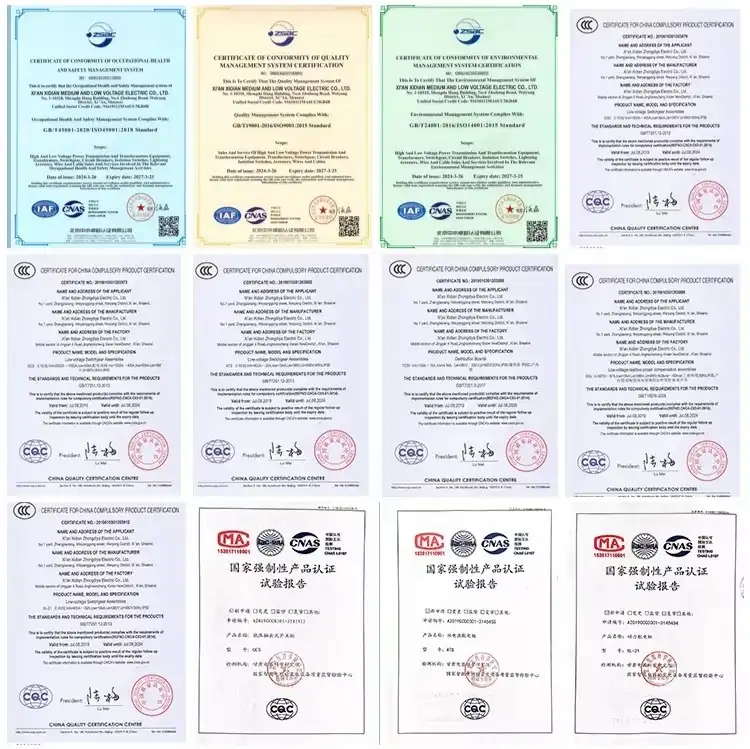
When you compare well-known brands like ABB, Siemens, Schneider Electric, and GE, you can see that they have different levels of customisation options, technical support, and compliance documentation. Professionals in procurement should check that the company has ISO 9001 quality management certification. This will confirm that the company has systematic manufacturing controls that make sure that each batch is the same. Following international standards, like CE marking for European markets, UL listing for North American projects, and GOST certification for installations in Eurasia, makes getting governmental approvals easier and lowers the risk of project delays.
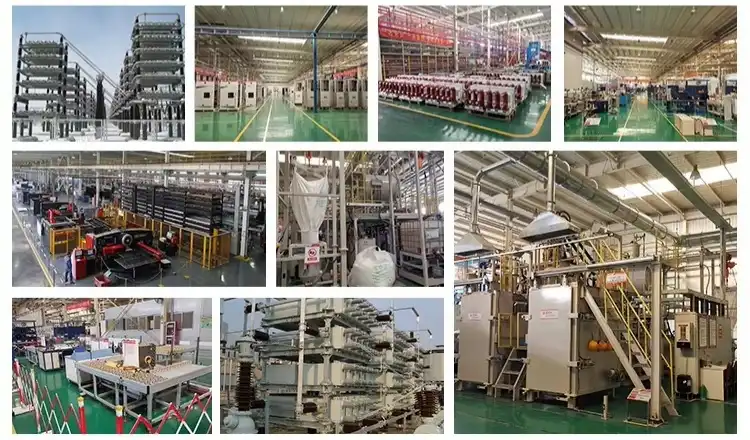
Xi'an Xikai stands out because it can be customised in a lot of ways. For example, voltage ratios, output configurations, and terminal arrangements can be changed to meet the needs of legacy system integration. Over the past 20 years, we've been making medium and low-voltage electrical equipment. As a result, we have twelve patents in high-voltage apparatus design, which shows that we are always coming up with new ways to improve insulation technology and transient response. After-sales service infrastructure, including strategically placed spare parts warehouses across continental regions, ensures quick response when problems arise in the field, limiting the effects of downtime on mission-critical operations.
Beyond the unit purchase price, other budget factors that need to be thought about are the difficulty of installation, the need for setup, and the expected costs of upkeep. For multi-site deployments, buying in bulk can often get you better prices, and sticking to a single supplier platform makes it easier to keep track of spare parts and train technicians. It's important to carefully read the terms of any warranty. For five years, full coverage that includes shipping, installation, and material handling issues protects you financially against early failures.
Advanced Features of Xi'an Xikai 69-72.5kV CVT
Our engineering team has improved capacitive voltage transformer design by going through strict development programs that focus on the problems that transmission operators and managers of industrial facilities face every day.
Robust Electrical Performance
There are electrical differences between systems that work well and ones that have problems with accuracy drift and failure events. A high insulation margin that is 25% higher than the industry standard protects against surges during lightning strikes and switching transients, which put extra stress on equipment beyond its usual working range. Low dielectric loss below 0.1% at rated voltage cuts down on energy waste, which is important when you think about utility fleets with hundreds of devices. It also lowers interior temperature, which speeds up the ageing of insulation. Our 3pT-level transient reaction and residual voltage kept below 2% make it compatible with current microprocessor-based switches that run protective algorithms in sub-cycle times. This keeps protection schemes from going wrong when the system is interrupted.
Environmental Resilience
Extreme conditions that test the durability of equipment are common in operating environments. An anti-pollution design with long silicone rubber sheds stops surface contamination and flashovers in coastal areas where salt spray breaks down regular porcelain insulators and in industrial areas where cement dust or chemical particles are present. Corrosion-resistant aluminium metal housings with IP66 entry protection keep moisture and dust out of the internal components, so measurements stay accurate even after decades of being outside. In places like hospitals and business complexes, where power outages can directly affect life safety systems and business income streams, these features are especially useful.
Smart Grid Compatibility
In order for utility companies to go digital, they need tracking equipment that gives them more information than just the voltage magnitude. With dual-output setups, metering and safety circuits are kept separate, so the accuracy can be optimised separately for collecting money and finding faults. Adding optional IoT sensors lets you do real-time diagnostic monitoring, keeping an eye on changes in insulation resistance, partial discharge activity, and thermal conditions. This information feeds into predictive maintenance algorithms that plan repairs before they break. Standard communication protocols make SCADA and EMS systems compatible with each other. This makes it possible to combine capacitive voltage transformer data into corporate asset management platforms. This helps make decisions based on data, which improves operational efficiency.
Conclusion
Capacitive voltage transformers are a tried-and-true way to measure high voltage accurately in transmission systems, industrial substations, and the power transfer of important facilities. If you specify and take care of the capacitive voltage division concept correctly, it will work reliably for decades. Our 69-72.5kV models are made with advanced insulation technology, a design that doesn't pollute, and smart grid compatibility to meet the strict needs of utilities, factories, and businesses. Procurement pros feel more confident when suppliers can provide detailed technical specifications, meet foreign standards, and go beyond just delivering equipment by building long-term partnerships that help the business succeed. As power systems move toward digital designs that require higher levels of reliability, capacitive voltage transformer technology keeps improving to meet new challenges while keeping the basic safety and accuracy that vital infrastructure needs.
FAQ
1. What differentiates CVTs from inductive voltage transformers?
Inductive voltage transformers (IVTs) only use electromagnetic induction, while capacitive voltage transformers use stacks of capacitors to lower the voltage at the start. When the power is above 115kV, capacitive voltage transformers are lighter and cheaper, and they can also communicate through secondary windings. For some protection applications, IVTs offer better transient response, and they are easier to maintain. The choice is based on the voltage level, available room, and the precision needs of the application.
2. How frequently should CVTs undergo maintenance inspection?
Comprehensive inspections every 24 to 36 months are good for most industrial and utility uses. These inspections include testing the insulation's resistance, making sure the secondary voltage is correct, and looking for damage or contamination. Every year, thermographic surveys look for unusual heating that could mean problems are starting to form. Continuous online monitoring systems, which are becoming more common in critical installations, give real-time assessments of the condition of things. This makes it possible to use condition-based maintenance strategies that make the best use of resources and equipment availability.
3. Can CVTs be customized for non-standard voltage levels?
Customisation in manufacturing allows for different system inputs and assembly needs. Changes to the voltage ratio, unique output configurations, and environmental changes for high or low temperatures are all typical requests for customisation. Technical advice during the creation of the specifications makes sure that the final design meets both the electrical performance needs and the installation limitations that are unique to each project.
Partner with a Trusted Capacitive Voltage Transformer Manufacturer
Xi'an Xikai Medium & Low Voltage Electric Co., Ltd. has been making high-voltage measurement solutions for more than 20 years and has twelve apparatus patents to protect its original designs. Its production methods are ISO 9001-certified. Our 69-72.5kV capacitive voltage transformer models have the high precision, durability, and smart grid compatibility that utilities and industry users need for their power systems to work reliably. Our expert team is ready to create unique solutions that meet your exact needs, whether you're updating old substation infrastructure, adding green energy sources, or making sure that measurements are followed for important facility operations. Send an email to serina@xaxd-electric.com, amber@xaxd-electric.com, or luna@xaxd-electric.com to talk about the needs of your project, ask for full technical documentation, or get reasonable quotes. There you'll also find tools that will help you choose equipment with confidence, along with fast technical support and access to spare parts all over the world to ensure your long-term operational success.
References
1. International Electrotechnical Commission. "IEC 61869-2: Instrument Transformers – Additional Requirements for Capacitor Voltage Transformers." Geneva: IEC Standards Publications, 2021.
2. Anderson, Paul M. "Power System Protection." IEEE Press Series on Power Engineering, Wiley-IEEE Press, 2019.
3. Harlow, James H. "Electric Power Transformer Engineering, Third Edition." CRC Press, Taylor & Francis Group, 2017.
4. Institute of Electrical and Electronics Engineers. "IEEE C93.1: IEEE Standard Requirements for Power-Line Carrier Coupling Capacitors and Coupling Capacitor Voltage Transformers." New York: IEEE Standards Association, 2018.
5. Kasztenny, Bogdan and Michael Thompson. "Modern Protective Relaying and Voltage Measurement Techniques for Transmission Systems." Schweitzer Engineering Laboratories Technical Papers, 2020.
6. Zhang, Wei and Chen, Lijun. "Advanced Insulation Technologies for High-Voltage Capacitive Instrument Transformers." Journal of Electrical Engineering & Technology, Volume 16, Issue 4, 2022.