
How Does Porcelain housed Lightning Arrester Work?
2026-08-11 10:43:24
By sending dangerous surge currents to ground in the event of lightning strikes or switching events, a Porcelain housed Lightning Arrester serves as a crucial voltage-limiting device that safeguards electrical infrastructure. Metal oxide varistors inside the porcelain housing have nonlinear resistance properties. They stay very resistive when they're not being used, but they quickly conduct electricity when the voltage goes over safe limits. This quick reaction clamps down on overvoltages, which keeps transformers and switchgear's protection from breaking down. For outdoor high-voltage uses, the porcelain exterior is necessary because it is strong, doesn't conduct electricity, and doesn't get damaged by the weather.

Introduction
Lightning strikes send millions of volts through power grids in a matter of microseconds, which can damage millions of dollars worth of equipment. Without the right safety, substations, factories, data centers, and hospitals can have catastrophic breakdowns that stop work and put people in danger. Lightning arresters are the first line of defence, but the choice of material has a big effect on how well they work and how long they last.
Devices that protect against surges with ceramic insulation have been trusted by power companies and factories for decades because they work well. This book is for procurement managers, electrical engineers, and EPC contractors who need to know how things work, what the advantages and disadvantages are, and how to find the best deals. We talk about how these devices protect important systems and look at the technical details that affect buying choices. Knowing these basics can help you protect your investments and keep your business running.
Understanding Porcelain Housed Lightning Arrester: Definition and Working Principle
Core Components and Structure
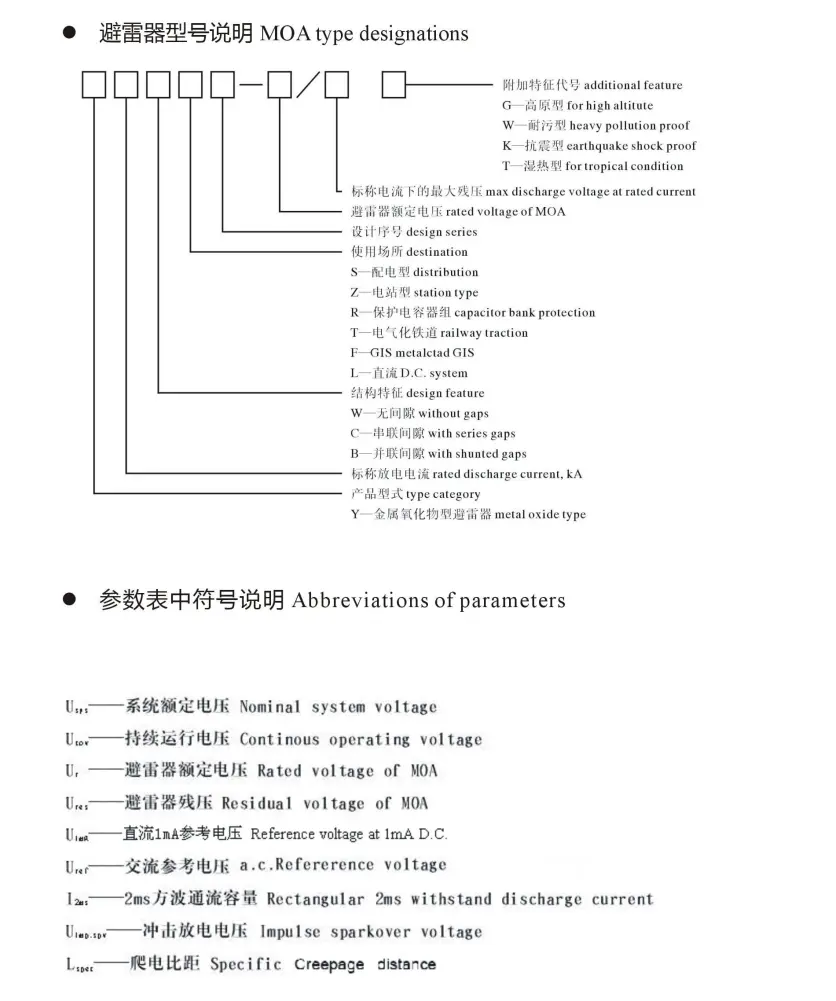
Porcelain-housed lightning arresters consist of zinc oxide discs pressed into an internal stack providing nonlinear voltage-limiting resistance. These discs conduct heavily during surges but block current under normal conditions. External ceramic insulation surrounds active components with specialized seals preventing moisture ingress. End fittings of aluminum or copper alloy provide mechanical support and electrical connections. The Y10W-216/562W features two-unit construction with 216kV rating, DC reference voltage exceeding 314kV, creepage distance of 25/31 mm/kV for contaminated environments, and high-strength ceramic handling 8kN loads.
Operational Mechanism During Surge Events
Under normal conditions, metal oxide elements exhibit gigaohm resistance with leakage current below 1mA. When lightning surges raise voltage sharply, zinc oxide rapidly transitions to conductive state upon exceeding DC reference level. Surge current diverts to ground through the arrester rather than damaging transformers or breakers. The Y10W-216/562W maintains residual voltage below 562kV during 10kA discharges. After the transient passes, metal oxide automatically returns to high-resistance state within milliseconds—no manual reset or replacement needed.
Material Advantages of Ceramic Housing
Porcelain offers dielectric strength exceeding 10kV/mm thickness, ensuring reliable electrical isolation. Weather resistance spans decades of UV exposure, -40°C to +85°C temperature ranges, and industrial pollution without degradation. Salt fog and corrosion resistance benefit coastal installations. Mechanical rigidity deters vandalism and impacts better than polymer alternatives. The thick ceramic structure prevents moisture ingress that would degrade internal components. Utilities choose ceramic for substations requiring 25-year service life with minimal maintenance.
Comparing Porcelain Housed Lightning Arresters with Other Types
Performance Under Environmental Stress
The choice of material has a direct effect on how reliable Porcelain housed Lightning Arresters are in a range of climates and pollution levels. Ceramic versions keep working the same way in areas with a lot of industry where electric dust builds up on surfaces. The smooth glaze gets rid of dirt when it rains, keeping the creepage distance at the right level. Polymer options have originally hydrophobic surfaces, but this trait decreases with UV exposure and wear and tear, so they need to be cleaned or coated again every so often.
Stability at different temperatures is another difference. Porcelain doesn't expand or contract much when it gets hot or cold, so daily heating and cooling processes don't put too much stress on the seals inside. When factories use electric arc furnaces, they produce a lot of heat, which ceramic housings can handle without changing shape. When temperatures rise, polymer materials become softer, which could weaken the bond. When temperatures rise above 45°C, desert sites gain most from ceramic's thermal stability.
Cost-Effectiveness and Maintenance Requirements
Porcelain arresters have higher initial purchase costs and shipping expenses due to weight (216kV ceramic: 150kg vs polymer: 80kg). Installation requires stronger support structures. However, 25+ year service life and stable electrical properties reduce replacement frequency. Ceramic self-cleans during rainfall, eliminating annual surface cleaning needed for polymer units in contaminated environments. Disposal favors ceramic as inert material over polymer requiring special processing. Procurement should evaluate total ownership cost rather than purchase price alone.
Suitability Across Voltage Classes and Applications
Polymer technology dominates distribution systems below 35kV where lighter weight aids handling. Transmission networks (110kV–500kV) prefer porcelain for strength and long-term stability. The Y10W-216/562W serves utility substations and industrial plants with 230kV-class equipment requiring maximum reliability. Salt fog resistance suits offshore wind farms and seaside substations. Ceramic-glazed surfaces perform better in mining with particulate pollution. Steel mills and factories choose ceramic for durability; data centers prioritize lighter polymer options.
Installation, Maintenance, and Common Issues
Preparatory Checks and Safety Protocols
The right way to put a Porcelain housed Lightning Arrester starts long before the tools gets there. Engineering drawings should show that the mounting structure can handle the weight and size of the arrester. It is necessary for the Y10W-216/562W to have supports that can hold 150 kg plus dynamic loads from short-circuit events. Check that the stated creepage distance fits the level of pollution in the area. For example, the 25/31 mm/kV rating is good for areas with a lot of industry, while smaller spacing might be okay in cleaner areas.
Before turning the power on, use a 5kV megohmmeter to check the insulation resistance between the contacts and ground. You should see values above 1000 megohms. Check the ceramic surfaces for damage caused by shipping. Hairline cracks weaken the material and let water in. Check that all fixed connections meet the torque requirements, which are usually between 60 and 80 Nm for terminal hardware. When connecting to the ground, you need to be extra careful. Use copper wires that are the right size for the maximum discharge current, and make sure the ends are brazed or compressed so that resistive heating doesn't happen during surges.
Inspection Checklists and Preventive Actions
Annual maintenance extends equipment life and prevents unexpected failures. Visual inspection identifies surface contamination—clean with low-pressure water spray, avoiding abrasive methods. Check mounting hardware for corrosion and tighten loose connections. Measure leakage current through ground lead; stable readings below 1mA indicate healthy operation, rising trends signal internal degradation. Thermographic scans detect hotspots—temperature rises exceeding 10°C require investigation. Track discharge counter readings for surge frequency analysis. Five-year offline testing verifies reference voltage margins; replace any arrester showing 10% or greater deviation from original specifications. Maintain comprehensive service records.
Typical Failure Modes and Troubleshooting
The most common way that Porcelain housed Lightning Arresters break down is through internal wetness penetration. As temperatures change, sealing agents gradually harden, leaving tiny holes where moisture can enter. Leakage current goes up when there is moisture and flashover voltage goes down. Rising leakage current readings and obvious condensation inside ceramics are signs. If an arrestor shows these signs, it needs to be replaced right away before something terrible happens.
Damage to the structure from theft, wildlife, or maintenance accidents can cause cracks that let water in. Even small cracks on the surface can spread when there is thermal stress, which can lead to flashover or explosion. These problems are caught before they get worse by doing regular repair checks. Sometimes, flaws in the manufacturing process lead to holes in ceramics or pollution in zinc oxide materials. These hidden problems usually show up in the first few years of service, which shows how important it is to do tests when the system is first put together and keep an eye on it right away.
Overvoltage events that are stronger than the body's ability to absorb energy damage cells permanently. The Y10W-216/562W can handle 562 kJ/kV, which is enough for most lightning strikes. However, switching surges or direct hits close by could be stronger than this rating. Catastrophic fails leave damage that can be seen, like broken porcelain, internal parts that fly out, or burn lines. After a failure, research helps find the reasons why it happened, which leads to system changes that stop it from happening again.
Procurement Insights: Pricing, Suppliers, and Ordering Tips
Voltage Ratings and Price-Performance Balance
The cost of a Porcelain housed Lightning Arrester is directly related to its voltage rating and its ability to absorb energy. A 216kV ceramic unit usually costs 150–200% more than a 110kV version because it has more materials and is harder to make. The ability to handle energy adds to the cost; the Y10W-216/562W's 562 kJ/kV grade calls for more expensive zinc oxide formulations than regular 250 kJ/kV ones. Managers of procurement have to find a balance between budget limits and safety margins.
Giving voltage ratings that are too high wastes money and time, while giving ratings that are too low invites failure. Figure out the system's highest continuous operating voltage while taking into account faults and short-term overvoltages. Choose a maximum voltage that is 20% higher than this number. Check the system's fault levels and lightning density data to see how much energy the system can absorb. Places where thunderstorms happen a lot or where the ground isn't strong need higher ratings, even though they cost more.
Identifying Reputable Manufacturers
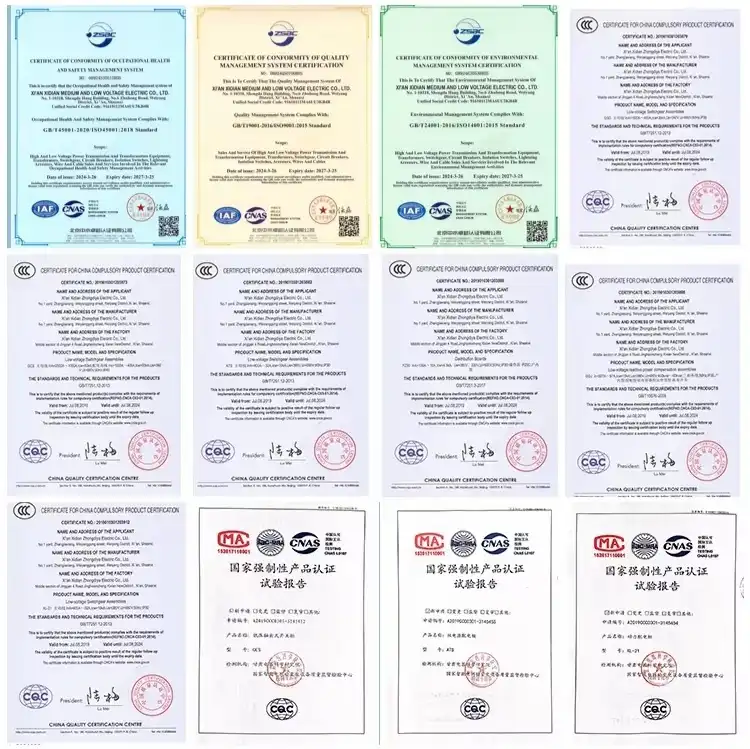
Fake safety products are very dangerous because they use low-quality parts and fake test certificates. Real companies use ISO 9001 quality management systems and send their Porcelain housed Lightning Arresters to approved laboratories for testing by outside parties. Ask for proof that the product meets the requirements of IEC 60099-4 and ANSI C62.11, such as results on impulse current withstand tests and rapid ageing. Make sure that the test results talk about the exact model being bought and not just general family certifications.
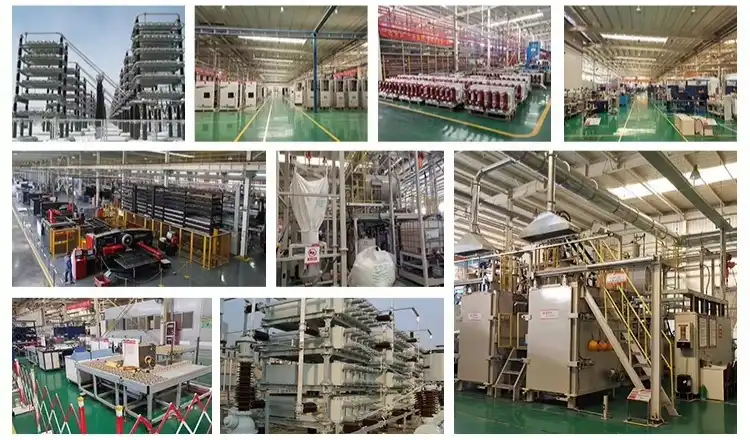
Established suppliers offer technical support for the whole lifecycle of a product. Help from engineers during the development of specifications helps make protection schemes work better. Support after delivery, such as help with setting up and fixing problems, adds value on top of the tools. This all-around method is shown by Xi'an Xikai, which has over 20 years of experience making medium- and high-voltage tools. In a wide range of demanding situations, our products are used by State Grid systems, rail transportation networks, and heavy industrial facilities.
Negotiating Bulk Orders and Logistics
When you buy Porcelain housed Lightning Arresters in bulk, you can get big price cuts. Manufacturers usually give discounts of 10–15% on orders of 50 or more units, and even bigger discounts for orders of 100 or more units. Setting the same voltage values for all places makes it easier to order in bulk and keep track of spare parts. Talk about payment terms that let you pay part of the amount up front and the rest when the delivery is inspected. This will lower your financial risk.
Because of their weight and fragility, shipping logistics need to be carefully planned. Porcelain housed Lightning Arresters need special packing with materials that absorb shock and keep out wetness. Make sure that the goods quotes you get include the right insurance that covers substitute value. Incoterms should be clearly stated on international orders. DDP (Delivered Duty Paid) makes customs clearance easier but costs more, while EXW (Ex Works) lowers prices but gives buyers more responsibility for operations. Expect lead times of 8 to 12 weeks for standard products and longer for products that are made to order.
Pay close attention to the warranty terms. There is standard covering for 18 to 24 months after shipment or 12 months after starting. Make it clear if the guarantee covers the cost of shipping the unit back and providing a replacement unit during repair times. For an extra fee, you may be able to get longer warranties, which are useful for setups that are far away and hard to repair quickly. Support after the sale should include technical help by phone or email, access to application engineering resources, and replacement parts that can be used for as long as the product is in use.
Why Choose Porcelain Housed Lightning Arresters? Value and Future Prospects
Durability and Lifecycle Performance
Porcelain housed Lightning Arrester construction lasts much longer than any other material when used outside. Unlike polymer options, which need to be replaced every 15 to 20 years, field setups usually last longer than 30 years with little maintenance. The neutral substance can't be damaged by chemicals from factories or by living things growing on it. Utilities say that high-quality ceramic arresters have failure rates of less than 0.1% per year, which cuts down on unplanned power blackouts and repair costs.
The Y10W-216/562W has design improvements that make it even more reliable. Even in humid seaside areas, moisture can't get in because the seals work so well. Electrical factors stay stable over decades if the ageing qualities are good. Safe pressure release saves nearby equipment if problems happen inside, letting gases out through controlled pathways instead of exploding into tiny pieces. These features show that high-tech product development is always coming up with new ideas to solve problems in the real world.
Environmental Resilience Across Operating Conditions
Electrical shielding methods are put to the test by changes in temperature. A Porcelain housed Lightning Arrester keeps its dielectric power even in the coldest arctic regions and the hottest deserts. It is used in places like Alaskan pipeline stations and factories in the Middle East. Performance stays the same at high altitudes because porcelain's dense structure stops partial discharge even when atmospheric pressure drops. With the right voltage rating changes, installations at 4,000 meters elevation, which is typical in mountain hydroelectric facilities, work consistently.
Pollution efficiency is especially useful in business settings. In steel mills, conductive particles build up on insulator surfaces, making ways for electricity to leak. The Y10W-216/562W has a 25/31 mm/kV creepage distance that is longer than what is required by standard. This gives you extra protection against contamination flashover. Smooth glaze makes it easier for rainwater to clean naturally, which lowers the frequency of maintenance. Because of these traits, the technology can reliably protect in places where other technologies fail.
Innovation Trends and Future Developments
Smart grid projects increase the need for safety devices with tracking features. Communication-enabled Porcelain housed Lightning Arresters send data about leaked current in real time to central systems, which lets repair be planned ahead of time. While polymer housings make it easier to install a monitor, more and more ceramic housings are adding these features through add-on modules. You can expect sensor technology and wireless communication protocols to keep getting better, which will make status tracking more useful.
New discoveries in materials science may make porcelain work even better. More research into nanocomposite glazes could lead to better water resistance and less surface contamination. Automation in manufacturing cuts down on costs while improving accuracy. Because of these changes, ceramic arresters will be able to compete better with other technologies. Procurement strategies should keep an eye on these trends and find a balance between tried-and-true solutions and new technologies that make asset management better.
Conclusion
Porcelain housed Lightning Arresters have been used for a long time to protect high-voltage electrical circuits. They are very durable and effectively stop surges. Knowing how they work, what their benefits are, and how to use them correctly lets you make smart purchasing decisions that protect important systems. The choice of material has a big effect on the overall costs and upkeep needed. For example, porcelain construction lasts longer in harsh environments, even though it costs more at first. Proper installation and regular maintenance make protection more reliable and reduce the number of failures that happen out of the blue. Working with reputable makers guarantees real goods that meet international standards and professional help for the whole lifecycle of the equipment.
FAQ
1. What operational lifespan should we expect from Porcelain housed Lightning Arresters?
When fixed and taken care of properly, quality Porcelain housed Lightning Arresters should last between 25 and 30 years. The Y10W-216/562W is built to last, and its stable metal oxide makeup lets it work for a long time with little performance loss. Inspections once a year and tracking for leaking current help figure out how much longer something will last, so it can be replaced before it breaks.
2. How do voltage ratings translate to system compatibility?
Choose a rated voltage that is 20% higher than the highest continuous voltage your system can handle. The 216kV rating works for 230kV systems that need to handle short-term overvoltages. A DC reference voltage greater than 314kV provides enough safety cushion. Consult application engineers when selecting Porcelain housed Lightning Arresters for systems with odd grounding configurations or voltage stress patterns.
3. Can Porcelain housed Lightning Arresters handle extreme pollution environments?
Heavy pollution is directly addressed by the 25/31 mm/kV creepage distance standard. This long surface path stops pollution flashover in deserts, industrial zones, and coastal places. When combined with the self-cleaning glaze of porcelain, these arresters keep their security integrity while polymer options need to be maintained often. Regular checks make sure that the surface conditions are still good.
Partner with Xi'an Xikai for Reliable Lightning Protection Solutions
Xi'an Xikai Medium & Low Voltage Electric Co., Ltd. makes approved Porcelain housed Lightning Arresters that are designed for tough industrial and utility uses. Our Y10W-216/562W model has been shown to provide effective surge protection for 216kV AC systems. It does this by mixing high-level surge protection with strong sealing and great ageing properties. We work with factories, data centers, hospitals, utility substations, and EPC companies that need reliable parts that keep capital investments safe and increase uptime.
Our technical team helps with everything, from making specifications to starting up the system. We make sure that the creepage distances, coatings, and tracking options fit your unique needs in terms of operation and surroundings. You can talk to our buying experts about your Porcelain housed Lightning Arrester needs at serina@xaxd-electric.com, amber@xaxd-electric.com, or luna@xaxd-electric.com. Find out how working with an experienced supplier can improve your electrical safety plan and ask for detailed quotes on large orders.
References
1. IEEE Standards Association. (2020). IEEE Guide for the Application of Metal-Oxide Surge Arresters for Alternating-Current Systems. IEEE Std C62.22-2020.
2. International Electrotechnical Commission. (2019). Surge Arresters – Part 4: Metal-Oxide Surge Arresters Without Gaps for A.C. Systems. IEC 60099-4 Edition 4.0.
3. Hinrichsen, V. (2018). Metal-Oxide Surge Arresters in High-Voltage Power Systems: Fundamentals. Siemens AG Technical Publication.
4. Lat, M. V. (2017). Thermal Properties and Long-term Performance of Porcelain and Polymeric Housed Surge Arresters. IEEE Transactions on Power Delivery, Vol. 32, No. 3, pp. 1456-1463.
5. CIGRE Working Group A3.17. (2016). Maintenance of HV Surge Arresters. CIGRE Technical Brochure 650.
6. Zhang, L. & Wang, Q. (2021). Comparative Analysis of Ceramic versus Composite Housing Materials for Transmission-Class Lightning Arresters. High Voltage Engineering Journal, Vol. 47, No. 8, pp. 2841-2849.

_1783415937807.jpg)
