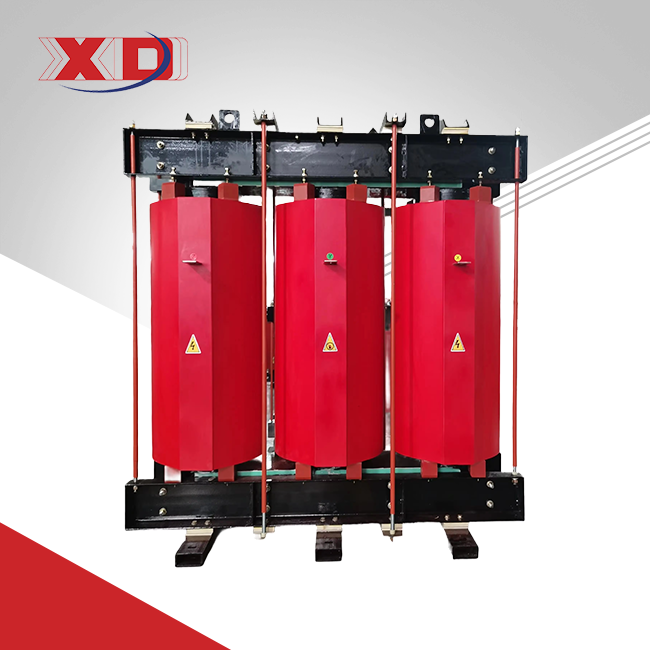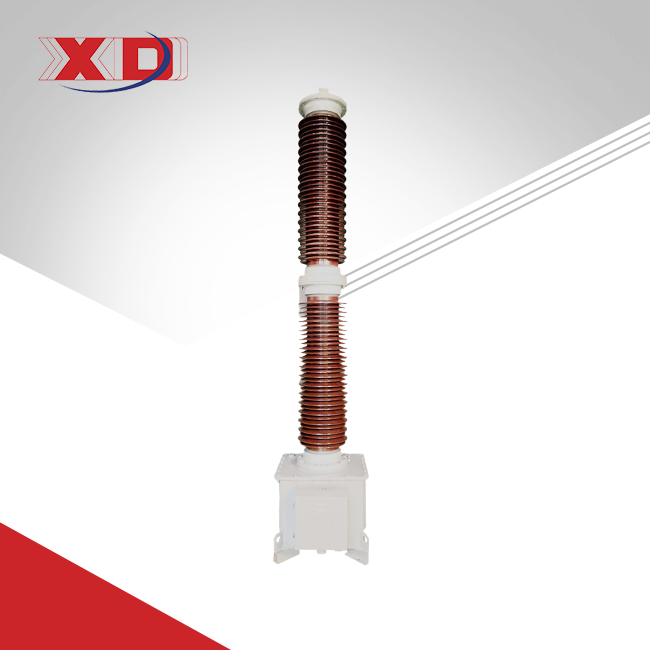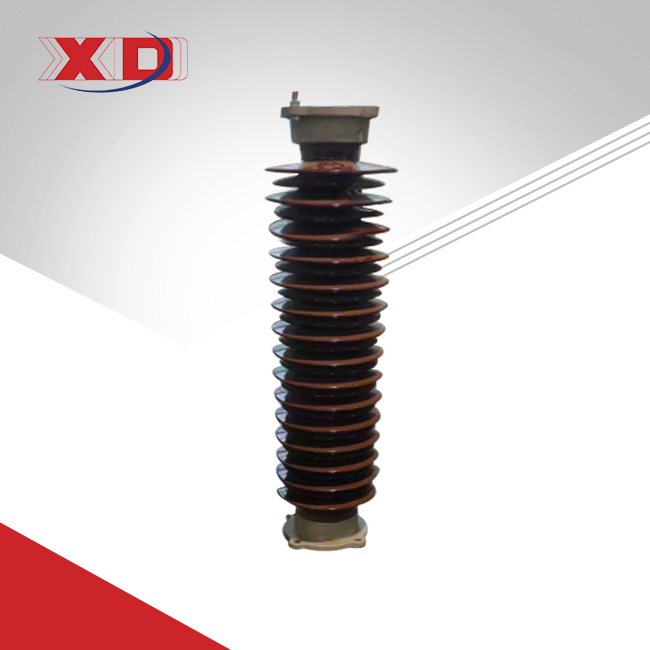
Y10W-102/266W Lightning Arrester Porcelain housed MOA for AC system
How Does a Hybrid Dynamic Compensation Device Work?
2026-09-14 15:50:21
A Hybrid Dynamic Compensation Device combines active power electronics—such as Static Var Generators (SVG)—with passive components like Thyristor Switched Capacitors (TSC) to deliver precise reactive power correction and harmonic filtering. Unlike traditional capacitor banks that switch in fixed steps, this integrated architecture continuously monitors electrical parameters and adjusts compensation in real time, maintaining stable voltage and power factor. The active module handles rapid load fluctuations and harmonics, while the passive section manages the bulk reactive demand efficiently, offering performance comparable to full SVG systems at substantially lower cost.


Understanding Hybrid Dynamic Compensation Devices
Core Principles of Hybrid Compensation Technology
Dual-modality architecture is its key advantage. With low-cost parts, passive capacitor banks manage basic reactive power demands, which make up 50–70% of compensation needs. However, the active power electronics module filters harmonic currents and fills stepped switch gaps. This job division boosts performance and ROI. This technology cuts system expenses by 30–50% and keeps reaction times below 10 milliseconds compared to fully active options.
Smart control algorithms constantly monitor voltage and current using high-precision sensors. The controller chooses between dynamic reaction with the active module or stable state with the capacitor banks when reactive power imbalance or harmonic pollution is detected. This decision-making process takes microseconds and maintains the power factor between 0.99 trailing and 0.99 leading, meeting utility demands.
Key Components and Design Elements
Dynamic reaction requires active power electronics. At frequencies over 10 kHz, IGBTs (Insulated Gate Bipolar Transistors) switch precise currents to balance load variations. Stepless adjustment is possible with the active module, which makes up 30–50% of the rated capacity. Regular contactors cannot. Constant capacitor switching shortens part life and creates voltage spikes. This part solves that.
Economic foundations are passive capacitor banks. Thyristor switches connect these units instead of mechanical contactors. Reduced inrush currents result from zero-crossing switching. Thinristor-based capacitors endure over 100,000 operations, whereas contactor-based ones last 20,000. Each capacitor step is monitored to avoid grid harmonics. Each phase usually has 6-7% resistance detuning reactors.
Building automation systems operate well with control and communication infrastructure. Energy management systems may communicate data in real time via RS485 and Modbus protocols, easing system designers' compatibility concerns. Power factor, harmonic levels, capacitor health, and historical trends are shown on simple HMI interfaces. Setting up and maintaining diagnostics is easy.
How Hybrid Dynamic Compensation Devices Operate in Practice
Real-Time Detection and Response Mechanisms
The controller measures disturbance size and duration when reactive power demand rises, for as when a motor starts or a transformer switches on. Only events under 500 milliseconds start the current module. This saves capacitor switching devices from overuse. When loads are stable, the capacitor banks work optimally and the active module adjusts output to match power factor targets.
Harmonic filtering does not need reactive power correction. Active module currents cancel and reflect nonlinear load harmonics like electronic ballasts and rectifiers. Standard configurations sometimes fail due to resonance between capacitor banks and grid impedance, but active damping prevents this. IEEE 519-2014 requirements are met without passive filters as Total Harmonic Distortion (THDi) drops from 20% to 5%.
Technical Specifications and Performance Metrics
For fast-changing loads, response speed is crucial. The active module reacts in 50 microseconds and stabilises power factor in 10 milliseconds following a load shift. The performance is two orders of magnitude greater than contactor-based systems. Precision machinery and programmable logic controllers are protected against voltage dips.
Hybrid Dynamic Compensation Device handles magnetic and capacitive reactive power, therefore it can manage many load conditions. Inductive loads can only improve power factor with capacitor banks. Modern buildings with server farms, LED lighting, and VFD-controlled HVAC systems have leading power factor when demand is low. In hybrid devices, the active module generates inductive reactive power to compensate for capacitance. This maintains grid integrity regardless of load.
The system normally operates at around 97% efficiency. Inactive capacitor banks lose 0.2 to 0.3 percent of maximal reactive power, whereas the active module functions at 96 to 98 percent efficiency. This blend achieves performance comparable to pure active systems while utilising far less energy than 24/7 full-capacity SVG operation.
Real-World Applications Across Industries
Spot welding robots blast huge loads for 50–200 milliseconds in auto manufacturers. These abrupt fluctuations produce power flickering, which violates utility service agreements and damages neighbouring manufacturing lines. Hybrid correction mechanisms at main distribution panels absorb disturbances before they propagate. This maintains voltage stability within ±2%, eliminating flicker problems. Manufacturing enterprises report 15–25% lower energy expenses after installation. This was largely because they no longer paid utilities and demand rates.
Data center-only issues arise when capacitive UPS systems are combined with harmonic-rich server power supply. Pure capacitor banks can't address leading power factor and may worsen harmonic resonance. Hybrid devices on transformer secondary sections correct power factor in both directions and screen harmonics. This improves PUE 8–12%. Active filtering prevents upstream circuit breakers from tripping for no cause, a common issue that costs a lot in downtime.
Chemical processing industries require large VFD-controlled pumps and compressors with high harmonic currents. Harmonics damage motor insulation, overheat transformers, and prematurely fail power factor correction capacitors. Maintenance records show that hybrid correction at motor control centers reduces harmonic distortion and maintains power factor near to unity. This extends equipment life 30–40%.
Comparing Hybrid Dynamic Compensation Devices with Traditional Solutions
Performance and Reliability Analysis
Conventional contactor-switched capacitor banks respond in 2 to 5 seconds, which is quick enough for steady loads but not for dynamic industrial situations. Latency fluctuates the power factor between 0.7 and 0.95, reducing energy penalties and device efficiency. Because hybrid systems constantly maintain the power factor over 0.98, medium-sized facilities don't have to pay $5,000-plus monthly penalties.
In duty-cycling, mechanical contactors must be changed every two to three years due to contact welding and arc loss. Unlike mechanical wear, solid-state thyristor-based switching in hybrid systems may last 15 to 20 years without substantial part replacement. Critical facilities with this dependability advantage will have cheaper maintenance costs and fewer production disruptions.
Harmonic voltages tenfold capacitor failure. Capacitors in earlier systems without active filters fail every 12–18 months in harmonic-rich environments. Hybrid devices with active harmonic suppression maintain voltage, extending capacitor life to 7–10 years. This cuts new part and labour costs.
Total Cost of Ownership Considerations
Hybrid systems cost 40–60% more than contactor-switched banks with the same reactive power capacity. Complex power electronics, extensive control systems, and noise filters raise the price. However, lifetime cost analysis provides several 18–36-month payment options.
The appropriate power factor saves energy when maintained consistently. The typical facility reduced power distribution losses by 8–15%. Transformer losses decrease correspondingly, reducing cooling and extending life. Remove utility fines and yearly running expenses reduce by $15,000 to $50,000 for 200 to 500 kVAR systems.
Maintenance costs drop since parts live longer and wear out slower. Traditional systems just need contactor replacement every six months and adjustments every three months. However, hybrid systems must be evaluated annually and capacitance reviewed every five to seven years. Campus-style maintenance offices that handle several pay systems save $3,000–$8,000 annually on labour.
Selection Criteria for Optimal System Design
Load profile analysis determines active and passive part sizes. For structures with generally constant loads, passive-to-active ratios of 70/30 or higher save costs and provide adequate dynamic reactivity. For stamping presses, arc furnaces, and lift systems with frequent load changes, increase active capacity (50/50 ratios) to maintain power quality.
Harmonic content evaluation aids screening. THD testing should be done on voltage and current at specified installation locations. Mixed systems with greater active screening are recommended for THD above 15%. Standard active module rates that alter reactive power may be employed in clean energy projects.
Communication demands effect controller selection. Advanced energy management or demand response facilities require Modbus TCP/IP or BACnet connectivity to send and receive data conveniently. Stand-alone usage may employ simpler RS485 connections with local HMI displays, lowering system cost and complexity while maintaining compensating features.
Maintaining and Troubleshooting Hybrid Dynamic Compensation Devices
Common Fault Scenarios and Prevention
Usually, capacitor deterioration causes maintenance issues. Years of usage reduce capacitance due to dielectric breakdown and self-healing. Capacitance may be measured every 5–7 years to identify equipment that require replacement before breaking down. Capacitance monitoring algorithms in modern hybrid controllers check bank health and alert operators to problems.
Cooling issues might reduce active module reliability. IGBT junction temperatures must be below 125°C to prevent semiconductor degradation and thermal runaway. Forced-air cooling systems require filters cleaned every three months and fan bearings lubricated annually. Sensors monitor heat sink temperatures and emit warnings before critical levels are reached. IP65 shelters may keep pollutants out while allowing air through in dusty facilities.
Control system communication issues hinder building automation platform integration. Communication issues typically result from weak terminal connections, incorrect protocol settings, or network address conflicts. Systematic repair begins with evaluating the physical layer for cable uniformity, termination resistors, and grounding. Protocol monitors detect data transmission failures, while controller diagnostic panels highlight configuration issues.
Practical Maintenance Checklist
Once a month, you should check the status of the indicator lamps, make sure there are no strange sounds or smells, and make sure the cabinet ventilation is working properly. Make sure the cooling fans work properly and that the air screens don't have too much dust on them. Check the event logs for annoying alarms or faults that happen every so often that could mean problems are getting worse and need to be looked into.
Every three months, thermal imaging scans look for strange heating in power electronics, capacitor contacts, and bus connections of the Hybrid Dynamic Compensation Device. If the temperature difference between two similar parts is more than 15°C, it means that the connections are loose or the parts are breaking down. Infrared checks done under normal load conditions give starting points for trend analysis, which lets condition-based maintenance plans be used instead of time-based ones.
Every year, a full set of tests is done, which checks the capacitance on all banks, the insulation resistance above 1000 megohms, and the thyristor/IGBT gate drive signal. To keep measurement accuracy within ±1%, compare current and voltage devices to norms that can be tracked. Follow the manufacturer's instructions to keep your configuration data safe when you update the controller's firmware to the latest versions, which have better performance and fewer bugs.
Software Updates and Operator Training
Controller manufacturers provide software updates to correct field issues and add functionality. Use release notes to determine whether an upgrade is required. Critical problem fixes should be delivered immediately, but new features may wait until maintenance. Save working parameters and custom settings before updating. You can immediately fix them if anything goes wrong.
Operator training should include basic troubleshooting, alarm response, and daily monitoring. Skilled operators can distinguish between routine operations and technological issues. Training reduces the time required to solve serious issues and eliminates unnecessary service calls for momentary overloads or automated capacitor switching.
Repair technicians learn diagnostic tools, part replacement, and controller setup in advanced training. Troubleshooting without manufacturer aid is possible if you understand system design and compensation. This capability is useful after hours or in rural areas when providers can't assist immediately.
Procurement Guidance for Hybrid Dynamic Compensation Devices
Selecting Reputable Suppliers and Manufacturers
Verifying certification is the initial step in supplier evaluation. ISO 9001 quality management accreditation verifies your production and documentation processes. ISO 14001 certification signifies responsible waste and material management. A product's China Compulsory Certification (CCC) or UL listing proves it satisfies market safety and performance criteria.
Manufacturing capability assessments indicate production, quality control, and technical assistance. Ask for facility visits or detailed process documents showing how incoming parts are examined, assembled, and tested. High-end manufacturers test each device for 72 hours of load simulation and harmonic stress to discover any issues that might cause newborn death before shipping. These stringent measures reduce field failures to 1% per year.
Technical support strongly impacts long-term enjoyment. Support options include phone, email, remote diagnostics, and guarantyd response times. When vendors provide 24/7 technical assistance, time zones don't matter. Read the guarantee conditions to determine how long the coverage lasts (2–5 years), what services are covered, and what are not. Longer warranties protect critical sites with significant downtime costs.
Understanding Market Pricing Structures
Hybrid compensation systems' reactive power capacity, active-to-passive ratio, communication features, and enclosure size and design affect their cost. Basic systems with 100 kVAR, 30% active capacity, and RS485 gearbox fixed prices. Active capacity of 50% increases base cost by 25–35%, while sophisticated protocols like Modbus TCP/IP or BACnet increase it by 8–12%. Outdoor enclosures with improved weatherproofing cost 15–20% more than interior NEMA 1 versions.
Volume pricing schemes reward large sales or long-term partnerships. Projects requiring 5–30 units get 10–18% off single-unit costs. Electrical system designers that equip company ventures frequently do this. System integrators planning project pipelines may benefit from framework agreements that define yearly volume promises and save 5–8%.
Customisation costs higher due to time and specialised components. Different voltage ratings, reactive power distributions, or control systems from other manufacturers need custom engineering. Budget 12–20% more for mild customisation and 30–50% more for considerable customisation. Early in the planning phase, engage with suppliers to optimise requirements for standard product fit to decrease customisation and costs.
Logistics and Delivery Considerations
Standard setups take 4–6 weeks, whereas custom systems take 10–14 weeks. Manufacturing planning, part supply, and quality control time effect delivery timelines. Buy orders should include precise delivery dates and penalties for late work. Faster manufacturing may cost 15% to 25% more when project plans necessitate it.
Shipping big electrical equipment requires careful planning. Systems above 200 kVAR normally ship as liftgate or dock freight. Schedule delivery timings with installation teams to prevent storage fees and weather damage. International shipments need customs paperwork, duties, and compliance with destination country laws. Experienced logistics providers handle paperwork, customs, and delivery.
Commissioning assistance impacts project completion. Ask whether suppliers provide on-site setup, optimisation, and operator training. These services are useful for first-time or difficult configurations that need integration with other control systems. Budget commissioning assistance as a distinct line item or attempt to incorporate it in the equipment price, remembering how critical professional advice is during the most crucial beginning process steps.

Conclusion
Active power electronics and passive reactive power components come together in Hybrid Dynamic Compensation Devices to create smart systems that solve today's power quality problems. These devices offer better performance at acceptable costs by combining the cost-effectiveness of capacitor banks with the dynamic reaction and filtering abilities of active electronics. The technology can be used in a wide range of places, from factories with changing loads to business buildings that want to use green energy and energy-efficient lights. Total lifecycle costs, supplier capabilities, and system compatibility with existing infrastructure should all be taken into account when making a procurement decision. When set up and taken care of correctly, hybrid compensation systems last for decades and reliably do their job while lowering energy costs, protecting equipment, and making sure utilities follow the rules.
FAQ
1. What advantages do hybrid compensation devices offer over pure SVG systems?
Hybrid systems cost 30–50% less than complete Static Var Generator options of the same capacity. Only 30 to 50% of the advertised capacity is used for dynamic response and harmonic filtering with expensive power electronics. Cheap capacitor banks provide steady-state reactive power. This concept improves power quality and reaction time like SVG at a lesser cost. Even mid-sized establishments that can't afford SVG systems may employ sophisticated compensation.
2. Can hybrid devices compensate for leading power factor conditions?
The active module generates inductive reactive power to neutralise capacitive loads. This addresses key power factor issues in contemporary buildings with LED lights, electronic ballasts, and server farms. Traditional capacitor-only solutions can't cure leading issues and may make them worse. The capacity to operate in both directions optimises power factor regardless of load. The addition of reactive loads to building electrical profiles makes this a crucial advantage.
3. How often do hybrid compensation systems require maintenance?
Full capacitance testing should be done every 5–7 years, however most systems simply require annual inspections. Solid-state thyristor and IGBT switching prevent mechanical wear, therefore maintenance is significantly less frequent than with contactor-based systems, which require maintenance every 6–12 months. Cooling system filters should be cleaned every three months in dusty areas. This lesser maintenance burden decreases operating costs and improves system efficiency, which is great for regions with little maintenance people.
Partner with Xi'an Xikai for Advanced Reactive Power Solutions
Xi'an Xikai Medium & Low Voltage Electric Co., Ltd. is one of the biggest companies that makes Hybrid Dynamic Compensation Devices. They can design new products, make them, and offer expert help around the world. Our GGJ Low Voltage Reactive Power Intelligent Compensation Device meets the needs of intelligent switchgear makers and building electrical system developers by allowing for smooth communication, improved harmonic protection, and easier field setup. Solutions are made to fit a wide range of needs, from high-density urban installations to specialized industrial processes. They are backed by certifications like ISO 9001, ISO 14001, and ISO 45001. Get in touch with our technical team at serina@xaxd-electric.com, amber@xaxd-electric.com, or luna@xaxd-electric.com to talk about your specific pay needs. Visit xaxd-electric.com to see all of our products and learn how our 20 years of experience in power distribution can help you with your next project.

References
1. IEEE Standards Association. (2014). IEEE Recommended Practice and Requirements for Harmonic Control in Electric Power Systems (IEEE 519-2014). Institute of Electrical and Electronics Engineers.
2. Rashid, M.H. (2017). Power Electronics Handbook: Devices, Circuits, and Applications. Butterworth-Heinemann, Fourth Edition.
3. Dugan, R.C., McGranaghan, M.F., Santoso, S., & Beaty, H.W. (2012). Electrical Power Systems Quality. McGraw-Hill Education, Third Edition.
4. International Electrotechnical Commission. (2008). Power Capacitors - Duties and Tests (IEC 61921). IEC Standards Publications.
5. Arrillaga, J., & Watson, N.R. (2003). Power System Harmonics. John Wiley & Sons, Second Edition.
6. Singh, B., Al-Haddad, K., & Chandra, A. (1999). A Review of Active Filters for Power Quality Improvement. IEEE Transactions on Industrial Electronics, Volume 46, Issue 5.