How to Choose the Right Line Current Limiting Reactor
2026-08-28 16:50:18
Choosing the right line current limiting reactor requires careful evaluation of system voltage levels, anticipated short-circuit currents, mechanical strength requirements, and compliance with international standards like IEC 60076-6 or IEEE C57.16. The selection process must balance technical specifications—including reactance values, thermal capacity, and insulation class—with operational demands such as installation space, environmental conditions, and long-term maintenance costs. For high-voltage substation projects ranging from 110kV to 330kV, procurement teams must prioritize dynamic thermal stability, inductance linearity under fault conditions, and rigorous type-test verification to ensure equipment reliability and grid protection.


Introduction
EPC contractors, design institutes, and utility operators all face ongoing problems in modern power distribution networks when they try to control fault currents and keep the system stable. Line current limiting reactors are important safety parts that raise the impedance of the circuit when a fault happens. This lowers the short-circuit currents to levels that can be safely stopped by existing switchgear. This guide talks about the technical and purchasing issues that professionals who are in charge of choosing reactors for 110-330kV substation projects, renewable energy integration points, and industrial power systems need to think about.
Electrical engineers and procurement managers can make better decisions when they know how reactors protect equipment from damage, make operations safer, and improve the quality of power in transmission and distribution networks. In the parts that follow, we'll talk about the basics of reactors, how to choose one, what it needs to do for a certain purpose, and quality control methods that meet the high standards of big infrastructure projects.
Understanding Line Current Limiting Reactors
What Are Line Current Limiting Reactors?
A line current limiting reactor is a special kind of inductive device that is connected in series with power circuits to lower the amount of short-circuit currents that flow when there is a fault. By adding controlled resistance to the system, these reactors keep fault currents from being too big for circuit breakers to handle. They also keep transformers, busbars, and equipment further down the line safe from damaging electrodynamic forces. Reactors provide dynamic resistance without stopping regular current flow or losing a lot of energy during steady-state operation, unlike fuses that break circuits or resistors that give off heat.
How Reactors Differ from Other Protection Devices
Reactors work constantly in the circuit path, keeping the impedance constant when the load is normal and reacting right away to fault situations. When fault currents are found, circuit breakers physically stop them. Reactors, on the other hand, passively limit the size of the current thru electromagnetic principles. Because of this basic difference, reactors are very useful in networks where the number of faults has grown because of system growth, adding more power sources, or installing parallel transformers.
Air-Core Versus Iron-Core Construction
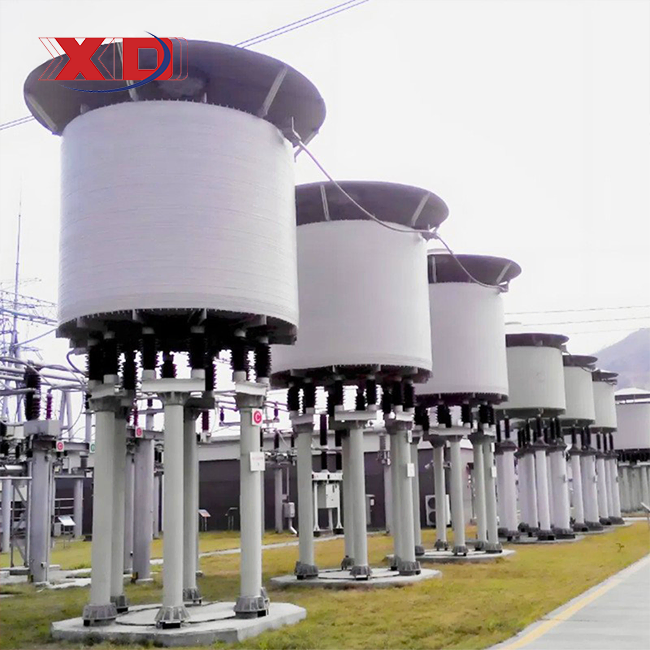
The performance characteristics are very different between air-core and iron-core reactor designs. Air-core reactors, like the XKGKL series dry-type types, use aluminum or copper wires that are spiral-wound and don't have magnetic cores. This design gets rid of worries about magnetic saturation and guaranties linear inductance even when fault currents are very high, over 50kA. Iron-core reactors have more inductance per unit volume, but they can become saturated during serious faults, which could make them less defensive when it's needed the most. By getting rid of iron core eddy current and hysteresis losses, air-core designs also lose about 30% less energy.
Key Factors to Consider When Choosing a Current Limiting Reactor
Defining System Requirements
A full study of the system is the first step in the choosing process. Teams in charge of buying things need to figure out the highest working current, rated system voltage, and possible short-circuit current levels at the installation site. These factors have a direct effect on the impedance specifications of the line current limiting reactor. Rates for voltages range from medium-voltage (6–35kV) to high-voltage substations (110–330kV). Each level needs its own insulation coordination and Basic Impulse Level (BIL) rates.
Critical Technical Specifications
The amount of current limits is set by the reactor impedance, which can be given as a percentage or as absolute ohms. For harmonic filtering, normal values are between 5% and 14%. For fault current limiting, you need to do a precise calculation based on the current fault level and the reduction goals you want to reach. The impedance must keep fault currents within the switchgear's ratings and keep normal operations' voltage drops to a minimum.
Reactors have to be able to handle both long-term problem currents and steady rated currents. Temperature rise tests make sure that hot spots in the windings stay below the limits for their insulation class. Systems with Class F (155°C) or Class H (180°C) insulation ensure long-term dependability. The XKGKL series uses H-class insulation and epoxy-impregnated fiberglass reinforcement to make installations very thermally stable in temperatures ranging from -50°C to +55°C.
When there is a short circuit, huge electrodynamic forces are created that are proportional to the square of the instantaneous current. When these forces are applied to reactors, they must keep their structural integrity. This is usually checked with short-time current withstand tests, in which the reactor is given fault current (often 25 to 40 times its rated current) for one to three seconds. Patented technologies for fixing the coil and encasing it in epoxy stop the winding from deforming and the insulation from failing from turn to turn.
Comparative Analysis with Alternative Solutions
Surge arresters and circuit breakers stop overvoltages and faults, respectively. Reactors, on the other hand, provide constant resistance that significantly lowers the size of fault currents. In situations where upgrading current switchgear is too expensive, adding reactors is a less expensive option. Reactors usually cost 15 to 25 percent of the total cost of replacing equipment. This makes them appealing to utilities that need to deal with old infrastructure or add more power without having to completely rebuild their systems.
How to Match Reactor Types to Specific Application Needs
Industry-Specific Demand Considerations
For 110-330kV substation uses, line current limiting reactors must meet strict Grid Code rules about being able to handle faults and having limits on harmonic distortion. Installing at bus-tie points or feeder links stops faults from coming from sources that are connected in parallel. The air-core design reduces the amount of stray magnetic fields that could interfere with nearby protection switches or control equipment. This is very important in small substation plans where equipment spacing is limited.
Wind and solar farms that connect to power lines face special problems. Different types of fault currents are made by inverter-based generation compared to synchronous machines. Reactors placed at the Point of Common Coupling handle these contributions while reducing switching transients. Reactors help green energy projects meet standards for interconnection by keeping voltage distortion in check and providing impedance that keeps grid contacts stable when production changes.
Arc furnaces and large motor drives that are used in steel mills, petrochemical plants, and manufacturing plants cause very high inrush currents and harmonic distortion. They keep variable frequency drives safe from notching effects and limit fault currents that could harm costly process equipment. The ability to handle surge currents up to 100 times rated capacity makes air-core reactors particularly suitable for these demanding applications.
Customizable Versus Standard Solutions
Standard stock reactors are good for a lot of different uses because they have shorter wait times and a history of working well. But big EPC projects often need to be customized to fit the needs of the specific site. For example, seismic strengthening may be needed in areas that are prone to earthquakes, corrosion-resistant coatings may be needed in seaside or industrial settings, or the sizes of retrofit installations may need to be changed because of limited space. Manufacturers like Xi'an Xikai provide tailored impedance values, specialized enclosures, and altitude-rated designs for installations up to 4,000 meters, ensuring optimal performance across diverse operating conditions.
Integration of tracking is also customizable. Modern reactors can combine temperature sensors, partial discharge tracking, and IoT-compatible telemetry systems that feed data into SCADA networks. With these smart grid-ready features, predictive maintenance plans can be used to cut down on unplanned downtime and make equipment last longer than 30 years.
Leading Brands and Supplier Insights for Current Limiting Reactors
Global Manufacturer Landscape
The line current limiting reactor market features established international brands—ABB, Siemens, Schneider Electric, Eaton, GE, Rockwell Automation, and Mitsubishi—each offering extensive product portfolios with proven track records in utility and industrial uses. These companies offer a lot of technical support, service networks around the world, and equipment that has been used for decades. Their reactors usually cost more than others because of their well-known brand and established supply chains.
Emerging Quality Suppliers
Along with global leaders, specialized makers like Xi'an Xikai offer competitive options that combine cutting-edge tech with lower costs. Xi'an Xikai is one of China's biggest factories for making medium- and low-voltage electrical equipment. It makes reactor solutions that meet the standards set by IEC 60076-6 and IEEE C57.16. The company's involvement in China's 863 National High-Tech Program shows that it can do research and development. It has over 15 patents in reactor technology, including its own methods for fixing coils that make them more resistant to shaking.
Evaluating Supplier Reliability
Procurement managers should look at more than just price when choosing suppliers for important infrastructure projects. Total cost of ownership is greatly affected by the provision of after-sales support, which includes help with commissioning, the shipping of spare parts, and professional training. When an emergency happens, it's faster to get help from suppliers who have local service teams or partnerships in the area where you do business. Objective proof of performance comes from quality standards (ISO 9001/14001, 3C certification for low-voltage equipment) and type-test results from recognized labs.
References for projects can help you learn a lot. Suppliers that have been trusted on more than 50 building projects have shown that they can consistently meet deadlines and are technically competent. Ask for case studies from similar projects that show the voltage class, weather conditions, and operating requirements. This will help you figure out if the manufacturer's experience fits with the needs of your project.
Case Studies & Practical Examples of Current Limiting Reactor Implementation
Utility Grid Expansion Project
As a regional utility increased its transmission capacity by connecting more transformers in parallel, fault levels rose above the limits of its current 145kV circuit breakers. Engineers put in air-core line current limiting reactors on bus-tie connections instead of replacing working switchgear, which would have cost a lot more. The reactors cut the fault current from 45kA to 31.5kA, which meant that existing infrastructure could keep running while the load grew by 35%. The project paid for itself in three years because it saved money on switchgear replacement costs and the reactors needed very little maintenance during the evaluation period.
Solar Farm Grid Integration
To meet Grid Code requirements, a 150MW solar farm that was connected to a 220kV cable network needed fault current control. Engineers put in reactors at the Point of Common Coupling. These provided the impedance needed to limit fault input and slow down voltage transients during changes in production caused by clouds. The reactors' linear inductance made sure they worked the same way at different generation levels, and their ability to withstand lightning impulse voltages kept them safe from atmospheric spikes that can happen in outdoor sites that are left open to the elements. The installation met the standards for interconnection without having to use expensive active filtering systems because the goal harmonic distortion levels were below 3% THD.
Industrial Manufacturing Facility
A steel factory with multiple arc furnaces often had safety trips and equipment breakdowns because of voltage notching and high fault currents. Putting dry-type air-core reactors on the main lines cut the size of the fault current by 40% and made the voltage profiles smoother during furnace ignition. The reactors were able to handle inrush currents that were more than 80 times their rated levels without breaking down. This kept production going and protected the transformers upstream. Over the course of five years, the plant reported a 65% drop in unplanned power outages and an eight-year increase in the service life of the transformers.

Conclusion
To choose the right line current limiting reactor, you need to carefully look at the electrical factors, the operating surroundings, and the long-term needs of the system. The decision-making process should take into account both scientific details (like reactance values, thermal capacity, mechanical strength, and how well the insulation works together) and practical ones (like fitting limitations, ease of upkeep, and compliance with standards). Air-core reactor designs have clear benefits in situations where linear performance is needed under extreme fault conditions, with little loss and a long service life.
Working with seasoned suppliers who offer full technical support, well-written test reports, and the ability to customize makes sure that the reactor specifications exactly match the needs of the project. Choosing the right reactors is important for protecting capital investments, making sure the system stays reliable and safe for decades, and handling the growth of utility infrastructure, incorporating green energy, or keeping industrial facilities secure.
FAQ
1.What is the difference between current limiting reactors and fuses?
Line current limiting reactors stay in the circuit during normal operation and fault conditions without stopping the flow of power and continuously limit the size of the fault current thru inductive impedance. Fuses stop circuits from working by melting when the current goes over the recommended limits. They need to be replaced after use. Reactors offer security that can be used more than once, which is good for faults that happen often, while fuses only stop once, which is good for catastrophic events.
2.Can reactors replace circuit breakers in protection schemes?
Instead of replacing circuit breakers, reactors work with them. Reactors lower the amount of fault current to a level that can be stopped by a circuit breaker. However, breakers are still needed to physically stop fault routes and separate harmed parts. When you use both together, you get layered protection, with reactors limiting current stress and breakers isolating the system completely.
3.How do you calculate the required reactor impedance for a specific application?
To figure out reactor impedance, you need to know the system voltage, the desired lower fault current (based on switchgear rates), and the expected fault current without the reactor. This can be found thru system fault studies. The basic method uses the voltage drop to find the impedance that will cause the goal current to drop. Detailed estimates must account for system resistance, transformer properties, and X/R ratios. Talking to application engineers makes sure that the specifications for important projects are correct.
Partner with Xi'an Xikai for Reliable Current Limiting Reactor Solutions
Every line current limiting reactor project that Xi'an Xikai Medium & Low Voltage Electric Co., Ltd. works on is backed by more than 20 years of top-notch engineering. Our XKGKL series dry-type air-core reactors have been used successfully in utility substations, renewable energy installations, and industrial power systems all over the world. We meet the technical requirements of difficult EPC projects by having ISO 9001/14001 certification, more than 15 nuclear technology patents, and following IEC and IEEE standards. Our engineering team provides full help from the initial system study to commissioning and beyond, with expert support available 24 hours a day, seven days a week. Get in touch with our knowledgeable experts at serina@xaxd-electric.com, amber@xaxd-electric.com, or luna@xaxd-electric.com to talk about your needs with a reliable line current limiting reactor supplier.

References
1. IEEE Standards Association. (2017). IEEE Standard for Power System Device Function Numbers and Contact Designations. IEEE C37.2-2017.
2. International Electrotechnical Commission. (2015). Power Transformers - Part 6: Reactors. IEC 60076-6:2015.
3. Glover, J. D., Sarma, M. S., & Overbye, T. J. (2016). Power System Analysis and Design (6th ed.). Cengage Learning.
4. Das, J. C. (2018). Short-Circuits in AC and DC Systems: ANSI, IEEE, and IEC Standards (2nd ed.). CRC Press.
5. Heathcote, M. J. (2018). The J&P Transformer Book: A Practical Technology of the Power Transformer (13th ed.). Franklin Classics.
6. Paithankar, Y. G., & Bhide, S. R. (2020). Fundamentals of Power System Protection (2nd ed.). PHI Learning Pvt. Ltd.