Indoor Disconnect Switch Buyer’s Guide for Industrial Power Systems
2026-06-29 16:26:42
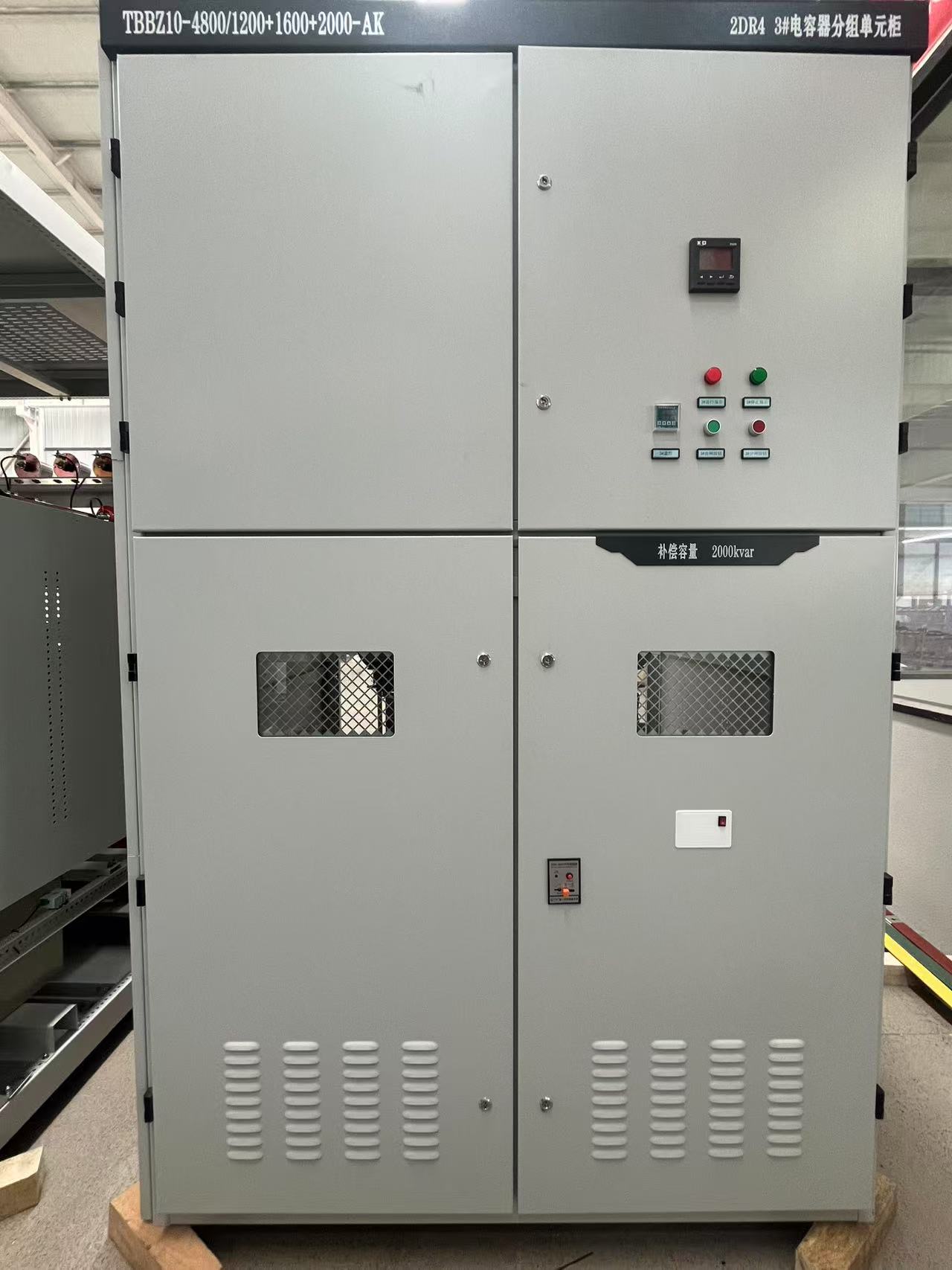
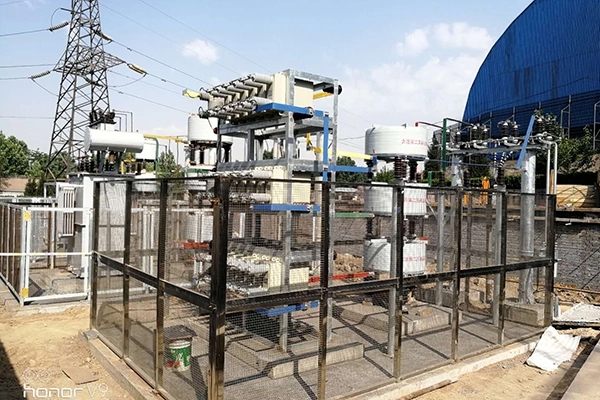
When handling industrial power infrastructure, it is very important to choose the right isolation tools. In medium- and high-voltage systems, an Indoor disconnect switch acts as the main safety barrier by physically separating circuits to safeguard workers during repair and avert catastrophic system failure. Instead of stopping fault currents like circuit breakers do, these devices make clear air gaps for lockout-tagout processes, making sure that there is no energy before techs touch active parts. Facility managers, utility engineers, and EPC contractors who work in industrial, healthcare, data centers, and transmission networks can use this book to learn about important selection criteria, installation best practices, and buying strategies.
 |
 |
Understanding Indoor Disconnect Switches: Basics and Functions
What Distinguishes Indoor from Outdoor Disconnect Switches
The enclosure grades and shielding materials of Indoor disconnect switches vary significantly. Outdoor versions need housings that are resistant to UV light and waterproof seals that are rated to IP65 or higher. Indoor versions, on the other hand, focus on having small footprints and being able to fit inside metal-clad switchgear. Indoor models usually work in controlled settings with temperatures between -5°C and +40°C. This keeps them from having problems with water getting in like outdoor models do. Because it doesn't get full sunlight, makers can use epoxy resin insulators instead of heavier ceramics, which makes the indoor versions 30–40% lighter than the outdoor ones. This difference is important when making changes to existing substations where room is limited or where earthquakes are a worry.
Operating Principles and Common Switch Types
A disconnect switch literally stops the flow of electricity through a device with moving blades. The blade, which is usually made of copper plated with silver, can spin or slide to make an isolation gap that meets the NFPA 70E safety limits for arc flashes. There are three main configurations:
1. Non-Fused Disconnect Switches: For separating transformers or capacitor banks during regular maintenance, non-fused disconnect switches are perfect. They have simple blade mechanisms that don't protect against overcurrent. Rated currents of up to 5000A and voltages up to 40.5kV can be handled by these units.
2. Fused Disconnect Switches: Put high-voltage fuses inside the blade assembly to protect against both short-circuits and separation. Usually used in motor control centers where it's important to work together with upstream breakers.
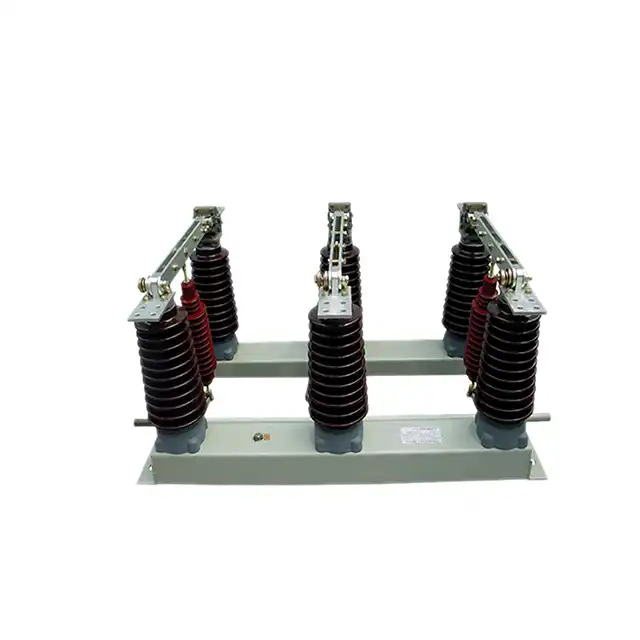
3. Load Break Switches: These have arc-quenching tanks that allow interruptions when the load is full. This type of switch is shown by the GN27 High Voltage Disconnect Switch, which uses vacuum interrupters or SF6 technology to put out sparks while moving is happening.
Each type does something different. In a hospital, the backup generator system might use fused versions to protect important life-safety circuits. On the other hand, the rolling mill drive in a steel mill needs load break features so that it can handle frequent start-stop cycles without breaking contacts.
Essential Components and Safety Standards
Some important parts are:
- Contact Systems: Spring-loaded pressure mechanisms in swing-contact designs, such as those in Xi'an Xikai's GN27 line, keep mechanical wear to a minimum. Even after 10,000 processes, this design keeps the contact resistance below 50 microhms.
- Insulator Assemblies: These are made of high-strength ceramic or composite materials that can handle shock voltages of up to 185kV. This is important for protecting utility substations from lightning.
- Operating Mechanisms: The operator's actions cause the blade to move through manual lever arms, powered motors, or pneumatic systems. When you pair the CS6-2 mechanism with GN27 switches, you get fail-safe coupling that keeps the door from closing too soon when it's under load.
Following the rules set by IEC 62271-102 and IEEE C37.32 makes sure that devices pass mechanical endurance and dielectric withstand tests (95kV for 1 minute at 40.5kV rated voltage). Third-party testing for contact temperature rise limits—usually 65°C above ambient at rated current—is required for UL listing. This makes sure that thermal runaway doesn't happen during ongoing operation.
How to Choose the Best Indoor Disconnect Switch for Industrial Applications
Defining Application-Specific Parameters
The specifications are based on the voltage and current values for Indoor disconnect switch. A data center that is fed by a 13.8kV distribution system needs switches that are rated for 15kV class (with a 10% overvoltage range) and have the heating capacity to match the secondary currents of the transformers. The short-circuit withstand rates, which are given as dynamic (peak) and thermal (RMS) values, need to be higher than the fault levels that were determined. A substation with 31.5kA fault currents needs switches that can handle 50kA peak and 20kA thermal for 4 seconds. This keeps the structure strong during grid disruption.Material choice is affected by environmental factors. Facilities near the coast have to deal with salt-fog rusting, which calls for tools made of stainless steel and insulators made of silicone rubber. Because the air is less dense at higher elevations, sites above 1000 meters need de-rated insulation or longer creepage distances. This is taken care of by Xi'an Xikai's plateau-rated equipment, which works regularly at 4000 meters—essential for mining operations in mountainous areas or green energy projects in high terrain.
Comparative Analysis: Disconnect Switches vs. Circuit Breakers
Both gadgets can interrupt circuitry, but they work in different ways. Circuit breakers protect devices further down the line by tripping automatically when there is an overload or a fault. Since disconnect switches don't have any sense parts, they have to be operated by hand after circuit breakers turn off the power. This split of tasks makes things more reliable; a stuck breaker won't stop maintenance isolation if there is an upstream disconnect switch that is properly interlocked.Fused disconnect switches fill in this gap by mixing overcurrent safety with human isolation. But replacing fuses costs more than using resettable circuit breakers when it comes to running the business. The choice depends on how often the circuit fails. Circuits that fail rarely, like transformer cores, are better off with fused switches because they are easier to use. On the other hand, circuits that fail often, like motor starts, are better off with circuit breakers.
Evaluating Supplier Credibility and Product Authenticity
North American markets are dominated by well-known companies like Siemens, Eaton, and Schneider Electric, but specialized providers can give you an edge. Xi'an Xikai has been making medium-voltage equipment for 50 years and has installed it in State Grid systems and industrial plants, showing that it is reliable in the field. When buying teams look at providers, they should make sure:
- Certification Transparency: Ask for IEC test records that show the results of the withstand voltage and mechanical cycle tests. Real producers give batch-specific paperwork that can be linked to production times.
- Material Authenticity: Contacts that are silver-plated prevent tarnishing better than contacts that are tin. When required plating thickness (25 microns) is written in buy orders, substitutions are not allowed.
- Warranty Terms: Full covering that includes accidental arc damage, not just production flaws, shows that the maker is confident in their product. Xi'an Xikai's support network includes expert help during testing, which lowers the risks for EPC firms during installation.
Installation, Safety Features, and Electrical Codes to Consider
Step-by-Step Installation Guidance
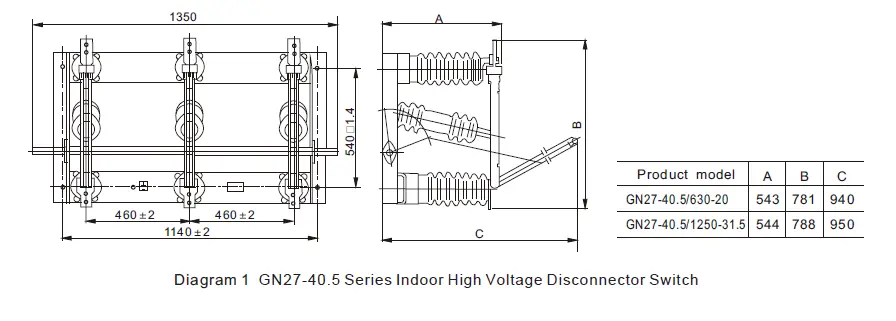
When fault forces happen, mechanical steadiness is ensured by proper placement of Indoor disconnect switch. For horizontal setups, like those found in switchgear lines, you need torque-verified anchor nuts (usually M16 grade 8.8) to hold the base plates to the structural steel. To survive 0.5g lateral accelerations, vertical layouts used in small substations need seismic bracing that meets ASCE 7 standards. The GN27's modular design lets it work in either direction without affecting performance, which is useful for retrofit jobs where the current buswork decides where switches go.Electrical connections demand attention to temperature growth. Aluminum bus joints need belleville washers to keep the contact pressure even when the joints are heated and cooled. According to NFPA 70B maintenance guidelines, torque specs must be checked with calibrated tools and written down. For M10 terminal nuts, these are usually 40 to 50 Nm. To keep flashovers from happening, phase-to-phase and phase-to-ground gaps must be at least 254 mm, as shown in NEC Table 490.24.
Critical Safety Features
These days, break switches have more than one layer of safety. Backfeed risks are eliminated by mechanical interlocks that stop blade closure when grounding switches are still in place. Padlockable handles can fit more than one lockout device, which is important for sites with multiple shifts where many skills need to access equipment. Visible break signs, like the voltage detector devices that can be added as an option to GN27 units, give extra proof that the power is off before people get close.Arc flash mitigation includes putting up protective devices in an organized way. Fuse or relays upstream must clear problems faster than the switch damage limits. A 1250A disconnect switch with a 31.5kA thermal resist can handle 4-second fault durations as long as the safety clears within 2 seconds. This was proven by time-current curve analysis during design.
Compliance with NEC and IEC Standards
Article 490 of the National Electrical Code (NEC) says that disconnect buttons must be within sight of devices or be able to be locked in the open state. Section 110.16 says that arc flash signs must show the incident energy levels, which are determined according to IEEE 1584 and help with choosing the right PPE. IEC 62271-102 adds to these with mechanical endurance classes (M1 through M3) that list the number of rounds of operation before repair. Class M2 (5000 operations) is best for industrial companies that switch networks once a month, while Class M3 (10,000 cycles) is needed for utility apps that change their networks often.
Benefits and Performance Optimization of Indoor Disconnect Switches
Core Operational and Financial Benefits
Isolation switches allow for focused repair, which cuts down on downtime. Technicians don't turn off whole substations; instead, they separate individual lines to keep production going. A drug company that is replacing a 2000 kVA generator saves $500,000 in missed production by keeping process lines next to it powered up during the 8-hour outage. This fine-grained control makes the initial cost of the tools worth it by allowing for flexible operations.Losses of energy are directly affected by thermal efficiency. Contacts with a high resistance lose power as heat. For example, a 100 microhm resistance at 1000A uses 100 watts of power all the time. At $0.10/kWh, this adds up to 876 kWh per phase over the course of a year and costs $88. Premium switches with swing-contact designs keep the resistance below 50 microhm, which cuts these losses in half and increases contact life by lowering the rate of oxidation.
Preventive Maintenance Practices
Regular checks keep problems from happening out of the blue for Indoor disconnect switch. Thermographic scans, which must be done every year according to NFPA 70B, find hotspots that show links that are loose or contacts that are breaking down before they cause major problems. Using micro-ohmmeters to test for contact resistance shows wear patterns; results higher than the manufacturer's standards by 20% mean upkeep needs to be done. The GN27's modular contact parts make it possible to change them in the field in less than two hours, while welded designs need eight hours to be retrofitted.Mechanical grease makes things last longer. Lithium-based greases that can handle temperatures from -30°C to +120°C need to be used on moving parts every 500 rounds, or every two years. Over-lubrication attracts dust in indoor substations that are next to outdoor areas, so they need to be applied precisely according to the torque curves provided by the maker. Maintenance that is done right can double the service life from 20 to 40 years, spreading out the cost of the capital over a longer length of time.
Industry Case Studies
A data center in Texas built GN27 load break switches into a 34.5kV utility interconnection. This allowed for hot moves between two utility lines without stopping server loads. The installation got rid of 12 downtime events a year that lasted an average of 4 minutes each. This saved $2.8 million in uptime service-level points. The switch's 1250A rating allowed for future growth to 20 MW without the need for infrastructure changes.A steel mill in the Midwest got rid of old oil-filled switches and replaced them with new vacuum-type units. This cut the arc flash impact energy from 40 cal/cm² to 8 cal/cm². Because of this change, the needed PPE went from Level 4 suits to Level 2 suits. This lowered the cost of upkeep labor by 35% by making tasks go faster. Pollution-resistant insulators in the switches were able to handle mill scale poisoning, allowing maintenance rounds of 15 years instead of 3 years.
Where and How to Procure Indoor Disconnect Switches for Industrial Use
Trusted Sourcing Channels
Having a direct contact with a maker makes customization easier. During the planning phase, Xi'an Xikai's engineering team works with EPC companies to find the best switch configurations for each project's needs. Custom busbar setups or modified mounting clamps speed up the installation process, which is important for quick building timelines. Lead times are usually between 12 and 16 weeks for normal setups, but they can go up to 20 weeks for high-altitude or pollution-resistant versions that need special testing.Authorized dealers keep popular grades in stock locally, which cuts the time it takes to get a replacement in an emergency to 48 hours. Verifying permission, on the other hand, stops fake goods, which are a chronic problem where low-quality materials cause products to fail early. To make sure something is real, you can ask for maker verification letters and check serial numbers against factory records.
Quality Verification and Warranty Considerations
Incoming inspection protocols ensure investment protection, including onsite power-frequency withstand voltage tests at 1.1× rated voltage for 1 minute to detect insulation defects missed during transport. Mechanical operation tests with 20 open–close cycles verify blade alignment and contact engagement, with results recorded for future maintenance reference. Warranty coverage should address failure modes, typically excluding wear parts like contact tips while covering mechanical and insulation components. Extended service agreements improve reliability for critical projects. Xi'an Xikai’s warranty includes technical support, reducing repair time by about 40%.
Strategic Procurement Tactics
Volume savings encourage projects with multiple sites to use the same specs. When a utility buys 50 similar 630A switches, the cost is 15-20% less than buying a single unit, and it's easier to keep track of extra parts. Setting up favorite supplier deals locks in prices for two to three years, protecting against changes in the copper and silver markets.When negotiating customization, specific needs are taken into account. High-altitude mining projects require tests at lower atmospheric pressures to make sure that the shielding works at the right working heights. Pollution-resistant mixtures with hydrophobic silicone coats stop surface tracking in cement plants or substations along the coast. These changes usually raise base costs by 8–12%, but they get rid of field failures that cost a lot more when they happen without warning.
Conclusion
The selection of the appropriate Indoor disconnect switch requires a mix between technical accuracy and practicality. Procurement teams make sure that voltage rates, environmental factors, and safety standards are all in line with what the building needs. This keeps workers safe and increases efficiency. The GN27 High Voltage Disconnect Switch is a great example of how advanced contact designs, multiple mounting choices, and strict testing procedures can work together to make reliable solutions for tough tasks. Whether you're in charge of a hospital's main power supply or a utility company's transmission grid, buying approved equipment from reputable companies like Xi'an Xikai pays off in the form of longer equipment life, less upkeep, and safer working conditions for your employees. These devices go from being passive safety features to active drivers to operational success with careful supplier screening and preventive repair plans.
FAQ
1.Can load currents be safely interrupted by Indoor disconnect switches?
Standard disconnect buttons need to be turned off before they can be used. Opening while under load creates damaging arcs that are higher than the equipment's values. Using arc-quenching technology, load break switches like the GN27 with vacuum interrupters are designed to stop currents up to their rated levels. Always check the load break values in the datasheets. Using non-load-break types while they are powered on is against the law and voids the warranty.
2.How does altitude affect disconnect switch performance?
The dielectric strength goes down as you go up because the air mass goes down. At 2000 meters, switches that are designed for sea level may have flashovers. Xi'an Xikai's plateau-rated equipment is tested in conditions that are similar to those at 4000 meters, which confirms that the insulation works well together. Either altitude-compensated designs or voltage de-rating based on IEC 62271-1 altitude correction factors are needed for installations above 1000 meters.
3.What maintenance intervals do manufacturers recommend?
Usually, thermographic checks are done once a year and mechanical lubrication is done every two years. Every five years or 1000 actions, whichever comes first, contact resistance testing is done. These times may be cut in half in harsh settings like ocean salt spray or cement dust. Manufacturer guides give advice that is specific to the environment. For example, Xi'an Xikai's paperwork has contamination severity ratings that make sure that upkeep times are right for the conditions of use.
Partner with Xi'an Xikai for Reliable Indoor Disconnect Switch Solutions
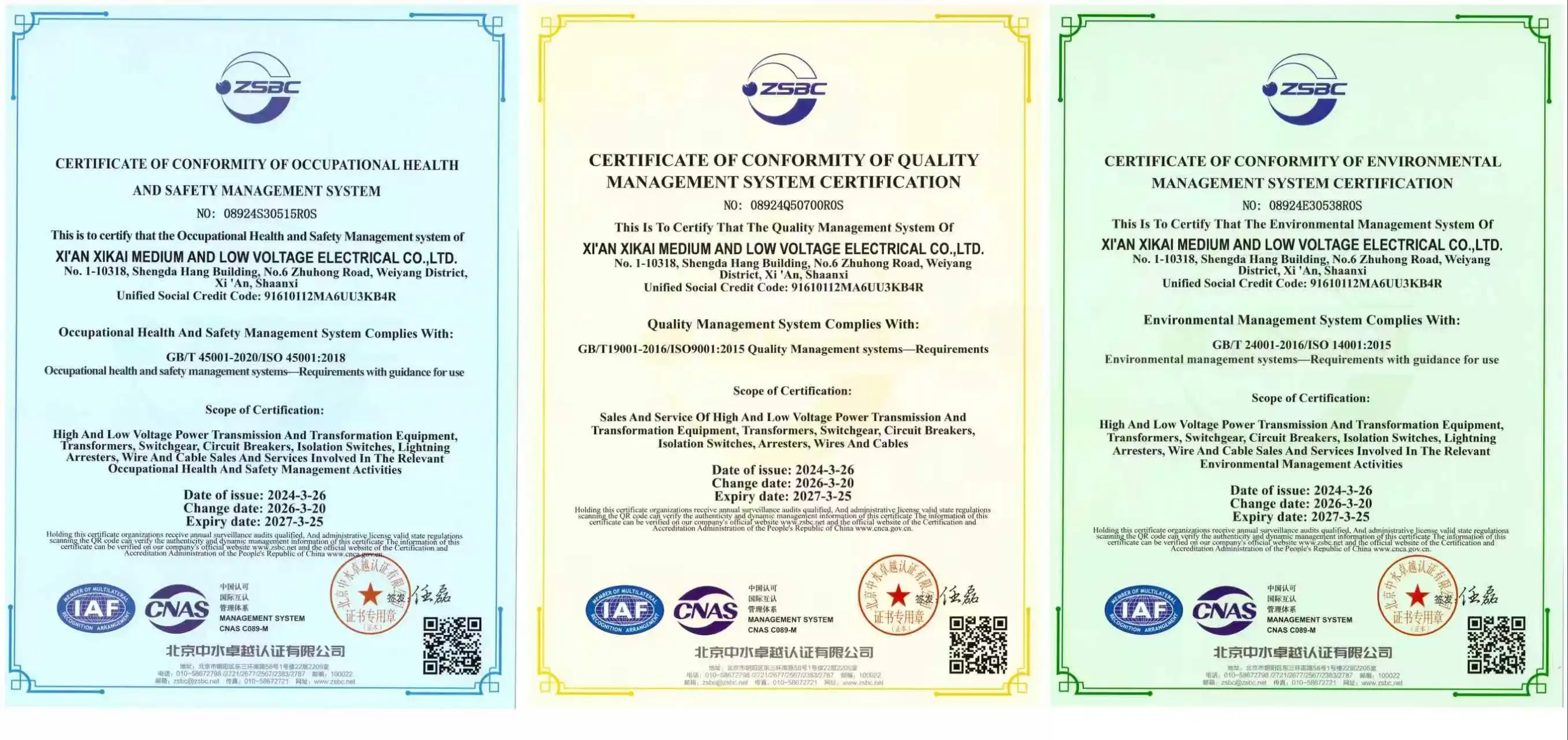
Xi'an Xikai Medium & Low Voltage Electric Co., Ltd. delivers engineered isolation solutions trusted across 30+ countries. Our GN27 series combines swing-contact durability with flexible mounting configurations, addressing complex substation challenges from sea level to 4000-meter elevations. With ISO 9001 certification and compliance to IEC/IEEE standards, our products meet the rigorous demands of utility transmission systems, heavy industrial plants, and mission-critical commercial facilities. Whether you're an Indoor disconnect switch manufacturer seeking OEM partnerships or an EPC firm requiring customized switchgear integration, our engineering team collaborates throughout design and commissioning phases. Contact our technical specialists at serina@xaxd-electric.com, amber@xaxd-electric.com, or luna@xaxd-electric.com to discuss your project requirements.
References
1. National Electrical Manufacturers Association. (2021). NEMA SG 6: Power Switching Equipment Standards for High-Voltage Applications. Rosslyn, VA: NEMA Publications.
2. Institute of Electrical and Electronics Engineers. (2019). IEEE C37.32: Standard Requirements for High-Voltage Air Disconnect Switches. New York, NY: IEEE Standards Association.
3. National Fire Protection Association. (2021). NFPA 70E: Standard for Electrical Safety in the Workplace. Quincy, MA: NFPA Press.
4. International Electrotechnical Commission. (2020). IEC 62271-102: High-Voltage Switchgear and Controlgear – Part 102: Alternating Current Disconnectors and Earthing Switches. Geneva, Switzerland: IEC Publications.
5. Electric Power Research Institute. (2018). Substation Equipment Reliability Study: Disconnect Switch Performance Analysis. Palo Alto, CA: EPRI Technical Reports.
6. American Society of Civil Engineers. (2022). ASCE 7: Minimum Design Loads and Associated Criteria for Buildings and Other Structures. Reston, VA: ASCE Press.