Indoor Voltage Transformer 35kV: Features and Applications Guide
2026-07-28 10:14:28
When power distribution systems demand precision voltage measurement at medium voltage levels, selecting the right equipment becomes critical to operational success. An indoor voltage transformer rated at 35kV serves as the backbone of accurate metering and protective relay coordination in substations, manufacturing facilities, and commercial complexes. These potential transformers step down high primary voltages to manageable secondary levels—typically 100V or 110V—enabling standard instrumentation to monitor grid conditions without exposure to dangerous voltage levels. Modern units employ epoxy resin encapsulation technology that eliminates internal voids, dramatically reducing partial discharge activity below 10 picocoulombs and extending service life beyond three decades with minimal intervention.


Understanding Indoor Voltage Transformers at 35kV Rating
Operating Principles and Core Technologies
Indoor voltage transformers work with electromagnetic induction. The main windings are linked to the high-voltage circuit, and the secondary windings send out a proportional amount of low voltage. The 35kV indoor voltage transformer has cores made of grain-oriented silicon steel, which keeps the magnetic flux stable even when the load changes from 1% to 120% of the rated voltage. Epoxy resin casting makes a single piece that holds the windings, core, and insulation together. This gives the structure more strength and can withstand short-circuit pressures of up to 40kA for one second. The fully enclosed design keeps out moisture and dirt, keeping the accuracy class 0.2 for revenue metering uses where even a 0.5% difference can mean big money losses over the course of a year's worth of energy use cycles.
Technical Specifications That Define Performance
The transformation ratio has an input voltage of 35kV and an output voltage of 10kV. It is also frequency compatible at 50/60Hz, which means it can be used on all grid standards around the world. Different models have different rated main current handling of 600A or 800A. The burden capacity, which is given in volt-amperes, tells you how many instruments you can connect to the secondary connections without losing accuracy. Following the rules set by GB 20840.2-2014 and IEC 61869-1/61869-2 ensures compatibility with safety systems and SCADA systems used by utilities around the world. Extremes of temperature (-40°C to +70°C) are covered by the thermal working range. However, installations above 1,000 meters need to be derated or have custom insulation gaps made to account for the lower air density.
Critical Datasheet Parameters for Procurement Decisions
There are different accuracy classes for metering (0.2/0.5 class) and security (3P/5P class) functions. To meet revenue billing rules, metering cores need tighter limits. The rated transformation ratio is written as 35000/100V or something similar, and the phase shift should stay below 5 minutes for safety reasons. Connected load limits are set by the thermal burden capacity, which can be tested at 15VA, 25VA, or 50VA. Going over this limit causes ratio mistakes that damage the accuracy of the measurement. Power frequency withstand voltage testing at 70kV for one minute verifies the strength of the insulation. Partial discharge measurements below 10pC prove the quality of the production process and predict long-term dependability when the device is continuously powered on.
Applications and Design Features of 35kV Potential Transformers
Industrial and Commercial Deployment Environments
Indoor voltage transformers help motor protection relays and power factor correction capacitor banks work together in factories. In data centers, they are built into redundant power distribution units. When voltage sags are detected, the generators start up right away. A hospital's electrical systems rely on accurate voltage tracking to keep equipment in the operating rooms and imaging offices from breaking down. Distribution substations use single three-phase assemblies or banks of three single-phase units to provide voltage references for distance protection relays that figure out where faults are along transmission corridors. For each use, a strong construction is needed that can withstand mechanical vibrations, electromagnetic interference, and changes in temperature without losing its calibration.
Design Innovations Enhancing Safety and Efficiency
Modern epoxy resin mixes have flame-retardant ingredients that meet UL94 V-0 ratings for flammability. This is very important for indoor setups where fire spread could be dangerous to people's lives. With normal measurements of 400mm × 300mm × 200mm, their small footprints make them easy to fit into switchgear compartments that are limited on space, next to circuit breakers and disconnectors. Two sets of secondary windings separate the galvanic separation between the metering circuits that connect to revenue meters and the safety circuits that feed relay panels. This way, ground faults in one system don't affect the other. By optimising the core geometry and winding arrangement, thermal management keeps hotspot temperatures within acceptable limits during continuous operation at full load, so there's no need for forced cooling systems that are harder to maintain.
Installation Best Practices and Maintenance Protocols
To keep high-resistance joints from forming and creating heat, mounting surfaces must offer rigid support and electrical grounding continuity. It is also important to strictly follow the torque specifications for terminal connections. Checking the phase sequence with spin meters before turning on the power keeps the safety relay from operating incorrectly in cases of opposite polarity. Epoxy-cast designs don't need oil sampling or bushing upkeep, but thermal imaging done on a regular basis can find loose connections or internal problems that show up as temperature differences. Contact resistance tests on the secondary connections should stay below 100 milliohms. Insulation resistance tests between the primary and secondary windings must be higher than 1,000 megohms at 2,500VDC to make sure the insulator stays strong after years of use. Real-life examples show measurable benefits: a steel mill cut unplanned downtime by 40% after replacing old oil-filled units with epoxy-cast transformers that got rid of the risk of explosions. A hospital complex saved 15% on energy costs by using 0.2-class accuracy metering transformers that fed automatic capacitor switching controls to keep an eye on the power factor.
Comparison and Decision Factors for Medium Voltage Transformers
Indoor Versus Outdoor Design Considerations
Material choice and enclosure ratings are based on how the enclosure will be used. Outdoor units need waterproof terminal tanks and porcelain or silicone rubber insulators that can stand up to UV light, salt fog, and ice buildup. Since indoor voltage transformer designs don't have to deal with the stresses of the weather, they can be smaller and lighter. This makes epoxy-cast construction a cost-effective option. Temperature changes are more common in outdoor units, so they need bigger accuracy tolerance bands. Indoor installs have more stable accuracy across all seasons because the environment is more controlled. When comparing performance standards that are the same, cost differences usually favour indoor designs by 20 to 30 percent. However, the best choice will ultimately depend on site-specific factors such as available building space and substation layout.
Dry-Type Versus Oil-Filled Technology Trade-Offs
Oil-impregnated paper insulation is better at conducting heat and has been used reliably in the past, but it poses a fire risk, needs to be tested for oil regularly, and is harder to get rid of because of environmental rules. Dry-type transformers made of epoxy resin don't have to worry about being flammable, can be installed in occupied buildings according to NFPA 70 electrical codes, and have lower lifetime maintenance costs because they are sealed for life. When comparing performance, epoxy-cast units have the same impulse withstand voltage ratings as oil-filled equivalents but take up 40% less space. For dry-type designs, noise levels stay below 45 decibels, while they reach 55 decibels for oil-cooled units. This is an important thing to think about when installing units near home or office areas.
Pricing Models and Efficiency Benchmarks Across Manufacturers
Global suppliers like Siemens, ABB, Schneider Electric, and GE place their products at different price points and levels of performance. Premium-tier items are 30–50% more expensive per unit than normal catalogue items because they focus on digital integration, longer guarantees, and the ability to be customised. By maximising production volumes and standardising designs around common voltage ratings, mid-range manufacturers offer good performance at prices that are competitive. Metrics for measuring efficiency look at both no-load losses and burden losses. Good units keep their total losses below 50 watts at rated settings, which means they lose almost no energy over decades of use. Lead times range from 6 weeks for normal configurations to 16 weeks for customised voltage ratios or special insulation systems. For project-critical uses, seller delivery reliability is an important factor in the buying process. Strategic sourcing compares the initial cost of buying something to its total cost of ownership, taking into account things like energy loss, maintenance schedules, expected service life, and how quickly suppliers can help with technical issues. When you negotiate for bulk orders, you can get discounts of more than 15% and lock in specifications that make sure the products will work with all phases of a project.
Procurement Guide for 35kV Potential Transformers
Evaluating Supplier Qualifications and Certifications
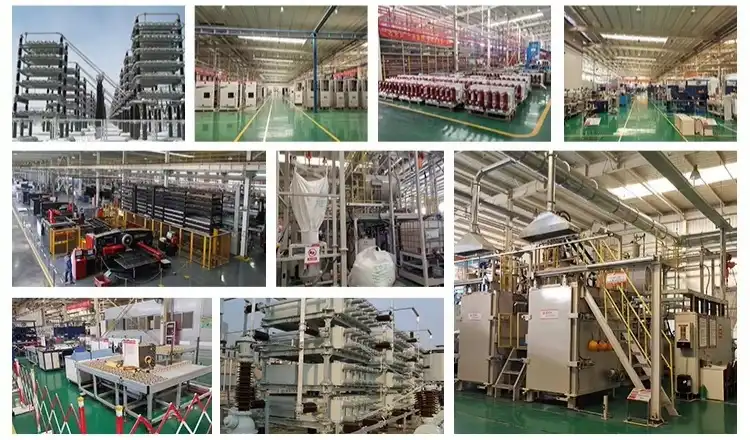
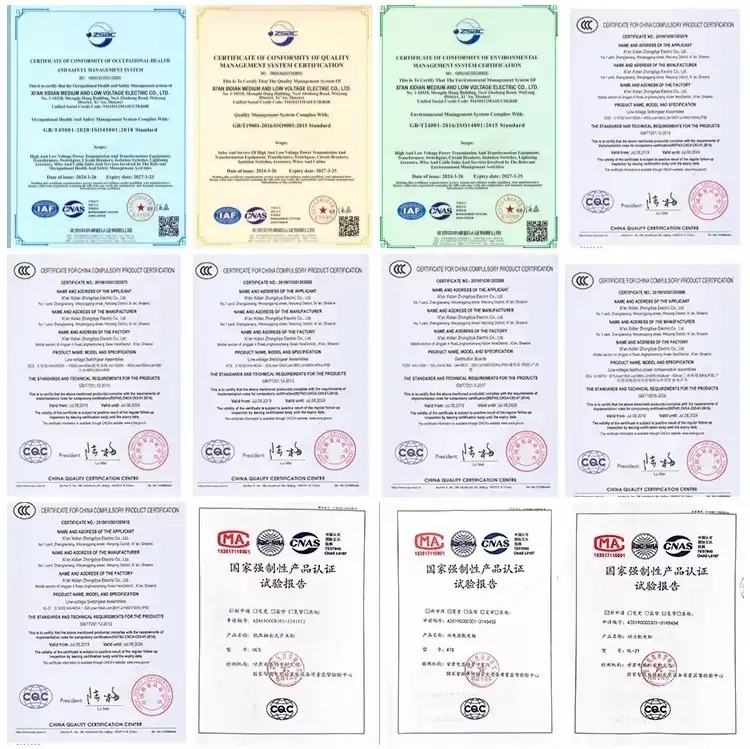
Along with ISO 9001 quality management certification, which shows strict process control, ISO 14001 environmental management certification and ISO 45001 workplace health standards should be on a manufacturer's qualifications list. UL listing, CE marking, or CCC approval are all examples of product certifications from well-known testing labs that prove a product meets safety and performance standards. Supplier audits show how much can be produced, how quality is controlled, and how raw materials are sourced, all of which affect how consistent production lots are. References from current customers in related industries can tell you a lot about the quality of after-sales support, how quickly warranty claims are handled, and how accurate technical paperwork is. Having vacuum casting systems, automated winding machines, and partial discharge detection chambers in a manufacturing facility shows that they care about quality, which means that their products will be reliable in the field.
Customization Options for Specialized Requirements
Standard catalogue items work for 80% of uses, but some projects need solutions that are specifically made for them. Custom voltage ratios can handle system voltages that aren't standard, like those found in old factories or on foreign projects. Wider temperature ranges make it possible to work in harsh environments, from Arctic installations to equatorial regions. Different hardware plans can be accommodated by different mounting options, such as wall-mounted, floor-standing, or trolley-integrated. Dual-ratio primary taps let you choose the voltage during commissioning without having to keep a lot of different types of transformers on hand. Designs that can communicate and have sensors built in send information about temperature, partial discharge, and power to building management systems. This lets repair plans plan ahead and avoid problems that come up out of the blue.
Negotiating Terms and Understanding Market Trends
The market price for 35kV indoor voltage transformers changes with the price of copper and steel. Prices usually range from moderate to high-end, depending on the specifications and the number of orders. Long-term supply deals keep prices stable and make sure that supplies are distributed during times of high demand. Payment terms usually go like this: 30% deposit, 60% upon factory inspection, and 10% retention after commissioning. However, these can change to fit the buyer's budget. The warranty should cover both parts and workmanship for at least five years, and there should be clear rules about when a new unit must be delivered. Technical support agreements that spell out response times for application engineering questions and help with troubleshooting in the field are worth more than the physical product itself, especially for EPC firms that are working on a lot of projects at once and have tight deadlines. To make realistic project schedules, you need to know what causes lead times, like getting raw materials, where in the manufacturing line you are, how long testing takes, and how to ship the goods. There may be extra fees for rush orders, but they are worth it because they keep building projects from being delayed, which can lead to fines. Building relationships with suppliers that have local inventory or regional distribution centers can help you save money on emergency purchases when you need to replace something that wasn't planned.
Safety and Compliance in Operating 35kV Systems
Installation Precautions and Risk Mitigation Strategies
For high-voltage work, you need skilled people who know how to use lockout-tagout methods and who have the right safety gear, like gloves that can handle high voltage and arc-flash suits. Before getting close to the terminals on primary connections, accurate voltage monitors that can handle 35kV service must be used to make sure that the circuits are off and grounded. For loose joints that arc under load, torque wrenches make sure that terminal connections meet the manufacturer's requirements. The National Electrical Code says that there must be enough space between live parts and grounded surfaces. Usually, this is 150 mm for 35kV systems in dry places, plus extra space for safety. Using colour-coded wires and permanent labels that last for decades, secondary circuit wiring pays attention to polarity markings to keep the right phase relationships with metering and safety equipment.
Interpreting Certification Standards and Test Reports
In type test records, makers write down the accuracy classes, thermal standards, and dielectric test methods that are set out in IEC 61869-2. Routine test papers that come with each unit check the accuracy of the ratio, the polarity, the insulation resistance, and the power frequency handle voltage for each unit. UL listing shows that the product meets North American safety standards for things like flammability, fault conditions, and labelling needs. Knowing how test voltages work—for example, a 35kV generator can handle a 70kV test voltage for one minute—helps with choosing the right equipment for systems that may be temporarily exposed to too much voltage during switching operations or lightning strikes. If the results of a partial discharge test are less than 10 picocoulombs, it means that the insulation was made correctly and doesn't have any internal holes or contamination that would speed up its ageing.
Preventive Maintenance and Troubleshooting Techniques
When compared to oil-filled options, sealed epoxy construction requires less regular upkeep, but it's still a good idea to check on it every so often. Every year, thermal imaging studies find strange heating patterns that could mean that connections are loose or the inside is breaking down before a major failure happens. Secondary burden testing makes sure that the connected instrument load stays within its stated capacity. This keeps the accuracy from dropping because the windings are too heavy. Insulation resistance trends over years show patterns of degradation; readings falling below 100 megohms need a thorough investigation. Some common ways that devices fail are secondary winding open circuits from bad installation techniques, primary bushing flashover from dirt and dust buildup, and ratio drift from core magnetisation after short periods of overvoltage. Bridge methods are used in diagnostic techniques to check the ratio and measure the phase angle. Deviations of more than 0.5% or 10 minutes mean that the device needs to be replaced. These practices keep measurement accuracy over 30 years, which protects the integrity of revenue meters and makes sure safety relay schemes work properly when there is a fault. Proper maintenance programs keep records of what was found during inspections, test results, and correction actions. This creates audit trails that meet legal requirements and help asset managers decide whether it's cheaper to fix or replace something.
Conclusion
To choose a 35kV indoor voltage transformer that will measure voltage accurately and protect the system, you need to weigh the technical specs, the needs of the application, and the supplier's abilities. Compared to older technologies, epoxy-cast designs are safer, easier to maintain, and take up less space. Following IEC and GB standards also makes sure that they are compatible around the world. To be successful with procurement, you need to carefully evaluate suppliers, be clear about what customisations you need, and negotiate terms that fit with project timelines and budgets. Correct installation methods, ongoing adherence to safety standards, and planned preventive maintenance programs maximise return on investment through decades of accurate, trouble-free operation serving important power infrastructure in the business, utility, and industrial sectors.
FAQ
1. What distinguishes a 35kV indoor voltage transformer from others with lower voltage ratings?
The 35kV rating means the highest continuous primary voltage that can be handled. This model needs thicker insulation and more space between components than the 12kV or 24kV models. This voltage class is used for medium-voltage distribution networks that connect power plants to industrial loads. They need to be built strong so they can handle switching transients and short-term overvoltages. Because of the cost of materials and testing, equipment costs go up in direct relation to its voltage grade. This makes it very important to specify correctly to avoid over-engineering or not having enough voltage margins.
2. Can these transformers be customized for altitude installations above 1,000 meters?
Standard designs work reliably up to 1,000 meters above sea level. At higher elevations, air density and dielectric strength drop, so designs need to be derated or made to work at those levels. To keep the required safety margins, customised units have longer insulation clearances and changed bushing profiles. When buying, the procurement requirements must include the installation altitude so that the right equipment is sent and meets performance guarantees.
3. How does accuracy class selection impact metering versus protection applications?
To meet revenue billing rules, metering circuits need an accuracy class of 0.2 or 0.5. This is because small percentage mistakes can have big financial effects over gigawatt-hours of energy use. For protection purposes, 3P or 5P accuracy is fine because the functioning limits of relays include margins that allow for measurement errors. Dual-core designs let you use both metering and protection functions at the same time without any problems, but single-core units work fine when one function is more important.
Partner With Xi'an Xikai for Reliable Indoor Voltage Transformer Solutions
As a top indoor voltage transformer manufacturer, Xi'an Xikai Medium & Low Voltage Electric Co., Ltd. has a lot of experience coming up with engineered solutions that meet the needs of utility companies, industrial facilities, and EPC contractors all over North America. Our 35kV indoor voltage transformers use cutting-edge epoxy resin technology and strict quality control, such as 100% regular testing according to IEC 61869 standards. This makes sure that they are accurate, safe, and last a long time in important power distribution uses. Our manufacturing processes guarantee consistent quality and full technical support, as shown by our ISO 9001, ISO 14001, and ISO 45001 certifications.
We know that for projects to be successful, they need more than just good products. They also need quick contact, the ability to make changes, and reliable delivery. Our technical teams work with procurement managers to come up with the best configurations. Meanwhile, our global logistics network makes sure that shipments happen on time, and for standard units, lead times are at or below 12 weeks. Get in touch with our application engineers at serina@xaxd-electric.com, amber@xaxd-electric.com, or luna@xaxd-electric.com to discuss your specific requirements and receive detailed quotations.
References
1. Institute of Electrical and Electronics Engineers, "IEEE Standard for Voltage Instrument Transformers," IEEE Std C57.13-2016, revision of IEEE Std C57.13-2008, Institute of Electrical and Electronics Engineers, New York, 2016.
2. International Electrotechnical Commission, "Instrument Transformers - Part 2: Additional Requirements for Voltage Transformers," IEC 61869-2:2012, International Electrotechnical Commission, Geneva, 2012.
3. Wang, J., Zhang, L., and Chen, H., "Partial Discharge Characteristics in Epoxy Resin Cast Voltage Transformers Under Multi-Stress Conditions," IEEE Transactions on Dielectrics and Electrical Insulation, vol. 28, no. 4, pp. 1356-1363, August 2021.
4. National Fire Protection Association, "NFPA 70: National Electrical Code," 2023 Edition, National Fire Protection Association, Quincy, Massachusetts, 2022.
5. Kumar, S. and Patel, R., "Comparative Analysis of Dry-Type and Oil-Immersed Instrument Transformers for Indoor Substation Applications," International Journal of Electrical Power & Energy Systems, vol. 115, article 105432, February 2020.
6. Standardization Administration of China, "Instrument Transformers - Part 2: Additional Requirements for Voltage Transformers," GB 20840.2-2014, Standards Press of China, Beijing, 2014.