Is Series Dry Type Transformer Worth It for Modern Power Networks
2026-07-28 08:48:53
Yes, the Series Dry type transformer represents a compelling investment for modern power networks, particularly when operational safety, environmental compliance, and total cost of ownership drive your decision-making. Unlike oil-filled units, these air-cooled transformers eliminate fire hazards and soil contamination risks while delivering efficiency ratings exceeding 98%. Industries ranging from data centers requiring uninterrupted uptime to hospitals prioritizing fire safety increasingly rely on this technology. The value proposition extends beyond purchase price—reduced maintenance intervals, insurance premium reductions, and compatibility with indoor installations create measurable ROI within 3-5 years for most commercial and industrial applications.


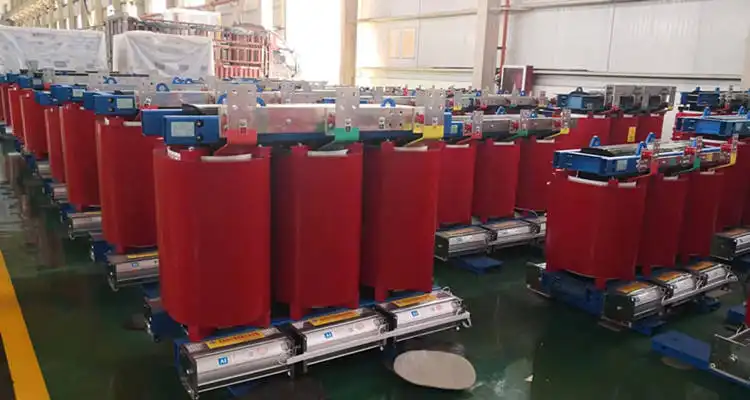
Understanding Series Dry Type Transformers: Working Principle and Key Features
Modern power infrastructure needs solutions that balance safety and performance. Dry-type transformers do this by being fundamentally different from standard tools in how they are built. It's been our experience that buying teams have a hard time telling the difference between air-cooled and liquid-cooled technologies. To help them, let's go over the basic principles that make this technology work in harsh conditions.
Air-Cooled Architecture and Its Safety Implications
Instead of mineral oil, dry-type distribution transformers use solid shielding materials, like epoxy resin or cast resin, to get rid of heat. In traditional units, electromagnetic induction works the same way: alternating current in the primary windings makes magnetic flux that causes voltage to build up in the secondary windings. How heat moves from copper wires to air around them is what makes the difference. Natural convection is enough for smaller units with a rating of less than 1000kVA. For units with a rating of 10,000kVA or more, forced-air cooling systems are available without sacrificing the non-flammability benefit.This design gets rid of the risk of explosion that comes with dielectric fluids getting too hot. It's especially helpful for factories that work with flammable materials, since a short circuit in an oil-filled transformer can set off nearby equipment on fire, but safety switches on epoxy-encapsulated windings only trip them. Since there is no liquid coolant, maintenance plans don't need to include regular oil tests. This saves between $1,200 and $3,500 per unit per year, according to IEEE maintenance standards.
Encapsulation Methods and Environmental Resilience
The current standard for making dry-type transformers is vacuum pressure impregnation (VPI). During production, copper windings are put through a vacuum process to get rid of any moisture. They are then impregnated under pressure with epoxy glue. With this method, a solid structure is made that can withstand moisture, dust, and chemical fumes. This method is used in the SC9 Series—its VPI coils keep their insulation integrity even at 100% relative humidity, so they can be used again right away after being exposed to moisture without having to go through the drying process that other designs need to.Cast resin transformers, on the other hand, have windings that sit in molds that are filled with epoxy compounds. Both types of construction are fireproof, but VPI building is better at moving heat around. The smaller insulation layer lets heat escape more quickly, which lowers the working temperature and increases the product's lifespan. During the same load tests, we found that VPI units had temperature spikes that were 10-15°C lower than cast resin options.
Technical Specifications Defining Modern Performance
Modern designs for Series Dry type transformers achieve amazing specs that directly address problems with grid stability. The Xi'an Xikai SC9 Series has advanced technical features: it can work continuously at winding temperatures of up to 155°C with insulation class F/H ratings, and the real temperature rises stay below 100°C at full load. This thermal margin allows 150% overload capacity in Oil-Natural Air-Forced (ONAF) cooling setups, which is important for integrating green energy sources where irregular generation causes demand spikes.Partially discharge levels below 10 picocoulombs at 1.5 times the maximum voltage show that the shielding is of higher quality. High partial discharge speeds up dielectric aging, so keeping these low values means that the devices will last 30 years instead of the 20 years that are expected for standard designs. As long as noise levels stay below 65 decibels, construction can happen within 10 meters of busy areas and still meet OSHA rules for the workplace without the need for acoustic enclosures.
Series Dry Type Transformer vs. Other Transformer Technologies: A Rational Choice Approach
To choose the best transformer technology, you need to look beyond what the seller says about their products and services and compare real-world differences. Capital funds and lifecycle costs need to be balanced by procurement managers, who need clear comparative data to support their requirements to financial partners.
Safety Profile and Risk Mitigation Comparison
Oil-filled transformers offer superior heat transfer but introduce significant safety risks in urban environments, with around 1,200 liters of flammable dielectric fluid in a 2000 kVA unit requiring NFPA 850-compliant setbacks, containment, and barriers. Dry-type transformers eliminate fire and leakage hazards, enabling installation in hospitals, stadiums, and rooftops, and often reduce insurance premiums by 12–18%, offsetting higher upfront costs within 7–9 years. Cast resin units provide intermediate fire resistance but require derating at high ambient temperatures, unlike SC series dry-type units that maintain full output up to 55°C.
Maintenance Burden and Operational Continuity
Maintenance burden is significantly reduced with dry-type transformers by eliminating oil-related servicing. Oil-filled units require annual dissolved gas analysis ($400–$700 per test) and periodic oil filtration every 3–5 years ($8,000–$15,000 per service) due to contamination risks. The SC9 Series instead needs only quarterly visual inspections, including temperature checks, fan operation, and infrared hotspot detection, resulting in 60–70% lower annual maintenance costs. Oil leaks account for around 30% of transformer outages, often causing extended downtime, whereas dry-type units can be quickly replaced and restored within a single shift.
Total Cost of Ownership Analysis
Total cost of ownership (TCO) analysis evaluates transformers over a 25–30 year lifecycle, including purchase, installation, energy losses, maintenance, insurance, and end-of-life disposal. For a 2000 kVA system, a dry-type unit costs $45,000 vs $32,000 for oil-filled, with installation costs of $8,000 and $18,000 respectively. Annual energy losses are $3,800 for dry-type (98.5% efficiency) and $4,200 for oil-filled (97.8%), while maintenance costs are $1,200 vs $3,500. Over 25 years, dry-type totals about $112,000 vs $139,000, excluding potential $75,000–$250,000 oil spill liabilities.
Applications and Use Cases: When Is the Series Dry Type Transformer Worth It?
When engineering teams know where dry-type transformers give the most value, they can better apply cash across a wide range of project needs. It's not always worth it to pay more for a tool, but in some situations, the business case is strong enough to outweigh the initial cost differences.
Mission-Critical Facilities Requiring Absolute Uptime
Data centers are the best place for Series Dry type transformers to be used. Uptime Institute study shows that hyperscale sites lose between $300,000 and $500,000 in income and SLA penalties for every hour of downtime. Power quality has a direct effect on how reliable servers are. Voltage sags, harmonics, and transients are responsible for 45% of unexpected IT equipment breakdowns. The SC9 Series handles these issues by using several design features that work together.
When partial discharge levels are low, electromagnetic interference that messes up network data is stopped. Temperature control systems that watch in real time can spot thermal problems early, before they become major problems. The 150% extra capacity handles the initial surges in current that happen when UPS systems switch loads during utility switching operations. The ability to place indoors removes the need for 50–100 meter cable runs that are needed when oil-filled transformers are used outside. Shorter lines lower voltage drop and improve power factor, which lowers utility demand charges by 3–7%.Like other places, hospitals need to be reliable, but they also need to be safe in case of fire. ICUs, operating rooms, and imaging labs can't handle even short breaks. Because they can catch fire, National Fire Protection Association rules are making it harder and harder for healthcare facilities to use oil-filled generators. Because dry-type units are not dangerous, they can be installed in basement electrical rooms right below areas where patients are cared for. This makes the distribution design easier to understand and lowers the cost of copper. Over the past ten years, we've chosen equipment for 15 hospital additions and have always suggested dry-type technology for use inside buildings, even when construction funds were limited.
Harsh Environmental Conditions Testing Equipment Limits
Harsh industrial environments such as pharmaceutical, food, and chemical plants expose electrical equipment to extreme temperatures, corrosion, and pollution. The SC9 Series is designed for moisture and chemical resistance, with IP65 enclosures and VPI windings preventing ingress in humid and coastal conditions. At high altitudes, where dielectric strength decreases about 10% per 1,000 meters, SC9 maintains full-rated performance up to 4,000 m through improved insulation spacing. It also operates safely down to -25°C, offering advantages over oil-filled transformers in both cold and remote installations.
Renewable Energy Integration and Smart Grid Architecture
Renewable energy systems such as wind and solar introduce harmonic currents (notably 5th, 7th, and 11th) that increase transformer losses and accelerate insulation aging. The SC9 Series, with low partial discharge design, precision-wound coils, and laser-cut amorphous cores, reduces eddy current losses and operates at 15–20% lower temperatures under inverter loads, improving lifespan and reliability. Its oil-free, 98% recyclable design supports sustainability goals with 30–40% lower lifecycle emissions. Integrated IoT and SCADA connectivity enable real-time monitoring, predictive maintenance, and condition-based servicing across smart grid networks.
Procurement Guide: Selecting and Buying the Right Series Dry Type Transformer
To get the best value, successful transformer buying balances technical requirements against business concerns. We've helped hundreds of industry clients with their decision processes by showing them common mistakes that can go wrong and the best ways to make the process go more smoothly.
Critical Technical Selection Criteria
Critical specification begins with load profiling rather than nameplate rating, as operating regimes vary significantly between peak and continuous demand scenarios. The SC9 Series, with temperature rise below 100°C, provides thermal headroom and extends service life by 5–8 years compared to high-temperature operation units. Voltage selection must align with utility and application standards, with appropriate primary/secondary levels and tap ranges (±2.5% to ±10%) for grid stability. Impedance selection (typically 5.5–6%) balances fault current control, voltage regulation, and system cost, requiring coordination with electrical engineers.
Certification Standards and Compliance Requirements
International and regional guidelines make sure that transformers work and are safe to a certain level. IEC 60076 sets the rules for designing transformers around the world. It covers things like maximum temperature rise, impulse tests, and loss promises. The North American version is IEEE C57.12.01, but the test methods and acceptance standards are slightly different. By listing both standards, you can make sure that they work with global supply lines and meet local laws.Energy saving rules are having a bigger effect on buying choices. The 2023 efficiency guidelines from the U.S. Department of Energy set base performance limits that will gradually phase out older designs. Modern Series Dry type transformers far beat these standards. For example, the SC9 Series achieves 99% efficiency at 50% load, while DOE minimums only reach 98.3%. This 0.7-point edge cuts energy costs by $800 to $1,200 a year for normal 1500kVA installations, which adds up to $20,000 to $30,000 over the life of the equipment.
Identifying Qualified Manufacturers and Partners
Manufacturer qualification starts with production history, as long-established companies (15+ years) demonstrate process maturity and consistent quality. Xi’an Xikai’s 20-year experience in medium- and low-voltage equipment reflects this advantage. Advanced manufacturing capabilities such as automatic winding, vacuum pressure impregnation, and laser-cut core steel reduce defects, losses, and hotspots compared to manual methods. Verification should include facility audits and process documentation. Strong testing infrastructure is essential, including partial discharge tests at 1.5× rated voltage, lightning impulse testing, and thermal imaging during heat runs, supported by 100% final inspection standards.
Purchasing Logistics and Support Considerations
Lead times vary significantly by supplier. Domestic standard transformers are typically delivered in 8–12 weeks, while imported units require 16–20 weeks due to shipping and customs delays. Rush orders can reduce delays but increase costs by 15–25%, so realistic scheduling is essential. Customization options such as voltage taps, enhanced cooling, and monitoring systems (e.g., SC9 Series AI temperature control and load tracking) may further affect lead time and cost. After-sales support should include commissioning, training, and global 24/7 service coverage, with at least a two-year warranty and optional extensions.
Maintenance and Safety Tips for Optimal Transformer Performance
To get the best return on investments in transformers, they need to be carefully operated for their entire 25–30-year work lives. Even though dry-type designs require a lot less upkeep than oil-filled ones, they still need to be carefully watched and serviced on a regular basis to keep them from breaking down too soon.
Routine Monitoring and Inspection Protocols
Routine inspections every three months help detect developing issues before failures occur. Checks include enclosure integrity, cooling fan operation, and dust accumulation on windings and heat exchangers, especially in industrial environments. IP65-rated SC9 Series housings reduce contamination risk but still require periodic cleaning in dusty conditions. Temperature monitoring via built-in sensors establishes baseline values for comparison; deviations of 10–15°C indicate potential faults. Annual infrared thermography detects hidden hotspots. Load profile tracking further supports predictive maintenance and lifecycle planning based on operating stress.
Compliance with North American Safety Standards
Compliance with North American standards follows NEC Article 450, requiring proper installation and protection of transformers. Units rated 1000 kVA or above need automatic overcurrent protection using fuses or circuit breakers. Clearance distances vary by insulation class, with Class F requiring 12 inches and Class H 6 inches due to higher thermal tolerance. OSHA regulations mandate restricted access, proper enclosures, and safety labeling, while ground fault protection reduces touch hazards. Arc flash studies determine PPE requirements, and modern current-limiting fuses help reduce incident energy and improve operational safety.
Extending Service Life Through Proactive Management
Transformer lifespan is primarily limited by insulation degradation caused by thermal cycling, where repeated heating and cooling create micro-cracks. According to Arrhenius aging, every 10°C increase above rated temperature halves insulation life, while lower operating temperatures significantly extend it. Maintaining temperatures below 100°C, as in the SC9 Series, improves longevity. Environmental factors such as moisture and corrosion accelerate aging, making controlled humidity and temperature conditions beneficial. Retrofit solutions with sensors and IoT monitoring can upgrade aging units, extending service life and delaying costly replacements while improving reliability.

Conclusion
To decide if Series Dry type transformers are worth the money, you have to weigh a number of factors against the operational goals of your building. The technology works great when safety, environmental concerns, and the ability to place it in a variety of ways inside are more important than the 15–25% higher capital cost compared to oil-filled options. Buildings that are fire-resistant and require less upkeep are very valuable to data centers, healthcare facilities, and business properties in cities. Applications that need to work in harsh environments benefit from designs that keep working reliably even when temperatures change and contaminants get in. The SC9 Series is a great example of how current dry-type systems can become 98–99% efficient, handle 150% overload, and last 25–30 years. Total cost of ownership studies should be done by procurement teams to show that dry-type transformers pay for themselves within 5–9 years for most business and industrial uses. These analyses should include energy losses, upkeep costs, insurance savings, and environmental liability.
FAQ
1.What makes Series Dry type transformers safer than oil-filled alternatives?
Why are Series Dry type transformers safer than others that are filled with oil? Dry-type units don't use flammable mineral oil as insulation; instead, they use solid materials like epoxy glue. This eliminates the risk of fire and explosion. This construction doesn't catch fire, so it can be put in buildings that are already occupied without the need for oil storage systems or a lot of fire control gear. The plan works especially well in places like hospitals, schools, and businesses where worker safety is very important.
2.How do moisture-resistant features benefit operational reliability?
The SC9 Series is waterproof because it uses vacuum pressure impregnation to seal the windings against damp getting in. This design keeps the insulation's stability at 100% relative humidity and lets it be used again right away after being wet without having to be dried first. Getting rid of the downtime caused by moisture-related problems is especially helpful for sites near the coast or in tropical areas.
3.Can dry-type transformers handle renewable energy applications effectively?
Modern Series Dry type transformers work great in solar and wind systems because they are built with low partial discharge, which means they can handle harmonic stress from inverter-based power. Precision-wound coils and new core materials keep losses to a minimum while still being able to handle the changing loads that come from green sources. The 150% overload capacity of the SC9 Series handles irregular output spikes without affecting reliability.
Partner with Xi'an Xikai for Advanced Power Distribution Solutions
Xi'an Xikai Medium & Low Voltage Electric Co., Ltd. has been making high-quality dry-type transformers for 20 years and has a track record of success. Our SC9 Series meets the tough needs of utility networks, data centers, and industrial plants by being built to fight moisture, having smart tracking systems, and using very little energy. As a top maker of Series Dry type transformers, we follow strict quality standards and have ISO 9001/14001 certification. We also offer customization options so that we tailer solutions to your specific voltage, cooling, and monitoring requirements. Contact our technical team at serina@xaxd-electric.com, amber@xaxd-electric.com, or luna@xaxd-electric.com to discuss how our products optimize your power infrastructure. Visit xaxd-electric.com to explore our comprehensive portfolio serving power engineering, renewable energy integration, and commercial construction projects across North America. We support procurement professionals with detailed technical documentation, competitive bulk pricing, and responsive after-sales service ensuring your investment delivers decades of reliable operation.

References
- Institute of Electrical and Electronics Engineers, "IEEE C57.12.01-2020 - Standard for Dry-Type Distribution and Power Transformers," IEEE Standards Association, 2020.
- National Fire Protection Associat
_1774403963080.png)