Metal-Clad Withdrawable Switchgear: A Buyer's Selection Guide
2026-09-03 17:24:07
Choosing metal-clad withdrawable switchgear for large-scale EPC projects requires balancing technical compliance, safety, operational flexibility, and supplier reliability. This guide walks you through decision criteria, maintenance practices, market insights, and future innovations to support confident procurement for industrial facilities, power stations, and infrastructure projects across challenging environments.


Understanding Metal-Clad Withdrawable Switchgear
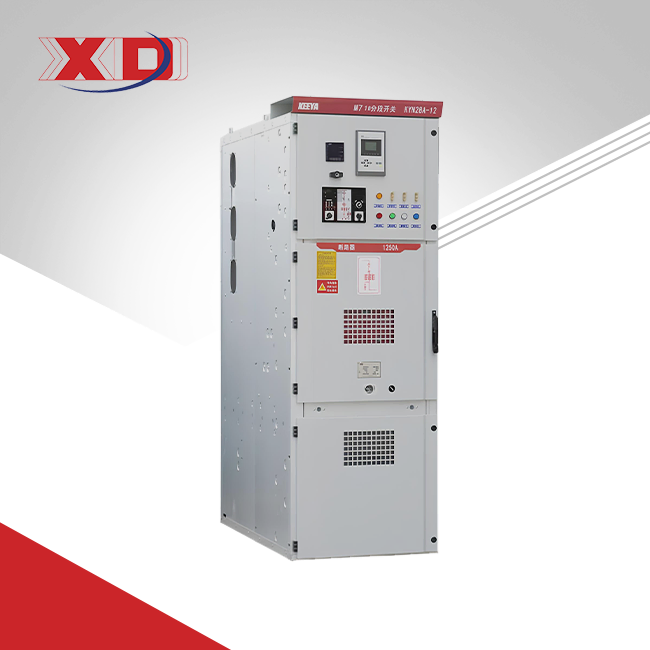
Metal-Clad Withdrawable Switchgear is a high-tech way to distribute medium-voltage electricity that combines a flexible design with extra safety features. In contrast to fixed installations, this equipment has metal enclosures with compartments that hold circuit breakers and other safety devices. These enclosures let individual parts be removed or added without turning off the whole system. When project plans can't handle long periods of downtime, this design comes in handy.
Partitioning is at the heart of the design philosophy. The circuit breaker, busbar connections, wire terminations, and control systems are all housed in separate rooms. These create physical barriers that stop arc faults and chain failures. This switchgear works reliably in voltage ranges from 12kV to 38kV and current capacities up to 4000A as long as it is properly kept. It can be used in a wide range of settings, from mineral processing plants to substations for green energy sources.
International guidelines like IEC 62271-200, GB3906, and IEEE C37.20.2 make sure that all global projects can work together. The mechanism that can be pulled out works on precisely guided tracks, and mechanical interlocks stop it from working in a dangerous way. This is very important when different workers are working together on the same project. This standardization makes it easier for EPC contractors to train technicians and get spare parts to remote areas like Central Asia or Sub-Saharan Africa.
The benefits of the structure become clear during commissioning and long-term use. When power goes out unexpectedly, the circuit breaker carriages can be quickly replaced because they are removable. Also, the dead-front construction hides any live parts that could be dangerous during checks. This mix of safety and serviceability solves the main problems that project managers face when they have to meet tight delivery deadlines and make sure that the system works reliably.
How to Choose the Right Metal-Clad Withdrawable Switchgear for Your Needs
Assessing Technical Requirements and Site Conditions
Before you can make a choice, you need to know the load patterns and fault current levels at the installation place. When an industrial plant starts up and equipment like crushers or conveyors is powered by a motor, the inrush current can hit 6 to 8 times the nominal rate. The switchgear has to be able to handle these transients without tripping for no reason and keep working with the upstream transformers to make sure safety.
Environmental variables greatly impact equipment design. IP54-rated shelters that block sand are essential for desert projects, while corrosion-resistant coatings that block salt spray are needed for coastal locations. Knowing your height is also important—standard equipment rated for 2000 meters may need to be downrated or redesigned for plateaus beyond 3000 meters. The correct operating ranges, from -25°C for storage in winter to +55°C for operation in summer, are crucial because extreme temperatures may degrade insulation and contact resistance.
Evaluating Compliance Certifications and Test Reports
National grid integration for Metal-Clad Withdrawable Switchgear needs type-test reports that show compliance with standards in the host country. For State Grid projects in China, you need to get GB3906 certification. For international projects, you might need IEC or ANSI conformity. Not just formalities—test results confirm the ability to survive short-circuits, the maximum temperature rise, and the mechanical endurance over thousands of switching cycles.
Ask for proof that the dielectric tests, measurements of partial discharge below 10 picocoulombs, and mechanical interlock verification were all completed successfully. According to IEEE C37.20.7, arc-resistant performance should include tests for pressure release and accessibility, which makes sure that people are safe during internal faults. Established makers keep libraries of type-test certificates that are easy to access during technical reviews. This speeds up the approval process with regulatory authorities and design institutes.
Comparing Supplier Capabilities and Service Infrastructure
It doesn't matter as much about the technical specs if the supplier can't deliver on time or offer support after the installation. Facility checks or third-party standards like ISO 9001 can help you figure out how much you can make. Customized configurations usually have production lead times of 8 to 16 weeks. Suppliers with modular assembly processes and enough stock of parts can shorten schedules for projects that need to be done quickly.
Infrastructure for after-sales service is very important for installations in other countries. Does the supplier keep service centers in different areas with trained staff? Can they send someone within 48 hours to fix an emergency problem? Long outages can be avoided by making sure that spare parts like vacuum interrupters, operating mechanisms, and control modules are available for at least 15 years, which is the same amount of time that the equipment is expected to last.
Maintenance and Troubleshooting of Metal-Clad Withdrawable Switchgear
Establishing Preventive Maintenance Schedules
Regular checks make equipment last longer and stop expensive unplanned breakdowns. Visual checks every six months find broken connections, coloring that means the unit is too hot, and dirt and dust building up on the insulators. As part of yearly maintenance, micro-ohmmeters are used to measure contact resistance. Readings above standard values by 50% signal loss indicate that something needs to be done to fix the problem.
Every two to three years, or after 500 uses, the hanging system needs to be fixed. Apply the right grease to the guide rails, check the mechanical interlocks for wear, and make sure that the fixed and retractable contacts are lined up correctly. When racking, too much force is a sign of misalignment or an obstruction. Making sure that the safety switches and control circuits work together properly by testing them; old settings might not be able to clear faults quickly, which could damage the equipment.
Monitoring the environment finds problems before they get too bad. Keep an eye on the internal temperature trends—long-term rises could mean that airflow is blocked or that high-resistance links are causing too much heat loss. When humidity levels are above 95%, insulation breaks down faster. Adding dehumidifiers or heaters keeps conditions within the limits set by the manufacturer. In dirty places like cement plants, insulator surfaces need to be cleaned more often to keep dirt from tracking across them.
Diagnosing Common Operational Issues
Localised heating, voltage dips, and unequal current flow across parallel feeders indicate contact resistance issues. During diagnostic, thermographic scanning finds hot regions while the machine is operating, and resistance values are collected after turning it off. Most failures are caused by oxidation, low contact pressure, or misalignment. If the damage is severe, resurfacing the contacts, changing the spring tension, or replacing the carriage may be necessary.
Circuit breakers lose vacuum stability with time, making them less efficient at stopping. Although most hoover bottles survive 20 years or more, replacing them accelerates deterioration. Monitoring systems monitor total interrupted current and replace when it approaches its rated amount. Measure partial discharge activity using appropriate equipment to assess the vacuum's integrity. High readings indicate failed seals, thus the breaker must be switched off before it stops clearing faults.
Accidental mechanical interlock failure may open energised compartments or close disconnectors and grounding switches simultaneously. During repair windows, manually test each interlock function to ensure it operates as intended. Record any fix-related workarounds or bypasses. Before restarting the equipment, verify that it functions properly. Never sacrifice safety features for convenience.
Market Overview: Brands, Suppliers, and Procurement Process
Navigating the Competitive Landscape
There are both well-known international companies and specialized regional suppliers in the medium-voltage switchgear market. Global names usually offer stock items that are all the same, come with a lot of information, and are serviced all over the world. Regional makers may be able to offer more customization options and low prices, which can be very helpful for projects that have specific technical needs or limited budgets.
Look at the providers' project files when you are judging them. Have they successfully completed similar projects in similar settings? Reference projects in mining, petrochemicals, or renewable energy show that the company can handle tough tasks. Customer testimonials show how responsive you are in emergencies and how good your long-term support is—things that can't be seen in datasheets but are very important for systems that last 20 years or more.
Transparency in certifications boosts trust. Suppliers you can trust are happy to share type-test reports, quality management system certifications, and compliance paperwork. They are thought leaders because they are involved in business groups, help make standards, and keep up with expert publications. This level of openness shows a dedication to always getting better and building relationships with customers that go beyond simple transactions.
Streamlining Procurement and Contract Negotiation
Medium-voltage Metal-Clad Withdrawable Switchgear takes three to nine months to get from the first inquiry to being put into service. Working with suppliers early on in the design process keeps changes from having to be made that cost a lot of money later on. Share single-line diagrams, fault current estimates, and site-specific needs so that exact quotes can be made. Ask ahead of time for the plant acceptance test protocols, which will make it clear what checks happen before the shipment and which tests need to be supervised by a customer.
The terms of the contract should include delivery dates, payment goals that are tied to proof of progress, and guarantee coverage. Standard warranties last for 18 to 24 months from the date of commissioning or 30 months from the date of shipment, whichever comes first. Longer guarantees that cover important parts like vacuum interrupters cost a little more but lower long-term risk. Make sure you understand the technical support terms, including reaction times, the cost of spare parts, and training for local repair staff.
Logistics in transportation need your full attention. Medium-voltage switchgear comes in big boxes that need special tools to open and move. Make sure that supply times and site readiness are coordinated so that storage doesn't happen in bad conditions. Inspection upon arrival records any damage caused by shipping, proving responsibility before uncrating. Suppliers with a lot of experience give detailed rigging instructions and may send technicians to oversee installation. This keeps commissioning delays from happening because of bad assembly.
Future Trends and Innovations in Metal-Clad Withdrawable Switchgear
Digital Transformation and Smart Monitoring
Intelligent electronics are now built into switchboard controls, which lets operators check on things from afar. Sensors that measure temperature, identify partial discharge, and check the state of circuit breakers send real-time data to centralized SCADA systems. This makes it easier to use predictive maintenance strategies, which plan repairs based on how healthy the equipment really is instead of set times. This saves money on repairs and makes the equipment more reliable.
Cybersecurity becomes an important issue to think about. Because switchgear is connected to business networks, it can be hacked or infected with malware. Security features like encrypted communications, role-based access controls, and audit logging are built into equipment that meets IEC 62443 standards. When you buy new switchgear, make sure that the digital connections comply with your company's security rules. This is especially important for installations in key infrastructure.
Digital twins, which are virtual copies of physical assets, let you practice different operating scenarios without affecting the real systems. As a way to test methods before they are put into action, engineers can model things like load transfers, fault responses, or changes to the setup. This technology speeds up the launching process, helps train operators, and improves system performance over the entire span of an asset.
Environmental Sustainability and Green Technologies
Because SF6 gas is a strong greenhouse gas, environmental laws are putting more and more limits on it. More people are buying insulation technologies that use vacuums, air, or gasses that are good for the environment. Even though these options have been shown to work, they may have a bigger environmental impact or cost more. Lifecycle environmental effect, such as production energy, operating costs, and dumping at the end of its useful life, should be taken into account when comparing choices.
Making things more energy efficient lowers costs and reduces carbon emissions. By using high-conductivity materials and conducting conductors of the right size, low-loss designs keep resistive heating to a minimum. Some makers can keep their electricity losses below 0.3%, which saves a lot of money over many years of use. When you add up the total cost of ownership, which includes energy costs, designs that are more energy efficient often pay for themselves over time.
The idea of modular construction supports the ideas of a circular economy. Less waste is made when equipment is made so that parts can be reused, fixed up, and recycled. More and more suppliers have trade-in programs that accept old equipment for proper removal and give credit toward new purchases. This closed-loop method fits with the goals of corporate sustainability that are becoming more important to big businesses and development finance institutions.

Conclusion
When choosing Metal-Clad Withdrawable Switchgear for difficult EPC projects, it is important to carefully look at the technical details, the supplier's skills, and the infrastructure for long-term support. The compartmentalized architecture and withdrawable design give operators the freedom they need to keep things running while maintenance is being done. Global compatibility is ensured by meeting international standards, and the construction is strong enough to handle the harsh conditions that are common in industry and remote sites. New digital technologies offer better tracking and maintenance planning, but when buying them, manufacturers need to pay close attention to cybersecurity and environmental concerns. By carefully looking at technical requirements, making sure suppliers are trustworthy, and planning thorough maintenance schedules, project managers can choose reliable electrical distribution systems that meet performance standards for many years to come.
FAQ
1. What distinguishes metal-clad withdrawable switchgear from fixed switchgear?
The unique feature is the circuit breaker assembly that can be taken off and put back on a carriage that moves along precise rails. With this method, workers can disconnect, pull, and replace the breaker without turning off the whole bus system, which they have to do with fixed switchgear. During the racking process, mechanical interlocks make sure that the breaker is fully connected, tested, or isolated before letting any other actions happen.
2. How long does custom switchgear procurement typically take?
Standard configurations are sent out 8 to 12 weeks after the order is confirmed. Lead times may go up to 14 to 18 weeks for custom designs that need non-standard power ratings, special environmental shelters, or built-in automation systems. Complex projects that need a lot of engineering planning or the merging of third-party tools can take up to 24 weeks. Getting suppliers involved in the early stages of design and giving them full technical specs speeds up the production process.
3. What safety standards apply to international projects?
Medium-voltage switchgear is governed by IEC 62271-200 around the world. In China, GB3906 is the standard, and in North America, IEEE C37.20.2 is the standard. Different countries also have their own versions of these standards that spell out specific needs. The IEEE C37.20.7 classification is used for arc-resistant design. Many times, projects have to follow more than one standard, based on where the money comes from, where the material comes from, and where it will be installed. Before you finalize the purchase, make sure that the type-test results cover all the necessary standards.
Partner with Xi'an Xikai for Proven Metal-Clad Withdrawable Switchgear Solutions
Xi'an Xikai has been making medium-voltage electrical equipment for difficult projects around the world for more than 25 years. Our KYN28-24 Metal-Clad Withdrawable Switchgear can handle rated voltages up to 24kV and currents up to 4000A. It has five mechanical interlocks that meet the requirements of GB3906 and IEC 62271-200. With its compartmentalized design and vacuum circuit breakers, the system provides reliable power distribution for factories, mines, and infrastructure projects in a range of climates.
Our manufacturing skills allow us to make plateau-rated tools that can safely work at elevations above 4000 meters, which is important for projects in mountainous areas. Before a unit is shipped, it is thoroughly checked to make sure it meets international standards. This is done through testing of the materials, checking the assembly, and simulating faults. We keep up technical support infrastructure in 12 countries, which lets us quickly solve problems that come up during installation and commissioning.
Xi'an Xikai can help you find a qualified Metal-Clad Withdrawable Switchgear supplier for State Grid projects or industrial developments in Belt and Road markets. They offer custom solutions that are backed by certified testing and quick service. Send an email to serina@xaxd-electric.com, amber@xaxd-electric.com, or luna@xaxd-electric.com with your specific needs to our expert team. You can look at all of our products at xaxd-electric.com and download detailed information to help you with your procurement review. Start your next project with a partner who is dedicated to meeting your deadlines for safe, reliable electrical distribution systems.

References
1. Institute of Electrical and Electronics Engineers. "IEEE Standard for Metal-Clad Switchgear," IEEE C37.20.2-2015, Revision of IEEE Std C37.20.2-1999.
2. International Electrotechnical Commission. "High-Voltage Switchgear and Controlgear - Part 200: AC Metal-Enclosed Switchgear and Controlgear for Rated Voltages Above 1 kV and Up to and Including 52 kV," IEC 62271-200:2021.
3. National Technical Committee on High Voltage Switchgear and Controlgear. "3.6 kV to 40.5 kV AC Metal-Enclosed Switchgear and Controlgear," GB 3906-2020, Standards Press of China, Beijing.
4. Das, J.C. "Power System Analysis: Short-Circuit Load Flow and Harmonics," Second Edition, CRC Press, 2018, Chapter 8: Medium-Voltage Switchgear Selection.
5. Institute of Electrical and Electronics Engineers. "IEEE Guide for Type Tests of Arc-Resistant Switchgear Assemblies," IEEE C37.20.7-2017.
6. Garzon, R.D. "High Voltage Circuit Breakers: Design and Applications," Third Edition, Marcel Dekker, 2018, Chapter 12: Metal-Clad Switchgear Maintenance Practices.