Self-Healing Capacitors: How They Recover from Dielectric Breakdown
2026-08-03 15:24:23
When voltage spikes or dielectric stress happen in electrical equipment, traditional capacitors often fail permanently. This causes expensive downtime and safety risks. Through a special metallized film mechanism, Self-healing Capacitors revolutionize this situation by automatically repairing dielectric damage. In just a few microseconds, this healing process vaporizes the damaged electrode area, identifying the fault while keeping the capacitor working. Facility workers, utility managers, and EPC professionals can choose parts that maximize uptime and reduce maintenance costs in industrial, commercial, and grid uses if they understand this technology.


Understanding Self-Healing Capacitors
What Makes These Capacitors Different from Conventional Designs?
Self-healing Capacitors use a very thin layer of metal—usually aluminum or zinc—deposited directly on polypropylene or polyester insulating films. This design is very different from foil-type capacitors, which use thick metal wires. When there is localized dielectric breakdown because of flaws in the manufacturing process, voltage changes, or wear and tear, the arc discharge creates a lot of heat. The metallized layer around the fault point evaporates right away, leaving an insulating gap that keeps short circuits from happening. This clearing mechanism restores insulation resistance in milliseconds, so the system can keep running without any help from a person.
Gradient metallization patterns are used in the film winding structure to improve current distribution and cleaning efficiency. Heavy-edge designs put more of the thicker metal where the capacitor is connected while keeping the insulating surface with smaller layers. This engineering balance makes sure that faults are quickly found and fixed while keeping the similar series resistance low for efficient power supply. Precision winding under controlled tension is used in the manufacturing process to get a uniform dielectric thickness. This directly affects the uniformity of the breakdown voltage and the effectiveness of self-healing.
How the Recovery Process Works in Real Operating Conditions?
The capacitor keeps a stable electric field across its insulating layers when it is working normally. An arc channel forms between electrodes when a weak spot breaks down, which can be caused by contaminants trapped in the material, mechanical stress, or voltage surges. In just a few nanoseconds, the arc's energy density hits temperatures above 3,000°C. The metallized film close by sublimates, making a zone around the flaw that is not conducting electricity. This process takes away about 1 to 3 millimeters of electrode material, which erases the fault line.
The capacitor keeps working with very little capacitance loss, usually less than 0.1% per repair event. Over the course of its useful life, it can handle hundreds or thousands of small breaks without failing completely. Pressure-sensitive disconnectors are used in more advanced designs to physically disconnect the capacitor if the amount of damage builds up to a safe level. This fail-safe feature stops thermal runaway in cases of extreme overload, keeping people and equipment nearby safe. The whole self-recovery ecosystem turns problems that could be very bad into events that are easier to handle and stop themselves. This makes parts last longer than 100,000 hours in tough conditions.
Benefits and Applications of Self-Healing Capacitors in Electronics
Superior Reliability in Mission-Critical Power Systems
When production lines are going 24 hours a day, seven days a week, they can't have unexpected power quality problems. This weakness is fixed by self-healing technology, which turns possible failures into clear recovery events. Uninterrupted reactive power compensation keeps voltage levels stable for computer equipment in data centers that handle sensitive tasks. Hospitals that use life-support systems have an extra safety net against power outages caused by capacitors. The technology is necessary in places where grid instability or switching surges are frequent because it can handle transients up to 100 times its maximum capacity.
Installing renewable energy sources can be hard because the power doesn't always work and the circuits can cause harmonic distortion. Despite changing loads and voltage harmonics, Self-healing Capacitors built into solar farm substations keep the power factor right. In wind turbine converters, these parts are used for DC link filtering, where frequent charge-discharge cycles put stress on the electrical and heating systems. The automatic fault recovery makes sure that the energy conversion keeps going without shutting down the inverters, which would lower the grid feed-in revenue. These capacitors are also important for telecommunications infrastructure because they filter power sources for base stations that are in remote areas where repair workers can't easily get to them.
Cost Reduction Through Extended Maintenance Intervals
Traditional capacitor banks need to be checked every three months to look for signs of overheating, bulging cases, or capacitance drift. Most planned replacements aren't needed with self-healing designs because they absorb fault energy internally instead of spreading failures. Over five years, facility managers say that upkeep costs for capacitors have gone down by 40 to 60 percent. Not having to call out for emergencies like blown capacitors means that operations budgets are more stable and workers are better distributed. When electrical systems show lower fire and explosion risks through approved self-healing safety classes, insurance rates go down.
Comparing Self-Healing Capacitors with Other Capacitor Types
Structural and Performance Distinctions Across Technologies
Ceramic capacitors are small and work well at high frequencies, but they can't fix themselves. They can't be used for high-voltage power applications because even one dielectric crack makes them permanently fail. Film-foil capacitors are strong because they have thick metal wires, but they can't fix themselves after they break. Short circuits are usually what cause them to fail, which means the system has to be shut down and replaced right away. Electrolytic capacitors have a high capacitance density, but they don't last long and are sensitive to polarity, which means they can't be used to fix AC power.
Self-healing Capacitors make up for these trade-offs by being both reliable and cheap. Their bulk efficiency is 30–50% higher than film-foil designs, which means that capacitor banks can be housed in smaller spaces. The voltage levels range from 250V to 2000V, which covers both low-voltage distribution and medium-voltage center needs. Dissipation factors below 0.002 keep the inside from getting too hot, which increases the thermal lifespan in temperatures up to 85°C. Because of these features, self-healing technology is the best choice for DC link filtering, motor run applications, and correcting power factors where long-term stability is more important than initial component prices.
Failure Mode Analysis for Procurement Decision-Making
Knowing how different types of capacitors fail helps you choose parts that are right for the level of risk. Catastrophic shorts in non-Self-healing Capacitors can cause arc flashes, which can damage equipment and put people in danger. Self-healing versions turn these events into controlled drops in capacitance, which keeps the circuit's integrity. According to IEC 60252-1, safety standards set different levels of protection. For example, S0 doesn't offer any specific safety measures, S1 stops fires, and S2/S3 has mechanical disconnectors for the highest level of protection.
When procurement teams look at the total cost of ownership, they need to think about how often things need to be replaced, how much emergency service costs, and how much downtime costs. A business that has three traditional capacitor failures a year, each costing $2,500 for parts and labor, spends $7,500. With self-healing technology, there are no unplanned replacements. When operational continuity is very important for the bottom line, like in drug factories, semiconductor factories, or financial data centers, the break-even analysis favors high-end self-healing parts.
Procurement Guide: Selecting and Buying Self-Healing Capacitors
Critical Specifications for Application Matching
When choosing a voltage grade, you have to take grid changes and harmonic voltage rise into account. Capacitors rated at 440V or 480V can help a 400V system work better by giving it extra voltage. The accuracy of reactive power is affected by the tolerance of the capacitance. Tighter tolerances (±5%) work best for automatic power factor controls, while ±10% is enough for fixed correction. The ability to retrofit into existing enclosures depends on their physical dimensions. Compact cylindrical designs like the BKMJ series make the best use of space. The layout of the busbars must match the configuration of the terminals. For flexibility, some designs have terminals mounted on top, while others have connections on the sides.
Environmental standards cover more than just electrical factors when it comes to working stresses. Enclosures with an IP54 rating keep dust and water out in outdoor substations or humid tropical climates. When it comes to shaking protection, PU resin potting is better than oil-filled designs. This is especially important for uses near motors or compressors. Different types of capacitors can work in different temperature ranges. Commercial-grade capacitors can work from -25°C to +70°C, while industrial capacitors can work in harsh conditions from -40°C to +85°C. When you go above 1,000 meters, the equipment at Xi'an Xikai keeps working at full capacity at 4,000 meters, even though the lower air density makes cooling harder.
Evaluating Manufacturer Quality and Support Infrastructure
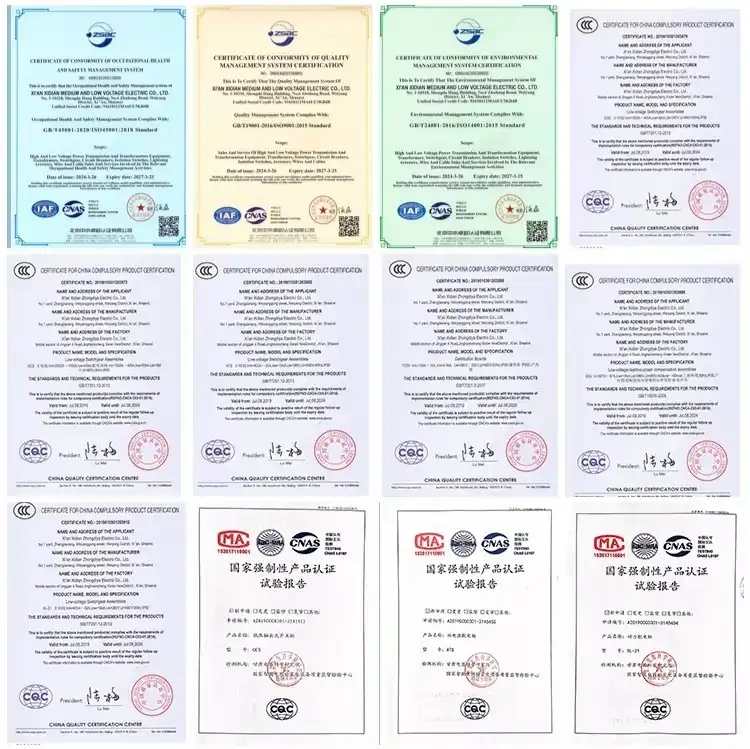
Reliable providers give detailed datasheets that show the electrical properties, thermal curves, and projected life spans for different load situations. Certifications show that the product meets foreign standards like IEC 60252-1 for power electronics, IEC 61071 for grid uses, and UL 810 for placements in North America. Audits of the quality management system (ISO 9001) and environmental standards (ISO 14001) show that the manufacturing process is consistent and that rules are followed.
The long-term value of a partnership depends on how well it can provide technical support. Custom voltage rates, capacitance values, or enclosure changes from manufacturers can be made to fit the needs of any project. Larger orders are rewarded by bulk price, which gives discounts of 15–25% for sales over 100 units. Lead times depend on how customized an item is. Catalog items ship in one week, but engineered solutions need four weeks to make. Manufacturers who offer warranties for three to ten years are sure that their products will last.
Spotlight: 400V Self-Healing Capacitor-Cylindrical BKMJ0.46-30-3
This power factor adjustment capacitor is an example of an advanced Self-healing Capacitor design that works best in business and industry settings. It can handle 50/60Hz grid frequencies on power systems around the world and is rated at 400V with a 30 kvar capacity. The small cylinder shape, which is 242 mm tall, makes it easier to fit into capacitor banks with limited room or to update old infrastructure. Grounding bolts that are already fitted speed up commissioning by making installation of the wire easier.
PU resin coating is better than standard filling materials in a number of ways. The soft plastic mix absorbs mechanical shocks from nearby equipment, which lowers the stress inside dielectric films. Better resistance to moisture stops electrode oxidation, which lowers capacitance and is a common way for electronics to fail in damp places. Thermal conductivity is better than options to mineral oil, which means heat is better able to escape during high loads. The IP54 grade makes sure that the device will work reliably in dusty factories or outdoor solar setups where parts that aren't protected can get dirty.
Performance specifications make sure that the product can be used in demanding situations. When the dissipation factor is less than 0.2W/kvar, internal losses are kept to a minimum. This makes the system more efficient as a whole. Self-healing metallized polypropylene films fix dielectric problems themselves in microseconds, so voltage fluctuations don't cause downtime. Surge withstand power goes up to 100 times rated current, which protects against spikes caused by lightning in open areas. Factory tests are very strict. They include spinning the load for 72 hours at 110% of the rated voltage, checking the impulse voltage according to IEC standards, and thermal shock tests that simulate sudden changes in temperature.
Real-world deployments show that they are flexible across fields. These capacitors are put into motor control centers in factories so that CNC machines and robotic production lines don't lose power factor. They are used by utility substations to keep the voltage stable against harmonics that come from solar generators and variable frequency drives. These quiet (<45dB) units meet NFPA 70 fire safety rules and can be used to replace old power systems in commercial buildings. This is especially important for hospitals and shopping centers. The fact that it doesn't need any maintenance fits with lean facility management strategies that cut down on ongoing service costs.
Future Trends and Technological Advances in Self-Healing Capacitors
Material Science Innovations Enhancing Recovery Capabilities
Researchers working on nanocomposite dielectrics say they can make things stronger and help them heal faster. Ceramic nanoparticles added to hybrid polypropylene films make them 20% more resistant to voltage while still keeping their flexibility for rolling processes. These materials make it possible to make capacitors smaller without lowering their ability to handle power, which meets the needs of the industry for better power efficiency. The creation of a zinc-aluminum alloy metallization improves the uniformity of clearing across a wider range of temperatures by finding the best balance between conductivity and vaporization energy.
Condition tracking sensors are built into the housings of smart capacitors so that they can keep track of capacitance drift, internal temperature, and the frequency of mending events. Diagnostic data is sent wirelessly to predictive maintenance platforms, which warn operators before damage builds up to the point where it needs to be replaced. Connecting to IoT ecosystems lets capacitor banks switch automatically based on real-time power factor readings, which improves reactive power delivery for industrial loads that change loads. As a result of these developments, Self-healing Capacitors are now active grid components rather than passive ones, which improves the intelligence of the entire power system.
Market Dynamics Shaping Procurement Strategies
Voltage increases around the world will cause capacitor demand to rise at a rate of 6 to 8 percent per year until 2030. As the use of renewable energy grows, more grid-connected power quality equipment is needed. Solar systems are the fastest-growing part of this need. High-reliability capacitors are needed in DC fast chargers for electric vehicles because failures affect both customer satisfaction and income. To meet utility efficiency requirements, power factor correction is needed because industrial automation projects add more loads that are powered by motors.
As geopolitical factors affect the availability of raw materials, supply chain issues affect decisions about where to get them. Asia and Europe are the main places where polypropylene film is made, so it's smart to have a variety of area suppliers to lower your risk. When manufacturers invest in vertical integration, they take control of film production, metallization, and winding. This makes the supply more stable when materials are in short supply. Long-term supply deals lock in prices and capacity, which protects budgets for buying things from changes in the market. As companies try to reach their carbon neutrality goals, sustainability measures are becoming more important in their vendor selection. ISO 14001-certified makers show they care about the environment by reducing waste and using energy-efficient production methods.
Conclusion
For businesses that value efficient uptime and cost-effective power management, Self-healing Capacitors are a tried-and-true option. The automatic recovery mechanism turns dielectric failures that could be very bad into events that can be handled. This makes the equipment last longer and reduces the need for emergency maintenance. When procurement professionals look at these parts, they gain a competitive edge because the total cost of ownership is lower and system reliability is higher. As electricity infrastructure changes to become smarter and more resilient, self-healing metallized film technology will continue to be a key part of reaching these goals in the business, utility, and industrial sectors.
FAQ
1. How does self-healing affect total capacitance over time?
Each mending event burns up tiny amounts of electrodes, which lowers the effective capacitance over time. Good parts can handle thousands of clearing rounds before the capacitance drops to 5%, which is usually the end of their useful life. By checking capacitance every three months, you can spot signs of degradation before they have a big effect on performance.
2. Can these capacitors handle huge amounts of electricity?
Self-healing technology clears up mild transients that happen a lot in industrial settings. Extreme overvoltages that are higher than 150% of the maximum voltage could damage the clearing device permanently. In places where lightning is common, surge protection devices should be added to capacitor systems to soak up high-energy hits before they reach sensitive parts.
3. What certifications verify quality and compliance?
For uses involving power systems, look for IEC 60252-1 certification. For installations on the power grid, look for IEC 61071 certification. UL 810 listing proves agreement with North American safety standards. ISO 9001 quality management certification shows that the production process is uniform, and safety class markings (S1, S2, S3) show the levels of fault protection required by European standards.
Partner with Xi'an Xikai for Reliable Self-Healing Capacitor Solutions
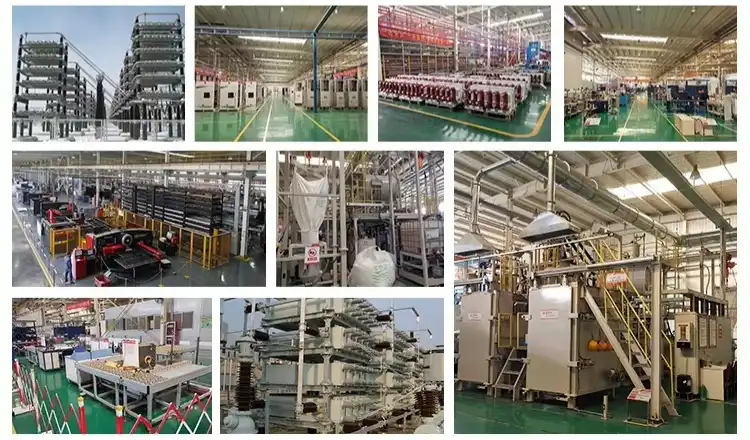
Xi'an Xikai Medium & Low Voltage Electric Co., Ltd. can help you with your buying needs because they have been in the power distribution business for more than twenty years. Our range of Self-healing Capacitors includes the tried-and-true 400V BKMJ0.46-30-3 line as well as custom options for specific industry uses. The products they can make range from standard catalog items to custom designs that have to meet specific voltage, capacitance, or environmental requirements. Quality control procedures that include 72-hour load testing and following IEC, CCC, and ISO standards make sure that parts are ready for tough installations.
To get the most out of the system, technical support teams help with application sizing, harmonic analysis, and installation. Competitive price models are good for both one-time purchases and long-term contracts. Simplified logistics help delivery times meet project deadlines. You can email our experts at serina@xaxd-electric.com, amber@xaxd-electric.com, or luna@xaxd-electric.com to talk about your needs with a Self-healing Capacitor manufacturer who cares about your business's success.
References
1. Sarjeant, W.J., et al. "Capacitor Technology for Power Electronics." IEEE Transactions on Industry Applications, vol. 34, no. 5, 1998, pp. 1095-1103.
2. Makdessi, M., et al. "Self-Healing Mechanism in Metallized Film Capacitors: Experimental Observations and Theoretical Models." IEEE Transactions on Dielectrics and Electrical Insulation, vol. 21, no. 3, 2014, pp. 1071-1078.
3. International Electrotechnical Commission. "IEC 60252-1: AC Motor Capacitors - Part 1: General - Performance, Testing and Rating." Geneva: IEC, 2013.
4. Rabuffi, M., and Picci, G. "Status Quo and Future Prospects for Metallized Polypropylene Energy Storage Capacitors." IEEE Transactions on Plasma Science, vol. 30, no. 5, 2002, pp. 1939-1942.
5. Ho, J., and Jow, T.R. "High Field Dielectric Properties of Polypropylene at Elevated Temperatures." Proceedings of IEEE International Conference on Dielectric Liquids, 2011, pp. 1-4.
6. Belko, V., et al. "Reliability Assessment of Self-Healing Capacitors in Power Electronic Applications." Microelectronics Reliability, vol. 55, no. 12, 2015, pp. 2590-2598.