Top Active Harmonic Filter Solutions 2026
2026-03-12 15:42:22
Active Harmonic Filters have made a big difference in how power quality control is done in industry today. In production settings, irregular loads are becoming more and more of a problem, so they need to be fixed. Purchasing managers, electrical engineers, wholesalers, and original equipment makers (OEMs) still need to choose the right active harmonic filter options to meet strict compliance standards and make their businesses more efficient. The year 2026 is almost over. On the market, there are a lot of reliable companies that are always making new technologies to meet the changing needs of industrial uses. As more variable frequency drives, power electronics, and complicated control systems are used, it's more important than ever to find good ways to reduce harmonics. Harmonic distortion is a big problem for modern buildings because it can make technology less efficient, raise energy costs, and cause problems with compliance. This detailed guide explains active harmonic filter technologies in detail, shows how important they are becoming in modern factories, and gives procurement professionals the knowledge they need to make choices that are in line with the newest power quality solutions.
Understanding Active Harmonic Filters: Principles and Benefits
Industrial B2B stakeholders who are looking at complete power quality plans need to know how active harmonic filters work on a basic level. These high-tech devices actively find and fix harmonic distortions in real time. This makes the system work better and keeps sensitive equipment safe from electrical disturbances that could be harmful. Active harmonic filter systems are better than passive ones because they can change based on the load. This makes them useful in many industry settings, like data centers, factories, and large-scale energy distribution systems.
Real-Time Harmonic Compensation Technology
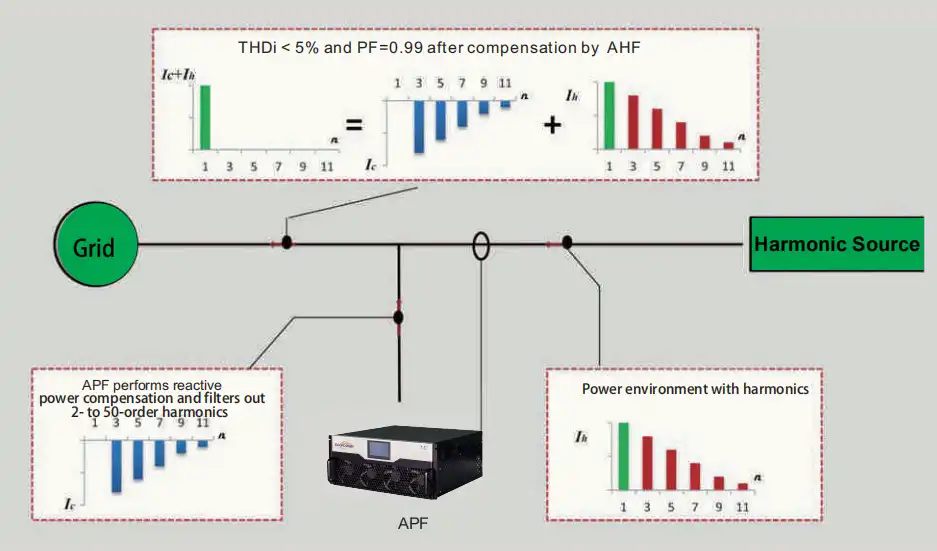
Active harmonic filters use high-tech power electronics to watch electrical waves all the time and send exact cancellation signals that reduce the effects of harmful harmonics. This technology stops resonance and harmonic amplification and keeps performance fixed even when power is low. Its modular design lets you mount it on the wall or on a rack, so you can place it in a way that fits the needs of your industrial facility. These devices meet global performance requirements for harmonic reduction because they follow IEC 61000-3-2, which is the international standard for harmonic current pollution.
Superior Performance Advantages
Active harmonic filter systems are useful in many business settings because of their main benefits. It is safe to run activities when there are no outside disturbances because dynamic harmonic reduction keeps the power quality stable even when the load changes. The system is more stable and can work in harsh industrial settings because it can change the power factor better and lose less energy in the transformer. Since these technologies make active harmonic filters better than inactive ones, they are the best way to fix today's power quality issues because they offer more complete answers. They are very helpful in places where work plans or power needs change because they can quickly adapt to new electricity conditions.
Top Active Harmonic Filter Solutions in 2026
This detailed study shows the best active harmonic filter choices on the market, chosen based on strict factors such as performance metrics, technological innovation, operational reliability, and cost-effectiveness. In this review, well-known global names like Siemens, Schneider Electric, ABB, and Emerson are compared to new technology companies like Xi'an Xidian, which has shown it can provide strong power quality solutions.
Established Market Leaders
Siemens keeps improving active harmonic filter technology by making it easier to combine digital signals. Schneider Electric, on the other hand, works on making its products modularly scalable so they can be used in a lot of different industrial settings. ABB focuses on grid stability solutions that can be used by utilities, and Emerson has solutions that are specifically made for data centers that need stable power quality.
Emerging Technology Innovators
Xi'an Xidian has become a major player in the active harmonic filter market thanks to its advanced manufacturing skills and strict quality control systems. Its solutions use dynamic harmonic reduction technology that is very resistant to changes in the power grid. This means that they can be used in business buildings, industrial plants, and substations. The company's active harmonic filter systems are good at handling surge currents; they can handle currents up to 100 times their estimated capacity and still be quiet (less than 45dB). Manufacturers like Delta make choices that are tailored to specific groups of customers, with smaller sizes and better connectivity features. With so many options, procurement workers can find the right ones to solve the power quality problems that come up in different industrial settings. These companies' new technologies show that the industry is focused on solving power quality problems that are getting more complicated while also giving investors real returns on their money by lowering energy costs and making equipment safer.
How to Select and Size an Active Harmonic Filter for Your Industrial Application?
Selecting and sizing the right active harmonic filter requires a systematic process tailored to your industry's needs and operational constraints. This process guides procurement teams through key evaluation criteria, including load characteristic analysis, harmonic profile assessment, and system integration requirements. Understanding these fundamental factors enables decisions that improve both technical performance and economic efficiency.
Load Characteristics Assessment
A thorough load study of the various nonlinear loads in your facility is the first step in selecting an effective active harmonic filter. In factories with CNC machines and assembly lines, an active harmonic filter capable of handling variable loads and reducing power factor penalties is required. Substation systems need to mitigate harmonics from renewable energy inverters and intermittent power sources. For commercial building retrofits, NFPA 70 fire safety standards require flame-resistant components and low-noise operation.
Sizing Methodology and Integration Requirements
An effective sizing methodology involves a comprehensive analysis of the harmonic spectrum, considering both current harmonic distortion levels and expected future growth. Active harmonic filter systems must handle peak demand periods while maintaining efficiency during low-demand periods. Integration considerations include compatibility with existing switchgear, available installation space, and environmental factors such as temperature, humidity, and altitude. Sizing should also align with IEC 61000-3-4 guidelines for harmonic voltage limits to ensure compliance.
Lifecycle Cost Analysis
A comprehensive lifecycle cost analysis includes all associated costs, such as initial purchase price, installation expenses, ongoing maintenance requirements, and energy-saving potential. Active harmonic filter systems typically offer strong long-term value by reducing transformer losses, extending equipment lifespan, and avoiding power quality penalties. Maintenance factors include ease of routine inspections, availability of replacement parts, and the manufacturer's or supplier's technical support capabilities.
Installation, Troubleshooting, and Maintenance Best Practices
Professional installation techniques, proactive troubleshooting methods, and thorough maintenance procedures are critical for the successful adoption and long-term performance of active harmonic filter systems. Industrial-scale applications require specialized expertise and close attention to factors such as environmental conditions, electrical connections, and system configuration processes.
Professional Installation Guidelines
Proper installation begins with careful site preparation and verification of electrical equipment compatibility. Active harmonic filter units must be securely mounted to avoid vibration-related issues and properly wired in accordance with manufacturer instructions to ensure effective heat dissipation. Installation teams must verify correct wiring, phase rotation, and protection device coordination to ensure optimal performance and safety.
Troubleshooting Common Issues
Effective troubleshooting plans address common operational problems, such as alarm conditions, performance degradation, and contact issues. Modern active harmonic filter systems are equipped with advanced monitoring features that facilitate fault detection and resolution. Familiarity with these diagnostic tools and established escalation processes with technical support teams can reduce downtime and enable quick problem resolution.
Preventive Maintenance Protocols
Regular preventive maintenance plans extend filter lifespan and ensure consistent power quality improvement throughout the system's lifetime. Routine inspection plans include thermal imaging, connection tightness checks, and performance monitoring to identify potential issues before they impact operations. Partnering with manufacturers that offer comprehensive technical support and after-sales services strengthens risk mitigation strategies and maintains business stability.
Procurement and Supply Chain Insights for Active Harmonic Filters
Procurement professionals need a solid understanding of the active harmonic filter supply chain to address key issues such as supplier evaluation, pricing, warranty negotiation, and operational coordination. Strategic procurement approaches improve both technical outcomes and financial performance while ensuring reliable supply chain management.
Supplier Evaluation and Selection
A robust supplier evaluation considers professional capabilities, product quality, certifications, active harmonic filter, and after-sales support. Leading active harmonic filter manufacturers hold ISO 9001 (quality management) and ISO 14001 (environmental management) certifications, as well as regional approvals such as CE, UL, and CCC marks. Quality control measures, including 72-hour aging tests and 100% load testing before shipment, demonstrate a commitment to high manufacturing standards and product reliability.
Strategic Procurement Considerations
When buying in bulk, it's important to think about the long-term benefits of standardisation, volume price, and possible business partnerships. For projects that need to be finished quickly, managing lead times is very important, and suppliers need to be clear about production plans and delivery promises. When business purchasing cycles are aligned with streamlined buying processes, projects can be finished quickly and with little administrative work. The wide range of products that Xi'an Xidian sells shows that it can be a complete seller. These products include different types of active harmonic filters that are made for different industrial uses. Its dedication to new ideas and teamwork, along with a history of successful implementations in State Grid systems, power engineering projects, and industrial facilities, shows how important it is to work with established businesses that can offer both technical know-how and dependable supply chain management.
Conclusion
Modern factories that want to improve power quality, cut costs, and make sure they're following the rules should invest in active harmonic filter technology. A close study of the best choices for 2026 shows big gains in their ability to reduce dynamic harmonics, protect against grid fluctuations, and lower energy costs. For adoption to go smoothly, application-specific needs must be carefully thought through, the right sizing methods must be used, and strategic partnerships must be formed with suppliers who offer both excellent expert support and long-term assistance.
FAQ
1. What is the typical implementation timeline for active harmonic filter systems?
Active harmonic filter systems usually take between 4 and 8 weeks to set up, but this depends on how complicated the system is and what the site needs. This includes checking the plan, getting the equipment, installing it, starting it up, and making sure it works right.
2. How do active harmonic filters differ from passive filtering technologies?
Active harmonic filters offer dynamic, real-time harmonic adjustment that changes based on the load, while passive filters provide fixed-frequency filtering that can't be changed as easily. Active systems keep working even when the electricity conditions change because they don't have resonance problems.
3. What methods help assess facility requirements for harmonic correction?
Power quality checks, load characterization studies, and harmonic spectrum measures are all parts of a full harmonic analysis. These tests find the exact harmonic frequencies, distortion levels, and system resistance features that are needed to choose and size an active harmonic filter correctly.
Partner with Xi'an Xidian for Advanced Active Harmonic Filter Solutions
With the best active harmonic filter technology and the best expert help in the business, Xi'an Xidian is ready to meet your most difficult power quality needs. Our skilled engineers create unique solutions that are backed by strict quality control measures and a wide range of certifications, such as ISO 9001, CE, and UL approvals. We are a reliable seller of active harmonic filters that work well in business buildings, substations, and industrial plants all over the world. Get in touch with our technical experts at serina@xaxd-electric.com, amber@xaxd-electric.com, or luna@xaxd-electric.com to talk about your needs and learn more about our full range of active harmonic filters.
References
1. Institute of Electrical and Electronics Engineers. "IEEE Standard 519-2022: Harmonic Control in Electric Power Systems." IEEE Standards Association, 2022.
2. International Electrotechnical Commission. "IEC 61000-4-7: Testing and Measurement Techniques for Harmonic and Interharmonic Measurements." IEC Publications, 2024.
3. American Society of Heating, Refrigerating and Air-Conditioning Engineers. "Power Quality Considerations for HVAC Systems in Industrial Facilities." ASHRAE Technical Guidelines, 2025.
4. Electric Power Research Institute. "Active Harmonic Filter Performance Assessment in Industrial Applications." EPRI Technical Report, 2025.
5. National Fire Protection Association. "NFPA 70: National Electrical Code Requirements for Harmonic Mitigation Equipment." NFPA Standards, 2026.
6. International Energy Agency. "Grid Integration of Variable Renewable Energy Sources: Power Quality Considerations." IEA Clean Energy Transitions Programme, 2025.