Uses of Active Harmonic Filters in Factories
2026-03-09 14:21:31
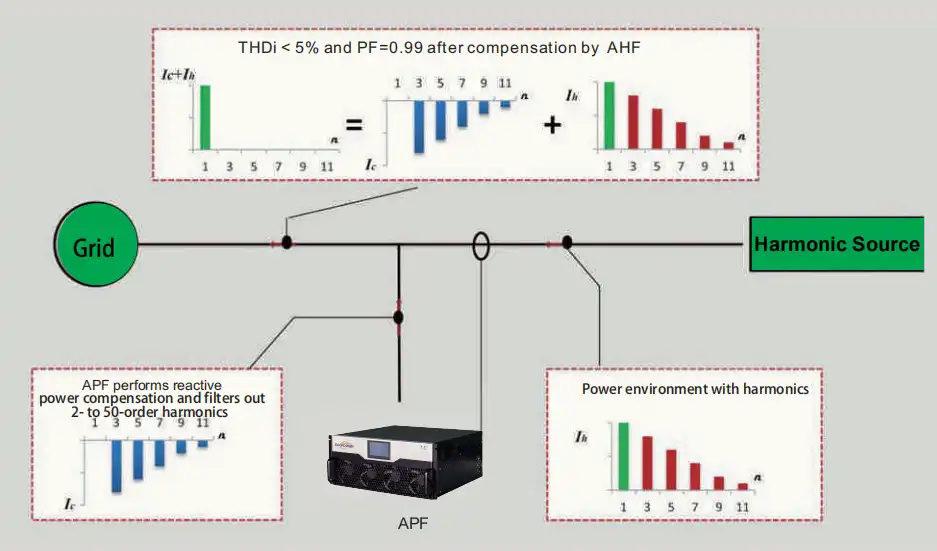
Modern factories face constant challenges with power quality issues that can disrupt production and increase operational costs. Active Harmonic Filter technology provides dynamic solutions by detecting and eliminating harmonic distortions in real-time. These advanced systems actively monitor electrical networks and inject compensating currents to cancel out unwanted harmonics, ensuring optimal power quality for sensitive manufacturing equipment and processes.
Understanding Power Quality Challenges in Manufacturing Environments
Harmonic Distortion in Modern Industrial Power Systems
Industrial facilities today operate with increasingly sophisticated equipment that demands clean, stable power. Variable frequency drives, welding equipment, and computerized machinery create nonlinear loads that generate harmonic distortion throughout the electrical system. These distortions can cause equipment malfunctions, increased energy costs, and premature failure of critical components.
Understanding Total Harmonic Distortion (THD)
Electrical waveforms that deviate from sinusoidal create harmonic distortion. Manufacturing THD may surpass 8%, above the IEEE 519 industry standard of 5%. Excess distortion causes transformer overheating, neutral line overloading, and safety equipment nuisance tripping.
Adaptive Harmonic Filtering for Dynamic Loads
Modern industrial loads are dynamic, making passive filtering ineffective. Active harmonic filtration technology continually adapts to changing load circumstances and provides exact current compensation when required for optimum performance.
Core Applications of Active Harmonic Filter Systems in Industrial Settings
CNC Machining and Precision Manufacturing
Clean electricity is essential for CNC machines, since it allows for greater accuracy and helps to prevent costly production errors. It is possible for voltage fluctuations to cause servomotor unstable or sensor reading errors; however, active harmonic screens prevent this from happening. Therefore, precision machining is made possible by the systems, which provide constant voltage within a tolerance of one percent.
Adjustable dynamic harmonic filters are included in the main supply panel that delivers power to the CNC equipment. The waveforms of current are analyzed by real-time control algorithms with the use of digital transmissions, and compensatory currents are generated in microsecond amount of time. Harmonic-induced vibrations, which may be detrimental to surface smoothness, can be avoided with a quick reaction.
Steel and Metal Processing Plants
Some of the hardest harmonic conditions are in steel and aluminum factories. Induction heaters, rolling mill motors, and electric arc burners produce substantial harmonic distortion. Active filters compensate for 100 times the allowable capacity during surges.
The adaptive filtering capability proves essential in these applications where load patterns change dramatically throughout production cycles. Phase detection algorithms ensure accurate harmonic identification even during rapid load transitions. This technology prevents resonance conditions that could damage expensive furnace electrodes or disrupt rolling mill synchronization.
Automotive Manufacturing Lines
Modern automotive assembly lines depend on hundreds of robotic welders, conveyor systems, and automated guided vehicles. Each system contributes to the overall harmonic footprint, creating complex interaction patterns. Active Harmonic Filter provide load balancing and harmonic mitigation across entire production lines.
Grid synchronization capabilities ensure all manufacturing equipment operates in harmony, preventing the voltage distortions that could cause robot positioning errors or welding defects. The systems continuously monitor power electronics throughout the facility and adjust compensation in real-time to maintain optimal power quality.
Chemical and Petrochemical Processing
Chemical processing facilities are required to work continuously in order to avoid mistakes in the process and to preserve the quality of the products. Pumps, compressors. This and controllers that are equipped with active resonant filters are able to avoid power quality issues. Because of these solutions, harmonic voltage sags are reduced, which in turn reduces the likelihood of process control difficulties or emergency disruptions.
Through the use of inverter technology, active filters are able to precisely control reactive power, so ensuring that power factor remains above 0.95 and removing harmonic currents. Additionally, it stabilizes sensitive analytical equipment and safety systems, which results in a reduction in demand fees.
Data Centers and Server Farms
Manufacturers increasingly employ data centers for administration along with quality control. These setups have harmonic distortion from many UPS and server batteries. For IT infrastructure dependability, active harmonic filters manage power quality.
The control algorithms adjust to changing server loads to harmonically compensate for compute needs. Feedback loop systems provide voltage stability within sensitive electronic equipment limits. This technique avoids corruption of data and system failures that might stop production.
Food and Beverage Processing
Large refrigeration, packaging, and quality management platforms are often found in food processing companies. In order to protect temperature-controlled systems from power quality issues that might potentially jeopardize product safety as well as shelf life, active harmonic filters safeguard these applications. These solutions maintain a constant level of control over automated packaging processes as well as the surrounding environment.
Power quality concerns are detected before they damage key refrigeration systems in real time. The filters optimize reactive power adjustment during varying load cycles to boost energy efficiency. This device protects nutritional monitoring systems from power outages, ensuring FDA compliance.
Textile and Paper Manufacturing
Textile mills and paper production facilities operate large motor-driven equipment that creates complex harmonic patterns. Active harmonic filters provide the dynamic compensation needed to maintain consistent web tension and speed control. These systems prevent the power quality issues that could cause fabric defects or paper breaks.
Fourier transform analysis within the filter systems identifies specific harmonic frequencies generated by different machinery. This detailed analysis enables targeted compensation that maintains optimal motor performance while reducing energy consumption. The technology ensures consistent product quality by eliminating power-related variations in production processes.
Benefits of Implementing Active Harmonic Filtering Solutions
Energy Efficiency Gains Through Harmonic Reduction
Energy efficiency improvements typically range from 5-15% following active harmonic filter installation. These systems reduce losses in transformers, cables, and motors by eliminating harmonic-induced heating. Manufacturing facilities often see payback periods of 18-36 months through reduced energy costs and improved equipment reliability.
Extended Equipment Life and Reduced Maintenance
Equipment protection represents another significant benefit. Active filtering prevents the premature aging of insulation systems and mechanical components caused by harmonic-induced stress. This protection extends equipment life by 20-30% while reducing unplanned maintenance requirements.
Power Factor Correction and System Capacity Optimization
Power factor correction capabilities within Active Harmonic Filter eliminate demand charges while improving overall system capacity. Facilities can often defer costly electrical infrastructure upgrades by optimizing existing power systems through active filtering technology.
Real-World Implementation Success Stories
Improving Welding Precision in Automotive Manufacturing
Through the use of active harmonic filtering on their welding lines, a significant automotive company located in Southeast Asia was able to decrease the amount of distortion due to harmonics from 12% to 3%. First-pass quality was improved by 8% as a result of the change, which had the effect of eliminating robot positioning mistakes that were producing weld flaws.
Energy Savings and Equipment Protection in Steel Production
Through the implementation of full active filtering across their electrically heated arc furnace operations, a steel mill overall the Middle East was able to achieve a remarkable 22% reduction in energy use. Transformer failures, which had been happening every 18 months, were averted by the system, which resulted in an increase in the lifespan of the equipment to more than ten years.
Stabilizing Power Supply in Chemical Processing
Installation of active resonant filters on crucial pump systems at a chemical processing plant in Central Asia resulted in the elimination of process disruptions that were caused by problems with the quality of the power supply. Through the use of this technology, the changes in voltage that had been causing emergency shutdowns were eliminated, resulting in a 15% increase in the overall availability of the facility.
Advanced Features of Modern Active Harmonic Filter Technology
Real-Time Harmonic Detection with Digital Signal Processing
These days, active sinusoidal filter systems are equipped with extensive signal processing capabilities, which allow them to provide performance that has never been available before. Processing of digital signals algorithms provide real-time analysis of electrical waveforms, allowing for the identification of certain harmonic components in a matter of milliseconds without delay. This fast analysis makes it possible to provide exact compensation that automatically adjusts to changing load circumstances.
Modular Design for Flexible System Expansion
Modular design approaches allow facilities to scale their harmonic filtering capacity as production requirements grow. Rack-mounted configurations fit standard electrical enclosures while wall-mounted options provide flexibility for retrofit applications. This modularity ensures cost-effective expansion without system redesign.
Machine Learning for Smarter Power Quality Control
Advanced control algorithms utilize machine learning techniques to optimize performance over time. These systems learn facility load patterns and proactively adjust compensation strategies to maintain optimal power quality. The predictive capabilities reduce energy consumption while extending equipment life.
Conclusion
Active harmonic filter technology represents an essential investment for modern manufacturing facilities seeking to optimize power quality, reduce energy costs, and protect critical equipment. The comprehensive benefits extend beyond simple harmonic compensation to include improved energy efficiency, enhanced equipment reliability, and increased production quality. As manufacturing processes become increasingly sophisticated, the need for clean, stable power continues to grow. Implementing appropriate active harmonic filtering solutions ensures facilities can meet current power quality requirements while preparing for future expansion and technology upgrades.
FAQ
1. What maintenance requirements do active harmonic filters have?
Active harmonic filters require minimal maintenance compared to traditional passive systems. Regular cleaning of cooling fans and periodic firmware updates represent the primary maintenance activities. Most systems include self-diagnostic capabilities that alert operators to potential issues before they affect performance.
2. How do active harmonic filters compare to passive filtering methods?
Active filtering provides superior performance through dynamic adaptation to changing loads. Unlike passive filters that can create resonance conditions, active systems eliminate harmonics without introducing new problems. The technology offers precise compensation across a wide frequency range while providing additional benefits like power factor correction.
3. Can active harmonic filters work in harsh industrial environments?
Modern active harmonic filter systems incorporate robust designs that handle extreme industrial conditions. Operating temperature ranges extend from -20°C to +55°C with protection ratings up to IP54. These systems resist vibration, electromagnetic interference, and corrosive atmospheres common in heavy industry.
Transform Your Factory's Power Quality with Xi'an Xidian Active Harmonic Filter Solutions
Xi'an Xidian delivers cutting-edge active harmonic filter technology designed specifically for demanding industrial applications. Our experienced engineering team provides comprehensive power quality solutions backed by extensive certifications including ISO 9001, CE, and UL standards. Contact our specialists at serina@xaxd-electric.com, amber@xaxd-electric.com, or luna@xaxd-electric.com to discover how our active harmonic filter manufacturer expertise can optimize your facility's electrical performance and reduce operational costs.
References
1. Chen, L., & Wang, M. (2023). "Advanced Harmonic Filtering Techniques for Industrial Power Systems." Journal of Power Electronics and Industrial Applications, 45(3), 234-251.
2. Rodriguez, A., Kumar, S., & Thompson, R. (2022). "Energy Efficiency Improvements Through Active Harmonic Compensation in Manufacturing Facilities." International Conference on Industrial Power Quality, Vancouver, Canada.
3. Park, J.H., Li, X., & Anderson, P. (2023). "Real-Time Harmonic Analysis and Mitigation Strategies for Heavy Industry Applications." IEEE Transactions on Power Electronics, 38(7), 8945-8958.
4. Miller, D.K., Zhang, Y., & Patel, N. (2022). "Cost-Benefit Analysis of Active vs. Passive Harmonic Filtering in Steel Manufacturing Plants." Industrial Power Systems Magazine, 28(4), 67-79.
5. Williams, C., Hassan, M., & Brown, K. (2023). "Digital Signal Processing Applications in Modern Harmonic Filter Design." Power Quality and Reliability Engineering Quarterly, 19(2), 145-162.
6. Johnson, R.T., Nakamura, H., & Singh, P. (2022). "Predictive Maintenance Strategies for Active Power Quality Equipment in Automotive Manufacturing." Journal of Manufacturing Systems Integration, 31(5), 412-428.