Vacuum Circuit Breaker: Basics and Working
2026-05-29 16:05:17
Vacuum circuit breakers stop current by extinguishing the arc formed during circuit breaking in a sealed vacuum chamber. This method, used in medium-voltage systems, uses vacuum's better insulation to quickly extinguish arcs and isolate faults. For reliable power protection, facility operators, utility managers, and system integrators must understand vacuum circuit breakers.
 |
 |
Understanding Vacuum Circuit Breakers: Basics and Working Principle
Electrical problems in industrial or utility networks need quick circuit cutoff to protect equipment and workers. With its simple design and high performance, Vacuum Circuit Breakers meet this necessity.
How Vacuum Arc Extinction Works?
The vacuum interrupter, two contacts in a hermetically sealed chamber, is the circuit breaker's heart. These connections are closed during normal operation, enabling electricity to pass. A failure opens the breaker, separating the contacts quickly. The vacuum environment lacks gas molecules to sustain the arc between separate contacts. The vacuum's intrinsic dielectric strength restores insulation between connections after the arc extinguishes in microseconds as electrons and ions scatter. This process completes in 1-3 cycles at 50Hz, quicker than air or oil-based breakers.
Core Components and Their Functions
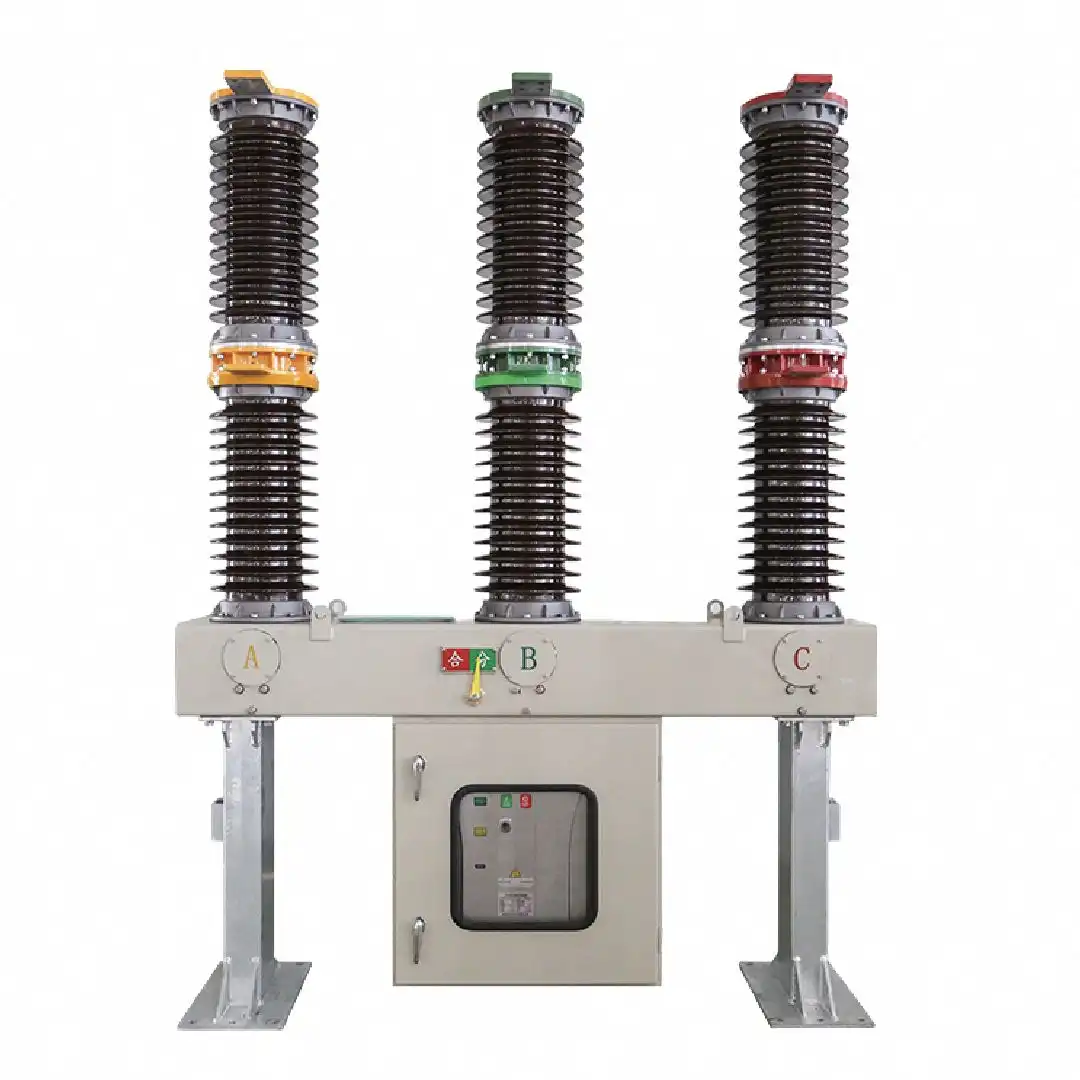
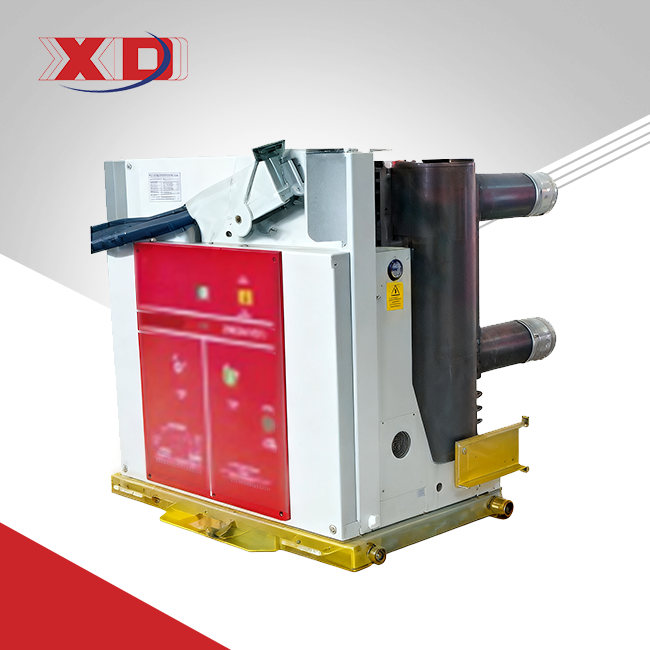
An working mechanism, usually a modular spring-operated system, delivers mechanical energy for contact separation and closure. This mechanism performs reliably over thousands of operations in sophisticated models as the ZW7-40.5 outdoor unit. Copper-chromium alloy contact materials can tolerate frequent switching's thermal and electrical pressures. Porcelain or polymer housings insulate live parts from ground. The reinforced bracket column construction in outdoor applications meets IEEE 693 earthquake-prone region criteria.
Advantages Over Traditional Technologies
In response to stricter sulfur hexafluoride rules, vacuum circuit breakers reduce SF6 greenhouse gas. The sealed vacuum chamber requires no gas replacement, decreasing maintenance by 40% above SF6. Normal operating life exceeds 30 years, with mechanical endurance ratings frequently exceeding 10,000 operations. The lack of explosive liquids or flammable gasses improves worker safety in manufacturing facilities and data centers, while the compact footprint allows installation in space-constrained substations.
Comparing Vacuum Circuit Breakers with Other Circuit Protection Technologies
Understanding how different breaker types perform across key operating metrics helps procurement teams evaluate circuit protection solutions. Each technology has different environmental, maintenance, and application trade-offs.
Vacuum vs. SF6 Circuit Breakers
High-voltage applications have traditionally used SF6 breakers due to their arc-quenching capabilities. SF6 gas warms the planet 23,500 times more than carbon dioxide. U.S. and global regulations are pushing utilities toward SF6-free options. Vacuum Circuit Breaker technology removes this issue and provides equivalent or better performance from 12kV to 40.5kV. Vacuum interrupters lack gas leakage channels, maintenance intervals are long.
Performance Against Air and Oil Circuit Breakers
Air circuit breakers work well for low-voltage applications but struggle with medium-voltage arc energy. Their larger size and slower interruption periods make them unsuitable for tiny industrial substations. Oil circuit breakers are effective yet fire-prone and require extensive oil testing and replacement. The ZW7-40.5 outdoor vacuum circuit breaker's sealed design and compact construction minimize installation footprint by 30% compared to oil-filled models.
Application-Specific Selection Criteria
Hospitals and data centers need full dependability to avoid expensive downtime harming key operations. Modern vacuum interrupters safeguard sensitive devices during transient occurrences with 99.9% current-breaking efficiency. Vacuum breakers can sustain thousands of switching cycles without contact deterioration, benefiting manufacturing companies with arc furnaces or large motor loads. Utility firms operating distribution networks in different climates enjoy the large-creepage porcelain sleeve design that minimizes flashovers in polluted or humid coastal areas.
Technical Specifications, Lifespan, and Maintenance of Vacuum Circuit Breakers
Engineering teams may specify appropriate equipment for individual applications by understanding breaker performance technical characteristics. Standards ensure safety and interoperability in bigger electrical systems.
Critical Voltage and Current Ratings
The ZW7-40.5 type is appropriate for primary distribution networks at 40.5kV and 50Hz. Small industrial feeders to large substation circuits can use 1250A, 1600A, or 2000A rated current. This voltage class has a breaking capability of 25kA to 31.5kA. Lightning impulse withstand ratings demonstrate transient surge protection, while power frequency withstand voltage testing at 85kV for one minute proves insulation integrity under overvoltage circumstances.
Standards Compliance and Certification
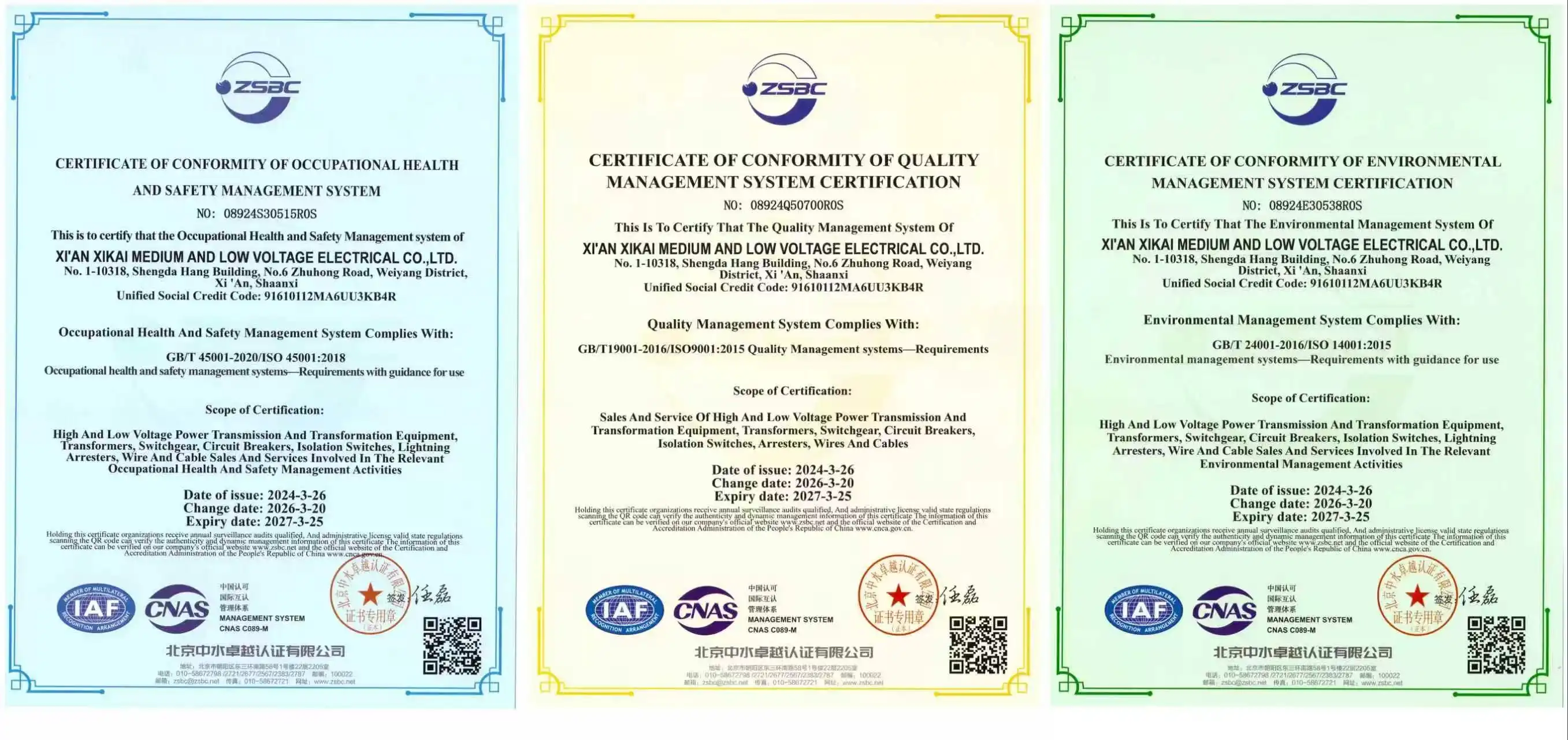
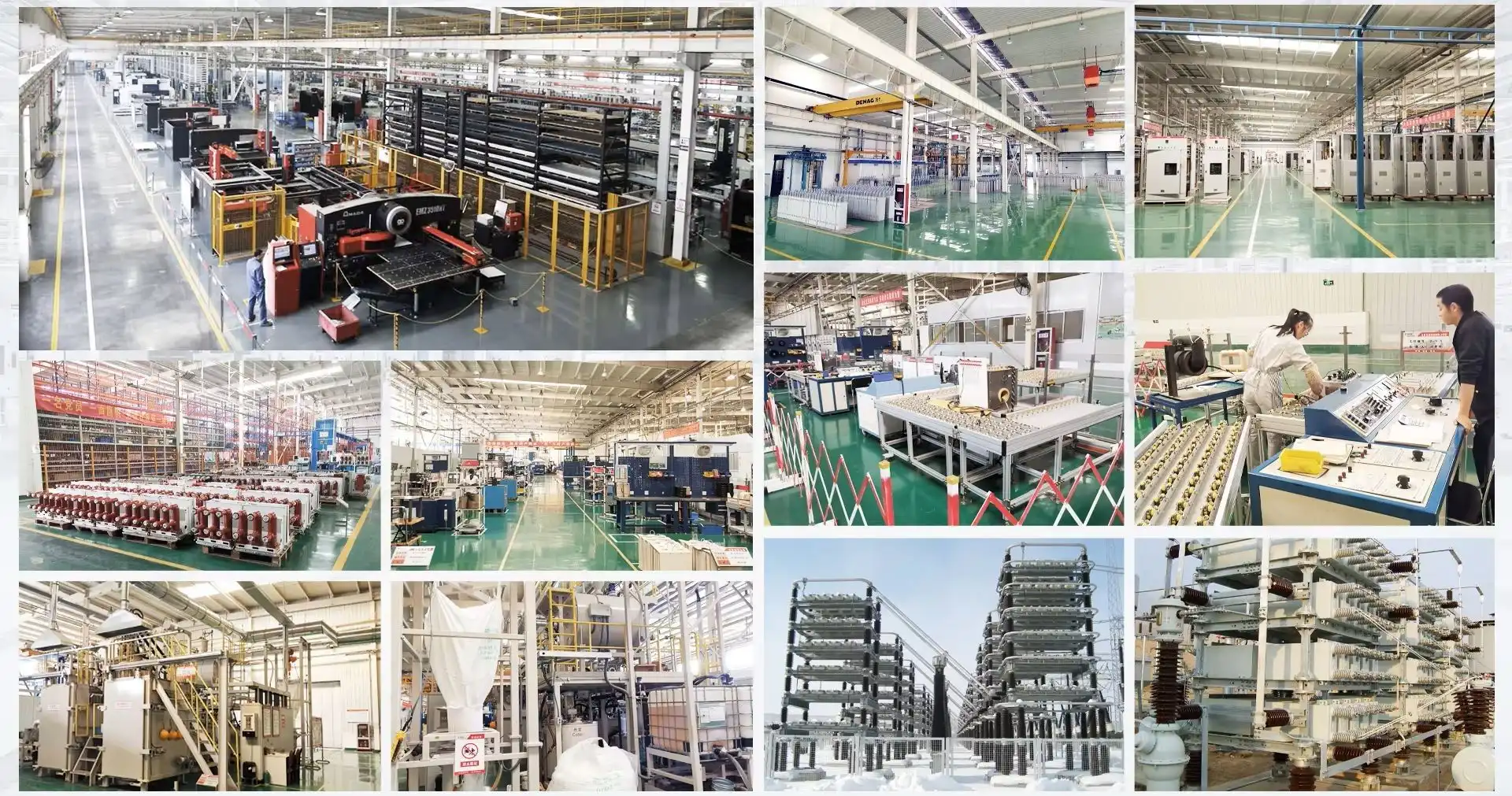
Manufacturers must follow IEC 62271-100 and IEEE C37.04 testing and performance requirements. These standards include mechanical endurance, dielectric strength, temperature increase limitations, and short-circuit creation and breaking. Xi'an Xikai's factories are ISO 9001, ISO 14001, and ISO 45001 certified, assuring quality, environmental responsibility, and occupational health. Precision is achieved across thousands of components by automated assembly and robotic welding.
Lifespan Factors and Maintenance Protocols
Switching frequency, fault current magnitude, and environment affect operational life. Vacuum Circuit Breakers typically last 25-30 years in distribution networks. The vacuum interrupter needs minimal maintenance, although the functioning mechanism should be inspected every 2-3 years. Maintenance includes moving part lubrication, spring tension check, and fastener tightness check. Maintenance time is 30% less than integrated solutions because the ZW7-40.5's modular spring-operated mechanism permits onsite component replacement. Genuine OEM replacement parts assure compatibility and warranty coverage, making supplier partnerships with Xi'an Xikai vital for long-term support.
Procurement Guide for Vacuum Circuit Breakers: From Evaluation to Purchase
Successful procurement balances technical needs, budget limits, and supplier reliability. Procurement managers use a systematic review approach to maximize total cost of ownership and satisfy operational needs.
Matching Capacity to System Requirements
Document voltage, maximum load current, and fault current at the installation location. To safely interrupt worst-case problems, coordination studies identify breaking capability. The ZW7-40.5's 40.5kV rating suits primary distribution and subtransmission applications, while its 1250A, 1600A, or 2000A rated currents accommodate feeder capacity. Environmental variables matter. In earthquake zones, bracket columns must be strengthened, whereas coastal installations benefit from salt-resistant large-creepage porcelain sleeves.
Total Cost of Ownership Analysis
Only one part of lifetime expenses is initial purchase price. Withdrawable designs in metal-enclosed switchgear require racking mechanisms, whereas fixed-mount outside units need weather-resistant enclosures and seismic foundations. Operating expenses include energy losses during normal conduction, which well-designed Vacuum Circuit Breakers minimize. Since vacuum interrupters remove gas monitoring and liquid testing, maintenance costs are far lower than SF6 or oil technology. In essential facilities like hospitals and data centers, equipment failure downtime may dwarf all other expenditures, making dependability vital.
Evaluating Suppliers and Brands
Regional vendors like Xi'an Xikai provide competitive options with project-specific customisation. Verify supplier credentials using certification, similar industry customer references, and factory audit reports. Long-term satisfaction depends on technical support infrastructure: applications engineering during design, field service during commissioning, and spare parts availability throughout the equipment lifespan.
Documentation and Compliance Verification
Request technical specs, including dimensions drawings, terminal layouts, and protective relay compatibility. Test results from recognized labs should verify IEC or IEEE conformity in certification documentation. For U.S. projects, check equipment for NEC and UL/CSA designations. Manufacturing problems are usually covered for 18–24 months, however longer warranties are possible.
Applications and Industry Use Cases of Vacuum Circuit Breakers
Real-world deployments across varied sectors show how Vacuum Circuit Breaker technology solves operational problems and delivers ROI.
Power Utility Distribution Networks
Electric utilities with large distribution systems use vacuum circuit breakers for feeder protection and sectionalizing switches. Rural networks use the pole-mounted ZW7-40.5 outdoor device to automatically isolate failed parts while preserving service. Its corrosion-resistant casing withstands decades of sun, rain, and -40°C to +50°C temperatures. Since vacuum interrupters eliminate oil sampling and SF6 leak detection, utilities save field personnel time.
Industrial Manufacturing Facilities
Steel mills, automobile factories, and chemical processors use high-power equipment that generates large fault currents during motor starts or process disturbances. Indoor vacuum circuit breakers like the VS1-24 series safeguard these loads in metal-enclosed switchgear with removable design for safe servicing. In plants with repeating production cycles, frequent switching without contact erosion is essential. PVLCs and VFDs are susceptible to voltage sags, although energy-efficient arc extinction reduces them.
Critical Infrastructure and Healthcare
Power outages that disrupt life-support systems, surgical suites, and data networks are unacceptable in hospitals. Automatic transfer switch systems with vacuum circuit breakers isolate utility and generator sources reliably. Their fast fault clearance reduces downstream equipment damage, repair costs, and restoration time. Data centers must be reliable since even brief outages cost revenue and service level agreements. The 99.9% breaking efficiency and prolonged operational life of vacuum technology meet these facilities' uptime demands.
Renewable Energy Integration
Wind and solar farms increasingly use vacuum circuit breakers to connect to utility grids. Distributed generation requires capacitor bank switching for power factor correction and transformer energization, which the modular spring-operated system handles. The ZW7-40.5 supports grid connections revenue metering and protective relaying systems with its center CT and side-installed CT versions.
Emerging trends point toward smart grid integration, with vacuum circuit breakers including digital communication interfaces for remote monitoring and control. Operating data is analyzed by predictive maintenance algorithms to predict component wear before breakdowns, optimizing maintenance schedule and asset availability. These advances make vacuum technology a smart investment for utilities and companies upgrading their electrical infrastructure.
Conclusion
Vacuum circuit breakers in medium-voltage applications from 12kV to 40.5kV are reliable, environmentally compliant, and cost-effective. Over 30-year lifespans, their sealed vacuum interrupters reduce SF6 greenhouse gas issues with minimum maintenance. Their quick arc extinction and small form make them excellent for space-constrained industrial substations, utility distribution networks, and essential installations requiring maximum uptime. Instead than only considering purchase price, procurement choices should include total cost of ownership, including installation, maintenance, and downtime risks. Vacuum technology leads circuit protection innovation as electrical systems move toward smart grid topologies and higher environmental criteria.
FAQ
1. What distinguishes vacuum circuit breakers from SF6 circuit breakers in practical operation?
Environmental effect and arc-quenching medium are the main differences. As a greenhouse gas 23,500 times stronger than CO2, sulfur hexafluoride gas in SF6 breakers must be monitored for leaks. Sealed chambers in vacuum breakers avoid this environmental hazard without gas replenishment. Vacuum interrupters lack gas handling systems, which complicate SF6 maintenance.
2. How often should vacuum circuit breakers undergo maintenance inspections?
Due to its seal, the vacuum interrupter requires no interior maintenance. The functioning mechanism needs examination every 2-3 years or 2,000 operations, whichever comes first. Checking spring tension, lubricating moving parts, and electrical connections are maintenance responsibilities. This differs from SF6 breakers' annual gas density tests and oil circuit breakers' periodic liquid testing.
3. Can vacuum circuit breakers be customized for specific industrial requirements?
Manufacturers provide environmental, seismic, and special protection customizations. The ZW7-40.5 supports center CT or side-installed CT for metering and relay purposes. Reinforced constructions fulfill seismic criteria for earthquake-prone areas, while enhanced creepage distance porcelain sleeves adapt to high-pollution settings. Altitude derating and specific coatings address operating over 1000 meters or in corrosive environments.
Partner with Xi'an Xikai for Reliable Vacuum Circuit Breaker Solutions
Leading vacuum circuit breaker maker Xi'an Xikai Medium & Low Voltage Electric Co., Ltd. serves utilities, industrial facilities, and EPC contractors in North America and worldwide. Our ZW7-40.5 outdoor breakers operate well in harsh situations due to their reinforced structure, modular spring mechanisms, and IEC 62271-100 and IEEE C37.04 compliance. We combine technical competence with ISO 9001, 14001, and 45001-certified manufacturing excellence with over 15 patents and national research initiatives. Our engineers work with clients to design seismic zones, high-altitude installations, and specialized protection. Our extensive technical assistance, genuine OEM spare parts inventory, and quick communication through serina@xaxd-electric.com, amber@xaxd-electric.com, and luna@xaxd-electric.com benefit procurement professionals seeking a trusted vacuum circuit breaker supplier.
References
1. IEEE Standards Association. (2018). IEEE Standard for AC High-Voltage Circuit Breakers Rated on a Symmetrical Current Basis—Preferred Ratings and Related Required Capabilities for Voltages Above 1000 V. IEEE Std C37.04-2018.
2. International Electrotechnical Commission. (2017). High-voltage switchgear and controlgear – Part 100: Alternating current circuit-breakers. IEC 62271-100:2017.
3. Slade, P.G. (2020). The Vacuum Interrupter: Theory, Design, and Application. CRC Press, Boca Raton.
4. Greenwood, A.N. (2019). Vacuum Switchgear. Institution of Engineering and Technology, London.
5. Ryan, H.M. (Ed.). (2016). High Voltage Engineering and Testing, Third Edition. Institution of Engineering and Technology, London.
6. Dufournet, D. & Montillet, G.F. (2015). "Vacuum versus SF6 circuit breakers: A comparative life cycle assessment." IEEE Transactions on Power Delivery, 30(3), pp. 1429-1437.
_1774319679257.png)