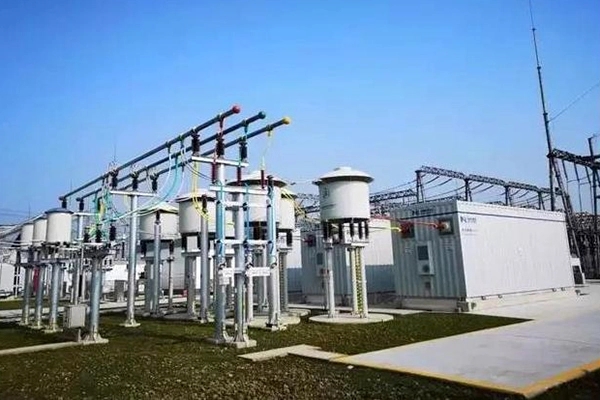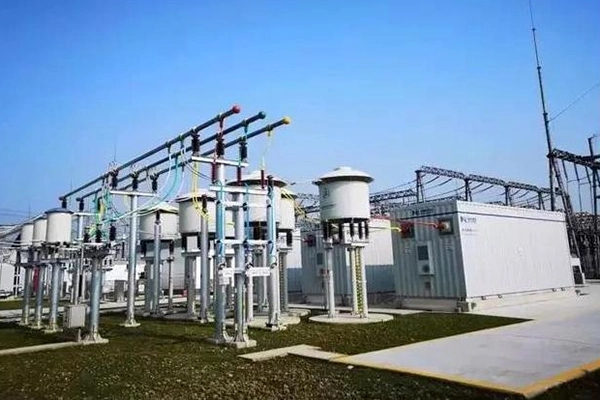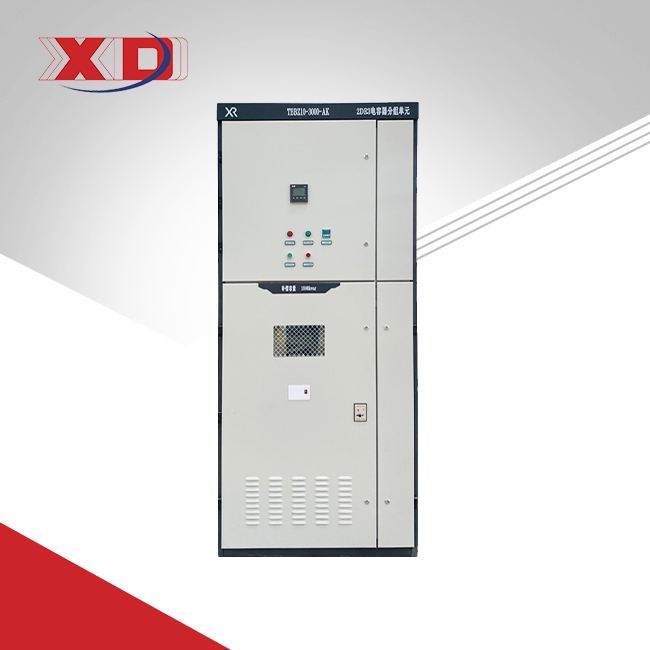
TBB10 High Voltage Reactive Power Automatic Compensation Device
Vacuum Circuit Breakers: Key Features and Benefits
2026-05-29 16:05:15
When power system dependability affects production schedules, equipment safety, and energy costs, choosing the correct protection device is critical. Vacuum Circuit Breakers isolate electrical faults in microseconds, eliminating cascade failures that might shut down whole facilities. These devices remove oil breaker fire concerns, reduce maintenance cycles compared to SF6 units, and work consistently during 30-year lifespans. This article discusses how vacuum technology solves medium-voltage protection problems for industrial operators, utility companies, and system integrators.
Understanding Vacuum Circuit Breakers: Working Principles and Core Features
How Vacuum Interrupters Eliminate Arc Hazards?
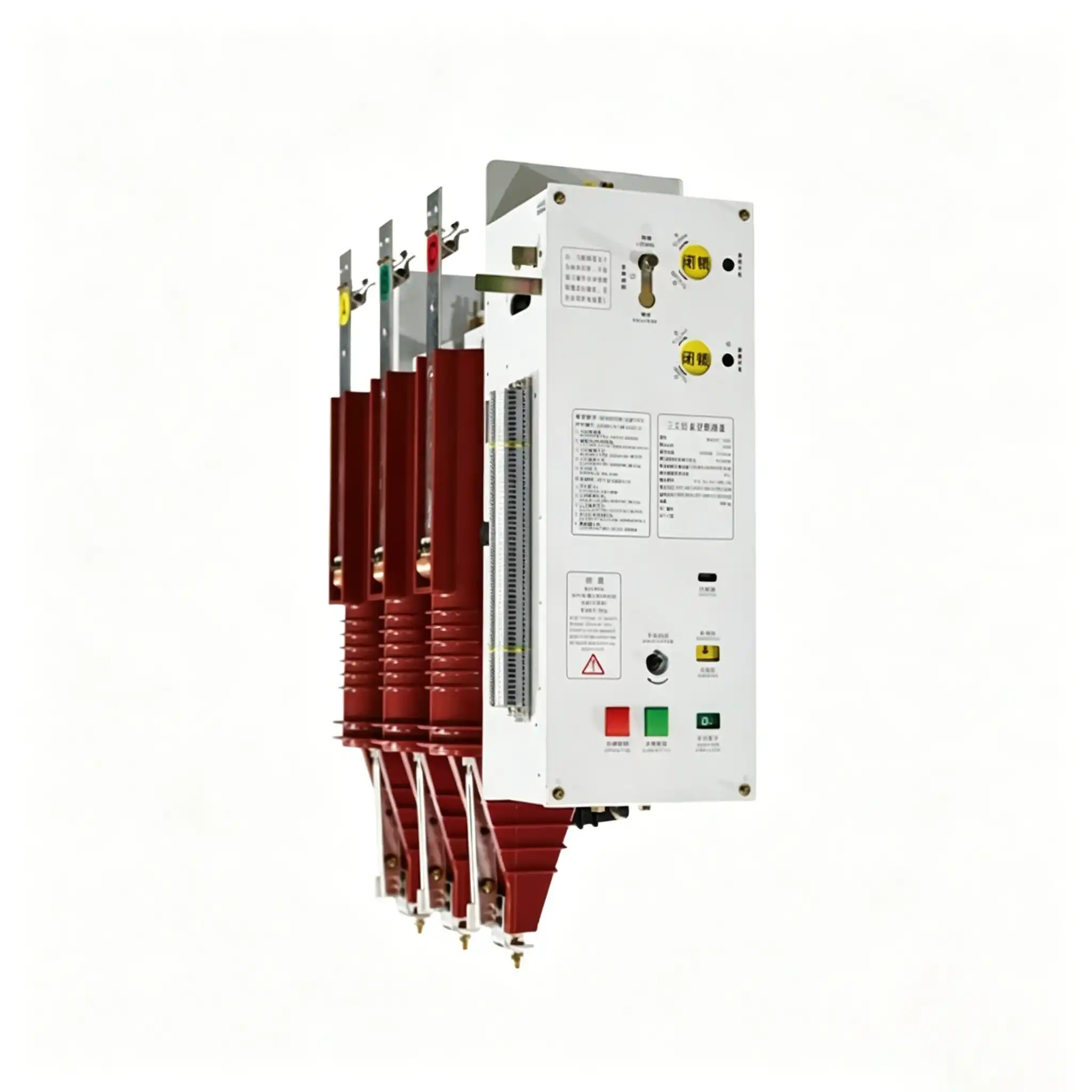
Vacuum Circuit Breakers use enclosed chambers to isolate electrical connections in vacuum. When overload or short-circuit conditions are detected, spring-operated devices separate connections. Unlike air or oil, vacuum inhibits ionization, extinguishing the arc in 0.1 seconds. Rapid quenching prevents downstream transformers and motors from overheating and stabilizes distribution network voltage. Modern contact assemblies use longitudinal magnetic field structures to uniformly distribute arc energy across electrode surfaces. This invention minimizes contact degradation to less than 1% after 10,000 switching operations, solving a high-frequency industrial reliability problem.
Classification by Installation Method and Application
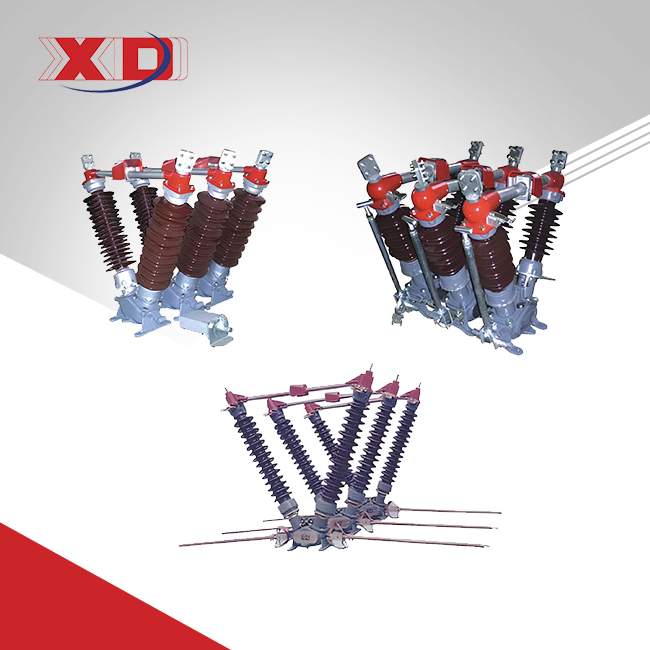
Vacuum Circuit Breakers come in three main variants for infrastructure needs. Fixed-type devices attach directly into tiny switchgear cabinets, saving 40% space over withdrawable versions. Xi'an Xikai's BGH series has a modular spring-operated mechanism for IEC 62271-100-compliant 12kV systems rated at 630A or 1250A. IP65 certification allows dependable operation in dusty mines and humid coastal substations. Maintenance teams can withdraw breaker assemblies from KYN28 or comparable racking cabinets without de-energizing nearby circuits. This approach is useful in data centers and hospitals where uptime is crucial. Extremely small 40.5kV substations use vacuum interrupters and SF6-insulated busbars, while environmental restrictions increasingly demand pure vacuum designs.
Critical Technical Parameters for Procurement
Industrial voltage ratings are 12kV to 40.5kV, with breaking capabilities of 25kA to 31.5kA depending on fault-current levels. Acoustically restricted commercial buildings require noise performance below 75dB while changeover. The BGH series works well from -40°C to +55°C, meeting high-altitude deployments up to 4,000 meters where air-cooled equipment generally underperforms. Mechanical endurance ratings designate devices as M1 (2,000 cycles) or M2 (10,000 cycles). For wear-free motor starting, steel rolling mills and water treatment facilities need M2-class durability. Though capacitor bank switching poses re-ignition concerns that need C2-class certification, electrical longevity often exceeds 20,000 operations at rated current.
Advantages of Vacuum Circuit Breakers Over Other Technologies
Superior Environmental Profile Compared to SF6 Solutions
Sulfur hexafluoride gas insulates well but has 23,500 times the global warming potential of CO2. California and EU regulations restrict SF6 use, forcing utilities to update old infrastructure. Vacuum Circuit Breaker technology eliminates this risk while preserving dielectric strength with solid insulation. Gas leaks in older switchgear are prevented by the sealed structure, decreasing annual inspection expenses by 30%. In sensitive electronics production operations, vacuum breakers prevent oil leaks contamination. A semiconductor fabrication plant in Arizona replaced oil circuit breakers with vacuum devices to avoid heat cycling-related insulating fluid deterioration. The upgrade paid for itself in 18 months by reducing maintenance and downtime.
Lifecycle Cost Analysis: Maintenance and Operational Savings
Traditional air circuit breakers require annual contact replacement and arc chute cleaning, requiring 120-150 work hours per 10 breakers in a normal substation. Mechanical inspection every 2,000 operations or three years is all vacuum interrupters need. Silver-plated terminals in offshore wind farms can endure salty air without passivation like copper air breakers. Vacuum technique reduced total cost of ownership by 20% over 15 years for a Texas utility with 150 substations. Reduced spare parts inventories, fewer emergency callouts, and longer asset replacement cycles offset purchase price premiums. Energy losses decreased significantly since vacuum breakers have contact resistance below 50 microhms, compared to 80-120 microhms in air designs, lowering I²R heating losses in high-current applications.
Enhanced Safety Through Arc-Flash Mitigation
Annually, arc-flash events cause countless electrical worker injuries, with energy levels surpassing 40 cal/cm² in older oil or air breaker setups. Arcing is contained in hermetically sealed chambers via vacuum technology. The BGH series integrates a circuit breaker, detaching switch, and grounding switch into a single enclosure, reducing manual handling of active components. Vacuum circuit breakers reduce arc-flash accidents by 65% over five years compared to outdated technology. Immediately resolving faults—often within 100 milliseconds—reduces equipment damage and secondary risks like molten metal projection or explosive busbar breakdowns that harm surrounding personnel.
Maintenance and Troubleshooting of Vacuum Circuit Breakers
Establishing Preventive Maintenance Protocols
Vacuum Circuit Breakers are maintenance-free, however mechanical and control systems need regularly scheduled maintenance. Use manufacturer-specified dielectric greases that endure operating temperatures to lubricate spring charging mechanisms and pivot points every 2,000 cycles. Torque inspection of terminal connections eliminates hotspots; infrared thermography during load situations detects loose joints before failure. Contact gap measurement using specific gauges while the breaker is racked out shows appropriate separation. In high-current applications, erosion patterns appear after 8,000–10,000 operations, however the device is usually functional until 15,000 cycles at rated capacity. To minimize unplanned downtime, integrated mechanical counters or SCADA logs record cumulative activities for predictive replacement scheduling.
Diagnosing Common Operational Issues
Discharged closing springs or secondary control voltage below 85% of rated values cause failure to close. Supply issues are isolated from mechanical interlocks by verifying trip coil terminal voltage under load. Misaligned racking mechanisms can obstruct closure on withdrawable units; shutter locations and alignment pins can be visually inspected. Ground faults or relay settings cause most tripping concerns, not breaker failures. Mismatches are found in protection coordination and fault levels using time-current curve analysis. Unlike destructive testing techniques on other breaker types, vacuum interrupter integrity testing employing high-voltage test sets—80% of rated withstand voltage—confirms dielectric strength without de-rating the device.
Securing Reliable After-Sales Support
Critical components like operational mechanisms and auxiliary switches should have local spare parts within 48 hours in procurement standards. Xi'an Xikai's regional service hubs can send field engineers for emergency troubleshooting within 24 hours and provide three-year vacuum bottle and two-year mechanical assembly warranties. English-language technical documentation and training increase in-house competency growth, decreasing contractor dependency. Framework agreements with manufacturers enable constant pricing and priority delivery throughout supply chain interruptions. Customers having pre-negotiated contracts received allocations before spot-market purchasers during the 2023 worldwide semiconductor shortage, which delayed breaker manufacturing by 8-12 weeks. As regulations change, proactive relationship-building ensures retrofits and improvements meet new requirements.
Procurement Considerations: How to Select and Buy Vacuum Circuit Breakers?
Matching Technical Specifications to Application Demands
System design characteristics must match voltage and current ratings, but procurement teams commonly ignore ambient condition standards. Desert substations need enhanced temperature ratings to handle 55°C peak ambient conditions, whereas coastal installations need IP65 salt fog protection. Unless built for high-altitude operation, typical Vacuum Circuit Breakers derate by 3% each 500 meters above 1,000 meters, as Xi'an Xikai's plateau-rated equipment shows. Breaking capacity selection needs fault-current calculations with load increase estimates. Underestimating interrupting capabilities by 10% can cause catastrophic failures when industrial expansions raise fault levels. However, oversizing increases capital costs without performance benefits—a 31.5kA breaker costs 40% more than a 25kA counterpart despite equal dimensions.
Evaluating Certification Compliance and Testing Evidence
Procurement requirements should require third-party test reports to verify compliance with IEC 62271-100 and ANSI C37.04 performance limits. Type test certifications from KEMA, CESI, or comparable laboratories confirm designs can survive mechanical endurance, short-circuit, and dielectric stress. The IEC-compliant GB/T 1984 standard in China facilitates cross-border purchase while fulfilling domestic regulations.
Navigating Supplier Relationships and Market Dynamics
Installations in earthquake-prone California or Japan need seismic certification. IEEE 693 testing simulates seismic motion to verify structural integrity during ground acceleration. The investment eliminates cascade failures like those caused by unqualified equipment during earlier seismic disasters, but it raises unit prices by 8–12%. Siemens and ABB have large product portfolios and service networks, but usual configuration lead times are 14-18 weeks. For retrofitting non-standard voltage classes or integrating old control systems, regional experts like Xi'an Xikai offer equivalent technical performance with 6-8 week delivery timeframes and greater customization freedom. Tradeoffs exist between direct manufacturer and distributor purchase. Authorized distributors stock typical configurations for fast implementation but limited technical customization. Direct orders meet project-specific needs such non-standard busbar layouts or integrated monitoring systems, although minimum quantities apply. Price comparisons must include shipping, tariffs, and currency changes to calculate total purchase cost.
Application Areas and Future Trends in Vacuum Circuit Breaker Technology
Diverse Industrial and Utility Deployments
Substation primary protection uses Vacuum Circuit Breakers to isolate defective feeds while providing service to unaffected circuits. After switching from electromechanical relays and air breakers to digitally controlled vacuum units, a New Jersey pharmaceutical facility saved $2.3 million in spoilt product losses due to the technology's fast clearing speed. Renewable energy integration presents distinct problems. Wind turbines create harmonic-rich electricity during variable-speed operation, whereas solar farms encounter fast current swings during cloud transients. Unlike molded-case devices that fail prematurely under recurrent inrush situations, vacuum circuit breakers rated for C2 capacitive switching duty manage these transients without contact deterioration. Using correctly specified vacuum switchgear, a 50MW West Texas wind project achieved 99.7% availability over five years, exceeding insurance underwriter expectations.
Smart Grid Integration and Digitalization
Vacuum Circuit Breakers with IoT send real-time operating data—contact travel curves, interrupting times, cumulative operations—to centralized monitoring systems. Predictive analytics techniques discover performance anomalies weeks before failures, changing reactive maintenance into condition-based scheduling. Early diagnostic signals from smart breakers in 200 substations decreased unexpected outages by 40% in two years for a municipal utility. Communication standards like IEC 61850 provide millisecond-speed breakers, relays, and SCADA coordination. Digital substations isolate faulted zones in three cycles—50 milliseconds on 60Hz systems—limiting disruption. Distribution grids manage bidirectional power flows from rooftop solar and energy storage devices that previous protection techniques cannot.
Regulatory Drivers and Sustainability Imperatives
Western US vacuum technology usage grows following California's 2025 SF6 equipment prohibition. Manufacturers supplying drop-in replacement solutions compatible with current infrastructure can sell to utility asset managers who must remodel for millions. According to ISO 14040 lifetime studies, vacuum circuit breakers emit 70% less embodied carbon than SF6 alternatives during production. Circle economy concepts are changing end-of-life management. Silver, copper, and steel in vacuum interrupters are worth 15-20% of their original cost. Manufacturers with take-back programs get an edge with eco-conscious shoppers. China's 863 Program refined recycling methods that recapture 92% of materials from defunct breakers, favoring Xi'an Xikai as circular procurement rules gain popularity.
Conclusion
Through decreased maintenance, improved safety, and environmental responsibility that meets current regulations, Vacuum Circuit Breaker technology offers operational advantages. Rapid fault clearing, longer mechanical durability, and small form factors solve industrial, utility, and commercial problems. Vacuum interruption technology becomes more important as power systems integrate renewable generating, energy storage, and digital controls. Today's procurement decisions affect grid resilience and operating efficiency for decades, therefore technical specifications, supplier capabilities, and lifetime costs must be carefully assessed to maximize investment value.
FAQ
1. How do vacuum interrupters improve circuit breaker performance compared to traditional designs?
Vacuum Circuit Breakers increase performance over previous designs by interrupting current in 0.1 seconds, three times quicker than legacy technology. This is achieved by eliminating ionized gas pathways that sustain sparks in air or oil breakers. No oxidation in sealed chambers avoids contact deterioration, ensuring 30-year performance. The dependability eliminates nuisance tripping incidences that disturb work and ensures reliable protection during actual faults.
2. What is the typical lifespan and maintenance interval for vacuum circuit breakers?
M2-class devices have 10,000 mechanical operations, or 25-30 years in moderate switching frequency applications. Electrical longevity exceeds 20,000 full-load interruptions before contact replacement. Mechanism inspections last three years or 2,000 operations, compared to air circuit breakers' yearly servicing, lowering lifespan costs.
3. Why do vacuum circuit breakers enhance safety compared to conventional breakers?
Arc-flash risks that cause serious burns in oil or air breaker failures are prevented by the hermetically enclosed vacuum chamber. Chemical facilities and refineries benefit from eliminating flammable insulating fluids to prevent fires and explosions. Faster fault clearance reduces incident energy exposure, lowering PPE use and enhancing maintenance worker safety.
Partner with Xi'an Xikai for Reliable Vacuum Circuit Breaker Solutions
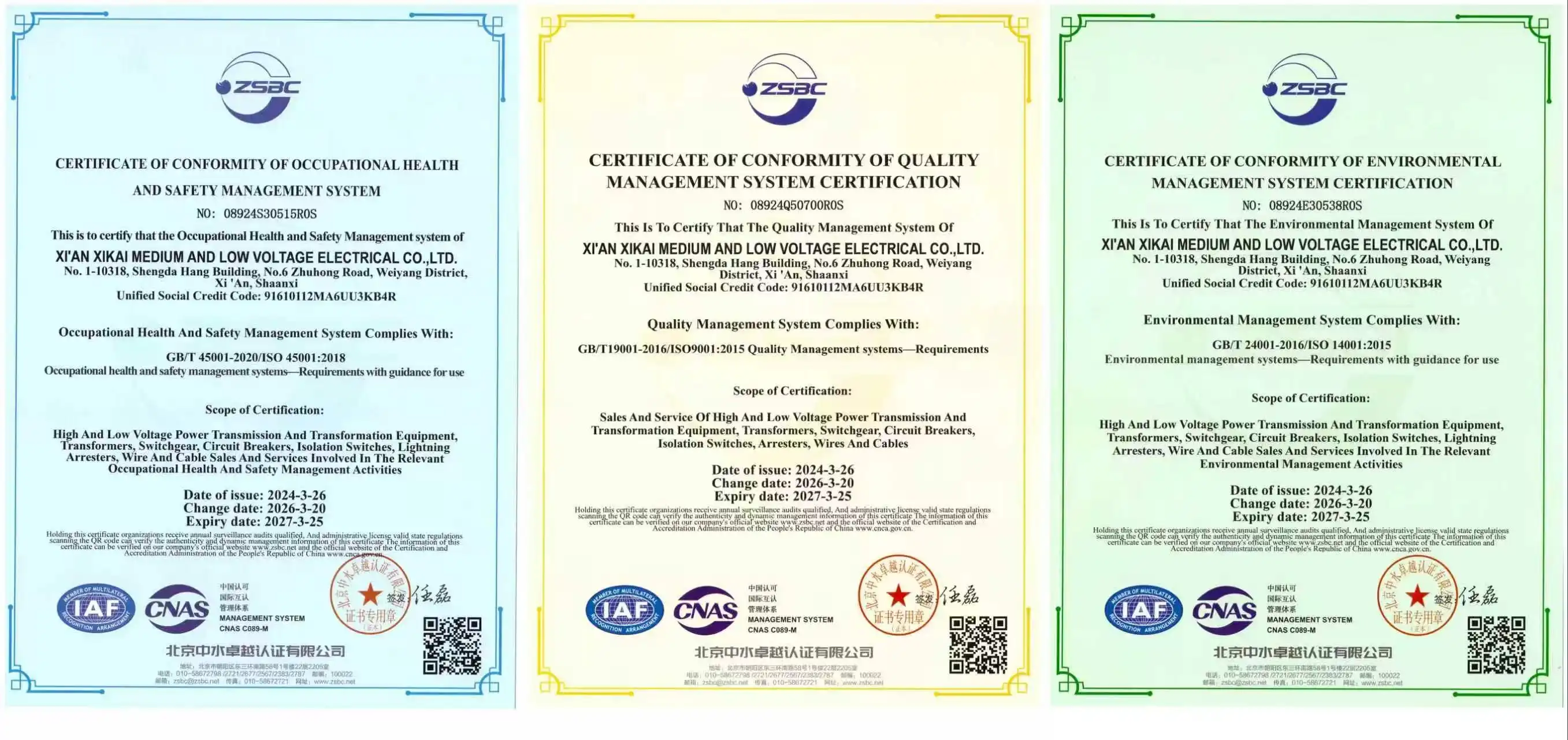
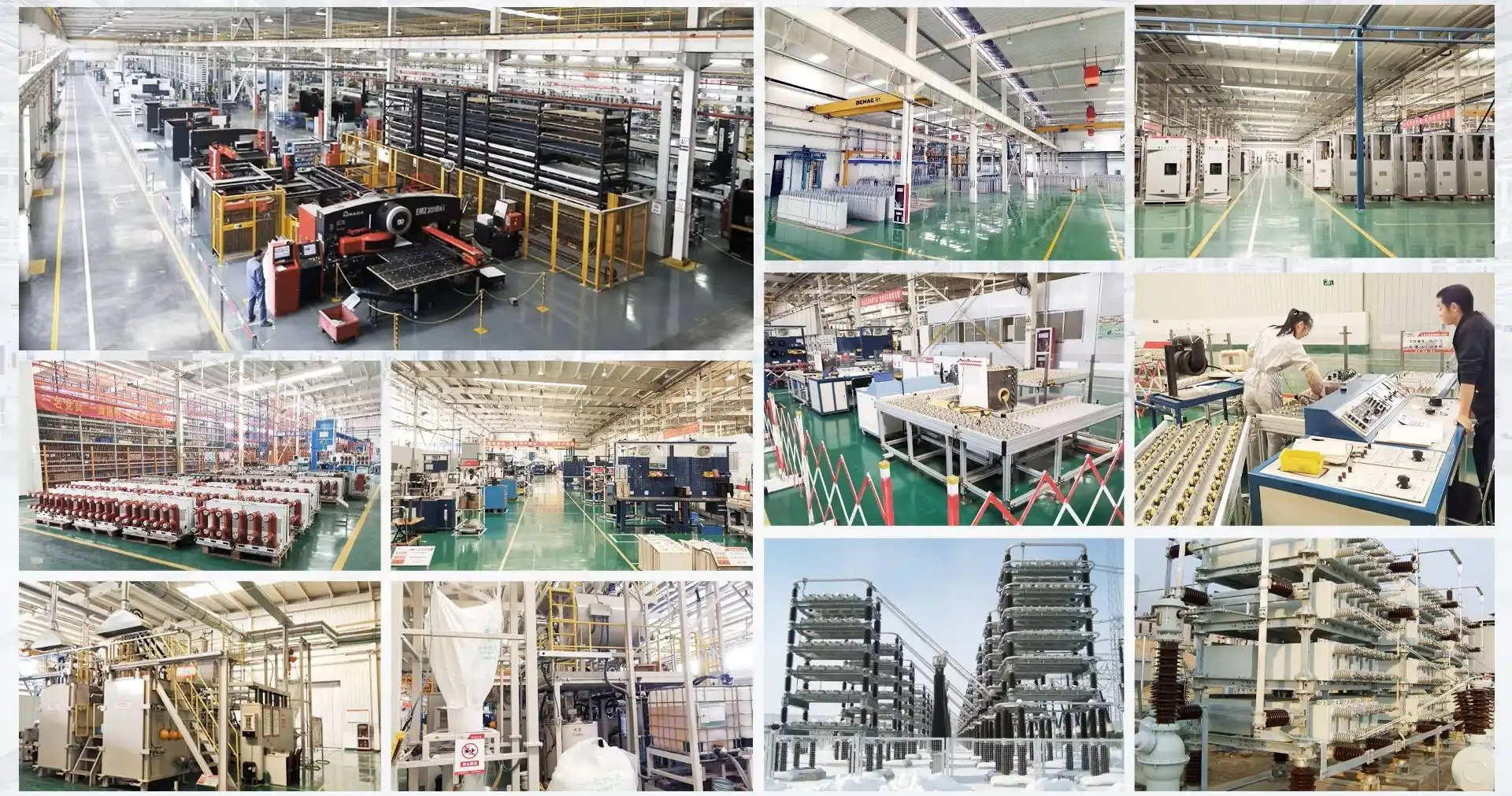
With 18 years of experience in medium-voltage protection, Xi'an Xikai Medium & Low Voltage Electric Co., Ltd. offers BGH series Vacuum Circuit Breakers that fulfill industrial and utility standards. M2-class durability and IP65 environmental protection make our modular spring-operated mechanisms ideal for high-altitude mining and coastal renewable energy projects. Our solutions fit North American and worldwide power systems thanks to IEC 62271-100, ANSI C37.04, and GB/T 1984 certifications. We help procurement teams with specification review, customizable engineering, 6-8 week delivery dates, and local technical assistance. Contact our applications engineers at serina@xaxd-electric.com, amber@xaxd-electric.com, or luna@xaxd-electric.com to discuss your requirements with a trusted supplier devoted to operational excellence and prompt after-sales support.
References
1. IEEE Standard C37.04-2018, IEEE Standard for Ratings and Requirements for AC High-Voltage Circuit Breakers with Rated Maximum Voltage Above 1000V, Institute of Electrical and Electronics Engineers, New York, 2018.
2. Slade, P.G., The Vacuum Interrupter: Theory, Design, and Application, CRC Press, Boca Raton, 2017.
3. IEC 62271-100:2021, High-voltage switchgear and controlgear – Part 100: Alternating current circuit-breakers, International Electrotechnical Commission, Geneva, 2021.
4. Garzon, R.D., High Voltage Circuit Breakers: Design and Applications, Second Edition, Marcel Dekker, New York, 2002.
5. Das, J.C., Power System Analysis: Short-Circuit Load Flow and Harmonics, Second Edition, CRC Press, Boca Raton, 2011.
6. Ryan, H.M., High Voltage Engineering and Testing, Third Edition, Institution of Engineering and Technology, London, 2013.
_1774319679257.png)