What is a Vacuum Circuit Breaker and How Does it Work in Electrical Systems
2026-07-31 15:20:20
A vacuum circuit breaker is a protective switching device that interrupts electrical current by extinguishing the arc produced during circuit opening within a sealed vacuum chamber. This technology operates on the principle that a vacuum provides superior dielectric strength and rapid arc extinction, making it highly effective for medium-voltage applications ranging from 12kV to 40.5kV. The absence of air or other gases within the interruption chamber eliminates oxidation and ionization, allowing contacts to separate cleanly and quickly during fault conditions, thereby protecting critical infrastructure from damage.


Understanding Vacuum Circuit Breakers: Definition and Working Principle
What Makes Vacuum Technology Essential for Circuit Protection
Electrical safety systems have come a long way thanks to vacuum interruption technology. When there is a fault and the contacts in a vacuum interrupter separate, a metal vapor arc forms in a space with no air. This confinement stops the arc from continuing because electrons cannot easily move through empty space after the AC cycle's current drops to zero. As a result, interruptions happen very quickly—usually within 50 milliseconds—which keeps equipment from being stressed out and possibly damaged.
Core Operating Principle Explained
The basic idea behind how it works is based on the vacuum's special insulating properties. Air molecules can ionize and keep electrical arcs going at normal atmospheric pressure. But because there aren't many molecules in a vacuum with pressures below 10^-4 torr, ionization cannot happen. An arc is made when the moving contact breaks away from the fixed contact during a trip action. The contact material is vaporized. This metallic vapor quickly spreads out and condenses on shields around it. Once the current stops, the vacuum quickly returns to its shielding state, stopping re-strike.
How VCBs Compare to Alternative Technologies
Vacuum technology is better for small designs than air circuit breakers, which use mechanical arc chutes and need bigger footprints. Even though SF6 gas breakers work well at higher voltages, they are bad for the environment because they release greenhouse gases. Breakers that are filled with oil can catch fire and need to be checked for oil regularly. The vacuum method gets rid of these problems by keeping the arc interruption inside a protected, neutral-environment box that doesn't need much upkeep over its lifetime.
Key Components and Operation Mechanism of Vacuum Circuit Breakers
Essential Structural Elements
Facility managers and buying experts can respect how reliable these devices are by understanding how they are put together. The vacuum interrupter is the system's heart. It is a ceramic or glass envelope that keeps out air and contains fixed and moving contacts made of special copper-chromium alloys. Under arc conditions, these materials resist welding, but they have low contact resistance when they are not being used.
The operating mechanism of the vacuum circuit breaker, which is usually powered by a spring or a magnetic actuator, gives the contacts the force they need to quickly separate when the trip command is sent. When charged by hand or by a motor, spring mechanisms store energy. They instantly release it when safety switches identify overcurrent, short circuits, or other fault conditions. Position indicators, extra switches, and interlocking mechanisms are all used in modern designs to make sure they work safely and stop them from turning on by accident.
Step-by-Step Current Interruption Process
When everything is working normally, contacts that are closed let current flow through the circuit with little resistance heating. As soon as there is a problem and the protection system sends out a trip signal, the operating mechanism's stored energy quickly moves the moving contact away from the fixed contact. As the contacts move apart, an arc forms in the vapor of the contact material that has evaporated.
Because there is no air around, this arc cannot grow or stay in place past the natural current zero point of the AC waveform. The vacuum gap regains its full dielectric strength very quickly after the current stops. It can often reach 100kV across just a few millimeters of space. Because it recovers so quickly, vacuum interruption is very stable over many operations; the mechanical life rate is over 10,000 operations under load conditions.
Maintenance Considerations for Long-Term Reliability
One big benefit for manufacturing sites and utility companies is that they don't have to do as much upkeep. Vacuum interrupters are protected units that do not need to have their arc chutes, oil quality, or gas pressure checked on a daily basis, while oil or air breakers do. As part of maintenance, the running mechanism is checked on a regular basis to make sure the spring tension is correct, the pivot points are oiled, and the electrical connections are working properly. Over thousands of actions, the contacts wear down slowly, and since the interrupter is protected, dust or moisture from the outside cannot affect its performance. This means that critical power distribution systems will have lower lifecycle costs and more uptime.
Vacuum Circuit Breaker vs. Other Circuit Breakers: Making Informed Procurement Decisions
Performance and Reliability Comparison
Knowing the differences in performance helps you choose the best safety tools for substations or industrial plants. Vacuum technology works best in medium-voltage (12kV to 40.5kV) situations because it has a higher breaking ability compared to its size. Air circuit breakers are usually used for low-voltage tasks up to 6.6kV. At higher voltages, their bigger arc chutes become useless. Ultra-high-voltage transmission (above 72.5kV) is mostly done with SF6 breakers, but they require gas tracking and could cause leaks.
Breakers that are filled with oil, which are common in older installations, can catch fire and damage the environment when the mineral oil breaks down. Molded case circuit breakers (MCCBs) work well for low-voltage building distribution but aren't strong enough to stop industrial motor feeders or utility distribution networks. Vacuum technology is both small enough to fit in switchgear that doesn't have a lot of room and strong enough to stop fault currents over 25kA over and over again without breaking down.
Environmental Impact and Safety Considerations
Regulatory forces are pushing technologies with small environmental impacts more and more. Since vacuum interrupters don't have any greenhouse gases in them, utilities don't have to report or contain SF6 as they do with gas-insulated equipment. Since there is no flammable insulation, there is no need for a fire control system. This makes installation easier and lowers the cost of insurance.
Maintenance workers can also benefit from safety. Service work is less dangerous because you don't have to deal with pressurized gas or poisonous leftovers from the arc. The sealed interrupter design keeps you safe from high-energy sparks while switching, and the small size of the construction cuts down on the mechanical risks that come with bigger breaker frames.
Cost Analysis and Lifecycle Value
When it comes to voltage levels, the initial prices of vacuum circuit breaker technology are about the same as those of air breakers and SF6 units. The total cost of ownership estimate, on the other hand, highly supports vacuum designs. Compared to other technologies, yearly maintenance costs drop by 40 to 60 percent when oil changes, gas refills, and arc chute repairs are not needed. Longer contact life and mechanical endurance mean that replacement intervals are 15 to 20 years for typical industrial duty cycles. This delays the need to reinvest in capital and reduces the amount of downtime caused by equipment upgrades.
Advantages, Applications, and Troubleshooting of Vacuum Circuit Breakers
Core Technical Advantages
The engineering benefits of vacuum interruption directly translate to operational benefits for people who run facilities and utilities. A device rated at 12kV takes up about half as much space as a similar air breaker because it has a high dielectric strength. This lets more equipment fit into substations and switchgear rooms. The fast arc extinction reduces the amount of energy lost during interruption, which lowers the thermal stress on nearby parts and increases the life of the busbar.
Low upkeep needs have a direct effect on service. When factories have three shifts, they cannot afford to have unplanned power outages for breaker maintenance. The sealed interrupter design gets rid of the need for regular checks on internal parts. This means that planned maintenance can work with plant shutdown times instead of being forced to fit them. Because they don't make the loud explosions that come with air-blast arc extinction, these devices can be used in hospital electrical rooms and business buildings where noise bothers people who live or work there.
As sustainability goals get stricter, environmental credentials become more and more important in purchasing decisions. The lack of SF6 gas is in line with companies' goals to cut carbon emissions, and the lack of oil removes the risk of soil pollution in places that are good for the environment, like water treatment plants or protected watersheds.
Real-World Industrial Applications
Because of these features, vacuum technology is perfect for a wide range of industries. To keep servers running, data centers need to be completely reliable. Vacuum breakers clear faults quickly enough to stop voltage drops from spreading to backup power systems. Failures of safety equipment that could stop life-support systems from working cannot happen in hospitals. Vacuum interrupters meet these strict standards because they have a history of long mechanical life and a low failure rate.
There are special problems that come up in manufacturing settings. Induction furnaces used in metal fabrication plants cause harmonics and voltage transients that put stress on protective equipment. To keep standards tight, CNC cutting centers need power that is stable. The strong design and ability to handle arcs of vacuum technology make it able to handle these rough electrical conditions. It also provides precise overload protection that stops annoying trips during motor starting surges.
Utility distribution networks benefit from vacuum breakers' ability to handle capacitor bank switching without re-strike damage, their ability to work in coastal or industrial settings where corrosion can be a problem, and their suitability for automated reclosing schemes after transient faults. The small size means that current substations can be updated without having to add on to them.
Common Issues and Troubleshooting Guidance
Even when maintenance is kept to a minimum, operational problems can still happen. Most of the time, failure to close is caused by working springs that are drained or control voltage dropping below the pickup level. To figure out what's wrong, check the spring charging motor circuit and measure the control power at the closing coil terminals. Lack of lubrication at pivot points causes mechanical binding that makes operation less smooth. Using lubricants recommended by the manufacturer on joints that can be reached fixes the problem.
Checking for contact wear means keeping track of how many processes are happening and stopping duty. Most companies make counts and contact wear markers. When the collected breaking current gets close to the rating endurance limits, the scheduling interrupter replaces itself to avoid breakdowns that were not expected. During normal service life, vacuum integrity rarely gets compromised, but physical damage from outside hits can break the envelope. Cracks or discoloration that show vacuum loss can be found through regular eye inspection.
Procurement Insights: How to Choose and Where to Buy Vacuum Circuit Breakers
Critical Selection Parameters
To choose the right protection equipment, you need to match the technical requirements with the needs of the application. Voltage rating must match system nominal voltage. For example, a device rated at 12kV can work with systems that have a phase-to-phase voltage of 13.8kV, taking into account normal voltage differences. To keep thermal aging from happening from constant overload, the current rate should be 25–30% higher than the standard load current.
The breaking capacity of a gadget tells you the largest fault current it can safely stop. Usually, utility distribution substations need interrupting ratings of 25–31.5kA. On the other hand, industrial plant feeders may only need 12.5–20kA, depending on how much fault current is available at the installation point. System impedance analysis is used to figure out fault levels and make sure that there is enough protection without over-specifying and driving up costs.
Ratings for mechanical and electrical endurance show how long something should work. Class M2 mechanical longevity (10,000 operations) is good for industrial settings where switching happens a lot, while Class M1 (2,000 operations) is good for utility settings where action doesn't happen very often. Electrical endurance ratings tell you how much total breaking current the contacts can stop before they need to be replaced. Matching these ratings to the expected duty cycles keeps the contacts from failing before they should.
Partnering with Reputable Manufacturers
How reliable an item is depends a lot on how well it was made and how long it has been around. Well-known brands like Siemens, ABB, and Schneider Electric have been in the business for decades and have a lot of testing centers. Their high prices mirror their reputation. Regional makers, especially those that focus on certain markets, can meet international standards and give reasonable prices.
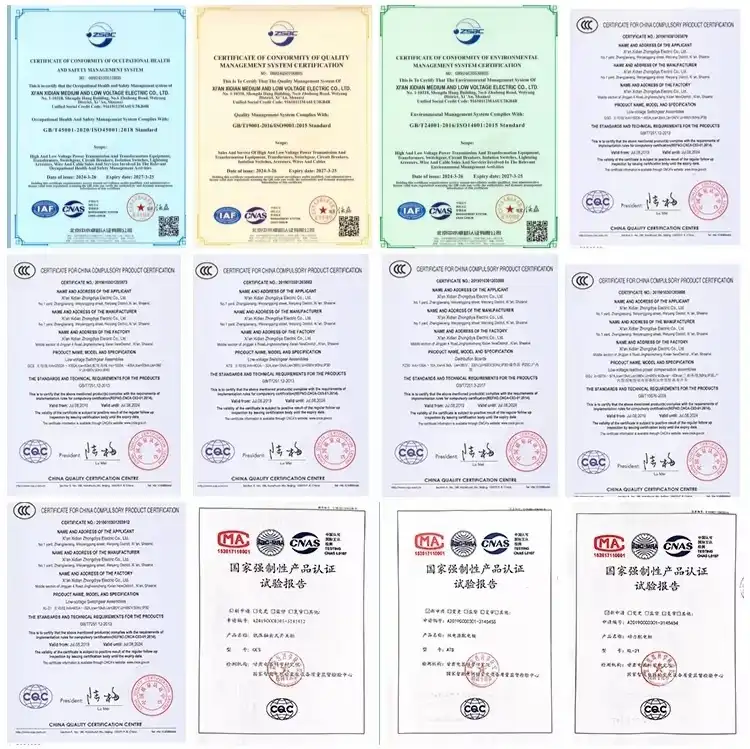
When looking at possible suppliers, looking at their certifications is a good way to get objective quality assurance. International interoperability is guaranteed by IEC 62271-100 compliance, and fitness for North American use is proven by IEEE C37.04 approval. Type-test results from accredited labs back up performance claims, and ISO 9001 manufacturing certification shows that production processes are consistent.
Introducing the ZW32-40.5 Solution
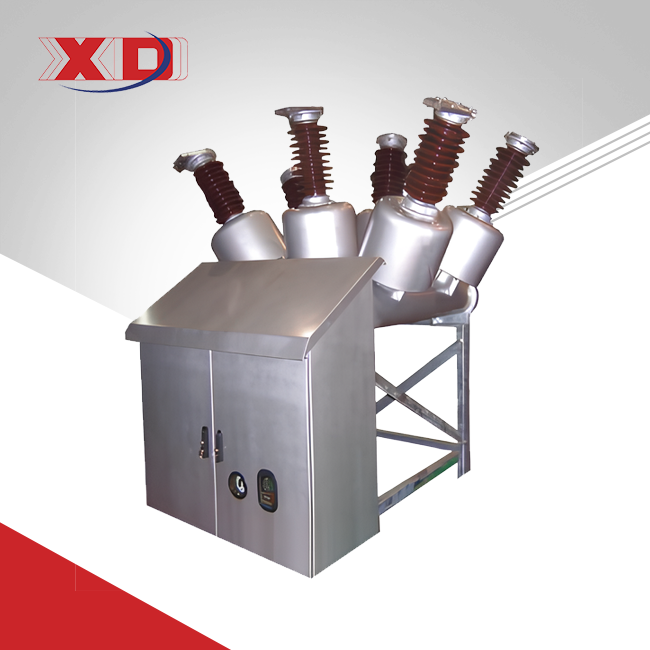
The ZW32-40.5 vacuum circuit breaker from Xi'an Xikai is a modern example of medium-voltage safety that works well in both industry and utility settings. This device can handle the needs of outdoor distribution substations and industrial switchyards. It has a 12kV rating, a continuous current capacity of 630A, and a frequency of 50Hz. The small size includes a strong steel case that meets IP67 standards for water protection. This makes sure that it works well in difficult conditions ranging from -40°C to +60°C.
Strong fault protection for distribution lines is provided by breaking capacities above 25kA, and the option to add integrated isolation switches lowers the switchgear's footprint by combining two functions into a single frame. The spring-operated device interrupts quickly and can be handled by hand or from a distance, meeting the needs of modern technology. This platform meets the reliability needs of demanding infrastructure applications with a mechanical endurance rating of more than 10,000 operations and certification that it meets IEC 62271-100 and IEEE C37.04 standards.
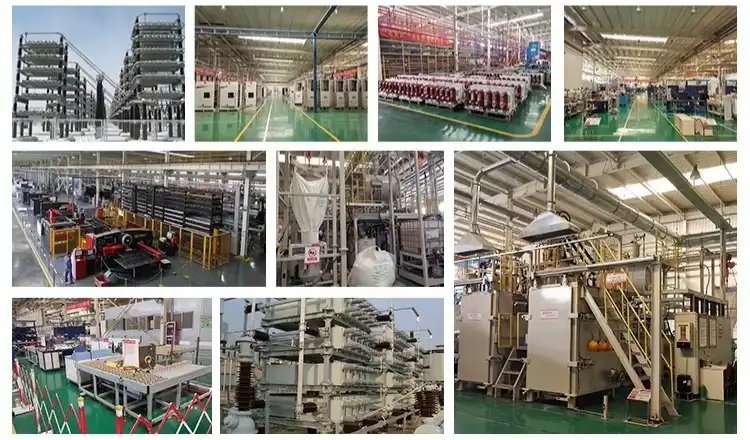
Xi'an Xikai's strict manufacturing process includes 23-point testing protocols that check the dielectric strength at 80kV for one minute, the mechanical endurance across full lifecycle operation counts, and the environmental stress validation across the full temperature range. This method to quality control, which is backed by ISO 9001 certification and strengthened by vertical integration of key parts like contacts and working mechanisms, makes sure that the products are consistent from batch to batch and will work well in the field for a long time.
Logistics and After-Sales Support Considerations
Besides technical details, practical buying factors also affect the overall success of the project. Lead times vary a lot. Catalogue items may ship within 4 to 6 weeks, but custom configurations with special finishes or control interfaces can take 10 to 14 weeks. Ordering tools around the plan for building a project keeps expensive installation delays from happening.
The warranty terms should be carefully read. Standard coverage usually lasts for 18 to 24 months after the product is commissioned or 24 to 30 months after it is shipped, whichever comes first. Options for longer warranties protect against failures that happen out of the blue during important project stages. How quickly problems are fixed depends on the infrastructure for after-sales support, such as the supply of spare parts, field service techs, and technical hotlines. Suppliers with established delivery networks in the project area lower the risk of failure.
Conclusion
For medium-voltage power distribution in the utility, commercial, and industrial sectors, vacuum interruption technology offers clear benefits. This technology is the best choice for modern electrical infrastructure because it is small, doesn't need much upkeep, is safe for the environment, and can reliably stop power. Understanding how different technologies work, how their parts interact, and the performance trade-offs that come with them helps procurement teams and facility operators choose equipment that meets changing regulatory requirements, maximizes uptime, and keeps costs low over its lifetime. The dependability of vacuum circuit breakers makes them essential parts of grid modernization and factory efficiency gains as electrical systems become more complicated with the addition of renewable energy and automation.
FAQ
1. How often do vacuum circuit breakers require maintenance?
Usually, routine maintenance is done every three to five years or every 2,000 operations, whichever comes first. The working mechanism is the main focus of maintenance tasks like checking the tightness of the springs, lubricating the mechanical parts, and making sure the electrical links have the right amount of torque. The sealed vacuum interrupter doesn't need any internal maintenance, but during mechanism service, it should be looked at visually for any damage. This plan is very different from oil breakers, which need to be tested for oil once a year, or SF6 units, which need to have their gas pressure checked every other year.
2. Can existing air circuit breakers be retrofitted with vacuum technology?
Retrofitting depends on how the switchgear is set up and how big it is. Most of the time, vacuum replacements intended to meet current ANSI or IEC standards can be used in metal-clad switchgear with drawout breakers. This keeps the mounting hole patterns and primary/secondary connection locations. For fixed-mount setups, the panel may need to be changed. Talking to equipment manufacturers with experience with retrofits makes sure that the two systems will work together and helps you figure out what changes need to be made before you buy.
3. What environmental benefits do vacuum circuit breakers provide compared to SF6 alternatives?
Using vacuum technology gets rid of all SF6 gas, which means no more greenhouse gas releases 23,500 times stronger than CO2. This gets rid of the need to track SF6 and report leaks, which makes regulatory compliance easier. Also, getting rid of the interrupter at the end of its useful life is easy because it is made of metal and ceramic materials that can be recycled using normal industrial methods. This means that you don't have to deal with the special dangerous waste handling rules that come with contaminated insulating oils or captured SF6.
Partner with Xi'an Xikai for Your Vacuum Circuit Breaker Needs
Xi'an Xikai Medium & Low Voltage Electric Co., Ltd. is ready to help you with your power distribution projects by providing you with reliable vacuum circuit breaker solutions that are made to handle tough situations. Our ZW32-40.5 platform is built to last and uses tried-and-true vacuum interruption technology. It is ideal for use in utility substations, industrial plants, and business buildings. As one of the leading companies that makes vacuum circuit breakers for the North American market, we offer full support from the original design phase through commissioning and service throughout the product's life. Talk to our technical team at serina@xaxd-electric.com, amber@xaxd-electric.com, or luna@xaxd-electric.com about your specific voltage, current, and environmental needs. We'll suggest the best configurations and give you competitive quotes, backed by our quality certifications and proven reliability in the field.
References
1. IEEE Standard C37.04-2018, IEEE Standard for Ratings and Requirements for AC High-Voltage Circuit Breakers with Rated Maximum Voltage Above 1000V, Institute of Electrical and Electronics Engineers, New York, 2018.
2. IEC 62271-100:2021, High-voltage switchgear and controlgear – Part 100: Alternating current circuit-breakers, International Electrotechnical Commission, Geneva, 2021.
3. Greenwood, Allan N., Vacuum Switchgear, Institution of Engineering and Technology, London, 2007.
4. Slade, Paul G., The Vacuum Interrupter: Theory, Design, and Application, CRC Press, Boca Raton, 2017.
5. Smeets, René P.P., and van der Sluis, Lou, Switching in Electrical Transmission and Distribution Systems, John Wiley & Sons, Chichester, 2015.
6. akanishi, Koji, Switching Phenomena in High-Voltage Circuit Breakers, Marcel Dekker, New York, 1991.