What is Indoor High Voltage Switchgear and Its Importance?
2026-02-26 16:01:55
Indoor high voltage switchgear is a vital electrical control system for industrial and commercial power distribution. In environments above 1kV, this equipment protects electrical circuits, controls power flow, and ensures operational safety. This technology ensures power supply and protects equipment and personnel from electrical faults. Modern industry relies on reliable electrical infrastructure. Manufacturing facilities lose thousands per minute due to power outages, while hospitals risk patient safety. These realities demonstrate why facility operators in various industries must understand and implement proper switchgear solutions.
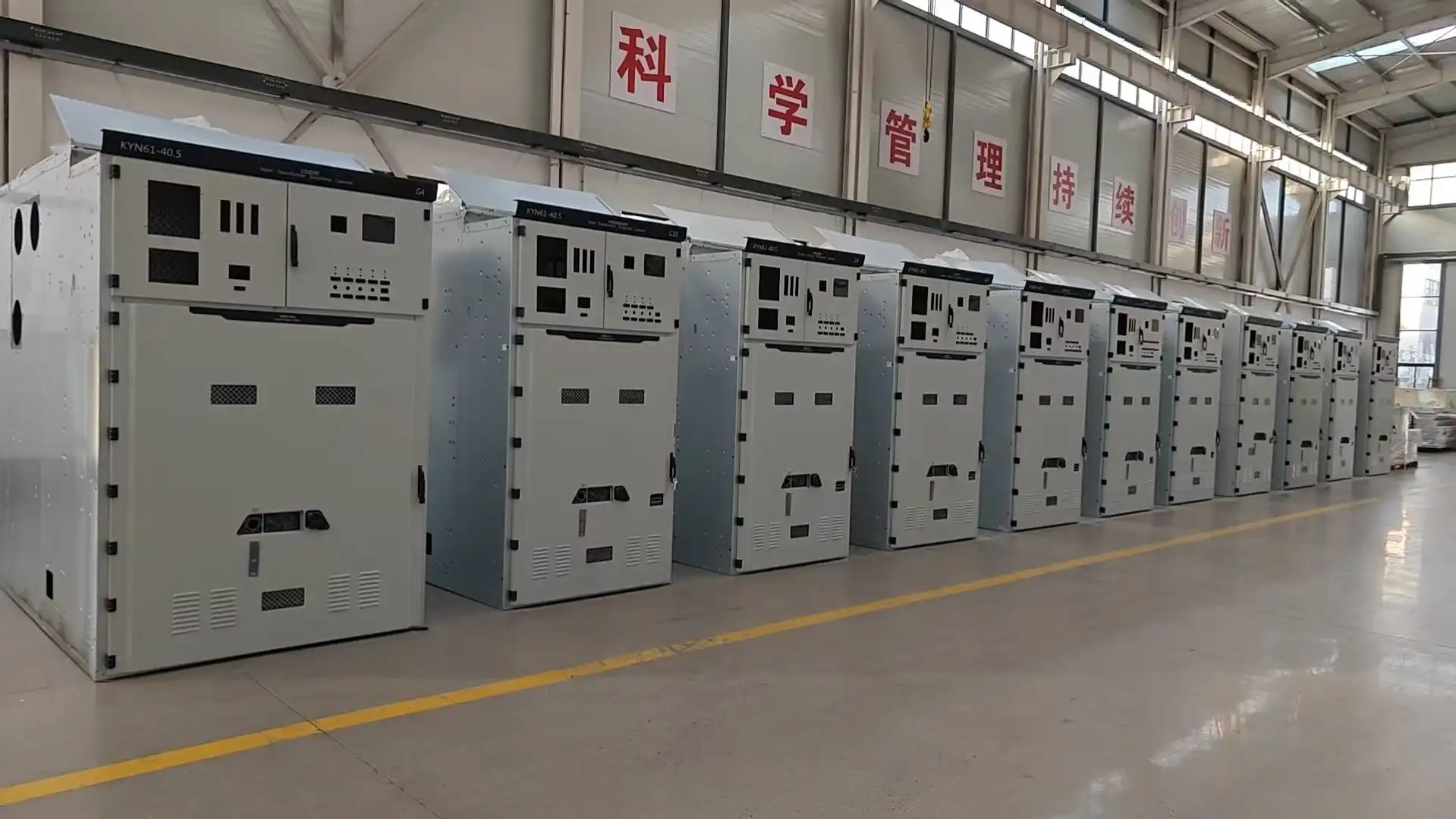
What is Indoor High Voltage Switchgear?
Key Parts and Function
Indoor high voltage switchgear houses multiple components in a protected enclosure and controls electrical distribution systems. The system operates at 3.3kV to 36kV, making it suitable for medium voltage industrial applications. The basic design has several complementary elements. The main interruption devices, circuit breakers, safely break fault currents. Busbars are the system's main current-carrying conductors. Insulation prevents live components from touching grounded surfaces, ensuring safety.
Protection and Fault Management
Modern switchgear frequently has sophisticated protection relays that continuously monitor system parameters. Overcurrent, undervoltage, and frequency deviations are detected by these devices. The protection system immediately isolates faulted areas while maintaining power to unaffected sections.
Safety Features and Mechanical Protection
The metal enclosure protects mechanically and environmentally. This housing protects internal components from dust, moisture, and other environmental factors that could affect performance. Advanced designs' arc-resistant features direct fault energy away from operating areas, improving worker safety.
Ability to Control and Monitor
Operators can remotely monitor system status and switch operations using switchgear control panels. Current, voltage, and equipment status are displayed in real time on these interfaces. Communication with building management systems or SCADA networks is common in modern units.
The Critical Problems Indoor High Voltage Switchgear Solves
Operations and Power Quality Risks
Large facilities' electrical distribution issues pose operational risks that require sophisticated solutions. Power quality issues strain sensitive equipment, and unplanned outages disrupt production and profitability. With comprehensive system protection and control, indoor high voltage switchgear addresses these concerns.
Protecting and Monitoring Equipment
Equipment protection is switchgear's main function. CNC machines and automated production lines need stable power. Harmonic distortions and voltage fluctuations can damage sensitive electronic components, causing costly repairs and downtime. Current and voltage transformers in switchgear monitor power quality.
Detect and isolate faults
Fault detection and isolation prevent minor electrical issues from becoming system failures. Protection relays assess short circuit and ground fault characteristics to determine response strategies. The system isolates damaged circuits in milliseconds, preventing damage and maintaining power to unaffected areas.
Manage and optimize loads
As facilities use more electricity, load management becomes more important. Operators can dynamically redistribute loads with switchgear systems to optimize power use across operational areas. This is especially useful during peak demand or when equipment needs more power to start.
Arc Flash Mitigation and Safety
Proper switchgear implementation is required by NFPA 70 safety codes. Maintenance workers can be seriously injured or killed by arc flashes. Modern switchgear has arc extinguishers and remote monitoring to reduce maintenance worker exposure.
Supporting Grid Stability
Grid stability support helps utilities deliver power reliably to all customers. As renewable energy sources increase, grid operators face intermittent generation and voltage regulation issues. Smart monitoring switchgear systems give utilities real-time feedback to optimize grid performance.
Core Features and Functionality Deep Dive
Circuit Breaker Technology
Switchgear systems depend on circuit breaker technology, with vacuum circuit breakers being the standard for indoor applications. These devices extinguish electrical arcs during interruptions with vacuum interrupters. The vacuum environment eliminates oil or gas insulation, reducing maintenance and improving environmental compatibility. Modern vacuum breakers can interrupt fault currents over 40kA for thousands of switching cycles.
Configuring Busbars
Busbar configurations control switchgear power flow. Single busbar configurations are cost-effective for smaller installations, while double busbar configurations improve reliability with redundant current paths. Sectionalizing busbars allow operators to isolate areas for maintenance without affecting system operation.
Coordinating Insulation
Insulation coordination ensures system safety at all voltage levels. Insulation materials and live component-ground surface clearances must be chosen carefully. Modern switchgear uses polymer materials that outperform porcelain insulators. These materials resist tracking and erosion and maintain dielectric properties across temperatures.
Relay Protection Systems
Protection relay systems have evolved from electromechanical devices to digital platforms with complex analysis functions. Microprocessor-based relays simultaneously monitor current, voltage, frequency, and power flow directions. These devices use advanced algorithms to distinguish temporary disturbances from permanent faults, reducing interruptions and protecting the system.
Control Panel Integration
Operators have full system visibility and control with control panel integration. Human-machine interfaces show real-time system parameters in intuitive graphics. Alarm management systems prioritize events by severity, letting operators focus on critical issues. Remote monitoring lets facility managers check system status from anywhere, speeding emergency response.
Earthing System Design
Earthing system design protects people and equipment during faults. Grounding maintains safe step and touch potentials in operating areas while providing a low-impedance fault current path. Modern switchgear supports solidly grounded and high-resistance grounded systems with sophisticated earthing arrangements.
Advanced Technology Integration and Smart Grid Readiness
Smart Grid Integration
Intelligent electrical infrastructure has expanded switchgear capabilities beyond switching and protection. Smart grid integration allows switchgear systems and central control facilities to communicate, optimizing system operation and predictive maintenance.
IoT Connectivity
Switchgear components can continuously send operational data to cloud-based analytics platforms via IoT. This data includes critical connection thermal measurements, circuit breaker contact wear indicators, and insulation condition assessments. Maintenance teams can schedule interventions before equipment failures by using machine learning algorithms to identify patterns.
Monitoring Systems Remote
Remote monitoring systems assess equipment condition without physical inspection using sensor technologies. Partial discharge sensors detect early insulation degradation, while temperature sensors monitor critical connection points. Before equipment failure, motorized component vibration sensors can detect bearing wear and mechanical looseness.
Protocols for communication
Switchgear and facility automation platforms integrate seamlessly using IEC 61850 communication protocols. The standardization allows equipment from different manufacturers to efficiently share information, reducing integration complexity and improving system interoperability. The protocol supports horizontal and vertical communication between protection devices and central control systems.
Concerns about cybersecurity
As switchgear systems become networked, cybersecurity becomes more important. Modern designs use encrypted communication, authentication, and network segmentation. These measures safeguard critical infrastructure from cyberattacks while maintaining operations.
Key Advantages and Competitive Benefits
Spatial Efficiency
Indoor high voltage switchgear is ideal for demanding electrical distribution applications due to its many benefits. Indoor installations benefit from space efficiency, especially in urban areas with high real estate costs. Indoor switchgear is compact but as functional as outdoor installations. The compact design integrates into existing buildings without switchyards.
Protection of Environment
Environmental protection guarantees reliable operation in all weather. The enclosed design shields critical components from rain, snow, dust, and other environmental factors that could affect performance. This prevents weather-related outages and reduces maintenance compared to outdoor installations.
Maintenance Access
Maintenance accessibility improves with ergonomic design that prioritizes technician safety and efficiency. Clear access paths and safe clearances from energized equipment are provided by component arrangement. Modular design and removable panels allow component replacement without system shutdown.
Flexibility in Operations
System reconfiguration can meet changing facility needs due to operational flexibility. Modular designs allow adding circuit positions without major reconstruction. Scalability protects initial investments and allows operations to grow.
Fire Safety Features
Flame-retardant and arc-resistant materials reduce fire risks. Advanced switchgear uses high-temperature materials and fire suppression systems. These features help facilities protect assets and maintain insurance coverage.
Noise Levels
Indoor switchgear can be installed in occupied buildings because its normal sound level is below 45dB. Switchgear can be placed near offices and other noise-sensitive areas without disturbing them due to its acoustics.
Considerations and Implementation Challenges
Startup Costs
Indoor high voltage switchgear has many benefits, but its implementation requires careful consideration of factors that could affect system performance and project success. Indoor switchgear requires careful financial analysis to justify high initial investment costs. Lifecycle cost analysis often shows favorable economics due to reduced maintenance, improved reliability, and operational flexibility. Advanced switchgear technology offsets higher upfront costs with long-term value.
Space Needed
Space must accommodate switchgear equipment and operation and maintenance clearances. Proper ventilation maintains electronic component ambient temperatures by dissipating heat. These requirements may require building modifications or electrical rooms in some installations.
Technical Skills Needed
Facility staff may lack technical expertise for operation and maintenance. Modern switchgear systems require specialized knowledge to use their protection and control functions. These knowledge gaps are filled by training and equipment supplier support.
Integration Issues
New switchgear integration into electrical systems is difficult. Compatibility issues between protection philosophies or communication protocols may require additional engineering. Thorough design coordination helps identify and resolve these issues before installation.
Compliance with regulations
Regulatory compliance involves local and application-specific codes and standards. Early requirement understanding prevents costly redesigns later in project development. Experienced engineering firms familiar with local regulations ensure compliant installations.
Competitive Landscape and Technology Comparison
Classic Air-Insulated Switchgear
The indoor high voltage switchgear market has several established manufacturers with different technologies and features. Traditional air-insulated switchgear (AIS) uses atmospheric air as insulation, requiring larger dimensions to maintain safe clearances between energized components. These systems are reliable and easy to maintain, so facility operators prefer them. However, space-constrained installations may be limited by the larger footprint.
Gas-insulated switchgear
Gas-insulated switchgear (GIS) uses SF6 gas for insulation and arc extinguishing, making it more compact than air-insulated options. SF6's superior dielectric properties allow for significant size reduction without compromising electrical performance. Environmental concerns about SF6 emissions have spurred development of alternative insulating gases.
Solid Insulation Tech
Solid insulation technologies may replace gaseous insulation. These compact designs use advanced polymer materials and vacuum technology to avoid SF6 gas's environmental impacts. Field experience with these newer technologies is limited compared to conventional methods.
Digital Integration Skills
Digital integration capabilities vary widely by manufacturer and product line. Some manufacturers emphasize basic switching and protection, while others emphasize advanced monitoring and communication. Digital integration impacts initial costs and long-term operations.
Integrative vs. Modular Design
Different switchgear construction methods use modular or integrated design. Individual component replacement in modular systems may reduce maintenance costs and improve availability. Integrated designs may optimize performance but require more maintenance.
Target Applications and Ideal Use Cases
Manufacturing Facilities
Indoor high voltage switchgear is used in many industries, each with unique requirements that affect equipment selection and configuration. Power distribution is essential for manufacturing facilities to meet production schedules and protect expensive automation equipment. Motor startup applications require switchgear with high inrush currents and precise acceleration profile control. Variable frequency drives and other power electronics in modern manufacturing can cause harmonic distortions that require special filtering and protection.
The Data Center
Data centers are sensitive applications where power outages can cost money and disrupt services. These facilities need multiple redundancies and fast fault clearing to avoid equipment damage. To maintain operation during utility outages, UPS and emergency generators must integrate seamlessly with switchgear systems.
Health Care Facilities
Healthcare facilities face unique life safety and regulatory compliance challenges. Emergency power systems must activate within seconds of utility failures in critical care areas. Electrically sensitive medical equipment needs clean power with low voltage fluctuations. Healthcare switchgear must support multiple power sources and isolate normal and emergency circuits.
Commercial Buildings
Switchgear systems distribute power efficiently across large floors in commercial buildings and allow tenant modifications. Load break switches isolate maintenance areas without disturbing building occupants. Building operators can optimize power consumption and lower utility costs with energy management.
Utility Substations
Utility substations use switchgear for grid monitoring and control to maintain system stability across large areas. They need communication interfaces for remote operation from central dispatch centers. Protection coordination between switchgear installations minimizes fault outages through selective operation.
Conclusion
Indoor high voltage switchgear evolves to meet complex electrical distribution needs in diverse industrial applications. These passive protection devices become active grid management tools that optimize performance and reduce operational costs with smart monitoring and communication technologies. Eliminating SF6 gas and improving system component recycling will likely be future priorities. Predictive maintenance with digital twins and AI will improve system reliability and lower lifecycle costs. Indoor high voltage switchgear will continue to ensure safe, reliable power distribution as electrical infrastructure becomes increasingly critical to modern operations.
Frequently Asked Questions
Q1: What voltage levels are considered high voltage in switchgear applications?
A: Most indoor high voltage switchgear operates at 3.3kV to 36kV. Facility needs and utility supply determine voltage.
Q2: How often does indoor high voltage switchgear require maintenance?
A: Most modern vacuum circuit breakers only need annual inspections and major overhauls every 10-15 years. Condition-based maintenance recommendations from smart monitoring systems extend these intervals.
Q3: Can existing electrical systems be upgraded with new indoor switchgear?
A: Modular designs allow easy retrofitting. Coordination during planning ensures new equipment and infrastructure compatibility.
Ready to Enhance Your Electrical Infrastructure with Xi'an Xidian?
Xi'an Xidian stands as a leading indoor high voltage switchgear manufacturer with proven expertise across diverse industrial applications. Advanced protection systems, intelligent monitoring features, and modular designs that can be tailored to your unique needs are all part of our extensive product portfolio. Get in touch with us at serina@xaxd-electric.com, amber@xaxd-electric.com, or luna@xaxd-electric.com to talk about your project requirements and learn how our creative solutions can lower operating costs and increase the electrical dependability of your facility.
References
1. IEEE Standards Association. "IEEE Standard for Metal-Clad Switchgear." IEEE C37.20.2-2015, Institute of Electrical and Electronics Engineers, 2015.
2. International Electrotechnical Commission. "High-Voltage Switchgear and Controlgear - Part 200: AC Metal-Enclosed Switchgear and Controlgear for Rated Voltages Above 1 kV and Up to and Including 52 kV." IEC 62271-200, IEC Publications, 2021.
3. National Fire Protection Association. "National Electrical Code Handbook." NFPA 70, National Fire Protection Association, 2023.
4. Cigré Working Group B3.17. "Benefits and Practical Applications of High Voltage Gas Insulated Switchgear in Distribution Networks." Technical Brochure 642, International Council on Large Electric Systems, 2016.
5. Electric Power Research Institute. "Switchgear Condition Assessment Guidelines for Medium-Voltage Equipment." EPRI Technical Report 3002005777, Electric Power Research Institute, 2015.
6. International Council on Large Electric Systems. "Medium Voltage Switchgear Partial Discharge Detection and Trending." Cigré Technical Brochure 738, Cigré Publications, 2018.