Why Choose Porcelain housed Lightning Arrester for AC Systems?
2026-08-03 11:50:53
Getting a Porcelain housed Lightning Arrester for your AC system is the best way to protect it from short-term voltage spikes caused by lightning hits and switching operations. The ceramic base design gives it great mechanical strength, better insulation, and a track record of lasting for a long time in tough weather conditions. Procurement managers value these arresters because they combine reliable surge suppression with minimal maintenance demands, directly supporting operational continuity while reducing long-term ownership costs. This decision indicates a strategic investment in grid reliability and equipment safety.


Understanding Porcelain Housed Lightning Arresters in AC Systems
What Is a Porcelain Housed Lightning Arrester?
The first line of defence for AC electrical equipment is a surge arrester with a porcelain case. Before they get to transformers, circuit breakers, or sensitive electronic controls, these devices stop voltage spikes that could be dangerous. Within microseconds, the metal oxide varistor blocks inside react, making a low-resistance path that sends extra energy to ground safely. This quick action stops shielding from breaking down and equipment from breaking down across your power distribution network.
Construction and Material Advantages
The porcelain shell that surrounds the active parts has clear engineering benefits. High-grade ceramic materials resist fracturing under mechanical loads up to 8kN tensile strength, making them suitable for installations exposed to wind, ice accumulation, and seismic activity. The glazed surface quickly gets rid of moisture and keeps its insulating properties even after decades of being outside. Internal closing systems employ helium leak detection during manufacturing to prevent moisture entry that could compromise electrical performance.
How Surge Protection Works in AC Networks?
When lightning injects thousands of amperes into your distribution lines, the metal oxide blocks within the arrester quickly lower their resistance. This stopping action keeps voltage building at safe levels, which for high-capacity models is usually below 562kV residual voltage. The varistor automatically goes back to its high-impedance state after the surge is over, so regular AC current flow can restart without any problems. This ability to reset itself means that no manual actions are needed after each event.
Technical Specifications That Matter
When evaluating options, procurement professionals should pay attention to a number of important factors. The rated voltage tells you how much continuous AC voltage the arrester can handle when it's working normally. For example, models made for gearbox use a 216kV rating. The level at which safety starts is set by the DC reference voltage, which on sturdy units must be higher than 314kV. Creepage distance—measured at 25/31 mm/kV on quality products—defines pollution protection by setting the surface path length between energized and grounded parts.
Key Features and Benefits of Porcelain Housed Lightning Arresters
Choosing tools with ceramic housings gives you real benefits in the workplace. Ceramic tiles made of porcelain have natural qualities that make them last longer, need less maintenance, and protect well in a wide range of environmental conditions. Through lifecycle value analysis, knowing these benefits helps make the initial investment costs more reasonable.
Exceptional Durability in Demanding Conditions
Porcelain can stand up to ultraviolet light, which breaks down synthetic replacements over time. The material is resistant to salt fog corrosion, which is good for coastal installations. Chemical pollutants are also good for industrial sites. Cycling the temperature between -40°C and +85°C doesn't damage the structure or make it less useful. Because of these features, utility companies that work in a wide range of conditions, from the hot desert to the freezing arctic, continue to choose ceramic-housed models for important safety points.
Rapid Response and Energy Absorption
How well protection works depends on how fast it can react and how much energy it can handle. Good arresters act in nanoseconds and stop the voltage before it spreads to other equipment that is connected. The Y10W-216/562W model shows this ability by being able to absorb 562 kJ/kV of energy, which means it can handle multiple surge events without losing any performance. Low residual voltage characteristics ensure that protected transformers and switchgear experience minimal stress during transient conditions.
Installation Ease and Maintenance Requirements
Standard mounting designs for Porcelain housed Lightning Arrester make it easier to add new equipment to old substations without extensive structural modifications. Ceramic housings are less likely to break during installation than more fragile alternatives due to mechanical robustness. Visual checks and leakage current monitoring form the core of routine maintenance—units properly specified require minimal attention over their 25-year service lives. Leakage current remaining below 1mA indicates internal health and absence of accelerated aging.
Lifecycle Cost Optimization
While the starting cost of porcelain may be higher than that of polymer options, the total cost of ownership is lower because it lasts longer and fails less often. When procurement teams look at net present value, they always find that ceramic options give better returns in situations where long-term dependability is needed. The fact that hydrophobic coatings don't need to be renewed further lowers ongoing costs.
Porcelain vs. Polymer Housed Lightning Arresters—A Rational Choice for Procurement
The choice of material has a big effect on how well an arrester works and how much it costs to own. Comparing ceramic and polymer housings based on a number of factors helps buyers make smart choices that meet the needs of the project and work in the given setting.
Mechanical Strength Comparison
Compared to polymer options, porcelain housings are stronger and less likely to break when they are crushed. The results of tests show that ceramic materials can withstand shock loads that would break composite housings. This advantage proves critical in installations subject to vandalism, accidental contact during maintenance, or falling debris during storms. The rigid structure also makes designing mounting hardware easier and makes installation simpler.
Environmental Resistance Analysis
As long as they are made correctly, both materials don't let water in, but porcelain is more stable over time. Polymer housings need hydrophobic surface treatments that wear off over time, so they need to be cleaned or coated again to keep working well with pollution. Ceramic surfaces maintain their insulating features indefinitely without meddling. Porcelain is not affected by UV light, which breaks down polymer chains over many years. These differences stand out more in industrial areas with a lot of pollution or near the coast where salt pollution is common.
Performance Metrics and Reliability
Field experience from utility operations shows that Porcelain housed Lightning Arresters have lower failure rates in a wide range of service environments. Ceramics don't form hotspots during surge events because they are thermally stable, but polymer housings may get localised warmth that speeds up ageing. With porcelain, the arrester's ability to absorb energy stays the same over time, but over time, degradation of polymers can make safety gaps smaller.
Economic Considerations for Procurement
Total cost of ownership analysis shows complex trade-offs. Polymer units are cheaper at first, but they may need to be replaced every 15 to 20 years because their hydrophobic properties start to break down. Even though they cost more up front, porcelain models often last 30 years or more with little maintenance. Polymer is better for transportation costs because it is lighter, but this benefit is lessened when you consider how often it needs to be replaced. Procurement specialists combining budget limits with lifecycle value find ceramic choices better for permanent installs requiring maximum reliability.
Applications and Use Cases in Power Transmission and Distribution
Surge arresters with ceramic housings keep important electrical systems and structures safe. Procurement managers can better match product specs to operational needs when they know about common application cases.
High-Voltage Transmission Lines
At line terminations, switching stations and mid-span sites that are vulnerable to lightning, transmission managers put in arresters. The Y10W-216/562W model, which has a rated voltage of 216kV, works well on 230kV transmission networks because it handles energy better, which keeps thousands of customers from losing power. Creepage distance requirements take into account the amount of pollution in the area, and 25/31 mm/kV ratios are good for areas with mild pollution.
Substation Protection Schemes
Substations hold a lot of expensive equipment that needs to be protected in an organised way. Multiple layers of defence are made up of arresters placed at power connections, bus sections, and feeder exits. Metal oxide technology makes sure that all units react at the same time when there is a problem with the system. This spreads the energy absorption across the protection plan. When fault currents are interrupted by circuit breakers next to each other, the mechanical forces that are applied to porcelain housings are strong enough to keep their structural integrity over time.
Industrial Facility Applications
Sensitive process controls and computer equipment in factories, data centers, and business complexes need power that doesn't go out. Voltage transients can't mess up operations or damage electronics when surge arresters are put in place at service entrances and critical load panels. Ceramic housings are useful in places where the temperature is high because of industrial processes because they don't melt or crack easily. Replacing old systems with new arresters that meet NFPA 70 fire codes makes them safer and better protects against fire.
Climate and Regional Considerations
The environment has a big effect on the choice of arrester. Extreme temperature changes and strong UV light make desert installations ideal for porcelain construction. Coastal utilities have to deal with salt fog, which requires materials that don't rust and a maximum creepage distance. In industrial areas with a lot of particulate pollution, homes need to keep their insulation even when they are dirty on the outside. IEC 60815 says that local environmental severity classifications should be used in procurement specifications to make sure that there are enough design margins.
These ideas are shown through real-world examples. A utility company in the southwestern United States that works in desert areas said that their arresters have not failed in 12 years since they switched to porcelain-housed models. This saved them money on replacement costs that were usually associated with polymer units. Similar results can be seen in field data from coastal areas, where ceramic housings keep their protection even though salt builds up and only need to be washed every so often.
How to Source and Procure Porcelain Housed Lightning Arresters for Your Projects?
Strategic sourcing makes sure that procurement teams get high-quality products that meet technical needs and stay within budget. By using structured review methods, you can reduce risk and increase value at the same time.
Identifying Reputable Manufacturers
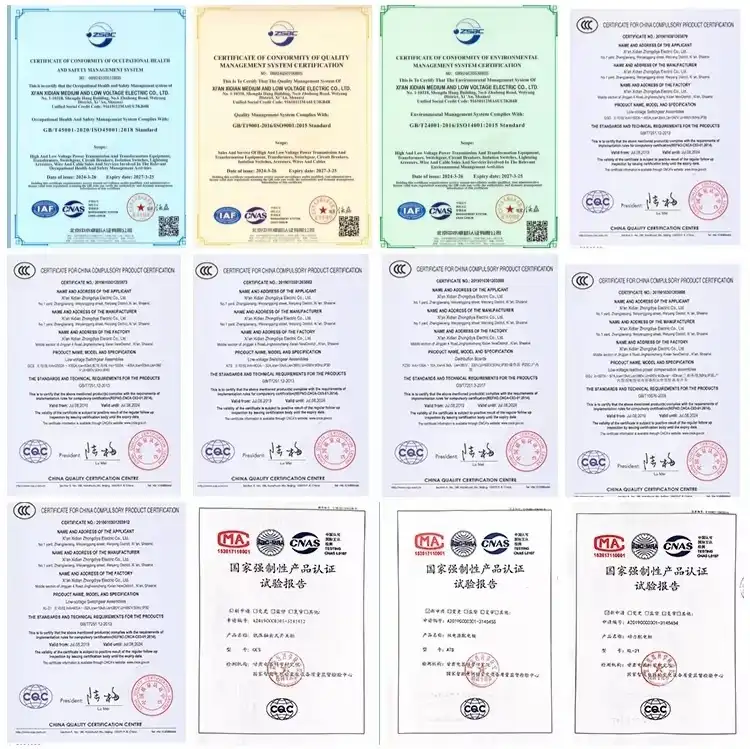
Global suppliers like ABB, Siemens, Schneider Electric, Eaton, GE, and Chint have longstanding reputations for manufacturing Porcelain housed Lightning Arrester. Regional companies like Xi'an Xikai offer viable alternatives with successful deployments in Chinese State Grid and international projects. When evaluating potential providers, verify ISO 9001 quality management certification, IEC 60099-4 product compliance, and type-test reports from recognized laboratories. Manufacturers participating in national research programs demonstrate commitment to continued innovation.
Certification and Compliance Verification
In Arrester's procurement specifications, they have to include references to relevant standards like IEC 60099-4, ANSI C62.11, and in some markets, regional versions like GB/T standards. Ask for approved test results that show the ability to handle impulse current, power-frequency voltage tests, and validation of the sealing's integrity. Check that the manufacturer's quality control systems include X-ray screening of metal oxide blocks, helium leak detection on sealed assemblies, and batch testing methods that make sure the quality of each production run is the same.
Best Practices for Bulk Ordering
Through economies of scale, buying in bulk can lead to better prices. Procurement managers should combine requirements across multiple projects to best influence during talks. Ask for detailed quotes that include unit prices, delivery times, ways of packing, and shipping rules. Make it clear what the warranty covers, where to get spare parts, and how to get expert help. Consider forming framework deals with chosen suppliers to streamline future purchases while locking in favorable commercial terms.
Logistics and Delivery Considerations
Porcelain housed Lightning Arresters require careful handling to prevent damage during shipping. Specify suitable packing with impact-resistant crating and vibration dampening materials. Align delivery plans with building milestones to avoid long periods of on-site storage that raise the risk of handling problems. When you ship something internationally, you need to pay close attention to the customs paperwork, import taxes, and local rules and regulations. Logistics providers that are ISO 14001-compliant show that they care about the environment as well as their business skills.
Technical Support and Customization
A lot of the time, engineering, procurement, and building companies need modifications that aren't available in normal catalogue items. Reliable makers can meet your needs for custom creepage distances, special coatings for areas with a lot of pollution, or built-in tracking ports that let you use condition-based maintenance programs. Technical support teams should give advice on how to do arrester coordination studies, the right way to ground things, and how to install things. Suppliers that can handle complex projects are different from commodity sellers because they have access to skilled application engineers.
Conclusion
When you buy Porcelain housed Lightning Arrester, you gain strategic benefits throughout their operational life. Porcelain construction provides mechanical strength, environmental resistance, proven reliability, long service life, and minimal maintenance. Models like the Y10W-216/562W feature 216kV rated voltage, 314kV DC reference voltage, and 25/31 mm/kV creepage distance—ensuring adequate safety margins for transmission and distribution. Porcelain outperforms polymer alternatives in UV resistance, pollution handling, and thermal stability. Strategic sourcing from certified manufacturers with full technical support enables procurement teams to maximize lifecycle value while ensuring international standards compliance.
FAQ
1. What Is the Expected Service Life?
Under normal working conditions, high-quality lightning arrestors with porcelain housing should last 25 to 30 years. Lifespan varies on how often surges happen, how much garbage is present, and how well the system is maintained. Condition-based repair can be done before failures happen by keeping an eye on leaking current trends. Ceramic materials have stable ageing properties that help with planning their predictable lifecycle.
2. Can These Arresters Perform in Coastal or Polluted Environments?
When things get tough, porcelain housings do really well. The glazed ceramic surface doesn't rust when exposed to salt fog, and it keeps its insulation even when it gets dirty. Setting the right creepage distance (at least 25/31 mm/kV) guarantees dependable performance in areas with a lot of pollution. Periodic washing gets rid of built-up dirt and grime, returning full insulation strength without having to replace the insulation.
3. How Do I Ensure Compatibility With Existing AC Systems?
Match the maximum voltage of the arrester to the standard voltage of the system, making sure there is enough of a margin as recommended by the maker. Make sure that the system's lightning ground flash density and energy absorption capacity are higher than the predicted spike sizes. Check application guides or ask providers for coordination studies to make sure that the new system works well with the ones that are already in place.
Partner With Xi'an Xikai for Reliable Porcelain Housed Lightning Arrester Solutions
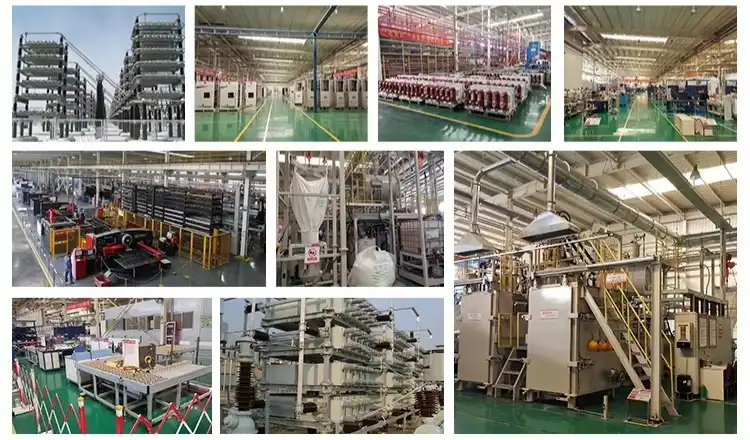
Xi'an Xikai Medium & Low Voltage Electric Co., Ltd. has been making products for 20 years and offers full technical support to procurement professionals looking for reliable surge protection. Our provider of Y10W-216/562W Porcelain housed Lightning Arresters has a track record of providing reliable service in transmission networks, industrial sites and utility substations around the world. When ISO 9001 quality systems are used to make products, they meet IEC 60099-4 and ANSI C62.11 standards and can be customised for specific uses. Send emails to serina@xaxd-electric.com, amber@xaxd-electric.com, or luna@xaxd-electric.com to talk about project needs, ask for technical information, or get competitive quotes for large orders.
References
1. IEEE Standards Association. "IEEE Guide for the Application of Metal-Oxide Surge Arresters for Alternating-Current Systems." IEEE Std C62.22-2009.
2. International Electrotechnical Commission. "IEC 60099-4: Surge Arresters – Part 4: Metal-Oxide Surge Arresters Without Gaps for A.C. Systems." Fourth Edition, 2014.
3. Hinrichsen, Volker. "Metal-Oxide Surge Arresters: Fundamentals." Siemens AG Energy Sector Technical Handbook, 2012.
4. CIGRE Working Group A3.17. "Impact of Long Duration Overvoltages on MOV Surge Arresters." CIGRE Technical Brochure 544, June 2013.
5. Darveniza, M., and D. R. Mercer. "Lightning Protection of Pole-Mounted Transformers." IEEE Transactions on Power Delivery, Vol. 4, No. 2, April 1989.
6. Zhang, Qiaogen, and Li Chengxiang. "Reliability Assessment of Porcelain and Composite Housed Metal Oxide Surge Arresters Under Pollution Conditions." High Voltage Engineering Journal, Vol. 38, No. 7, 2012.
_1783415937807.jpg)