Porcelain Type SF6 Circuit Breaker: Design and Performance Guide
2026-08-03 11:50:51
When managing high-voltage transmission networks, choosing the right circuit protection matters deeply. An outdoor SF6 circuit breaker with porcelain housing stands as a reliable solution for utilities, industrial plants, and system integrators facing harsh environmental conditions. This technology combines proven SF6 gas insulation with durable porcelain construction, delivering dependable arc interruption and extended service life. Our guide walks you through design fundamentals, performance characteristics, maintenance strategies, and procurement considerations—helping you make confident decisions that protect your infrastructure investments and keep operations running smoothly.


Understanding the Design of Porcelain Type SF6 Circuit Breakers
Why Porcelain Housings Excel in Outdoor Applications
In harsh outdoor settings, porcelain housings have won trust over many years. Porcelain is more resistant to UV damage, extreme temperatures, and pollution from industrial pollutants than polymer substitutes. When it comes to coastal areas with salty air, the material can handle water getting in and keeps its shape. We've seen installations work reliably in temperatures above 50°C in the desert and below -40°C in the Arctic. This temperature stability stops cracks and keeps the dielectric performance constant even when the weather changes.
The ceramic composition also provides better resistance to surface tracking. When pollution builds up on insulator surfaces during dry times, it can make conductive pathways when it rains. The glaze and profile form of porcelain successfully shed water, lowering the risk of flashovers that threaten the security of the grid.
SF6 Gas as the Core Insulation Medium
Sulphur hexafluoride gas's 2.5-fold greater dielectric strength than air at the same pressure affects circuit breakers. Deionisation occurs soon once the contact splits because this electronegative gas quickly collects free electrons during arc formation. A compact interrupter with great breaking capacity is the outcome.
SF6 follows properly defined paths in breaker chambers during switching. Because it cools better, the gas absorbs and expels arc plasma heat. Outdoor SF6 circuit breakers with this two-in-one design halt fault currents above 50kA in milliseconds, protecting downstream equipment.
SF6 pressure is constantly monitored via gas density devices. Contemporary versions contain two pressure switches: one for alarms and one for lockouts. The breaker pauses operations until pressure is restored if a gas leak reduces shielding.
Mechanical Operating Mechanisms Explained
Three operating mechanisms make the LW25 line from Xi'an Xikai versatile. In the spring mechanism, an electric motor charges the closing spring. Opening mechanisms use self-charging springs to store energy during closure. This design offers fail-safe safety even when the station is dark since it doesn't require electricity to open.
Hydraulic systems don't require nitrogen gas since disc springs store energy and hydraulics move parts. This setup enables contacts to move easily and reliably across all working temperatures. The hydraulic dampening prevents the contact from bouncing as it shuts, improving interruption reliability and contact life.
Pneumatic doors open using compressed air and shut with a spring. This technique saves money on supplementary equipment for sites with air supply infrastructure. Each device has similar control interfaces, so they may be simply incorporated into substation automation systems.
Triple-break interrupters divide system voltage between three porcelain cells in each phase. This design reduces interrupter voltage stress while reducing size. Phase-segregated construction allows pole repairs without turning off the breaker assembly. This shortens regular checks.
Performance Benefits of Outdoor Porcelain Type SF6 Circuit Breakers
Proven Reliability Under Environmental Stress
Ceramic outdoor SF6 circuit breakers have been tested in several conditions and shown to be robust. High-pollution industrial corridor units retain dielectric strength despite regular exposure to conductive dust and chemical vapours. Porcelain without pores prevents filth from clinging, and rain naturally eliminates accumulation.
Solar radiation is another issue porcelain handles well. Long-term UV exposure doesn't tear down porcelain like plastic barriers. We have confirmation of installations outdoors for over 25 years without insulation or structural degradation.
Buildings in earthquake-prone areas need seismic resistance. Heavy ground acceleration doesn't affect mechanically robust outdoor SF6 circuit breakers, which may be placed in many ways. The one-piece porcelain structure evenly distributes stress, preventing it from breaking in large pieces during earthquakes that could break multi-piece systems.
Energy Efficiency and Operational Economics
Operating losses in high-voltage switchgear affect system performance and lifetime costs. SF6 breakers reduce resistive heating with enhanced contact materials and pressure systems. Even at 4000A, the LW25 line offers lower contact resistance than industry norms and a low temperature.
Maintenance frequency reduction saves money throughout the machine's lifetime. Test, filter, and discard traditional oil circuit breakers. Air-blast breakers must be maintained for compressor and moisture removal. However, sealed SF6 systems don't require long-term maintenance, and inspection cycles may last five years or more in excellent condition.
It requires no cooling due to its self-contained design. Even with the machine running at full load, natural convection and radiative heat transfer are sufficient. This passive thermal management reduces the station's power consumption and eliminates cooling system failure modes, improving stability.
Advanced Safety Features and Monitoring Integration
Modern outdoor SF6 circuit breakers are safe. Pressure release devices exhaust gases upward to protect persons and equipment from uncommon internal arcing. Mechanical interlocks ensure process safety by opening connections before racking mechanisms move.
Circuit breakers from Xi'an Xikai have SCADA tracking. SF6 gas density, total operations, contact wear, and mechanism health are shown in real time. Trend-following predictive maintenance algorithms recommend servicing before wear and tear damages performance. With initiatives to digitise utilities, smart features enable condition-based maintenance plans that maximise resources.
Arc flash prevention is another safety measure. Short circuits release less incident energy with rapid fault clearance. Since the outdoor SF6 circuit breaker only needs to be turned on and off twice, maintenance workers are safer near powered equipment due to arc flash hazards.
Maintenance and Troubleshooting Best Practices for Outdoor SF6 Circuit Breakers
Establishing Effective Inspection Protocols
Regular eye examinations of outdoor SF6 circuit breakers are part of preventative maintenance. Step on porcelain surfaces every three months to check for cracks, chips, and dirt. Discolouration may indicate tracking and needs prompt care. Checking mechanical part lubrication and alignment ensures proper force transfer during operations.
Annual checkups deepen system health assessment. SF6 gas moisture is assessed during quality testing. To avoid hydrofluoric acid, moisture should be below 150 ppm. Decomposition byproduct study detects internal arcing or burning early. Gas chromatography examines trace contaminants and detects shielding breakdown early.
Electrical current flows smoothly over the current line when contact resistance is measured. Micro-ohmmeter readings are compared to commissioning baselines. Resistance over a specific threshold indicates contact loss or contamination that has to be addressed. Testing should be done with contacts closed and breaker off for accurate results. Current sources should exceed 100 amps.
Machine performance is measured by timing and travel analysis. High-speed sensors monitor three-phase synchronisation, contact opening and closing timings, and contact velocity during tests. Manufacturer standards deviations indicate mechanism wear, spring tension, or damper deterioration that must be addressed before dependability worsens.
Diagnosing Common Performance Issues
The most prevalent SF6 device maintenance concern is gas leakage. Gaskets, valve stems, and soldered pieces that are repeatedly heated and cooled cause most slow leaks. Ultrasonic leak detection discovers water leaks before density alarms. Portable SF6 sniffers let techs inspect potential leaks and prioritise repairs by measuring leak severity.
A failing mechanical part usually makes strange noises or won't trip or close. A worn bearing grinds while working, and a broken spring clangs when mechanism components meet limit stops. If the control circuit fails, the coil may not be energised despite proper command inputs. Systematic fixing distinguishes electrical and mechanical issues, improving repair plans.
Interrupting a high-current fault might cause contact welding. Too much arcing energy melts contact surfaces, forming fusion bonds that prevent operations. Safely finding welded contacts requires shunt trip testing without load. Take affected interrupters apart to replace contacts. Choosing the correct interrupting capacity while purchasing them for the first time is crucial.
Sourcing Quality Spare Parts and Support
Extra parts allow quick repairs when a component breaks. Spare interrupters, mechanism components, SF6 gas sources, and seal kits are essential. Working with complete parts program manufacturers speeds up part delivery. Xi'an Xikai has a huge supply of LW25 series replacement parts and can deliver in days due to worldwide distribution.
Technical support and entrance simplicity are crucial. Experienced application engineers analyse test data and provide solutions for remote diagnostics. On-site launching support verifies installation, and ongoing training updates care workers on best practices. Technical assistance at serina@xaxd-electric.com is available 24/7 to help you with your business issues.
Emergency response planning helps teams recover faster. Discussed service agreements include response timelines and resources. Mobile service centers with testing instruments may help rural areas address problems that take a long time at the plant. These support technologies minimise power disruptions to preserve revenue lines that rely on steady electricity.
Procurement and Installation Guide for Outdoor Porcelain SF6 Circuit Breakers
Defining Technical Requirements Accurately
Know the system's baseline voltage and insulation coordination requirements before picking a voltage grade. It can handle 145kV lightning and 126kV working voltage with the LW25-126/145 marking. Above 1000 meters, systems must be derated or have stronger insulation to compensate for decreasing air density, which affects outdoor SF6 circuit breaker clearances.
The breaking capacity must match the installation site's maximum fault current. Short circuit studies determine symmetric and asymmetric circuit breaking currents. Transient recovery voltage influences breaker choice, particularly when switching capacitors or charging connections, when voltage variations stress the interrupter insulator.
Rated normal current selection considers current load demands and future expansion. The LW25 series offers 2000A, 3150A, and 4000A for various applications. Thermal ratings also consider ambient temperature. Standard values imply 40°C ambient temperature. Current de-rating or greater cooling may be required in hotter areas.
Operating mechanism selection balances operational preferences with infrastructural compatibility. Where other equipment has compressed air, pneumatic devices work better than spring ones. The smooth operation of hydraulic mechanisms at a broad range of temperatures is important in cold areas where lubricant viscosity might damage spring mechanisms.
Evaluating Supplier Capabilities and Support
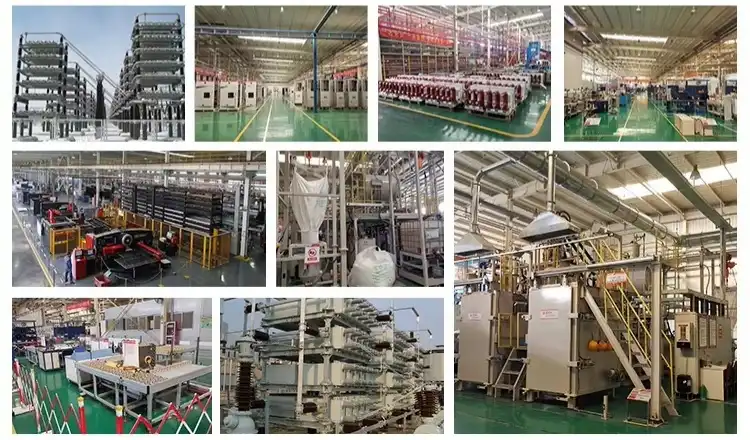
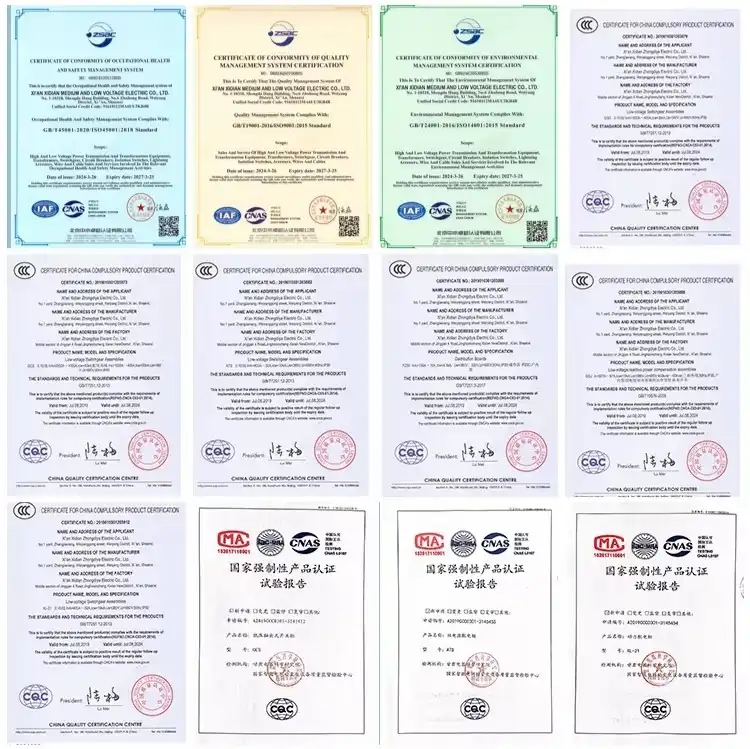
The quality of the manufacture, the thoroughness of the testing, and the after-sales assistance are all important when picking a provider. ISO 9001 and ISO 14001 certifications demonstrate systematic quality management and environmental concern, respectively. Xi'an Xikai has many high-voltage switchgear certifications and patents. This displays our commitment to quality and innovation.
Testing documentation verifies a product. Type test results from accredited laboratories confirm that items satisfy IEC 62271-100 criteria. Production tests, including dielectric endurance, mechanical endurance, and gas leak rate monitoring, ensure every device satisfies specifications. Every shipment includes full test records for commissioning and regulatory compliance.
Warranty terms safeguard purchases against manufacturing defects and premature failures. The standard warranty lasts two years after shipment or three years after commissioning. For critical applications where replacement or downtime costs justify extended warranties, they provide added protection. Clear warranty claim procedures and prompt replies make issues simpler to address.
Technical training improves repair team competence. The manufacturer's instructions include usage, maintenance, repair, and safety. Before having to obtain parts and conduct servicing procedures swiftly in the field, hands-on training with genuine equipment helps. Xi'an Xikai can customise training programs at our factory or at a customer's location. We can accommodate your language and schedule.
Installation Best Practices for Optimal Performance
Shipping and delivering porcelain keeps it safe. Specialised crating protects insulation from impact and drains water. The lifting parts must evenly support the breaker's weight to avoid point loads and porcelain breakage. Our technical literature specifies maximum sling angles and lifting locations. This prevents installation harm from improper handling.
Preparing the foundation ensures strength and drainage. Mounting surfaces must be level within limitations to prevent mechanical connections from sticking. Grounding grid connections need structural steel and low-resistance ground terminals. This protects during faults. The site's civil work should allow maintenance men to reach parts without disrupting other machinery.
Before turning on the installation, commissioning testing ensures everything works. Insulation resistance tests reveal no impurities and a good bond. Control circuit functional tests imitate all operating modes to ensure safe switch and breaker systems operate together. Final acceptance testing resembles production testing. It stores installation performance for future maintenance comparisons.
Comparative Overview: Outdoor Porcelain SF6 Circuit Breakers vs Alternatives
SF6 Technology Versus Vacuum Interrupters
Because they're small and low-maintenance, vacuum circuit breakers are the most common indoor medium-voltage device. The dielectric strength of high vacuum stops currents when connections separate in empty tanks. However, outdoor high-voltage systems have issues. External vacuum bottle shielding requires a lot of creepage distance, negating size benefits. In the same size and shape, porcelain outdoor SF6 circuit breakers insulate better.
Another difference is its interrupting ability. Vacuum technology struggles with fault currents above 40kA. This requires parallel interrupters, which complicates and costs more. SF6 breakers are typically employed in these settings, and single interrupters can take 50kA breaking currents. Better arc-quenching allows simpler mechanical designs to handle higher power.
Each technology has varied contact life. Due to low contact corrosion, vacuum bottles can last 10,000 processes without service. SF6 contacts wear out faster but can be adjusted or replaced. Life cycle economics compares maintenance tasks to equipment startup cost. Outdoor SF6 circuit breakers are cheaper but need more maintenance for high-voltage installations.
Environmental Considerations and Emerging Alternatives
Because SF6 gas may cause global warming, the insulation industry is exploring alternatives. Fluoronitrile and CO2 blends may be greener. However, these alternatives require higher working pressures or can't stop as well as SF6 at the same density. More laws are making SF6 difficult to utilise, particularly in the EU. There are exceptions for high-voltage usage with no other choices.
Air-insulated switchgear uses atmospheric air in huge clearance enclosures instead of insulating gas. Utility projects with adequate acreage for massive plans benefit from the technology. The capital costs per installed MVA are still attractive, but they pollute more and require more maintenance than gas-insulated options. The middle has outside SF6 circuit breakers. They are smaller than air-insulated substations but simpler to access than sealed gas-insulated ones.
Combining SF6 interrupters with other buswork and disconnector insulation reduces gas storage. These solutions maintain SF6's demonstrated ability to stop where other materials fail while minimising environmental impact. As technology improves, we predict modest changes, but SF6 will be useful for decades in existing installations and demanding applications that need excellent alternatives.
Conclusion
Porcelain outdoor SF6 circuit breakers are best for high-voltage applications that combine environmental exposure, interrupting performance, and lifecycle economics. The strong porcelain construction can withstand harsh outdoor conditions that would damage other materials, and SF6 gas has the best arc-quenching in small packages. Xi'an Xikai's LW25 series is a superb example of modern engineering due to its broad choice of operating systems, smart monitoring, and extensive support network. Consider long-term costs, supplier technicality, and changing regulations when selecting circuit protection systems. With proper maintenance, ceramic SF6 breakers will preserve your infrastructure investments for decades, keeping the grid steady and your company functioning.
FAQ
1. How often should SF6 gas pressure and quality be monitored?
Continuous tracking of gas density should be done by permanently placed gauges that can send alarms to a remote location. Gas samples are analysed in a lab once a year to make sure that the moisture content stays below 150 ppm and that the levels of decomposition byproducts stay within acceptable limits. As soon as a big fault is interrupted, quick gas quality testing checks for possible contamination from arc byproducts. From what we've seen, eye pressure checks every three months are a good addition to ongoing tracking because they catch indicator problems or drift.
2. Why does porcelain outperform polymer insulators in outdoor environments?
Porcelain's dielectric properties stay the same at very high and very low temperatures, and UV damage doesn't affect the structure's strength. The glossy surface successfully sheds water, which keeps the tracks from coming off when it's dirty and wet. Although polymer insulators are lighter, they break down in the sun and may need to be replaced every 15 to 20 years. Installing porcelain usually lasts longer than 30 years, giving you better value over time even though they are heavier at first and need to be handled more carefully during installation.
3. What triggers indicate outdoor SF6 circuit breaker replacement rather than repair?
Repeated gas leaks after replacing seals suggest that porcelain is cracking or welding is failing and needs to be replaced. When the number of operations gets close to the rated mechanical endurance limits, it's time to replace the part before it fails completely. When contact wears down beyond the adjustment range, the interrupter needs to be replaced, but this is only a part of the outdoor SF6 circuit breaker replacement strategy. Concerns about obsolescence arise when extra parts become harder to find or when newer options offer big performance or tracking benefits that make upgrading worthwhile.
Partner with Xi'an Xikai for Reliable Outdoor SF6 Circuit Breaker Solutions
With decades of manufacturing experience and innovation behind them, Xi'an Xikai provides complete outdoor SF6 circuit breaker solutions. Our LW25 line is made for tough high-voltage jobs. It has rates up to 145kV and breaking capacities of up to 50kA, and it has all been tested to meet strict international standards. We work with utilities, factories, and EPC companies in 30 different countries, offering custom configurations, quick technical support, and large spare parts inventories. You can email our applications team at amber@xaxd-electric.com or luna@xaxd-electric.com to talk about the needs of your unique project. We are a trusted company that makes outdoor SF6 circuit breakers, and we want to protect your infrastructure investments by using tried-and-true technology and strong partnerships.
References
1. IEEE Standard C37.06-2009, "AC High-Voltage Circuit Breakers Rated on a Symmetrical Current Basis—Preferred Ratings and Related Required Capabilities for Voltages Above 1000 V," Institute of Electrical and Electronics Engineers, New York, 2009.
2. IEC 62271-100:2021, "High-voltage switchgear and controlgear - Part 100: Alternating current circuit-breakers," International Electrotechnical Commission, Geneva, 2021.
3. Slade, P.G., "The Vacuum Interrupter: Theory, Design, and Application," CRC Press, Boca Raton, Florida, 2017.
4. Smeets, R.P.P., van der Linden, W.A., and Achterkamp, M., "Switching in Electrical Transmission and Distribution Systems," John Wiley & Sons, Chichester, United Kingdom, 2015.
5. Christophorou, L.G., Olthoff, J.K., and Green, D.S., "Gases for Electrical Insulation and Arc Interruption: Possible Present and Future Alternatives to Pure SF6," National Institute of Standards and Technology Technical Note 1425, Washington, D.C., 1997.
6. Ryan, H.M., "High Voltage Engineering and Testing," 3rd Edition, Institution of Engineering and Technology, London, 2013.
_1774322334531.png)