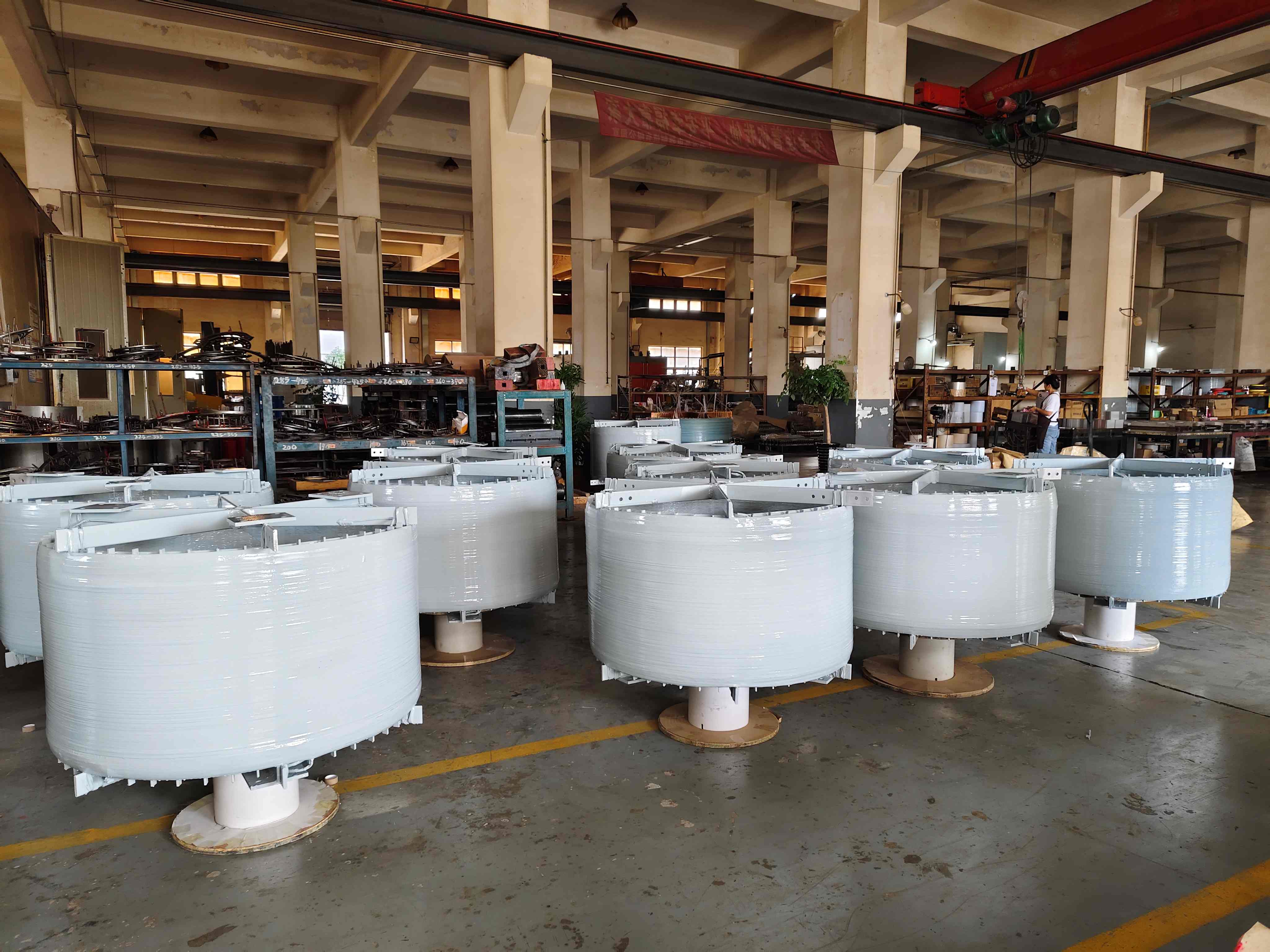
Series Dry type transformer Applications in Industrial Facilities
2026-09-11 16:57:38
Series dry type transformers have become the preferred power distribution solution across modern industrial facilities worldwide. Unlike oil-filled units, these transformers use solid insulation—typically cast resin or vacuum pressure impregnated (VPI) materials—to safely convert voltage levels without fire risk or fluid leakage. Industrial operators choose them for their maintenance-free design, environmental compliance, and proven resilience in demanding conditions. The SC9 series dry type transformer from Xi'an Xikai exemplifies this category, delivering certified performance across commercial complexes, data centers, and heavy manufacturing environments where reliability cannot be compromised.


Understanding Series Dry Type Transformers in Industrial Settings
A series dry-type transformer is a static electrical device that controls voltage through magnetic induction. All of its working parts are protected by solid materials instead of oil. This basic design difference fixes two problems that have been bothering industrial power infrastructure for a long time: the risk of fire and the responsibility to protect the environment.
Cast Resin vs. Vacuum Pressure Impregnated Designs
The two most common building ways are each best used in certain types of industries. Cast resin units completely cover windings in epoxy, which makes them more resistant to moisture and perfect for facilities near the coast or in places with a lot of humidity. In VPI transformers, varnish is applied to the windings while they are under vacuum. This makes the unit lighter and cheaper, making it perfect for indoor substations and commercial buildings. Both meet the standards set by IEC 60076 and IEEE C57.12.01, which procurement engineers use to choose equipment for critical infrastructure.
Why Industrial Clients Prioritize Dry Type Technology
In addition to getting rid of risks related to oil, dry-type units offer important operating benefits. They don't need oil samples, filtration cycles, or Buchholz relay tracking, which are all expensive and time-consuming upkeep chores. IEC 60076-11 says that cast resin dry-type transformers should be able to put out fires on their own and not release any harmful gasses when they do. This is a very important safety requirement for setups inside of hospitals, hotels, and data centers.
Applications of Series Dry Type Transformers in Industrial Facilities
By looking at where these units are used, you can see how versatile a well-designed series dry-type transformer is in terms of its uses. A wide range of applications are being used in vital infrastructure, business real estate, and manufacturing.
High-End Commercial Complexes and Five-Star Hotels
Power equipment that fits in cleanly with occupied buildings is needed in high-end business projects. The SC9 series dry-type transformer directly meets this need; it can be installed at load centers because it is made of non-flammable epoxy resin, which cuts down on cable runs and distribution losses. With noise levels at or below 50 dB, it can be used in places where guests will be hearing it and where transformer hum would be annoying.
Data Centers and Semiconductor Facilities
Data centers have strict rules about the quality of the power they use. These rules include low harmonic distortion and stable voltage control even when the loads change. As long as the partial discharge level of the series dry type transformer stays below 10 pC at 1.5Ur, it keeps critical server hardware safe from insulation degradation. It has an integrated temperature monitoring system that gives continuous thermal data. This lets maintenance be planned ahead of time, which keeps operations running 24 hours a day, seven days a week.
Manufacturing Plants, Chemical Facilities, and Mining Operations
Heavy dust, chemical vapors, and mechanical vibrations in industrial settings have typically limited where transformers could be placed. The SC9 series dry-type transformer works consistently at temperatures above 55°C and at heights of up to 4,000 meters, which are not good for oil-filled options. Because it is moisture-proof, the unit can work at 100% relative humidity and be turned back on without a drying cycle. This means that production doesn't have to stop for expensive repairs after being exposed to humidity.
All of these uses are similar: they are all used in places where losing power could cost a lot of money or put people in danger. The fact that a cast resin transformer can work constantly in a variety of situations is not a bonus; it is the main reason why facility managers who are in charge of large electrical systems buy them.
Comparing Series Dry Type Transformers with Oil-Filled Alternatives
Quantifiable Trade-Offs: Safety, Noise, Maintenance, and Lifecycle Costs
When deciding between dry-type and oil-filled units, there are a number of trade-offs that can be measured. A clear understanding of them helps with lifecycle cost analysis.
Here are the key differentiators that consistently influence B2B procurement decisions:
- Safety and Environmental Compliance: Dry-type units completely remove the risk of oil leakage. This gets rid of both the environmental risk and the cost of oil containment infrastructure that is needed in places like sites near water sources or inside buildings that are already occupied.
- Noise and Vibration Performance: The SC9 series dry-type transformer is much quieter than many oil-filled counterparts, with noise levels at or below 50 dB. This means it can be used in mixed-use buildings, hospitals, and stores where patients are complaining about vibrations going through the building structures.
- Maintenance Burden: Transformers that are filled with oil need to have their dielectric fluid tested, their wetness levels checked, and possibly their oil replaced every so often. The SC9 series dry-type transformer is designed to not need any maintenance. This is because its solid insulation doesn't break down due to oxidation or moisture absorption like liquid dielectrics do.
- Lifecycle Cost: Dry-type transformers usually have higher unit costs up front, but over their 20–30 year working life, they usually have lower total cost of ownership because they don't need to handle oil, have special containment buildings, or have fire control systems.
These differences make dry-type technology the best choice for high-end projects where long-term dependability is more important than starting capital cost.
How to Choose the Best Series Dry Type Transformer for Industrial Procurement
To choose the right series dry-type transformer, you have to match technical specs to what the building actually needs. This is an iterative process that works best when the seller is involved early on.
Key Technical Parameters to Evaluate
Load analysis is the first step in choosing a power rating for the series dry type transformer. From 50 kVA to 10,000 kVA, the SC9 series dry-type transformer can handle a wide range of applications, from small commercial substations to large industrial facilities. The voltage range is from 0.4 kV to 40.5 kV, which means it can work with medium voltage distribution networks that are typical on manufacturing grounds. IEC standards for continuous duty in high ambient conditions are in line with insulation class F/H with a temperature rise below 100°C. ONAF cooling provides 150% overload capacity, which is very useful for buildings where peak demand rates are much higher than normal load.
Certifications and Customization Considerations
For high-end projects, SCB9/SGB9 approval, CE marking, and ISO 9001/14001 compliance are basic standards that can't be changed. A lot of the time, procurement managers for big projects need non-standard voltage taps, custom enclosure ratings, or specific monitoring integration in addition to standard certifications. Xi'an Xikai can meet these needs with engineered-to-order configurations that allow for project-specific electrical design without affecting lead time commitments.
Installation, Maintenance, and Optimization of Series Dry Type Transformers
When you put a series dry-type transformer correctly, it has a direct effect on how long the transformer lasts and how reliable the system is. As you prepare the site, you should pay attention to the manufacturer's installation manual's instructions for bus duct or cable connections, earthquake anchoring requirements, and air gaps.
The SC9 series dry-type transformer is tested at the factory and comes with proof of a partial discharge below 10 pC, lightning impulse test results at 170 kV, and thermal imaging proof of even heat dissipation. This pre-shipment validation cuts down on the time needed for commissioning and makes sure that the unit meets performance standards before it goes into service.
As part of ongoing optimization, load profiles are compared to the transformer's stated capacity, cooling mode is switched between ONAN and ONAF as demand changes with the seasons, and IoT sensor data is looked at for any unusual trends in temperature or insulation resistance. These proactive actions protect the capital investment in key power assets and make it last longer.

Conclusion
Series dry type transformers are a tried-and-true, technically advanced way to distribute power in industries that care most about safety, dependability, and environmental responsibility. The Xi'an Xikai SC9 series dry-type transformer is approved to work well in a wide range of demanding settings, such as data centers, big industrial facilities, and substations for five-star hotels. It meets the technical needs of picky acquisition engineers with a partial discharge below 10 pC, noise at or below 50 dB, 150% overload capacity under ONAF cooling, and full IEC/CE approval. Facilities that choose this equipment are making a long-term investment in the power grid that can be defended.
FAQ
1. How does a dry type transformer differ from an oil-filled unit in terms of safety?
In series dry-type transformers, epoxy glue or VPI materials are used for solid shielding instead of dielectric oil. This gets rid of the chance of oil leaking, fires spreading through fluid, and damage to the environment. If there is a problem, cast resin units will put out the fire on their own without giving off any harmful gasses. This meets fire safety standards for installations inside of buildings that are occupied.
2. How do I determine the correct rated capacity for my facility?
To choose the right capacity, you need to do a full load study that looks at the linked load, the demand factor, the diversity factor, and the growth that is expected over the life of the transformer. Harmonic analysis should be used to help with derating calculations in places where there are a lot of motor loads or variable frequency drives. The SC9 series ranges from 50 kVA to 10,000 kVA, and Xi'an Xikai's engineering team can help you figure out the right capacity for your needs by looking at your load profile.
3. What are common maintenance challenges and how can they be prevented?
Compared to oil-filled units, dry-type transformers don't need as much upkeep. However, the cooling air passages, terminal connections, and epoxy resin surfaces should be checked for cracks or contamination on a regular basis. The SC9 series dry-type transformer comes with built-in temperature tracking systems that let you know about any problems with the temperature before they become fails.
Partner with Xi'an Xikai for Your Next Series Dry Type Transformer Project
Engineered series dry type transformer options from Xi'an Xikai are made to fit the exact needs of your high-end project. Our SC9 line is compliant with IEC, CE, and ISO standards, and it can be customized to work with voltages and sizes that aren't standard. You can email our technical team at serina@xaxd-electric.com, amber@xaxd-electric.com, or luna@xaxd-electric.com, or you can go to xaxd-electric.com to look through our full catalog and get a quote from a reliable series dry-type transformer manufacturer.

References
1. International Electrotechnical Commission. IEC 60076-11: Power Transformers – Part 11: Dry-Type Transformers. IEC, 2018.
2. IEEE Standards Association. IEEE C57.12.01: Standard General Requirements for Dry-Type Distribution and Power Transformers. IEEE, 2015.
3. U.S. Department of Energy. Energy Conservation Standards for Distribution Transformers (DOE 2023 Compliance Update). DOE, 2023.
4. NFPA. NFPA 70: National Electrical Code, Article 450 – Transformers and Transformer Vaults. NFPA, 2023.
5. Blume, S. W. Electric Power System Basics for the Nonelectrical Professional. Wiley-IEEE Press, 2017.
6. Kulkarni, S. V., & Khaparde, S. A. Transformer Engineering: Design, Technology, and Diagnostics. CRC Press, 2013.

_1774417662667.png)