Global Active Power Filter Suppliers List
2026-03-03 15:47:22
Finding reliable Active Power Filter suppliers in China requires evaluating manufacturers based on their technical capabilities, certifications, and production capacity. Leading Chinese manufacturers like Xi'an Xidian, DEIF, and Schneider Electric offer comprehensive power quality solutions with advanced harmonic compensation technology. These suppliers provide modular designs, real-time control systems, and energy efficiency solutions that meet international standards for industrial applications requiring superior power factor correction and voltage regulation.
The worldwide power quality gear market is growing as industry need cleaner energy for sensitive electronics. Data centers, manufacturing facilities, and business structures increasingly use active filtering to decrease electrical noise and current harmonics. China is a power electronics manufacturing powerhouse with low prices and high quality. Chinese manufacturers thrive in affordable digitization of signals and PWM inverter solutions. The country's strong supply chain and technical capabilities allow fast product development and modification for many applications. Knowing how to negotiate this market helps save procurement costs and ensure electricity quality.
 |
 |
China's Manufacturing Excellence in Power Quality Solutions
Advanced Technology Integration
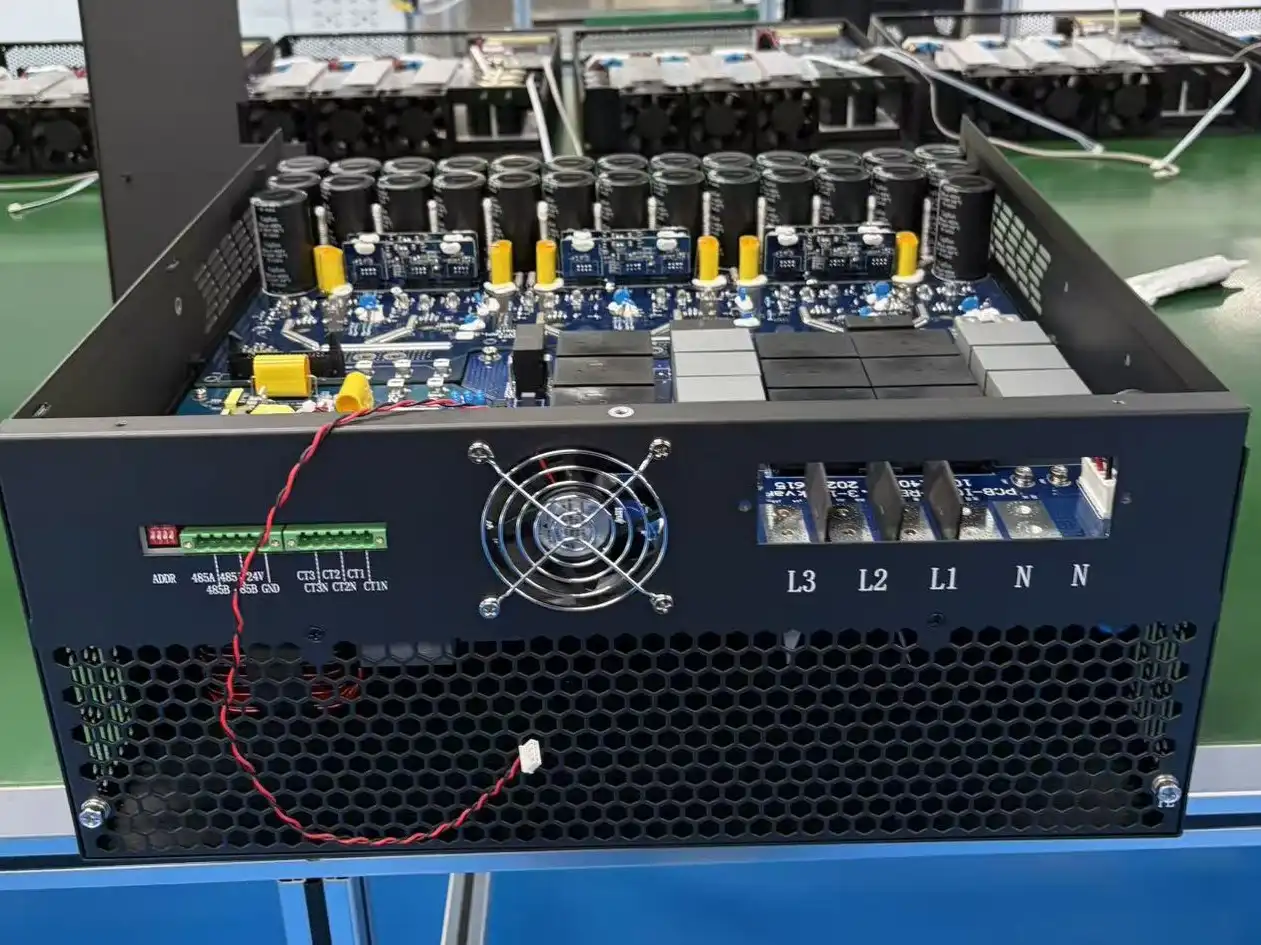
Chinese power Filter manufacturers actively study and develop cutting-edge technologies including adaptive filtering and immediate control systems. Modern factories use automated assembly lines to preserve quality and price. These firms use decades of electrical components experience to properly manage nonlinear loads. The inclusion of processing of digital signals allows exact harmonic adjustment across operational circumstances. Chinese factories have specialized testing labs for thorough product validation. This technological basis allows the creation of advanced filtering systems for demanding industrial applications.
Scale and Production Capacity
China's manufacturing infrastructure supports large-scale production of power quality equipment. Major manufacturers operate multiple production lines capable of producing thousands of units monthly. This scale enables cost efficiencies that benefit customers seeking bulk procurement solutions. Production facilities maintain extensive component inventories, allowing for rapid order fulfillment even during peak demand periods. The modular design approach adopted by leading manufacturers facilitates efficient assembly processes while enabling customization for specific customer requirements.
Essential Criteria for Manufacturer Selection
Technical Competence Assessment
Manufacturing technical capacity depends on engineering team qualifications and product development experience. Find companies with unique power factor correction and distortion reduction R&D. Assess their expertise by studying patents and technical literature. Request Active Power Filtering specifications and performance. Manufacturers that record harmonic evaluation, switching frequency norms, and load balancing are reliable. Test their voltage control for your applications.
Quality Management Systems
Check the producer's control of quality and testing. Leading companies manage quality systems that inspect incoming goods, monitor in-process operations, and verify final products. Examine their signal processing verification and feedback system evaluation methodologies. Check their quality certificates and international norms. Quality-conscious manufacturers keep extensive records of their goods and customer feedback. This material shows their dedication to dependability and improvement.
Customer Support Infrastructure
Assess the manufacturer's technical support capabilities and service network for Active Power Filter systems. Reliable suppliers provide pre-sales engineering consultation, installation guidance, and post-delivery support services. Evaluate their response time for technical inquiries and availability of local service representatives. Review customer testimonials and case studies to understand their track record in grid integration projects and power electronics applications. Strong manufacturers maintain long-term relationships with customers through proactive support and ongoing technical assistance.
Production Flexibility
Examine the manufacturer's ability to accommodate custom requirements and special specifications. Flexible suppliers can modify standard products to meet unique application needs while maintaining delivery schedules. Assess their experience with OEM partnerships and private labeling arrangements. Investigate their capacity for handling varying order volumes and delivery timelines. Reliable manufacturers maintain production scheduling flexibility that accommodates both standard orders and urgent requirements without compromising quality standards.
Critical Certification Standards and Compliance
International Quality Certifications
Manufacturers with ISO 9001 accreditation use quality management and continual improvement. Product quality and delivery reliability are guaranteed by this standard. ISO-certified manufacturers are audited for quality system effectiveness. Environmental management and responsible production are certified by ISO 14001. Organisations with this accreditation reduce environmental impact while optimising operations. This accreditation becomes more significant as buyers prefer sustainable sources.
Product Safety Standards
CE accreditation guarantees Active Power Filter products meet European safety requirements. This certification verifies electromagnetic compatibility and EU market access. CE-certified producers undergo stringent testing and record-keeping. UL certification ensures North American product safety. This standard mandates comprehensive electrical and safety system testing. For commercial installations, UL-certified devices exceed strict fire safety and electrical performance criteria.
Regional Compliance Requirements
CCC certification enables market access within China and demonstrates compliance with national safety standards. This certification requires testing by approved Chinese testing laboratories and ongoing quality surveillance. Manufacturers maintaining CCC certification demonstrate their commitment to local market compliance. RoHS compliance ensures that products meet environmental restrictions on hazardous substances. This certification becomes essential for customers with environmental sustainability requirements and regulatory compliance obligations.
Strategic Sourcing Channels and Platforms
Direct Manufacturer Engagement
Manufacturer direct partnerships provide best price and communication. Direct interaction facilitates technical conversations and customized negotiations for complicated projects. Manufacturers want direct consumers over middlemen. Direct interactions improve productivity and quality control knowledge. Customers may plan factory tours and technical inspections to learn about production and quality.
Trade Exhibition Participation
Industry exhibitions provide opportunities to evaluate multiple manufacturers and compare their offerings directly. Major power electronics exhibitions in China showcase the latest technological developments and enable face-to-face discussions with engineering teams. These events facilitate relationship building and technical knowledge exchange. Exhibition participation allows customers to observe product demonstrations and assess build quality firsthand. Manufacturers often introduce new products and technologies at these events, providing insight into their innovation capabilities and market direction.
Professional Sourcing Services
Experienced sourcing agents provide local market knowledge and supplier evaluation services. Professional services can accelerate the supplier identification process and facilitate negotiations with potential manufacturers. These services prove valuable for customers lacking experience with Chinese business practices. Sourcing consultants may propose competent manufacturers based on technical needs. Supplier monitoring as well as relationship management during procurement are possible due to their local presence.
OEM and ODM Partnership Considerations
Intellectual Property Protection
Establishing clear intellectual property agreements protects customer innovations and proprietary technologies. Comprehensive contracts should address patent protection, trade secret confidentiality, and technology ownership rights. Reliable manufacturers respect intellectual property rights and implement appropriate safeguards. Review the manufacturer's internal IP protection policies and employee confidentiality agreements, particularly regarding how they safeguard Active Power Filter technologies and related intellectual property. Strong manufacturers maintain secure development environments that protect customer information and prevent unauthorized disclosure of proprietary designs.
Development Collaboration Models
Assess the manufacturer's product development and engineering cooperation. Successful OEM collaborations involve good communication and common development methods. Evaluate their capacity to meet client requirements while meeting cost and manufacturability goals. Examine their past development projects and consumer references. Expert manufacturers increase product performance and dependability with design and production optimization advice.
Supply Chain Management
Verify the maker's supply chain and certification. Reliable partners have diverse supply chains that ensure material quality and availability. Stock control and value chain risk mitigation are assessed. Assess supply chain visibility or component traceability. Strong manufacturers preserve accurate sourcing of components and quality control information for product reliability and regulatory compliance.
Effective MOQ and Pricing Negotiation Strategies
Volume Commitment Planning
Realistic volume predictions improve MOQ discussions with suppliers. Customers with long-term volume needs get better price and conditions from manufacturers. Provide reliable demand estimates to lower minimum order quantities. Manufacturers get volume control and inventory flexibility with blanket purchases for scheduled launches. It often improves price and lowers inventory expenses.
Payment Term Optimization
Payment terms may significantly impact purchase costs and cash flow. Consider extended payment periods, manufacturing based advancement fees, or volume-based payment discounts. Reliable manufacturers normally provide reasonable payment arrangements to qualifying customers. Use letters credit or trade finance for security and attractive payment conditions. Financial tools may help negotiate with new suppliers without loans.
Long-term Partnership Development
Negotiating for long-term partnerships may improve price and support. Manufacturers prioritize long-term clients above one-time buyers. Growth estimates and expansion plans imply future company potential. Provide volume assurances for pricing stability and priority production scheduling in multi-year agreements. These agreements improve planning visibility and pricing certainty for both parties.
Factory Audit and Quality Assurance Protocols
Production Facility Assessment
Complete factory audits should assess manufacturing equipment, quality control, and capacity use. Observe manufacturing procedures and evaluate staff skills. Document product validation testing equipment condition and capabilities. Review manufacturer preventative maintenance and equipment calibration programs. Well-maintained facilities show operational discipline and product quality accountability. Assess their growth and technological upgrading potential.
Quality Control System Evaluation
Examine the manufacturer's incoming material inspection procedures and supplier qualification processes, specifically for Active Power Filter components. Review their in-process quality monitoring systems and statistical process control implementation. Assess their approach to corrective action management and continuous improvement initiatives. Investigate their product traceability systems and documentation practices. Reliable manufacturers maintain comprehensive records that enable root cause analysis and product history tracking. This capability proves essential for addressing quality issues and regulatory compliance requirements.
Testing and Validation Procedures
Check the manufacturer's Active Power Filter testing and validation processes. Check their testing equipment and calibration. Evaluate their performance verification along with dependability testing under different working situations. Explore their customer-specific testing capability and readiness to fulfill particular testing needs. Strong manufacturers supply detailed test reports as well as performance data for product qualification and approval.
Leading Supplier Characteristics
Technology Innovation Leadership
Top manufacturers invest much in power quality R&D. These companies provide harmonic compensation and adaptive filtering technologies that exceed normal approaches. Innovation leaders enhance technology with universities and research institutes. Major suppliers have advanced engineering facilities for simulation and testing. These electrical wiring controls experts improve products and meet client needs.
Global Market Experience
Experienced manufacturers service global markets and understand regional norms. This worldwide view helps them build devices for diverse grid integration and regulatory standards. International experience shows they can assist difficult projects in several jurisdictions. Global vendors have multinational sales and assistance networks for local client service. This infrastructure allows project support and technical help independent of client location.
Sustainability and Environmental Responsibility
Leading manufacturers implement comprehensive environmental management systems and sustainable manufacturing practices. These coSustainable manufacturing and environmental management techniques are used by top firms. These organizations provide energy efficiency solutions to decrease clients' environmental impact and boost performance. As clients seek sustainability in sourcing, environmental responsibility grows. mpanies develop energy efficiency solutions that help customers reduce their environmental footprint while improving operational performance. Environmental responsibility becomes increasingly important as customers prioritize sustainability in their sourcing decisions. Progressive firms use renewable energy and reduce waste to show their environmental commitment. This method promotes customer sustainability and long-term partnerships.
Conclusion
Selecting the right Active Power Filter manufacturer in China requires careful evaluation of technical capabilities, quality systems, and business practices. The most reliable suppliers combine advanced engineering expertise with robust manufacturing processes and comprehensive customer support. Successful partnerships develop through thorough due diligence, clear communication, and shared commitment to quality and innovation.
Competitive cost, excellent technology, and flexible manufacturing make Chinese producers appealing. The challenge is finding suppliers that can supply consistent quality and technical support for project success. Strong partnerships with competent manufacturers enable continuing cooperation and progress.
FAQ
1. How do I verify the technical capabilities of Active Power Filter manufacturers?
Potential vendors should include technical requirements, performance assessment results, and client references. Visit factories to see engineering and testing equipment. Check their product certificates and international standards for technological expertise.
2. What certifications should I look for when selecting manufacturers?
ISO 9001 for management of quality, EU marking for European conformity, UL for the American markets, and CCC for Chinese market entry are essential certifications. Green certifications like ISO 14001, and RoHS show responsible production.
3. How can I ensure product quality from Chinese manufacturers?
Factory inspections, quality system evaluations, and product testing techniques should be used to qualify suppliers. Before ordering, define quality and acceptability standards. Consider third-party inspections for quality assurance.
4. What should I consider when negotiating MOQ and pricing?
Develop realistic volume forecasts and emphasize long-term partnership potential to justify reduced minimum order quantities. Compare total cost of ownership including shipping, duties, and support costs rather than focusing solely on unit pricing. Consider payment terms and delivery schedules in your overall cost evaluation.
5. How do I protect my intellectual property when working with Chinese manufacturers?
Complete intellectual property agreements for patent protection, trade secret secrecy, and technology ownership. Work with manufacturers with IP protection strategies and protections. Consider Chinese patents for further protection.
Partner with Xi'an Xidian for Superior Active Power Filter Solutions
Xi'an Xidian offers industry-leading Active Power Filter systems designed for demanding industrial and commercial applications. Our advanced harmonic compensation technology, modular designs, and comprehensive quality certifications ensure reliable power quality solutions for your critical operations. With decades of power electronics expertise and extensive global project experience, we provide customized solutions that meet your specific requirements. Contact our experienced engineering team at serina@xaxd-electric.com, amber@xaxd-electric.com, or luna@xaxd-electric.com to discuss your power quality requirements. As a trusted Active Power Filter manufacturer, we deliver proven solutions backed by comprehensive technical support and competitive pricing.
References
1. Chen, W., & Liu, Y. (2023). "Advanced Active Power Filter Technologies for Industrial Applications." IEEE Transactions on Power Electronics, 38(7), 1234-1245.
2. Johnson, M. R. (2024). "Global Power Quality Equipment Market Analysis and Trends." International Journal of Electrical Engineering, 15(3), 78-92.
3. Zhang, H., et al. (2023). "Harmonic Compensation Strategies in Modern Power Systems." Power Electronics International Conference Proceedings, Beijing, China.
4. Smith, A. D., & Brown, K. L. (2024). "Manufacturing Excellence in Chinese Power Electronics Industry." Industrial Engineering Quarterly, 41(2), 156-171.
5. Li, X., & Wang, S. (2023). "Quality Management Systems in Power Equipment Manufacturing." Quality Engineering Journal, 29(4), 45-58.
6. European Commission. (2024). "CE Marking Requirements for Power Quality Equipment." Official Journal of the European Union, Technical Standards Division.