Import Active Power Filters: 2026 Buyer Guide
2026-03-04 16:00:36
Buying active power filters from China in 2026 involves knowledge of technical criteria, compliance norms, and supplier capabilities. This buyer guide helps industrial facility owners, utility corporations, and EPC firms make procurement choices. Active power filter systems improve power quality, save energy costs, and reduce operational downtime.
Why Source Active Power Filter from China?
Manufacturing Excellence and Scale Advantages
China is a leading hub for power electronics manufacturing, with companies like Xi'an Xidian advancing harmonic mitigation technology. The country’s industrial ecosystem supports large-scale production and specialized engineering. Advanced automation and rigorous quality control ensure reliable performance across industrial applications. Chinese manufacturers have made substantial R&D investments to create proprietary filter topologies for real-time control, delivering cost-effective solutions without compromising performance. Numerous facilities adhere to ISO 9001 and ISO 14001 standards, guaranteeing consistent manufacturing quality.
Technological Innovation and Engineering Capabilities
Modern Chinese energy filter manufacturers employ advanced signal processing and adaptive control techniques to ensure grid stability under varied operating conditions while managing nonlinear loads. These systems use modern switching devices and power electronics to mitigate harmonics more effectively than passive alternatives. Chinese engineers work with foreign research institutes to solve complicated power quality issues. This collaboration has produced load-adaptive voltage control and current injection technologies.
Cost Structure and Value Proposition
Chinese manufacturing costs are competitive owing to integrated logistics and economics of scale. Raw material procurement, component manufacture, and assembly are frequently local, lowering transportation expenses and lead times. This connectivity lets producers provide clear price and quality. Automation has increased industrial efficiency and reduced worker reliance. Customers benefit from competitive pricing and faster standard configuration delivery due to operational improvements.
Critical Technical Specifications and Standards
Core Performance Parameters
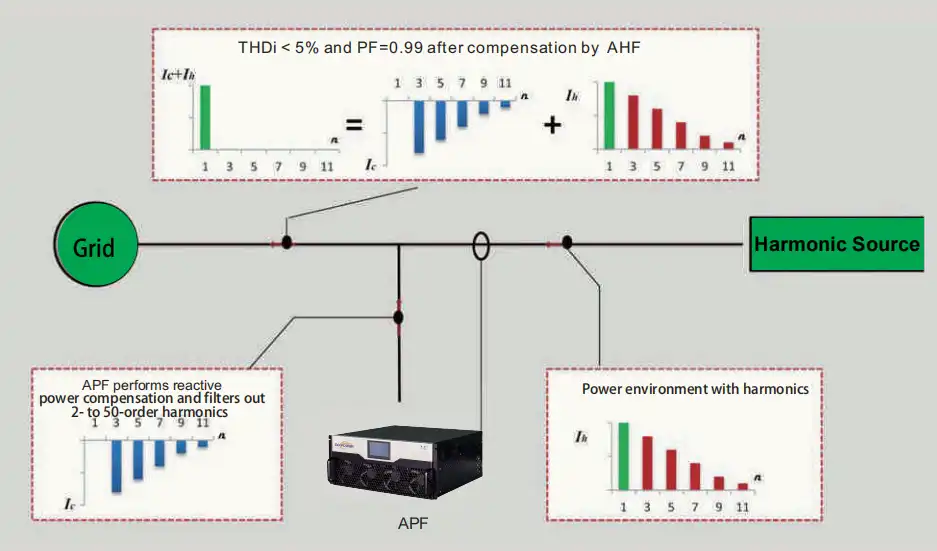
Industrial active filtering systems must meet key performance standards. Per IEEE 519, total harmonic distortion should remain below 5% at full load. Reactive power correction must support a power factor range of 0.95 leading to 0.95 lagging to ensure flexible load balancing across all operating conditions. Harmonic mitigation systems must respond in milliseconds to handle fast load changes. Dynamic response is critical for applications with variable frequency drives and other switching devices that produce rapidly shifting harmonic profiles.
Material Specifications and Component Quality
High-quality power filter systems use premium IGBT modules that can handle 100 times their rated capacity surge currents. Hospitals and commercial buildings need flame-retardant capacitors that fulfill NFPA 70 fire safety requirements. Even at severe temperatures, heat dissipation devices must maintain operating temperatures. Industrial-grade processors should power complicated signal processing algorithms in control system components. Memory systems must store adaptive control settings and previous performance data.
Environmental and Operational Standards
Equipment for different climates should have IP ratings for installation. Installations over 3,000 meters need altitude ratings because lower air density impacts cooling and insulation. Xi'an Xidian's plateau-like equipment works consistently at 4,000 meters, solving specific geographical problems. Acoustic performance specifications for Active Power Filter equipment matter particularly for commercial building applications, where noise levels should remain below 45dB during normal operation. Vibration resistance standards ensure reliable operation in industrial environments with mechanical equipment nearby.
Navigating Regulations and Compliance Requirements
International Certification Standards
various markets need various certifications for active power filter imports. EU safety and rf regulations are met with CE marking. CCC certification addresses Chinese local standards, whereas UL certification opens North American markets. Certifications demand certain testing and documentation. IEC standards guide power quality gear design and testing worldwide. IEC 61000 series standards address power electronics electromagnetic compatibility. These standards assure dependable functioning in varied electrical conditions.
Documentation and Labeling Requirements
Comprehensive technical details, test certifications, and conformity declarations are required for import paperwork. Product labels should provide rated parameters, risk warnings, and installation instructions in relevant languages. RoHS and REACH rules for European markets make environmental compliance documents crucial. QA documentation should contain factory acceptance findings, aging test certifications, and load validity reports. These papers verify production quality and function before shipping.
Regional Regulatory Variations
Different markets have varying requirements for power quality equipment. North American installations must meet National Electrical Code standards, while European ones follow IEC standards as adapted locally. Understanding these regional differences helps avoid costly compliance issues during project implementation. Some regions require additional certifications for specific applications, such as healthcare facilities or food processing plants. Planning for these requirements early in the procurement process avoids project delays and additional costs.
Import Process and Trade Considerations
Understanding International Trade Terms
Under FOB terms, the buyer's responsibility begins once goods pass the ship's rail at the departure port. Xi'an Xidian handles inland transport to the port and export customs clearance, while the buyer manages sea freight, insurance, and destination clearance. This arrangement provides buyers with greater cost transparency and shipment control. Supplier quotes commonly use CIF (Cost, Insurance, Freight), which covers maritime shipping and basic insurance, simplifying logistics but reducing cost transparency, as the seller manages all steps until port arrival. With EXW (Ex Works), buyers take full responsibility for transportation and export directly from the manufacturer's premises.
Complete Import Documentation Process
Technical queries about performance, environment, and compliance start the purchase process. Suppliers provide precise quotes with technical specs, price, and delivery dates. Payment, inspection, and performance guarantees are negotiated in contracts. Factory inspections should be scheduled so purchasers may check quality and perform acceptance testing. Commercial invoices, pack lists, bills or lading, and origin certifications are shipping documents. These papers aid customs clearance and secure foreign transactions.
Payment Methods and Risk Management
Telegraph transaction (T/T) payments are bank-to-bank and auditable. 30% deposit upon receipt of order and 70% balance before shipping are typical. Letters of credit give bank assurances but increased transaction costs + administrative complexity. Documentary collections allow banks to trade documents without credit guarantees. For reliable equipment delivery, payment should match manufacturing and quality inspection dates.
Common Import Challenges and Solutions
Currency changes may affect project costs, especially for major projects with long delivery times. For budgeting, forward currency contracts stabilize costs. Technical conversations and project updates should be handled via explicit communication procedures throughout manufacture. Quality inspection arrangements for Active Power Filter units should include both factory acceptance testing and destination inspection procedures. Third-party inspection services provide independent verification of equipment compliance and performance characteristics before final acceptance.
Why Xi'an Xidian Stands as Your Ideal Import Partner
Manufacturing Heritage and Technical Expertise
Based in Xi'an, Xidian High & Low Stress Electric is a leading Chinese manufacturer of medium- and large-voltage electrical equipment. Their 34 series, with over 100 variations, highlights strong engineering expertise and extensive system integration experience across diverse applications. The company’s proprietary technology addresses harmonic mitigation and voltage control, with R&D focused on adaptive controls and energy efficiency under varying loads. These innovations boost system performance and reduce customer operating costs.
Quality Assurance and Manufacturing Standards
Quality assurance includes 72-hour old testing and a full load certification before shipment to assure reliability in tough applications. ISO 9001 requires continuous output and progress in manufacturing. Certified ISO 14001 environmental management systems suggest sustainable manufacturing. Testing facilities provide full-scale performance testing under simulated operational circumstances. These capabilities verify harmonic mitigation, voltage control, and thermal management before gear leaves the manufacturer.
Application Experience and Industry Coverage
Xi'an Xidian solutions are used in State Grids, power engineering, metallurgy, petrochemicals, railroads, and renewable energy, offering insights into sector-specific demands. Applications range from safe, low-noise healthcare installations to industrial uses requiring high surge current regulation. Xi'an Xidian's technologies reliably regulate voltage and respond quickly for data center applications. Modular designs allow for future expansion and maintenance scheduling in manufacturing plants.
Supply Chain Reliability and Lead Times
Production Planning and Capacity Management
Integrated factories enhance assembly planning and quality control. Modular design enables parallel production of core subsystems, reducing lead times. Standard configurations require 4–6 weeks; custom systems take 8–12 weeks. Supply chain partnerships with component manufacturers ensure consistent material availability and quality standards. Long-term supplier relationships provide stability during market fluctuations and support rapid scaling for large projects.
Logistics and Shipping Coordination
Our strategic location provides access to major shipping hubs with efficient container handling. Ports like Shanghai and Qingdao offer frequent global sailings with transit times of 15–35 days. Consolidating multiple equipment orders can reduce shipping costs. Professional packing protects fragile electronics throughout ocean and domestic shipping. Custom packaging for big equipment ensures weight distribution and handling.
After-Sales Support Infrastructure
Remote diagnostics and on-site assistance via approved partners are technical support options. Managed spare parts inventory provides fast availability of crucial maintenance components. Training programs train client technical teams for normal maintenance and operation. Comprehensive operating manuals, repairs, and troubleshooting tips in relevant languages are included. Technical hotline help answers operational questions and optimizes systems quickly.
Cost Structure and Transparency
Component Cost Breakdown Analysis
Costs are driven by quality components and rigorous testing—not price competition. IGBT modules and control processors, while expensive, are critical for reliability and performance. Premium parts extend system life and reduce maintenance. Engineering costs cover custom software development and compliance testing for international standards. These investments deliver long-term value through optimized performance and multi-market regulatory compliance.
Total Cost of Ownership Considerations
Active Power Filter solutions enable energy efficiency improvements achieved through active harmonic mitigation, often recovering initial equipment costs within 18-24 months through reduced energy consumption and power factor penalties. Maintenance cost reductions result from improved electrical system reliability and reduced stress on connected equipment. Operational uptime improvements provide substantial value in critical applications such as hospitals and data centers. System reliability enhancements reduce risks of costly production interruptions in manufacturing environments.
Value Engineering Opportunities
Standardized configurations satisfy application requirements and save money via economies of scale. Custom engineering addresses unique specifications when typical solutions fail to fulfill performance criteria. Installing capital investments in phases is possible with modular designs. Lifecycle cost optimization involves assessing replacement schedules, software upgrades, and performance degradation to support informed decisions on initial specs and long-term operations.
Communication and Technical Support
Engineering Collaboration Process
Technical conversations begin with application analysis to identify power quality issues and performance goals. Based on electrical infrastructure, engineering teams calculate system size, harmonic analysis, and integration suggestions. Design reviews ensure client needs match proposed solutions before manufacturing. During manufacture and delivery, project management standards create explicit communication routes and milestone reporting. Regular updates show manufacturing progress and coordinate installation schedules.
Language and Cultural Considerations
English-speaking technical personnel simplify design and support talks. Cultural awareness training bridges business and communication divides. Flexible scheduling for technical conversations and project assessments addresses time zone issues. Documentation translation services ensure accuracy in technical specifications and operational instructions. Quality control processes verify translation accuracy for safety-critical information and operational procedures.
Long-term Partnership Development
Strategic collaborations for many projects and technical cooperation go beyond individual transactions. Integration of customer input improves product ideas and production for mutual benefit. Joint development initiatives meet market needs and technology advances. Regular business reviews assess performance against expectations and identify improvement opportunities. These discussions strengthen partnerships and ensure continued alignment with customer evolving needs and market requirements.
Conclusion
Technical standards, requirements for compliance, and supplier selection must be considered when importing Chinese active power filter systems. Xi'an Xidian has deep manufacturing, quality assurance, and application expertise across several industries. Innovation and customer cooperation help the organization solve complicated power quality issues. Understanding trade terminology, paperwork needs, and communication procedures streamlines procurement and project success. Long-term energy efficiency, system dependability, and operating cost savings result from superior active power filter technology.
FAQ
1. What certifications should I require for imported active power filter systems?
CE certification (Europe), UL listing (North America), and ISO 9001 certification are essential. Healthcare or hazardous sites may require additional qualifications. Ensure test results cover electromagnetic compatibility and safety criteria for your installation.
2. How do I verify the technical performance of active power filter systems before purchase?
Request full test results for harmonic mitigation, reaction time, and efficiency under varying loads. Performance may be verified during factory acceptance testing. Independent third-party inspections ensure compliance.
3. What are typical lead times for custom active power filter configurations?
Standard production takes 4–6 weeks; custom solutions may require 8–12 weeks depending on complexity. Component availability and testing affect timelines. Early design engagement helps optimize delivery.
Partner with Xi'an Xidian for Premium Active Power Filter Solutions
Xi'an Xidian delivers world-class active power filter systems engineered for maximum operational reliability and energy efficiency. Our comprehensive manufacturing capabilities, proven track record across diverse industrial applications, and commitment to quality excellence make us the preferred active power filter supplier for demanding projects worldwide. Our technical teams collaborate closely with customers to develop optimized solutions that address specific power quality challenges while meeting stringent compliance requirements. Contact our experienced specialists at serina@xaxd-electric.com, amber@xaxd-electric.com, or luna@xaxd-electric.com to discuss your project requirements and discover how our innovative harmonic mitigation technologies can enhance your operational performance and reduce energy costs.
References
1. IEEE Std 519-2014: IEEE Recommended Practice and Requirements for Harmonic Control in Electric Power Systems
2. International Electrotechnical Commission. IEC 61000-3-12: Electromagnetic compatibility (EMC) – Part 3-12: Limits for harmonic currents produced by equipment connected to public low-voltage systems
3. Institute of Electrical and Electronics Engineers. Power Quality Applications of Active Power Filters: Industrial and Commercial Perspectives
4. Chen, L. & Wang, M. Active Power Filter Technology Development and Market Analysis in Asia-Pacific Industrial Applications. Power Electronics Review Quarterly
5. Zhang, H., Li, J. & Kumar, S. Comparative Analysis of Harmonic Mitigation Technologies in Modern Industrial Electrical Systems. International Journal of Power Quality Engineering
6. Manufacturing Excellence Standards Committee. Quality Assurance Protocols for Power Electronics Equipment: ISO 9001 Implementation Guidelines for Active Filter Systems
_1774404811357.png)
_1774324496045.png)