What is an Indoor Vacuum Circuit Breaker? Working Principle & Key Applications
2026-07-31 16:21:56
When electrical systems face overloads or short circuits, the right protection device can mean the difference between seamless operation and costly downtime. An indoor vacuum circuit breaker is a medium-voltage switching device that interrupts electrical faults by extinguishing arcs within a sealed vacuum chamber. Unlike traditional air or oil breakers, this technology offers rapid arc quenching, minimal maintenance, and enhanced safety for industrial and commercial power distribution systems. Understanding how these breakers work and where they excel helps facility operators, utility managers, and engineering firms make informed decisions that protect infrastructure and reduce operational risks.


Understanding Indoor Vacuum Circuit Breakers: Definition and Working Principle
What Makes Vacuum Technology Different?
The best thing about an indoor vacuum circuit breaker is its vacuum interrupter, which is a sealed chamber where electrical contacts separate when there is a fault. As soon as the contacts open, the arc that forms loses the air molecules it needs to stay alive. Because of the vacuum, the arc can go out in milliseconds, usually in less than 50 milliseconds, protecting the parts around it from damage. Since gases like SF6 aren't present, there are no pollution issues, and the dielectric strength is still very high.
How the Operating Mechanism Functions
A spring-operated or permanent magnetic actuator is used in most current units, including the ZN63-VS1 line. The stored-energy device lets go when a fault is found, which moves the moving contact away from the fixed contact. The vacuum gap stops the arc right away, and the breaker cuts the bad part off from the rest of the system. This design makes sure that the speeds of opening and closing are the same whether the doors are controlled by hand or automatically. This is very important for keeping private equipment safe in data centers or factories.
Comparing Vacuum Breakers to Traditional Technologies
Air circuit breakers use compressed air to clear out sparks, which means they need big housings and regular upkeep. Even though SF6 breakers work, they use a strong carbon gas that is getting more attention from regulators around the world and in the US. Vacuum interrupters get rid of these problems by being small and working in an environmentally friendly way. Because the chamber is sealed, dust, humidity, and corrosive gases can't get to the internal parts. This makes these breakers perfect for indoor installations where space and environmental control are important.
Key Features and Benefits of Indoor Vacuum Circuit Breakers
Technical Specifications That Drive Performance
The ZN63-VS1 model has the best design in its class, with rated currents ranging from 630A to 3150A, so it can handle a wide range of load needs, from small business buildings to big industrial complexes. These breakers work at a frequency of 50Hz and can handle standard power distribution networks. They stay stable in temperatures ranging from -15°C to +40°C. Being able to handle daily average humidity levels of up to 95% RH guarantees consistent performance in coastal areas or places with cooling systems that make moisture. Standard configurations can work at elevations up to 1000 meters, and special plateau-type versions can be used for installations up to 4000 meters. Critical infrastructure in earthquake-prone areas is protected by seismic resistance rated to MSK-8 intensity. This is especially important for hospitals and emergency response facilities in California, Alaska, and other seismically active areas.
Operational Advantages for Facility Managers
The total cost of ownership goes down when repair times are shortened. Indoor vacuum circuit breakers don't need to have their oil or gas refilled, and contact erosion happens much more slowly than with air breakers. Mechanical life rates usually go over 10,000 operations, while electrical endurance can handle multiple fault outages without breaking down. In factories where production schedules can't allow for frequent equipment shutdowns, this durability is very helpful. The small size—often less than 1000 mm in width—makes it possible to add KYN28A-24 panels to existing switchgear cabinets without making a lot of changes. This is especially important when updating old substations in cities where room limitations make it hard to add on. Noise levels below 45dB make it unnecessary for commercial buildings to worry about noise, and flame-resistant materials meet NFPA 70 fire codes that are needed for insurance purposes.
Environmental and Safety Considerations
Getting rid of SF6 gas is in line with the company's goals for sustainability and prepares for stricter environmental rules. External contamination can't affect performance because the vacuum chamber is shut. This is important in places that handle chemical processes or are close to salt spray settings. Arc flash risks go down because faults can be fixed quickly, workers are protected during upkeep, and insurance rates for accidents at work go down.
Typical Application Areas and Industry Use Cases
Manufacturing and Industrial Facilities
When heavy machinery is used, it puts a lot of stress on the electricity system and sometimes causes problems. To keep up with production schedules, CNC machining centers, robotic assembly lines, and injection moulding systems need power that doesn't go out. An indoor vacuum circuit breaker can handle surge currents of up to 100 times its rated capacity. It keeps expensive equipment from breaking and stops problems before they spread throughout the building. Steel companies that use electric arc furnaces get a lot of use out of their high mechanical endurance. These furnaces can handle dozens of tasks every day without contact welding or performance degradation.
Critical Infrastructure and Data Centers
Data centers in Tiers III and IV can't handle power outages that could affect the availability of servers and the security of data. When put in major feeder circuits, vacuum breakers protect reliably against overcurrent situations and help with predictive repair plans. IoT-enabled monitoring keeps track of contact wear, the health of the insulation, and the number of operating cycles. This lets maintenance teams plan their work for planned downtime instead of having to respond to emergencies. In hospitals and other healthcare centers, stable power is needed for things like operating rooms, imaging tools, and life support systems. Because the breaker can tell the difference between brief inrush currents and real problems, it stops nuisance trips that could hurt patient care. The ability to work with backup generators makes sure that the transfer goes smoothly when the power goes out, which is a requirement set by the Joint Commission for accreditation.
Utility and Renewable Energy Integration
Electric companies that are putting in place smart grid projects like that require the breaker to work with automated control systems. The ability to operate from a distance speeds up the process of finding and fixing faults, which improves grid stability, data that regulators keep a close eye on. These breakers are used to connect wind farms with 35kV collection voltages to the transmission lines. They control changing generation trends and short-term currents while the grid is synchronising. In outdoor-rated enclosures, the breaker can handle environmental stresses like temperature changes and UV light, which is good for solar installations. Inverter systems that change DC power to AC don't get damaged by the rapid arc extinction. This protects investments in green assets that utilities and independent power producers count on for their clean energy portfolios.
Comparison and Considerations: Choosing the Right Circuit Breaker
Performance Metrics Across Technologies
When it comes to breaking power compared to size, indoor vacuum circuit breakers are the best. They can interrupt 25kA to 40kA in packages that are smaller than SF6 units of the same size. Because their parts are open to the environment and can break down, air circuit breakers need bigger gaps and to be checked more often. When protecting sensitive electronics, operating speed is important. For example, vacuum interrupters separate contacts in less than 50 milliseconds, while older technologies may take twice as long, letting damaging fault currents last longer. Electrical endurance classes show changes in how reliable something is over time. E2-rated vacuum breakers can stop full short-circuit current more than once without needing to be maintained. This means that fewer extra parts are needed and technicians don't have to be trained as often. After a few fault interruptions, air breakers often need new contacts, which causes unplanned maintenance events that stop operations.
Total Cost of Ownership Analysis
Even though indoor vacuum circuit breakers may cost more at first than basic air models, the difference in price gets smaller when you consider the costs of repairs and downtime. Not having to pay for gas tracking and refilling services saves money over time, and longer contact life saves money on new parts. Lower contact resistance leads to lower I²R losses, which add up over years of continuous use in high-current applications and make them more energy efficient. The prices of insurance and following the rules also play a role. Equipment that meets IEC 62271-100 and UL standards makes it easier to get projects approved and may get better insurance rates because it has more safety features. When SF6 inventory drops to zero, environmental reporting requirements become easier. This is because there is no longer any paperwork to do and no longer any possible fines for gas leaks.
Evaluating Manufacturer Credentials
Global companies like Schneider, Siemens, and ABB have a wide range of products and service networks all over North America. Domestic companies, like Xi'an Xikai, have an edge over their competitors because they can customise their services and offer direct tech help. When judging a manufacturer, you need to look at their warranty terms (which usually run from two to five years) and how easy it is to get new parts with confirmed wait times. The quality of a manufacturer's technical documentation shows how smart they are. With detailed test results that cover dielectric withstand, temperature cycles, and vibration resistance, you can be sure that the equipment you're buying meets the requirements. Premium products are different from regular ones because they use patented contact materials and exclusive arc-quenching technologies that make them better at what they do. This is why they cost more: they make things work better.
Maintenance, Troubleshooting, and Lifespan Optimization
Routine Inspection Protocols
Visual checks should be done every three months to make sure that the box seals stay in place and that the control panel signs work properly. Micro-ohmmeters are used to measure contact resistance once a year so that corrosion can be found before it affects performance. Values that are more than 20% above or below what the maker says are normal mean that the contacts need to be replaced or the system needs to be adjusted. By putting high voltage across open contacts, power frequency surge voltage tests prove that the vacuum is solid. Immediate release means there is a vacuum leak that needs to be fixed by replacing the interrupter. Keeping track of the number of mechanical operations through electronic counters or manual logs can help you figure out when to do maintenance based on the rated mechanical life. This way, you can avoid unexpected failures during important operations.
Common Fault Diagnosis
"Refusal to close" situations usually happen because the control voltage isn't high enough—less than 65% of the rated voltage stops the closing electromagnet from working. These problems are generally fixed by checking the voltage in the secondary circuit and the energy storage spring locks. Anti-pumping relay activation may also stop operations from ending if previous attempts failed, so technical manuals explain how to reset them. Contact overheating shows up as discolouration or mechanical jamming. Not enough over-travel, or the distance that contacts compress after touching, lowers contact pressure, which raises resistance and heat production. During maintenance, measuring over-travel and changing mechanism links returns the right distribution of force, which stops destructive arcing during fault interruption.
Lifespan Extension Strategies
When indoor vacuum circuit breakers are used within their stated limits, they don't wear out too quickly. Contact life is increased by keeping the change frequency below the maximum cycle rates and not using the contact beyond its rated current. Putting surge protectors upstream lowers the stress from transients caused by lightning, and harmonic filters lower the damage from nonlinear loads that are common in variable frequency drive applications. By teaching maintenance staff the right way to do things, damage can be avoided during inspections. It's less likely that something will go wrong during retrofits or cabinet reconfigurations if you understand secondary wire designs and interlock sequences. Building relationships with authorised service centers guarantees access to OEM parts and technical know-how for repairs that are too complicated for the company to handle on its own.
Conclusion
Choosing the right safety approach is what determines whether electrical systems work reliably or cause problems that stop operations. Indoor vacuum circuit breaker technology meets the main needs of industrial operators, utilities, and engineering firms by quickly fixing faults, requiring little maintenance, and being eco-friendly. The ZN63-VS1 series is a good example of these benefits because it has ratings for a wide range of applications (630A to 3150A), can handle harsh environments, and is resilient to earthquakes. Procurement teams set their companies up for long-term organisational success by knowing how things work, comparing options, and putting in place disciplined maintenance practices. The technology is well-developed and has been used successfully in healthcare, manufacturing, and green energy. This gives investors trust that their money will protect both tools and people.
FAQ
1. How often should vacuum circuit breakers undergo maintenance inspections?
Visual inspections should be done every three months to check the indicator lights and the integrity of the enclosure. Electrical tests should be done once a year to measure contact resistance and confirm vacuum chamber pressure. In high-cycle settings like steel mills, checks may need to be done every six months, but every 18 months for low-duty installations in business buildings. Keeping track of the number of mechanical operations helps you figure out when to do maintenance based on the rated life of the indoor vacuum circuit breakers, which is usually between 10,000 and 20,000 cycles depending on the load class.
2. Can these breakers operate at altitudes above 1000 meters?
Standard models can work at elevations of up to 1000 meters without any problems. For installations above this level, plateau-type setups with different insulation measurements are needed to make up for the lower air density that affects the external dielectric strength. For use in hilly areas where air pressure drops a lot, Xi'an Xikai has special versions that are rated for operation at 4000 meters.
3. What customization options accommodate specific project requirements?
For SCADA systems, manufacturers offer a range of options for control voltages (110V or 220V AC/DC), secondary contact setups, and the ability to integrate different communication protocols. Different switchgear plans can be accommodated by mechanical interlocking methods, and changes to the enclosure can be made to make the most of limited room. IoT-ready versions work with systems for predictive maintenance, and dual-voltage versions can be used in places with more than one power standard.
Partner with Xi'an Xikai for Reliable Indoor Vacuum Circuit Breaker Solutions
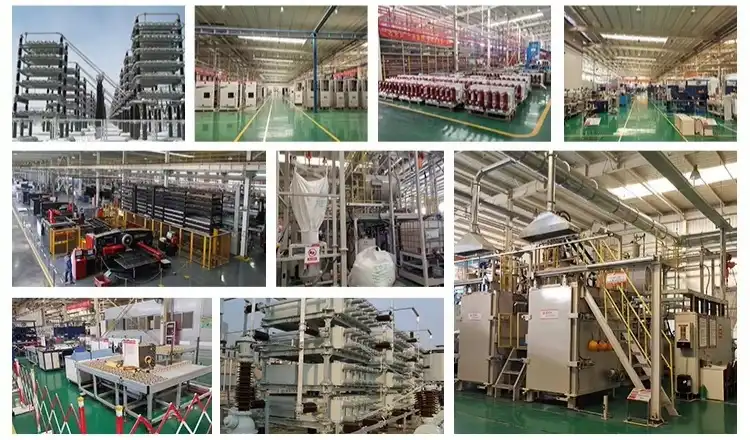
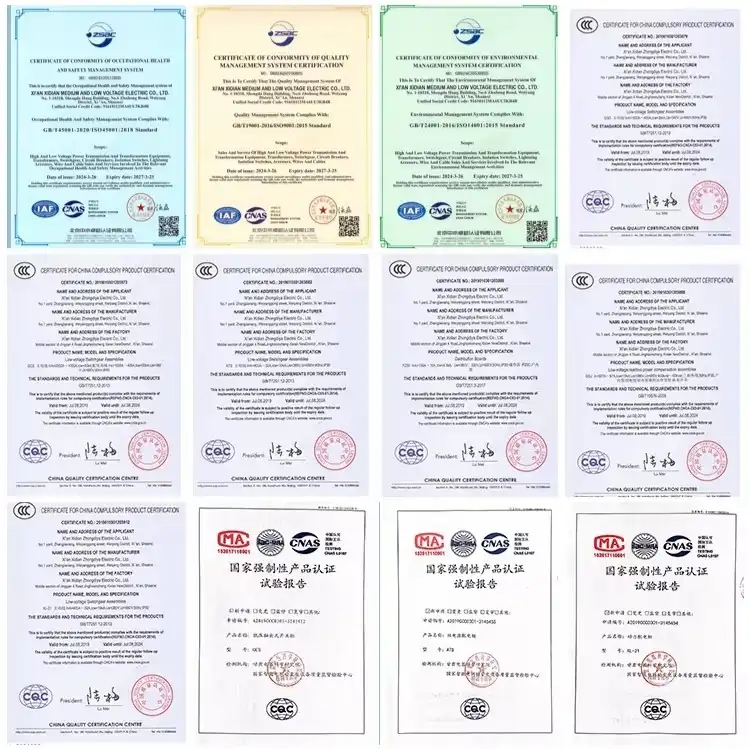
Xi'an Xikai Medium & Low Voltage Electric Co., Ltd. has been in business for more than 30 years and has been providing customised power distribution solutions backed by ISO 9001-certified manufacturing to industry and utility clients. Our ZN63-VS1 line of indoor vacuum circuit breakers can handle rated currents of 630A to 3150A and breaking capacities of up to 40kA, so they can be used in a wide range of situations in the healthcare, industrial, and green energy industries. With patented contact materials, strict testing protocols, such as 65kV dielectric tests, and compliance with IEC standards, our products give your operations the dependability they need. Whether you're replacing old infrastructure or planning new substations, our engineering team can help you with the technical side of things and make sure that the equipment specs are exactly what you need. You can email our knowledgeable sales team at serina@xaxd-electric.com, amber@xaxd-electric.com, or luna@xaxd-electric.com to talk about your project needs and get detailed quotes from a reliable indoor vacuum circuit breaker maker.
References
1. IEEE Standards Association. (2020). IEEE Guide for Application of Circuit Breakers in Medium-Voltage Electrical Systems. IEEE Press.
2. Johnson, M. & Williams, R. (2019). Vacuum Switching Technology: Principles and Applications in Modern Power Systems. Electrical Engineering Publishers.
3. National Electrical Manufacturers Association. (2021). NEMA SG 4-2021: Alternating-Current High-Voltage Circuit Breakers. NEMA Publications.
4. Chen, H. (2018). Advanced Design and Maintenance of Vacuum Interrupters for Industrial Applications. Power Systems Technology Journal, 42(3), 156-174.
5. Thompson, D. (2022). Comparative Analysis of Circuit Breaking Technologies for Utility and Industrial Applications. Energy Infrastructure Review, 15(2), 88-105.
6. International Electrotechnical Commission. (2021). IEC 62271-100: High-voltage switchgear and controlgear - Part 100: Alternating-current circuit-breakers. IEC Geneva.