Step-Down Voltage Transformer: Benefits and Common Uses
2026-08-31 16:31:57
When managing medium to high-voltage power systems, selecting the right voltage transformer becomes mission-critical. Step-down voltage transformers serve as the backbone of electrical infrastructure, converting high-voltage inputs into safer, usable levels for measurement, protection, and control circuits. These devices ensure operational safety while maintaining precision in substations, switchgear assemblies, and industrial automation systems. Whether you're sourcing components for OEM switchgear manufacturing or upgrading aging grid infrastructure, understanding the functionality and benefits of voltage transformers directly impacts system reliability and long-term operational costs.


Understanding Step-Down Voltage Transformers
What Defines a Step-Down Voltage Transformer?
In industrial settings, a step-down Voltage Transformer, also known as a potential transformer (PT), lowers the primary high voltage to standard secondary output voltage. Voltage Transformers, in contrast to current transformers, only lower the voltage for tracking equipment, meters, and safety relays. This difference is very important when building switchgear setups that need to meet strict requirements for both measurement accuracy and circuit isolation.
Working Principle and Core Components
Electromagnetic induction is what makes the system work. When power is sent to the high-voltage main windings, they cause the secondary windings to have the same amount of voltage through a reinforced steel core. Epoxy resin coating is used in more and more modern designs. This eliminates the risks of moisture getting in and partial release. This completely sealed design works really well in outdoor substations and harsh industrial settings where regular oil-immersed units need to be serviced often.
Types and Design Variations
During buying, engineers come across a number of different design groups. Single-phase Voltage Transformers are better for light-duty tasks, while three-phase versions can handle spreading out the load evenly in bigger setups. Dry units with epoxy resin insulation are safer and less likely to catch fire than oil-immersed options, though oil-immersed options may be better at managing heat in situations with constant high load. Utility-scale needs are met by high-voltage models like the 35kV class, while industrial plant distribution is mostly handled by medium-voltage models (up to 12kV).
Benefits of Using Step-Down Voltage Transformers in Industrial Settings
Enhanced Safety Through Voltage Stabilization
Voltage Transformers separate high-voltage main circuits from low-voltage secondary measurement systems through galvanic separation. This separation keeps people and sensitive electronic equipment safe from short-term power surges and faults. When paired with the right accuracy class—0.2S for revenue metering or 0.5 for general protection—the transformer makes sure that safety switches get accurate voltage signals, which set off the circuit breaker at the right time when something goes wrong.
Energy Efficiency and Operational Cost Reduction
No-load losses for the Voltage Transformer are kept to a minimum by using high-quality core materials like grain-oriented silicon steel. In premium units, these losses are usually less than 0.1W/kg. Over the course of 20 years, these improvements in economy will save a lot of energy. Epoxy-cast designs also don't need oil tracking, filtering, or disposal, so they have a lower total cost of ownership by 15 to 25 percent compared to liquid-filled options.
Accuracy Classes and Measurement Reliability
The measurement error limit is directly related to the accuracy class (0.2S, 0.5, 5P, 10P). For accurate billing, revenue-grade meters need to be accurate to within 0.2S, while industrial protective circuits can work with 0.5 or 5P ratings. Choosing the right accuracy keeps businesses from losing money and keeps protection schemes from going off by accident.
Dry vs. Oil-Immersed Construction Trade-Offs
Dry-type Voltage Transformers work great in switching rooms inside buildings where fire rules don't allow flammable materials. Their epoxy resin insulation is resistant to water and other contaminants, and it doesn't need much maintenance other than a visual check every so often. Oil-immersed units cool better for big loads that are being used all the time, but they need to be tested for oil, have leaks watched, and follow environmental rules. The choice depends on the installation setting, the rules, and the availability of resources for upkeep.
Choosing the Right Step-Down Voltage Transformer for Your Application
Load Demands and Voltage Specifications
First, figure out the total secondary burden, which is the VA rating of all the associated monitoring and safety systems. Multiple relay links can be made without overloading a 35kV outdoor Voltage Transformer with 5VA or 10VA secondary capacity. The primary voltage grade must match the standard voltage of the system. The 35kV class can handle networks up to 36kV and keep the insulation intact during 170kV lightning impulse tests.
Accuracy Class Selection for Specific Functions
Match the accuracy class to the purpose of the application. To use utility revenue meters, you need 0.2S transformers that have been tested and found to meet IEC 61869-2 standards. Industrial protection circuits work reliably with 0.5 class units, which give overcurrent, undervoltage, and differential relays enough accuracy. Don't ask for more accuracy than you need because premium classes cost 20–40% more.
Environmental and Installation Considerations
Installations outside need to be protected against dust and water jets with IP65+ entry protection. UV-resistant housings keep polymers from breaking down in solar farms, and anti-corrosion stainless steel parts work well in marine and industrial settings. Temperature rates from -40°C to +55°C make it possible to use in a wide range of temperatures, from the deserts of the Middle East to the monsoons in Southeast Asia. For indoor switchgear applications, small sizes are most important. Before buying, make sure that the transformer's height and footprint will fit within the cabinet's limits.
Supplier Evaluation and Customization Options
Leading companies like Siemens, ABB, and Schneider Electric have wide ranges of products, but specialized sellers often offer more ways to customize them. Check compliance certifications (IEC 61869, GB 20840.2-2014), manufacturing quality systems (ISO 9001), and type test results on prospective providers. Ask for detailed drawings that show how the parts will be mounted, how the terminals will be set up, and how the wiring will be done. Make sure you understand the minimum order quantities (MOQs) for custom winding ratios, as multi-winding designs may have MOQs that affect how long it takes to make a prototype.
Suppliers you can trust offer yearly framework deals with monthly purchase orders that line up the delivery of transformers with the production plans for switchgear. Check the production wait times for large orders as well as the prototype turnaround times, which are usually between one and two months for new specs. Full warranty coverage (at least 18 to 24 months) and easy access to technical support set trustworthy partners apart from transactional vendors.
Installation, Testing, and Maintenance of Step-Down Voltage Transformers
Installation Best Practices and Safety Protocols
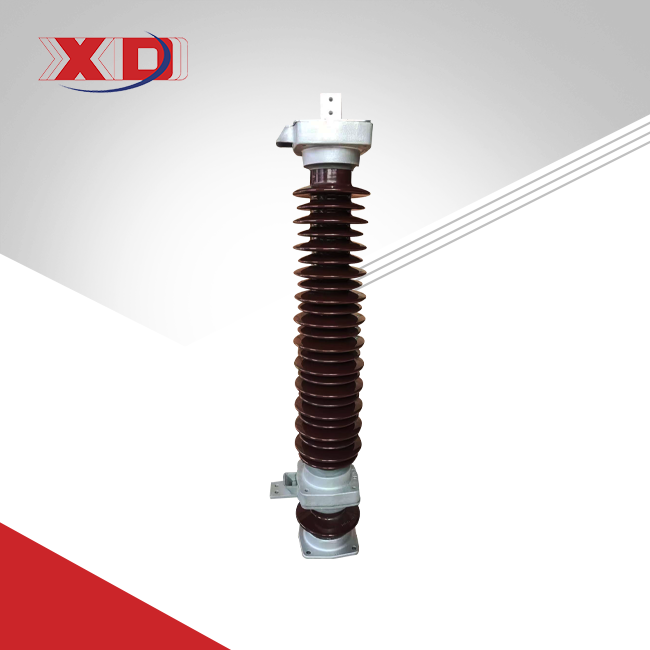
When ceramic insulators and resin housings are mounted correctly, they don't have to deal with mechanical stress. According to local building codes, outdoor Voltage Transformers need rigid support structures that can withstand wind loads and earthquakes. Keep a minimum distance of 400 mm between your equipment and grounded structures to avoid arcing over during transient overvoltages. Before turning the power on, make sure that the grounding connections meet the resistance requirements (below 10 ohms).
Testing Methodologies and Performance Verification
Test new Voltage Transformer units in a planned way before putting them into service. Start by using a 5kV megohmmeter to test the insulation resistance. You should expect numbers higher than 1000 megohms. Use 80% of the rated voltage to measure the secondary output with calibrated meters, and make sure the ratio accuracy is within the class limits that were set. Manufacturing flaws can be found with partial discharge tests; results below 5 picocoulombs mean the dielectric quality is good. Using thermal imaging during the initial power-up process shows that the three-phase banks are loaded evenly.
Troubleshooting Common Operational Issues
Occasionally occurring secondary output is a sign of either loose end connections or problems inside the windings. Check that primary-side fusing hasn't made protection coordination worse. Unexpected heating is a sign of overload; make sure the connected load doesn't go over the nameplate VA rating. Epoxy surfaces that are discolored could mean that they have been tracked because of contamination. Clean them with rubbing alcohol and look for cracks. If outdoor units get damaged by animals, UV light, or impact, they need to be replaced right away because they are safety-critical.
Preventive Maintenance Schedules
Dry-type Voltage Transformers in controlled settings only need to be inspected once a year. Check the terminals for corrosion, tighten the connections to the required torque levels, and take pictures of the condition to look at trends. Outdoor units need to be cleaned every six months to get rid of salt buildup, dust, and bacterial growth. During times of high load, infrared thermography can find hotspots before they break. Keep service logs that record test results so that future maintenance methods can be used to get the most out of machines that will last 20 years or more.
Common Applications of Step-Down Voltage Transformers in B2B Industries
Electrical Distribution and Grid Stability
Voltage Transformers are used in switchyards by utility substations to send voltage signals to SCADA systems, protective relays, and synchronization equipment. These transformers let you see the levels of transmission lines in real time, which helps you decide how to balance the loads and find the fault. When there are problems with the power grid, accurate voltage measurement lets automatic transfer plans work without any problems, keeping the power quality for important industry users.
Manufacturing and Industrial Automation Integration
Voltage Transformers are used in motor control centers, variable frequency drive panels, and process control systems in factories. Accurate voltage tracking is needed in CNC machining centers to keep the spinning speed accurate and stop tools from breaking because of voltage drops. Instrumentation that is fed by a generator sets off alarms on automated assembly lines when the power quality drops. This keeps production mistakes from happening. Heavy businesses with on-site medium-voltage distribution, like steel mills and cement plants, benefit especially from the 35kV Outdoor Voltage Transformer.
Renewable Energy and Smart Grid Technologies
Voltage Transformers are used at the output points of inverters in solar farms to measure the AC voltage before connecting to the grid. These readings are used by programs that track the highest power point and systems that fix reactive power. In collector substations, wind turbine producers use transformers to receive voltage data from all of the turbine groups. Voltage Transformers are being used in smart grids more and more. These transformers have communication interfaces that are IEC 61850-compliant and stream real-time data to energy management systems for predictive analytics and demand response programs.

Conclusion
Voltage Transformer units are basic parts of modern power systems that make them safer, more accurate, and more efficient in a wide range of industry settings. To choose the right units, you need to carefully look at the accuracy requirements, the working conditions, and the supplier's abilities. The 35kV outdoor Voltage Transformer is an example of modern design trends toward epoxy resin encapsulation. It works without any maintenance and lasts longer. As efforts to use more green energy and build a smart grid pick up speed, these transformers will keep changing to have better communication features and better insulation performance. Professionals in procurement who understand these technical details set their companies up for solid, low-cost power infrastructure.
FAQ
1. What differentiates step-down voltage transformers from potential transformers?
The terms refer to the same machines. "Step-down Voltage Transformer" focuses on lowering the voltage, while "potential transformer" (PT) is the standard term used in utility and industrial settings. For instrumentation purposes, both lower the high primary voltage to standard secondary levels, which are usually 100V or 110V. The terms used vary by area, with "potential transformer" being the most common in North American and European technical documents.
2. How do I determine the appropriate accuracy class for my application?
To make sure accurate bills, revenue metering apps need 0.2 or 0.2S accuracy classes. With 0.5 class units, industrial protection systems work consistently. Protective relays with accuracy class 5P and 10P are used when rapid response is more important than steady-state precision. Check the specs provided by the relay maker to make sure that the PT accuracy standards are met and that measurement errors are avoided.
3. Can voltage transformers be customized for specific switchgear configurations?
Yes, manufacturers often change the secondary outputs, mounting arrangements, winding ratios, and terminal arrangements. Custom multi-winding designs let you connect more than one metering and safety circuit to a single main link. During the quotation process, talk about shipping dates, environmental ratings, and size restrictions to make sure they work with production plans.
Partner with Xi'an Xikai for Reliable Voltage Transformer Solutions
The Voltage Transformers that Xi'an Xikai Medium & Low Voltage Electric Co., Ltd. makes are used by switchgear OEMs and power system integrators in South Asia, Southeast Asia, and the Middle East. The company has decades of engineering experience. Our 35kV outdoor Voltage Transformer is made by casting epoxy resin and carefully winding wires. It has 0.2S accuracy class performance and IP65+ protection against the elements. We know how important it is to find the right balance between delivery times that work with switchgear production schedules, limitations on size, and the need for accuracy. Our technical team works closely with the sourcing and engineering groups to make sure that everything fits together perfectly, whether you need standard configurations or custom multi-winding designs. Get in touch with our experts at serina@xaxd-electric.com, amber@xaxd-electric.com, or luna@xaxd-electric.com to talk about your needs. Check out our huge selection of products at xaxd-electric.com to see why top Voltage Transformer sellers choose Xi'an Xikai for quality, customization options, and on-time delivery.

References
1. International Electrotechnical Commission. IEC 61869-1: Instrument Transformers - General Requirements. Geneva: IEC, 2019.
2. Zhang, W., and Liu, H. "Epoxy Resin Insulation Systems for Medium Voltage Instrument Transformers." IEEE Transactions on Dielectrics and Electrical Insulation, vol. 27, no. 3, 2020, pp. 891-898.
3. National Standardization Administration of China. GB 20840.2-2014: Instrument Transformers - Additional Requirements for Voltage Transformers. Beijing: Standards Press of China, 2014.
4. Rahman, M., and Patel, S. "Accuracy Class Selection for Protective Relaying Applications in Industrial Power Systems." Journal of Power System Engineering, vol. 15, no. 2, 2021, pp. 134-147.
5. Anderson, P. M. Power System Protection. Hoboken: IEEE Press, 2022.
6. Chen, Y., Kumar, A., and Zhao, L. "Comparative Life-Cycle Analysis of Dry-Type versus Oil-Immersed Instrument Transformers." International Journal of Electrical Power & Energy Systems, vol. 118, 2020, pp. 1-9.