Where to Buy Active Harmonic Filters for Industrial Applications?
2026-02-26 16:01:53
You can find reliable active harmonic filter suppliers for industrial applications through direct manufacturers, authorized distributors, B2B platforms, and specialized electrical equipment traders in Southeast Asia, Central Asia, the Middle East, and Africa. Power quality enhancement solutions from leading manufacturers like Xi'an Xidian include standard and customized filtering systems that meet international and regional compliance requirements for industrial facilities. Industrial opportunities and challenges exist for sourcing advanced power quality solutions in Southeast Asia, Central Asia, the Middle East, and Africa. Harmonic filtering technology has great market potential in these regions due to rapid industrialization, manufacturing growth, and energy demand. Understanding regional procurement dynamics is crucial for evaluating suppliers and building reliable critical power electronics supply chains.
 |
 |
Understanding Active Harmonic Filter Technology and Market Demand
Advanced Technology Features for Industrial Applications
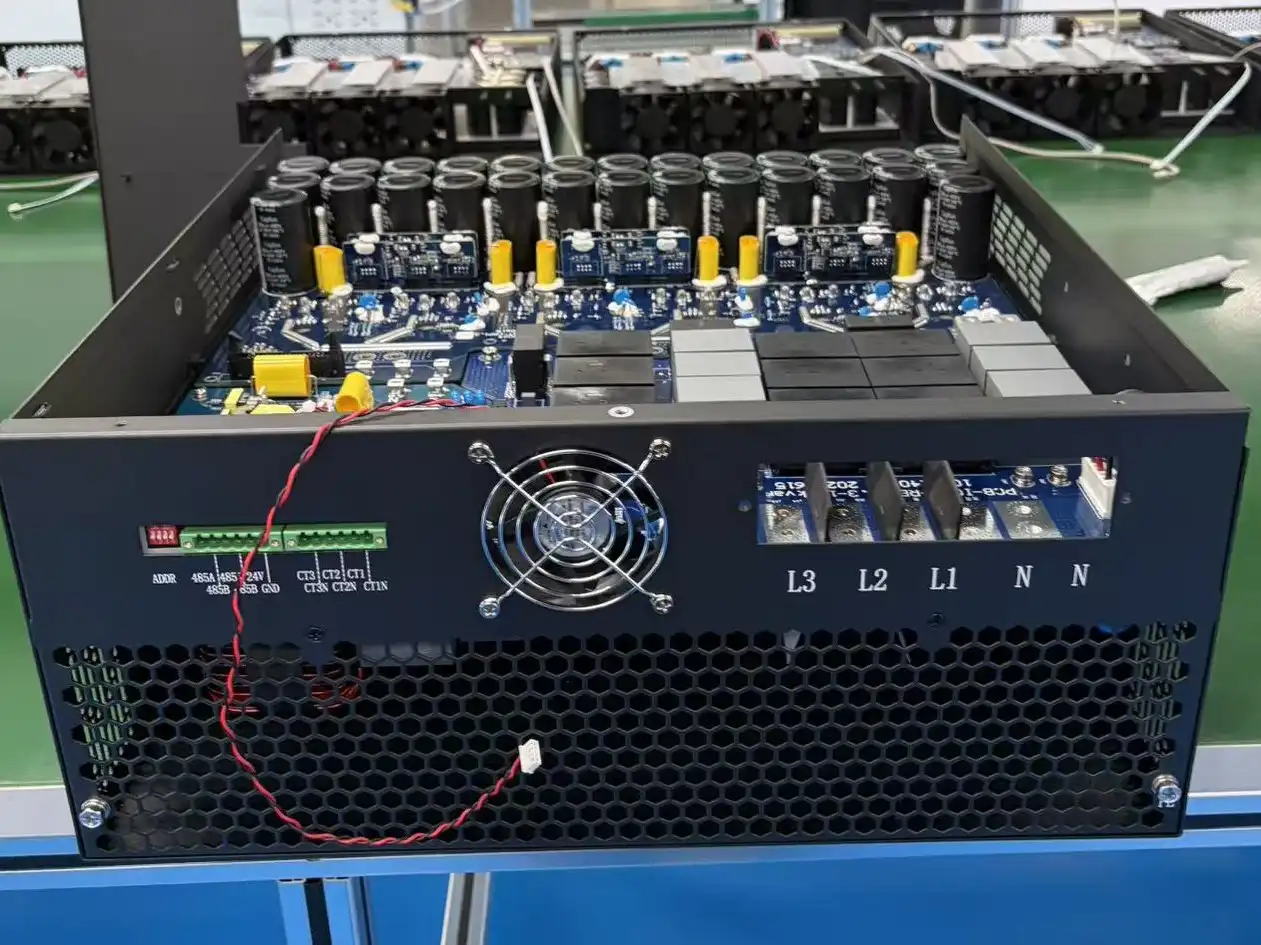
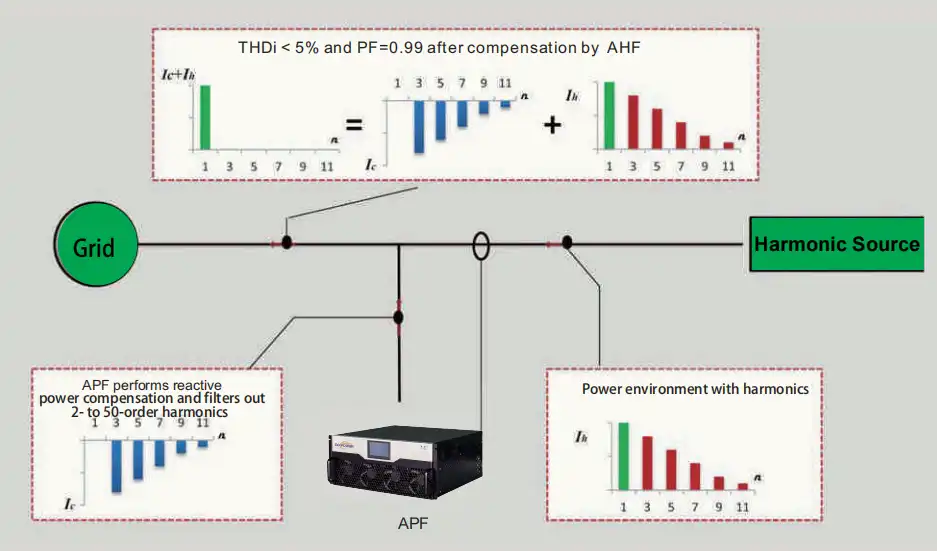
Advanced real-time control algorithms and digital signal processors enable dynamic harmonic suppression in modern Active Harmonic Filter systems. These systems actively inject compensating currents to neutralize harmonic distortion and optimize power quality across load conditions. Adaptive filtering instantly adjusts to changing harmonic spectrum characteristics to regulate voltage and compensate reactive power. Modular designs that support rack- and wall-mounted installation benefit industrial facilities. Switching frequency optimization and pulse width modulation control minimize electromagnetic interference and compensate current. Energy efficiency under diverse operating conditions is maintained by advanced feedback loop mechanisms that monitor power electronics performance and adjust compensation parameters.
Regional Market Growth and Industrial Expansion
Manufacturing in Southeast Asia boosts power quality solutions demand in automotive, electronics, and textile industries. Foreign investment in harmonic filtering systems-requiring manufacturing facilities is common in Vietnam, Thailand, and Malaysia. Industry 4.0 initiatives in the region offer opportunities for integrated power quality suppliers. Kazakhstan and Uzbekistan emphasize mining and energy development, which requires robust filtering systems that can handle nonlinear load variations. The Middle East's shift from oil-dependent economies to manufacturing and technology drives industrial power quality equipment demand. Power quality solutions are in demand in Kenya, Nigeria, and South Africa as infrastructure development accelerates.
Analyzing Industrial Applications and Performance Requirements
Manufacturing Plant Power Quality Challenges
Complex harmonic distortion challenges in industrial manufacturing require sophisticated filtering. Variable frequency drives and servo control systems generate harmonic content in CNC machining centers. Numerous motor drives on assembly lines cause cumulative harmonic effects that require complex current compensation. Modern factories use complex automation systems with sensitive digital controls that are susceptible to power quality issues. Robotics and precision instrumentation increase the need for clean power delivery with low harmonic spectrum contamination. Industrial inverters' switching frequency harmonics can disrupt communication and control networks, making filtering essential for operational reliability.
Load balancing multiple production lines is essential when harmonic generating equipment operates simultaneously. Advanced filtering systems must handle rapid load changes while regulating facility voltage. Processing surge currents up to 100 times rated capacity protects equipment startup and faults.
Data Center and Critical Infrastructure Requirements
Data centres need high power quality to protect sensitive computing equipment and run continuously. Switched-mode and UPS power supplies in server farms cause significant harmonic distortion. Traditional passive filters cannot handle the concentration of nonlinear loads.
Complex cooling systems with variable speed drives add harmonic content to modern data centers. Multiple harmonic sources interact, requiring adaptive filtering to adapt to changing load patterns during daily operations. Energy efficiency makes active filtering a better power loss reduction method than reactive compensation. Hospitals need similar power quality standards to protect life-critical equipment and imaging systems. Medical devices are sensitive to voltage and harmonic distortion. Diagnostic equipment, life support systems, and facility infrastructure create complex power quality issues that require comprehensive filtering.
Regional Supply Chain Analysis and Sourcing Strategies
Southeast Asian Manufacturing and Distribution Networks
Southeast Asia has many electrical equipment manufacturers and distributors serving regional and global markets, including suppliers of Active Harmonic Filter solutions. Singapore is a regional trading hub with extensive distribution networks. Power electronics components, such as those used in Active Harmonic Filter systems, are manufactured in Malaysia and Thailand at competitive prices and high quality.
Technical support and after-sales service are available from Bangkok, Kuala Lumpur, and Jakarta distributors. Regional partners offer faster delivery, local inventory management, and knowledge of national electrical codes and standards. Regional engineering contractor relationships aid project integration and commissioning. In Southeast Asia, multinational corporations demand internationally certified products with strict quality standards. Local sourcing can save money while providing technical expertise and fast response. Regional trade agreements streamline imports and logistics.
Central Asian and Middle Eastern Procurement Landscape
Almaty and Tashkent distributors serve Central Asian markets. Distributors maintain international manufacturer relationships while providing local technical support and inventory management. Industrial development in the region opens up opportunities for power quality solution providers.
Dubai, Riyadh, and Cairo have strong distribution networks in the Middle East. These commercial hubs provide access to Gulf Cooperation Council and North African markets. Regional standards and project requirements are illuminated by local partners. Industrial electrical equipment is in high demand in both regions due to infrastructure development. Advanced power quality suppliers benefit from government manufacturing diversification programs. Successful market entry requires knowledge of local procurement and payment methods.
African Market Dynamics and Distribution Channels
African markets offer opportunities across economic zones and industries. South Africa has the continent's best electrical equipment distribution network and technical capabilities. Industrial growth in Nigeria increases demand for power quality solutions for manufacturing and telecommunications infrastructure. Kenya and Tanzania are interested in industrial development that requires reliable power quality equipment. Market access and regional preferences and needs are provided by major city distributors. Infrastructure investment across the continent creates long-term growth.
Regional trade agreements and economic partnerships lower trade barriers and increase market access. Successful supplier relationships require knowledge of local customs, certification, and payment methods. Partnerships with local distributors are often the best market entry strategy.
Comprehensive Supplier Evaluation and Selection Criteria
Direct Manufacturer Sourcing Advantages and Considerations
| Sourcing Channel | Advantages | Disadvantages |
|---|---|---|
| Direct Manufacturers | Competitive pricing, customization capabilities, direct technical support | Higher MOQs, longer lead times, limited local support |
| Authorized Distributors | Local inventory, technical support, faster delivery | Higher pricing, limited customization, potential stock limitations |
| B2B Platforms | Wide supplier selection, competitive pricing, easy comparison | Quality verification challenges, limited technical support, payment risks |
| Trading Companies | Consolidated sourcing, logistics support, flexible terms | Limited technical expertise, quality control concerns, communication barriers |
Access to the newest technological advancements and customization options that distributors might not provide is possible through direct manufacturer relationships. Comprehensive engineering support, such as system design support, application-specific customization, and continuous technical consultation, is provided by manufacturers such as Xi'an Xidian. Direct communication with design engineers makes it easier to develop the best solution for particular industrial needs. Better knowledge of production capacities, quality control procedures, and delivery scheduling is made possible by manufacturing partnerships. For longer-term supply agreements and larger projects, direct relationships frequently offer preferential pricing. More assurance regarding product dependability and adherence to global standards is provided by having access to factory quality systems and certifications.
Quality Assurance and Certification Verification
A comprehensive evaluation of manufacturing processes, testing protocols, and certification compliance is necessary for evaluating supplier quality systems. Continuous improvement techniques and established quality control procedures are indicated by ISO 9001 quality management systems. A dedication to sustainable manufacturing practices is demonstrated by ISO 14001 environmental management certification.
Compatibility with local safety regulations and electrical standards is guaranteed by product certifications such as CE marking, UL listing, and CCC compliance. Product capabilities and reliability claims are validated through the verification of test certificates and performance specifications. Compatibility problems can be avoided by being aware of the range of certifications and how they relate to particular regional requirements.
Manufacturing capabilities and the efficacy of quality control are revealed by factory audits and quality evaluations. Assessing testing apparatus, production procedures, and quality documentation aids in determining the dependability of suppliers, particularly when they include advanced solutions like Active Harmonic Filter technologies. Adequate post-sales support availability is ensured by evaluating engineering resources and technical support capabilities.
Procurement Best Practices and Risk Management
Supplier Verification and Due Diligence Procedures
Comprehensive supplier verification uses a number of evaluation criteria, including manufacturing capacity, market reputation, and financial stability. Credit evaluations and business license verification can be used to determine the long-term viability and dependability of suppliers. Customer testimonials offer valuable information about real performance and service quality.
Engineering resources, testing facilities, and quality control systems should all be evaluated as part of the technical capability assessment process. When feasible, site visits allow for the direct observation of quality standards and manufacturing procedures. To verify suitability for particular industrial requirements, product portfolios and application experience can be examined.
Test results, quality certificates, and compliance documentation should all be reviewed. Legal issues can be avoided by confirming patent compliance and intellectual property rights. Reliable production continuity is ensured by evaluating component sourcing and supply chain stability.
Payment Terms and Risk Mitigation Strategies
Payment options and risk-reduction tactics need to be carefully considered when participating in international procurement. Credit letters guarantee performance compliance while offering buyers and suppliers security. In addition to lowering financial risk, staged payment plans based on performance and delivery criteria also keep suppliers motivated.
Purchase agreements should specify acceptance criteria and testing and inspection requirements in detail. Confirmation of product quality and compliance is provided by independent third-party inspection services. Protection against product flaws and performance problems is provided by warranty terms and performance guarantees.
Larger purchases or long-term supply agreements may require currency considerations and exchange rate protection. Payment delays can be avoided by being aware of local banking practices and transfer requirements. In order to guard against loss or damage during transit, international shipments are insured.
Conclusion
It is necessary to comprehend regional market dynamics, supplier capabilities, and procurement best practices in order to source Active Harmonic Filter systems across Southeast Asia, Central Asia, the Middle East, and Africa. These regions' expanding industrial sectors offer power quality equipment suppliers significant opportunities as well as particular difficulties with regard to logistics, standards compliance, and local support needs. Competitive pricing, dependable quality, technical assistance, and the possibility of a long-term partnership are all components of successful supplier relationships. The best supplier selection for particular industrial applications is ensured by a thorough assessment of manufacturing capabilities, certification compliance, and service infrastructure.
FAQ
1. What minimum order quantities should I expect when purchasing active harmonic filters?
The type of supplier and product specifications have a significant impact on minimum order quantities. Distributors may accept single-unit orders with higher per-unit pricing, but direct manufacturers usually demand MOQs between five and twenty units for standard products. Because of the engineering and tooling requirements, custom configurations frequently call for higher MOQs.
2. How long are typical delivery times for industrial harmonic filtering systems?
Depending on the supplier's location and inventory levels, standard product delivery times vary from two to eight weeks. Including the design, manufacturing, and testing stages, custom engineered solutions could take eight to sixteen weeks. In order to deliver common configurations more quickly, regional distributors frequently keep inventory.
3. What certifications are most important for industrial harmonic filter applications?
Relevant IEC standards for global applications, UL listing for North American markets, and CE marking for European compliance are all necessary certifications. Certain countries may require regional certifications, so local distributor knowledge is important for confirming compliance.
4. How can I verify the technical capabilities of potential suppliers?
Examining test certificates, engineering capabilities, and quality management certifications should all be part of technical verification. Request application case studies, performance test results, and comprehensive technical specifications. Reference checks and factory audits offer extra confirmation of suppliers' capabilities.
5. What warranty terms are standard for active harmonic filter equipment?
Typically, equipment warranties last 12 to 24 months, while consumable component warranties last 6 to 12 months. There might be options for an extended warranty at an extra cost. The scope of coverage, repair methods, and availability of replacement parts should all be covered by the warranty terms.
Get Quality Active Harmonic Filter Solutions from Xi'an Xidian
Xi'an Xidian Medium & Low Voltage Electric Co., Ltd. stands as a leading active harmonic filter manufacturer with advanced production capabilities and comprehensive quality control systems. Our modular filtering solutions provide outstanding harmonic suppression performance in addition to fulfilling international certification standards such as ISO 9001, CE, and UL requirements. Contact our technical specialists at serina@xaxd-electric.com, amber@xaxd-electric.com, or luna@xaxd-electric.com to discuss your particular power quality requirements and receive solutions that are customized to meet your needs and backed by our proven track record of excellent manufacturing.
References
1. IEEE Standards Association. "IEEE Standard 519-2022: IEEE Standard for Harmonic Control in Electric Power Systems." Institute of Electrical and Electronics Engineers, 2022.
2. International Electrotechnical Commission. "IEC 61000-3-12: Electromagnetic Compatibility - Limits for Harmonic Currents Produced by Equipment Connected to Public Low-voltage Systems." IEC Publications, 2021.
3. Asian Development Bank. "Power Sector Development and Investment in Southeast Asia: Market Analysis and Regional Trends." ADB Energy Reports, 2023.
4. Middle East Electricity Industry Report. "Industrial Power Quality Solutions Market Growth in MENA Region 2020-2025." Regional Energy Analysis, 2023.
5. International Finance Corporation. "Manufacturing Sector Growth and Infrastructure Development in Central Asia." World Bank Group Industry Reports, 2022.
6. African Development Bank. "Industrial Development and Power Infrastructure Investment Trends Across Sub-Saharan Africa." AfDB Economic Research, 2023.
_1774324496045.png)