-square BKMJ_1758505876091.webp)
50KVAR Self-healing Capacitor for PFC(Power factor correction)-square BKMJ
Where to Buy Disconnect Switch Reliable Supplier Guide
2026-05-12 11:59:10
Finding a reliable provider of Disconnect Switches can make or break the smooth running of your building. Finding the right break switch from a dependable provider is important for safety, budget, and compliance, no matter if you're in charge of a data center that needs to be online 99.99% of the time, a utility grid that serves thousands of people, or designing power distribution systems for businesses. This guide solves the important question of where to buy disconnect switch parts that meet strict B2B standards. It does this by looking at how to evaluate suppliers, how to buy, and technical factors that will make your buying process easier.
 |
 |
Understanding Disconnect Switches and Their Role in Electrical Safety
A Disconnect Switch is a mechanical device that separates electrical lines and makes an air gap between them. This lets repair workers work safely, and in case of an emergency, the power can be turned off. Instead of stopping fault currents like circuit breakers do, these switches work when there is no or very little load on them to physically separate charged wires from equipment further downstream.
Core Functions in Electrical Systems
These tools let electricians make sure that the circuit is completely off before they start fixing it. This lowers the risk of shock and protects the equipment. They keep transformers and power lines from touching each other in high-voltage substations. They are used to divide up work areas in factories while equipment is being upgraded. They help data centers move power around while testing generators so that server loads don't get messed up.
Types and Applications
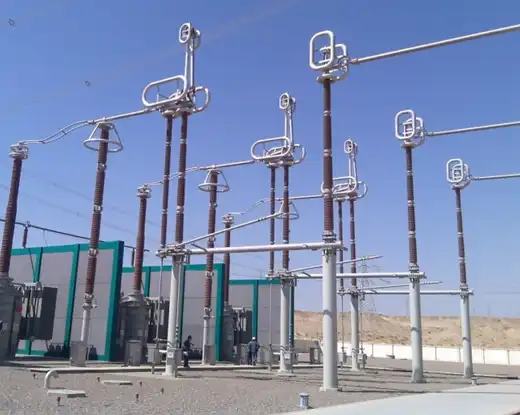
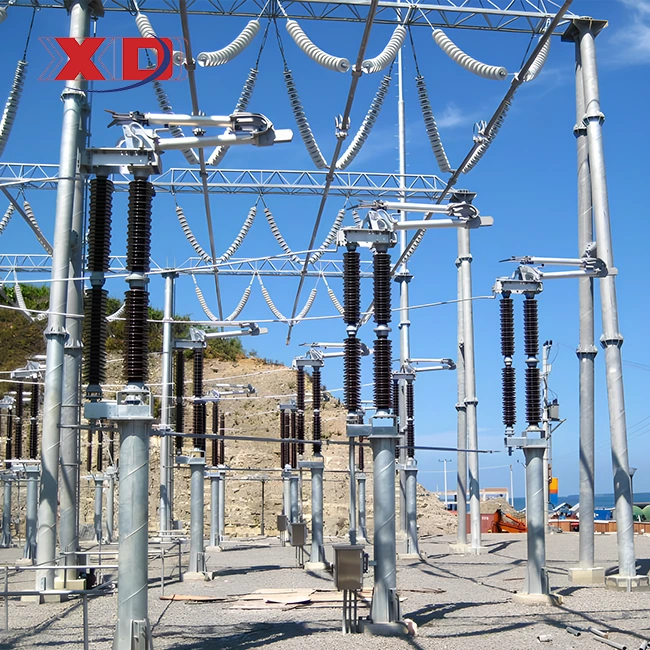
In industrial settings where workers need to check the state of a circuit, manual disconnect switches are the norm. Automatic versions work with SCADA systems in power lines to divide power up remotely. Models for indoor use keep dust out of cleanrooms, and models for outdoor use can handle temperatures ranging from -40°C to +50°C. Three-phase power systems use AC disconnect switches, while solar sites and battery storage centers use DC versions. The GW11 High Voltage Disconnect Switch, which has a pantograph mechanism, is an example of outdoor-rated gear made for transmission-level uses.
Comparison with Circuit Breakers and Fuses
Circuit breakers can't be used for visual isolation proof because they trip automatically when they sense too much current to keep fires from starting. Fuses defend you only once, but they need to be replaced after use. Disconnect switches provide reusable isolation that can be controlled by hand and have load-break rates of up to 3,150A. This makes them perfect for planned repair rather than problem interruption. When buying, teams know these differences, and they can choose the right device for each job.
Criteria for Selecting a Disconnect Switch Supplier
When you evaluate Disconnect Switches providers, you need to make sure that their skills match your business's goals. A structured review cuts down on buying risks and increases long-term value.
Product Range and Technical Compatibility
Leading suppliers provide voltage ranges from 480V to 765kV, current ranges from 630A to 5,000A, and different layouts, such as three-pole horizontal spinning types or vertical break designs. As you look at possibilities, make sure that their stock models will work with the switchgear design you already have. The GW7B-363 series, which comes in 3,150A and 5,000A versions and is rated for 363kV systems, has the range of features needed to support large-scale projects. Suppliers should give thorough information on loop resistance; for 3,150A models, reference numbers below 120μΩ show good conductor materials.
Certification and Compliance Standards
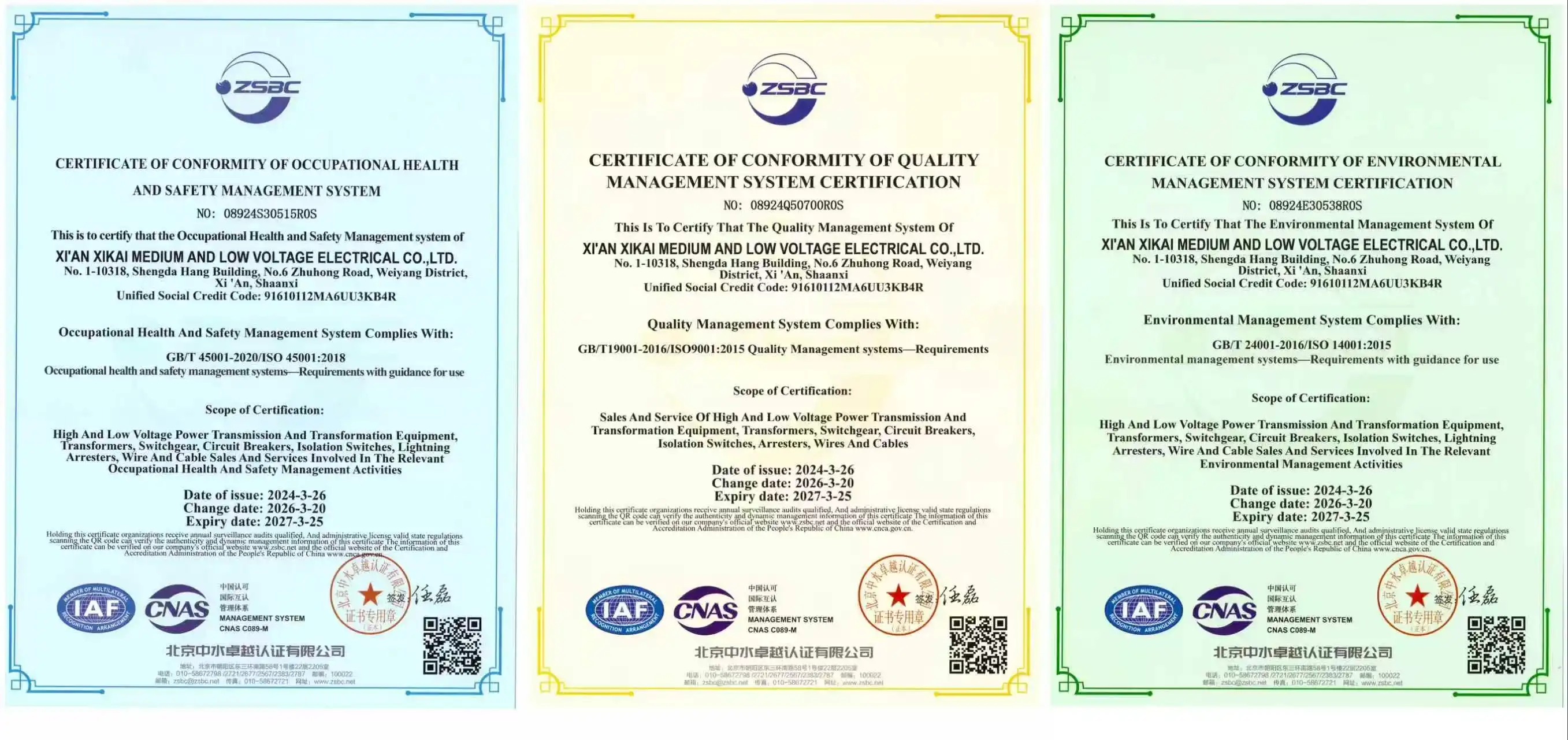
For high-voltage switchgear, international projects need to follow IEC 62271 or IEEE C37.32 for American lines. UL listing and NFPA 70 approval are needed for home installs. ISO 9001 certification means that the manufacturing process is reliable, and ISO 14001 certification means that the company cares about the environment. Make sure that providers give you test results that show the dielectric strength, mechanical longevity (at least 1,000 operations), and thermal stability. RoHS and CE marks are required for all goods exported from the European Union.
Logistics and After-Sales Support
When unexpected outages happen, fast shipping is important. Lead times are cut from 12 weeks to 3 weeks by suppliers with regional stores in the US. Check to see if they can handle large orders; factories that make 1,200 or more units a year show that they can grow. Support after installation should include help with commissioning, access to extra parts for 15 years or more, and expert hotlines that are open 24 hours a day, seven days a week. A five-year guarantee that covers problems with the way the product was made lowers the risk even more. Using these evaluation points, procurement professionals can narrow down their choices to suppliers who have the right mix of technical know-how and operational flexibility. This ensures the success of both the project right away and the value of the relationship in the long run.
Overview of Established Manufacturers and Their Solutions
Global companies like Siemens, ABB, and Schneider Electric control the market with their huge selection of products and service networks that span the globe. Siemens' SIEMENS 3WL series has flexible designs for retrofitting substations, and ABB's DIS series has controlled operation for integrating SCADA. Schneider's Compact NS range is for business buildings that need to meet UL508A standards.
Comparing Key Product Features
Well-known types of high-voltage outdoor Disconnect Switches usually have composite insulators that stop pollution flashover, aluminum alloy wires that cut weight by 40%, and enclosed transmission systems that keep sand out. Similar performance is achieved by the GW11 High Voltage Disconnect Switch, which has pantograph mechanisms and IoT-ready devices for preventative maintenance. It meets IEC 62271 standards for Disconnect Switches and is priced competitively.
Regional Specialists and Emerging Suppliers
More and more, people in North America are buying from companies like Xi'an Xikai, which has been making medium and low-voltage equipment for over 30 years and works with State Grid systems, industrial plants, and rail transportation networks. Their product line includes vacuum circuit breakers, instrument transformers, and premade substations, so you can get everything you need for a job from a single source. Plateau-rated equipment works regularly at elevations of up to 4,000 meters, meeting specific needs in hilly areas. These experts can often make changes, like adding earthing switches or changing the way the blades are arranged, that mass-market brands can't because they have to meet a minimum order quantity. In the end, choosing a brand depends on finding the right balance between global service networks and regional tech support. New suppliers offer freedom that works well with the standardization benefits of established players.
Where and How to Source Disconnect Switches Effectively
Different channels of procurement have different pricing, wait times, and expert help, so buyers need to make sure that their sourcing strategies fit the needs of their projects.
Direct Manufacturer Engagement
When you contact makers like Xi'an Xikai, you can negotiate payment terms and customization to get the lowest unit costs for sales over 50 units. Factory audits can check ISO-certified quality control procedures like inspecting raw materials, cutting to tight standards, and following 72-hour load testing protocols when there are direct relationships. This route works well for EPC companies that are building substations or industrial owners who are standardizing equipment across multiple sites. To find out how good a provider is, ask for thorough commissioning paperwork that includes measurements of loop resistance and results of mechanical endurance tests.
Authorized Distributors and System Integrators
Regional wholesalers keep popular setups in stock so they can be shipped right away. This cuts the time it takes to buy something from months to weeks. They offer extra services like putting together panels, managing UL508A certification, and planning deliveries to job sites. This channel helps data center owners who need to quickly add more space or hospitals that need to replace old equipment during tight building windows. Check the distributor's license to make sure the goods are real, and the guarantees are still valid.
Online Industrial Marketplaces
Platforms that bring together sellers let you compare prices, but they need to be carefully checked out. Check the reviews of sellers against third-party certifications and ask for sample packages before placing large orders. This method works well for smaller jobs or testing the market, but buyers give up the technical help that is needed for complicated installations. To get the best response time and lowest cost, smart buying uses a mix of methods, like working with sellers for quick replacements and building relationships with manufacturers for big projects that are planned ahead of time.
Installation Best Practices and Maintenance Protocols
Proper fitting makes tools last longer and keeps them from breaking down, which costs a lot of money. The GW7B-363 commissioning method shows how to do things in a way that is standard in the business and can be used with any type of Disconnect Switch.
Site Preparation and Mounting
Attach mounting bases to level foundation frames and use adjustable thread columns to make sure they are straight within a φ15mm error. Supporting insulators need to be vertically aligned using double-screw bolt changes to Disconnect Switches, to keep the mechanical stress from being distributed unevenly during operation. For outdoor setups, you need concrete pads with drainage paths so that water doesn't pool under the equipment.
Contact Alignment and Electrical Testing
When the switch is closed, the moving contacts and fixed contacts must line up perfectly, within a range of 90°±5°. This makes sure that the current flows evenly. Make sure that conductive boards stay 28±10 mm away from contact pedestals by adjusting them. For 3,150A units, loop resistance readings taken between outlet ends should stay below 120μΩ. Do three to five processes by hand to make sure the blades move smoothly. Then, run motor-driven tests at 85%, 100%, and 110% rated power to make sure electrically operated parts work.
Routine Maintenance and Safety Features
Every three months, use high-temperature grease that is rated for outdoor use to grease spinning shafts. Every year, check the horizontal insulation breaks for cracks or other damage that could put live-line repair safety at risk. The GW11 model's covered gearbox system keeps dust and moisture out, which reduces the number of times it needs to be serviced. Every five years, you should replace the secondary contact springs to keep the signals to control systems working well. These procedures, which were written to meet GB 1985-2004 standards, make sure that disconnect switches work reliably for decades in solar panels, HVAC distribution, and motor control.
Conclusion
When looking for Disconnect Switches, you have to balance technical requirements, source dependability, and the total cost of ownership. Procurement professionals lower risks and improve operational continuity by checking makers' certification standards, transportation capabilities, and customer service after the sale. Successful buyers put obvious isolation proof, compliance with IEC and IEEE standards, and alignment with project-specific voltage and current requirements at the top of their list. This is true whether they are working with well-known global names or specialized makers that offer customization. The strategies explained, such as negotiating directly with manufacturers and following best practices for maintenance, give data center managers, utility engineers, and EPC firms the information they need to make smart choices that protect people, equipment, and profits throughout the asset lifecycle.
FAQ
1. What factors determine disconnect switch pricing?
Base prices for a Disconnect Switch are determined by the voltage rating, the current capacity, and the certification criteria. Outside 363kV units with composite insulators cost 40 to 60 percent more than 480V indoor units. Orders of 20 or more units usually get a 15–25% discount. Customizations like IoT sensors or automatic running cost an extra 10 to 30 percent. Compared to older designs, making things with lead-free materials that meet RoHS guidelines costs 5 to 8 percent more.
2. How do I select appropriate current and voltage ratings?
Use safety margins of 125% to match scores to system factors. A 3,150A-rated disconnect switch is needed for a 2,500A load. For information on how to coordinate voltage in grids, see ANSI C37.34. When there is a fault, thermal stability requirements that allow short-circuit currents of up to 100 times the stated capacity for one second keep things from going horribly wrong.
3. Which certifications are mandatory for U.S. installations?
Having a UL listing shows that you follow the NFPA 70 fire rules. IEEE C37.32 sets the rules for how high-voltage switches should work. Seemingly separate workers are required by OSHA to keep them safe. For distributed production, utility lines need to be compliant with IEEE 1547. Always check to see if your state has made changes to the National Electrical Code.
Partner with Xi'an Xikai for Your Disconnect Switch Supply Needs
Xi'an Xikai Medium & Low Voltage Electric Co., Ltd. has been a leader in manufacturing for 30 years and can help businesses with their buying needs. We make Disconnect Switches for State Grid systems, petrochemical plants, and green energy projects all over the world. Our quality is ISO 9001-certified, and more than 1,200 GW11 installs have gone well. Our expert team is available 24 hours a day, seven days a week, to help with commissioning, maintenance, and customization. They can do everything from installing earthing switches to meet the needs of the area grid to making sure that equipment is rated for plateaus at 4,000 meters. Send an email to serina@xaxd-electric.com, amber@xaxd-electric.com, or luna@xaxd-electric.com to talk about bulk orders for disconnect switches, technical specs, and custom solutions that meet NFPA 70 and IEC 62271 standards and improve uptime.
References
1. Institute of Electrical and Electronics Engineers (2018). IEEE Standard for High-Voltage Switchgear and Controlgear: Guide for Application of Disconnect Switches. IEEE C37.32-2018.
2. National Fire Protection Association (2020). National Electrical Code 2020 Edition: Article 430 - Motors, Motor Circuits, and Controllers. NFPA 70.
3. International Electrotechnical Commission (2017). High-Voltage Switchgear and Controlgear – Part 103: Switches for Rated Voltages Above 1 kV up to and Including 52 kV. IEC 62271-103:2017.
4. Standardization Administration of China (2004). High Voltage AC Isolating Switch and Earthing Switch: Technical Requirements and Testing Methods. GB 1985-2004.
5. Electric Power Research Institute (2019). Substation Equipment Maintenance Guide: Disconnect Switches and Bus Support Insulators. EPRI Technical Report 3002015628.
6. American National Standards Institute (2016). Preferred Ratings and Related Required Capabilities for High-Voltage Circuit Breakers Rated on a Symmetrical Current Basis. ANSI C37.34-2016.
_1774416563318.png)