Outdoor Disconnect Switch: A Complete Guide to Safe Isolation
2026-08-21 16:28:25
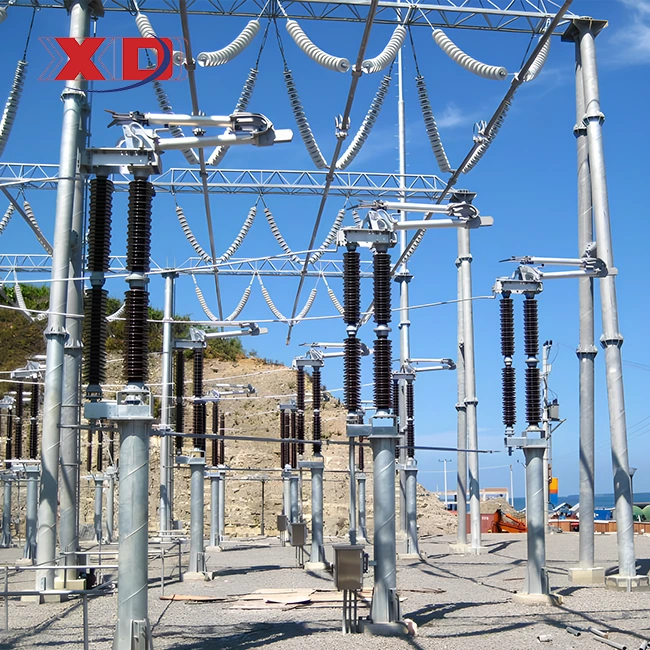
When managing high-voltage substation projects, choosing the right outdoor disconnect switch becomes critical to ensuring worker safety and operational reliability. These switches provide visible isolation points in power grids, allowing maintenance teams to work on de-energized equipment with confidence. Unlike circuit breakers that interrupt fault currents, disconnect switches create a physical air gap when open, making them essential for lockout/tagout procedures in 110kV, 220kV, and higher voltage applications. This guide walks through selection criteria, installation best practices, and maintenance strategies tailored for EPC contractors and electrical engineers working on global power infrastructure projects.


Understanding Outdoor Disconnect Switches
What Makes Outdoor Disconnect Switches Essential
A safe substation depends on high-voltage separation tools to work. An outdoor disconnect switch is a device that can be worked by hand or by a motor and makes a visible break in electrical circuits for repair or emergencies. As the word "outdoor" suggests, this is waterproof construction that can resist rain, snow, UV light, and temperature changes from -40°C to +55°C. These switches are very different from indoor models because they have longer insulation creepage distances, materials that don't corrode, and stronger mechanical structures that are made to last for decades of outdoor use.
Operating Principles and Core Components
High-voltage isolators made today use either horizontal spinning mechanisms or vertical pantograph designs. Moving contacts connect with fixed contact assemblies to finish the current path when they close. The GW7 series uses a flip-type blade system, in which conductive rods made of a single block of aluminum alloy turn into copper contact fingers that are inlaid with silver. Static contacts have external springs that keep the pressure constant without making shunt current paths that could lead to hotspots. Compared to older spring-loaded designs, this way of thinking about design cuts working force by 40%.
Good isolation switches have safety features like blade positions that can be seen, mechanical interlocks that stop operation when the load is too high, and earthing switches that connect equipment to the ground before work starts. In more advanced types, the counterweight-balanced earth switch needs very little physical force, which keeps operators from getting tired when they have to switch things on and off a lot.
Critical Benefits for Substation Projects
Putting in the right kind of outdoor disconnect switches has three main benefits. Electrical safety is improved by being able to see for sure that circuits are open—no voltmeter needed. Thanks to high-conductivity materials and improved contact surfaces, switches that can handle their rated currents of up to 6300A without burning make equipment last longer. Products that have type test results from approved labs are easy to comply with regulations because they are required by most places to get grid connection approvals.
Customized creepage lengths are helpful for projects that are in areas with a lot of pollution or high elevation. Standard designs might need 25 mm per kV, but places with a lot of pollution along the coast need 31 mm per kV or more to keep flashovers from happening when there is salt fog.
Installation and Maintenance of Outdoor Disconnect Switches
Pre-Installation Assessment and Standards Compliance
Before putting up any isolation equipment, procurement teams should make sure that the dimensions of the foundation match what the manufacturer says they should be. For the GW7B-363 model to work, the base spacing between phases must be 5162mm (A dimension), and the support structures must be level within a ±1mm range. Uneven foundations can make the insulator tilt, which can cause premature mechanical wear and contact misalignment.
Making sure that the maximum voltage and current meet the project needs is the first step in following the standards. No matter how close they look, a 363kV facility can't use a 252kV switch. The rules for outdoor high-voltage switchgear are set by IEC 62271-102 and IEEE C37.30. They cover everything from the maximum temperature rise to the ability to survive earthquakes.
Step-by-Step Installation Process
Installation crews typically follow this sequence:
- Foundation Preparation: M24x75 bolts are used to connect hot-dip galvanized steel bases to concrete piers. Modern outdoor disconnect switches don't have settlement problems like older ones did because their bases are built in.
- Insulator Assembly: To keep the porcelain from getting damaged, textile slings are used to lift the support insulators into place. Post insulators on the side with the moving contact must be able to freely rotate around their axis without wobbling. This means that the bearings are installed correctly. To spread the load evenly across the flange joints, the tightening processes are set up in diagonal designs.
- Blade and Contact Installation: Conductive blade kits are sent to you already put together so that the factory can set the orientation of the contacts. Lift spots shown in the manufacturer's literature keep stress from building up in aluminum alloy conductor poles. For switches rated above 1600A, the gap between the moving and fixed contacts should be between 30 and 50 mm. This can be checked with standardized feeler gages.
Mechanism Linkage: Three-phase mechanical linkage systems need to have their operation checks synchronized. All three stages should close all three contacts at the same time when the working handle turns all the way around to 100°. Extra buttons in the mechanism let SCADA systems know about its state from a distance.
Proactive Maintenance Strategies
Inspections done on a regular basis every five years keep tools working well for up to 30 years. Oxidation that raises resistance and heat production can be removed by cleaning touch areas. When conductive grease is put on silver-inlaid surfaces, the contact resistance stays below 20 microohms. In more advanced designs, self-cleaning contacts cut down on this upkeep time by wiping surfaces clean while the device is running.
Bearings and pivot points in mechanical parts work better when they are oiled once a year. Stainless steel and composite bearings don't rust in seaside areas, so they can keep turning smoothly even after years of being exposed to salt spray. Over time, springs relax, but counterweight balance adjustments make up for this. This keeps earth switches easy to operate by hand.
Using thermal imaging during times of high load can find problems before they break. Hot spots above 80°C mean that links are loose or there isn't enough contact pressure. Both of these problems can be fixed by following the steps in service guides for adjustments. This method of planning ahead stops unplanned outages that cause projects to take longer than planned to finish.
Comparing Outdoor Disconnect Switches: Making the Right Choice
Disconnect Switches vs. Circuit Breakers
People who are new to designing substations often get these gadgets mixed up. Arc suppression chambers filled with SF6 gas or vacuum bottles are used by circuit breakers to stop fault currents. When security links sense something is wrong, they start working automatically within milliseconds. Outdoor disconnect switches can't stop arcs, so they can only work on circuits that are live but not loaded. Their main job is to make isolation points so that maintenance workers can get to things safely.
This functional split can be seen in the differences in costs. A 245kV vacuum circuit breaker could cost between $80,000 and $120,000, while a disconnect switch with the same features costs between $15,000 and $30,000. Both types are used in large substations: disconnect switches are used to separate parts and circuit breakers are used to protect them.
Heavy-Duty vs. Standard Configurations
Normal load currents and cold load pickup transients can be handled by standard outdoor disconnect switches. Heavy-duty models have stronger contact assemblies that can handle higher through-fault currents that flow when the downstream breaker is working. The GW7 series is classified as heavy-duty because it has high-pressure contact designs that stop welding when there is a problem and ice-breaking blade shape that breaks up ice without any help from a person.
Another choice point is whether to use fused or non-fused patterns. Fused disconnect switches can isolate and protect against overcurrent. They can be used for transformer primary connections in distribution substations. In transmission uses, where fault clearing is handled by a different protection method, non-fused types are most common.
Evaluating Leading Manufacturers
When purchasing managers look at suppliers, they look at more than just the price. Type test reports from nationally recognized labs back up what was said about the electrical and mechanical performance. Data on operating history from utilities that use the same model shows reliability in the real world in a way that lab tests can't fully replicate. Since 2008, the GW7 series has been used on projects by the State Grid Corporation of China, showing that it works well in a variety of climates.
For difficult uses, it's important that the manufacturer can customize their products. Standard catalog items might not work in places with a lot of pollution or at 4,100 meters above sea level. To meet the needs of each project, Xi'an Xikai's engineering team changes base designs to include longer creepage distances, better tracking resistance insulators, and altitude-compensated gaps. Due to this versatility, there are no costly changes to specifications made during purchase.
How quickly problems are fixed depends on the system for after-sales help. Distributors that offer 72-hour on-site reaction anywhere in the world give project sites that are far away peace of mind. Having spare parts available thru regional stores cuts down on downtime when parts need to be replaced over the service life of many decades.
Procurement Guide for Outdoor Disconnect Switches
Sourcing Strategies for Large-Scale Projects
When EPC contractors buy 10 to 50 outdoor disconnect switches for a substation job, they can get better deals from the manufacturers directly instead of going thru multiple lines of distribution. Direct buying lowers unit costs by 15 to 25 percent and sets up ways for customers to talk to engineering teams that can answer technical questions during installation. When you sign a bulk purchase agreement for several projects spread out over one to three years, you get better prices and guaranteed delivery dates that work with your construction schedules.
Specification errors can be avoided by checking the quality of the goods before they are shipped. High-voltage withstand tests, contact resistance readings below the maximum limits, and mechanical operation cycles should all be part of the factory acceptance testing to make sure the part moves smoothly across the whole trip range. Being able to see these tests in person or thru a video link gives people more confidence before they send containers to faraway project sites.
Customization Options for Special Applications
Standard product lists cover most of the needs of a substation, but sometimes projects have special problems that need technical changes. Higher sites (above 1000 meters) need more space between phases and between phases and the ground because the air insulation strength is lower at those heights. Xi'an Xikai's plateau-type equipment works effectively at heights of up to 4000 meters thanks to changes to the design that have been approved by high-altitude test stations.
In areas that are prone to earthquakes, structures need to be strengthened and flexible conductor connections need to be made so that they can handle ground motion without putting too much force on porcelain insulators. When used in sand and dust, sealed bearing systems and protective coats keep abrasive particles from getting into the moving parts. If these needs are talked about early on in the procurement process, manufacturers can come up with good solutions instead of having to make changes in the field that hurt reliability.
Warranty and Long-Term Support Considerations
Standard warranties that last 18 to 24 months from the date of commissioning protect against problems with the way the product was made, but they are only the start of an asset's 30-year lifecycle. Longer warranty periods of five years or more put the responsibility for long-term maintenance costs on the manufacturer. This is especially helpful for installations that are far away from the manufacturer's office and where service calls are expensive. The warranty terms should make it clear what needs to be done for regular maintenance. For example, some makers will not cover problems if certain check times are not met.
When production runs switch to newer designs years after the original buy, having spare parts on hand becomes very important. Reputable makers keep parts in stock for models that have been taken off the market for twenty years or more. This way, when one insulator breaks, the whole system doesn't have to be replaced too soon. Interchangeability between model generations makes managing parts even easier for utilities with mixed teams.
Ensuring Safety and Compliance with Outdoor Disconnect Switches
Integrated Safety Features
The most obvious safety feature on any outdoor disconnect switch is its lockout/tagout ability. Multiple locks can fit on the padlock hasps on the operating mechanisms, so each worker can control the de-energization process on their own. Mechanical interlocks keep the main contacts from closing while the earth switch is still on. This keeps live circuits from grounding, which would result in catastrophic fault currents.
Weather-resistant design keeps things safe even when they are exposed to the weather. Insulators made of porcelain or a composite material stop pollution from building up and stopping tracks. Sealed mechanism enclosures keep damp away from electrical parts. The hot-dip galvanized steel bases in the GW7 series don't rust and last for decades. This keeps the structure from breaking, which could let moving parts fall.
International Standards and Certifications
Several groups that set guidelines agree on what levels of success are acceptable. International standards for alternating current outdoor disconnect switches are set by IEC 62271-102. For North American markets, IEEE C37.30 covers the same ground. Products that meet both standards can be used in global bids without having to go thru extra testing. UL and CSA marks meet certain standards for the U.S. and Canadian markets, especially for commercial systems that are governed by the National Electrical Code.
Avoiding Common Installation Errors
Field experience shows that mistakes are made over and over again that hurt safety and performance. When fixed connections are torqued incorrectly, they make high-resistance joints that get too hot when they're loaded. This problem can be avoided by using calibrated torque wrenches and following the manufacturer's instructions. Misaligned contacts lower the amount of current they can carry and speed up wear. When installing, precise leveling tools make sure that the blades are properly inserted into the contact parts.
Equipment can be damaged by lightning-induced voltages if structural parts are not properly grounded. For ground grid connections to work, the paths must have low resistance, which can be checked with fall-of-potential testing. Operating mechanisms need to be protected from direct lightning hits by surge arresters that are attached to the control wires next to them.
Future Trends in Isolation Technology
Monitoring monitors are being added to standard switchgear as part of smart grid projects. IoT-enabled outdoor disconnect switches can now send real-time information to centralized maintenance management systems about the temperature of the contacts, the number of cycles they have run, and the health of the mechanism. Using predictive analytics on this data to find patterns of wear and tear weeks before they happen allows condition-based maintenance, which is cheaper than set time plans.
Digital substations that use IEC 61850 communication protocols need disconnect switches that have smart electronics that tell protection and control systems what the status is. This coming together of mechanical switching equipment and digital networking is what the future of power infrastructure will look like. Early adopters will be able to get operational benefits that regular installations can't offer.

Conclusion
To choose effective outdoor disconnect switches, you need to weigh the technical specs, the working needs, and the ability to provide long-term support. In the GW7 series from Xi'an Xikai, extreme temperature performance, low-maintenance designs, and the ability to be customized for tough applications show how modern engineering can solve old problems. EPC contractors can get more work done when they work with makers that offer thorough type test paperwork, a past of successful operations, and quick technical support. As substations move toward connecting to the smart grid, picking equipment platforms that can be upgraded to digital tracking protects the investments made in infrastructure. Installing these critical isolation devices correctly by following the manufacturer's instructions and keeping them in good shape will make sure they work safely and reliably for decades in power systems around the world.
FAQ
1.What distinguishes an outdoor disconnect switch from a safety switch?
Safety switches are usually low-voltage devices (600V or less) that are used in business and industrial buildings. They usually have NEMA-rated enclosures and fused safety. Outdoor disconnect switches work with cable voltages ranging from 69kV to 1100kV. They don't have built-in overcurrent safety and are insulated with air instead of being contained. Both can be used for separation, but the voltage class and application setting are very different.
2.How often should disconnect switches undergo inspection?
In most places, inspections should happen every five years. In seaside or industrial areas where pollution builds up quickly, checks should happen more often. After a system fault that put the switch thru through-fault currents, inspections help find damage that needs to be fixed before it can be used again. In addition to thorough maintenance processes, damage or corrosion should be looked at visually once a year.
3.Can disconnect switches be installed without professional assistance?
Installing high-voltage equipment needs qualified electricians who have been trained in the right way to build substations. Bad installation poses serious risks to safety and damages equipment. All assembly work should be done by licensed contractors who know the relevant codes and maker methods. If needed, factory expert help should be available.
Partner with Xi'an Xikai for Your High-Voltage Isolation Needs
Xi'an Xikai Medium & Low Voltage Electric Co., Ltd. brings decades of experience making high-quality products to every relationship we make with an outdoor disconnect switch provider. Our GW7 series high-voltage disconnect switches are made with a mix of tried-and-true mechanical designs and the latest materials engineering. They work reliably in conditions ranging from -40°C in the cold to +55°C in the desert. As one of China's biggest factories for making electrical equipment, we offer EPC contractors a wide range of services, from custom creepage distance estimates for your unique pollution environment to on-site commissioning help anywhere in the world.
Our ISO 9001/14001-certified factories make switches for State Grid Corporation of China and more than 120 utilities around the world. These switches come with full type test reports from nationally recognized labs. To talk about your substation project needs, email our engineering team at serina@xaxd-electric.com, amber@xaxd-electric.com, or luna@xaxd-electric.com. We have flexible plans for buying in bulk, longer warranties, and technology solutions for tough situations, such as working at high altitudes of up to 4000 meters.

References
1. IEEE Standard C37.30-2015, "IEEE Standard for Definitions and Requirements for High-Voltage Air Switches, Insulators, and Bus Supports," Institute of Electrical and Electronics Engineers, 2015.
2. International Electrotechnical Commission, "IEC 62271-102: High-voltage switchgear and controlgear – Part 102: Alternating current disconnectors and earthing switches," Edition 2.0, 2018.
3. Zhang, L. and Wang, H., "Mechanical Reliability Analysis of High-Voltage Disconnect Switches Under Extreme Environmental Conditions," Electric Power Systems Research, vol. 187, 2020.
4. National Electrical Manufacturers Association, "NEMA SG 6-2016: Power Switching Equipment," National Electrical Manufacturers Association, Rosslyn, VA, 2016.
5. Chen, M., Liu, X., and Zhao, Y., "Contact Resistance and Temperature Rise in High-Current Disconnect Switch Applications," IEEE Transactions on Power Delivery, vol. 34, no. 2, pp. 892-901, April 2019.
6. Electric Power Research Institute, "Substation Equipment Maintenance Guide: High-Voltage Disconnect Switches and Air Switches," EPRI Technical Report 3002011612, Palo Alto, CA, 2017.