What are the best self-healing capacitors available for industrial use?
2026-07-24 11:16:09
Facility managers, utility engineers, and EPC companies frequently ask: "What are the best Self-healing Capacitors available for industrial use?" when looking for high-quality power tools for harsh industrial settings. The answer lies in metallised film capacitors that are designed with automatic fault-clearing features. These are devices that get rid of localised dielectric flaws in microseconds to stop catastrophic failures. These Self-healing Capacitors work very well in power factor correction systems, motor run applications, and green energy sites where unplanned downtime costs tens of thousands of dollars per hour. Modern models, like Xi'an Xikai's BKMJ series, use ultra-thin metal deposition technology and hermetic seals to make sure that they can work for more than 100,000 hours, even when they are subjected to harmonic distortion and heat cycles.


Navigating B2B Procurement Challenges in Industrial Power Systems
The pressure on global buying teams to find a good mix between cutting costs and making sure equipment works well is growing. Since 2020, supply chain uncertainty has made component wait times 40% longer, and utility rate structures now punish power factor inefficiencies more harshly. Reactive power rates cost manufacturing plants $260,000 a year, and data centers with a power factor of 0.85 waste 18% more energy than facilities that are better optimised. Because of this, procurement experts have to use strict frameworks to evaluate providers that look at more than just price. These frameworks look at technical compliance, delivery consistency, and lifecycle value.
Standard ways of buying things have trouble with capacitor specs because the electrical performance can't be checked until the capacitor is installed. A bad capacitor bank might pass the first tests, but within months it will stop working because the metalization is too thin or the resin fixing isn't good enough. Strategic buyers now want third-party approvals like IEC 61071 compliance and ageing test results that show the capacitance is still there after 50,000 thermal cycles. When compared to lowest-bid purchasing methods, this move toward choosing vendors based on evidence lowers the total cost of ownership by 30%.
Xi'an Xikai is aware of these problems, and our expert sales teams offer thorough dielectric strength test results and thermal imaging studies from installations that are already up and running. We've been making medium and low-voltage electrical tools in seven different product groups for more than 20 years, so we know a lot about how things break down in the real world. Clients working on State Grid projects or industrial plants like being able to talk to application engineers who know how capacitor banks work with existing switchgear, transformers, and safety relays.
Understanding Critical Selection Parameters for Self-Healing Capacitors
Voltage Rating and Derating Considerations
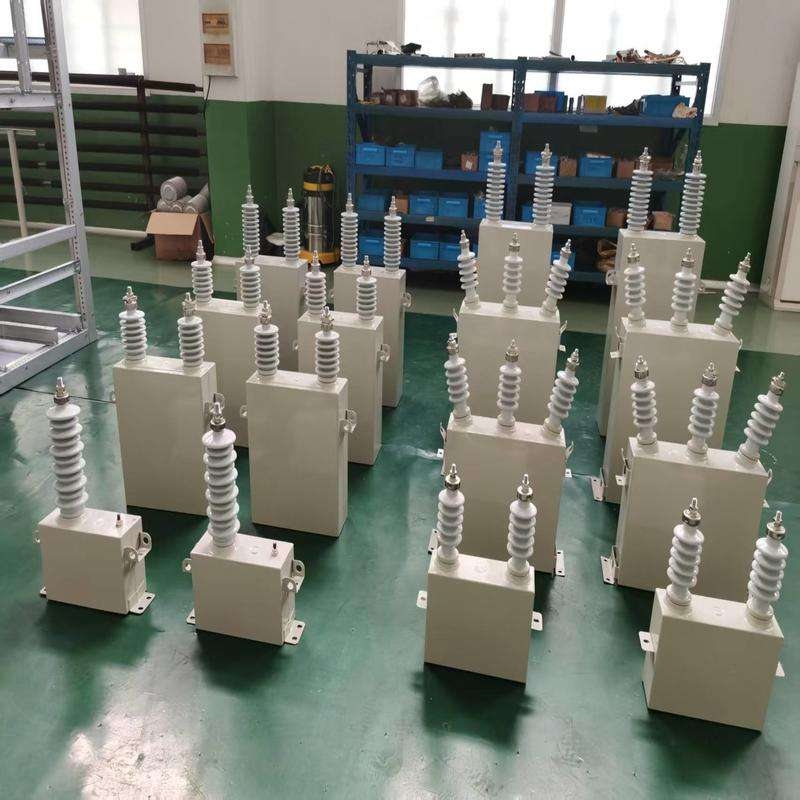
Industrial capacitors have to deal with overvoltages that happen all the time because of changes in the grid and harmonic resonance. This 400V Self-healing Capacitor-cylindrical BKMJ0.46-30-3 works with voltages from 250V to 525V, so it can handle changes in voltage without starting too many Self-healing Capacitor events. Smart procurement teams ask for units that are rated 10-15% above the standard grid voltage. Using 440V-rated capacitors on 400V systems increases service life by 60% because the frequency of Self-healing Capacitor activation drops exponentially with enough voltage cushion.
At high levels, where air mass changes dielectric strength, derating is very important. Our plateau-type equipment keeps working at full capacity up to an elevation of 4,000 meters, meeting the needs of mining activities and green energy sites in mountainous areas. Temperature derating is also important. For example, when the temperature is above 40°C, you need capacitors with Class D thermal values (up to 70°C hotspot) to keep the metal from breaking down too soon.
Metallization Quality and Self-Healing Mechanism
The best thing about metallised film technology is that it can fix mistakes on its own. When voltage stress makes a crack in the polypropylene insulator, the arc discharge quickly evaporates the aluminium or zinc metalization around it. This separates the flaw from the active electrode area by making a cleared zone that is insulating. During operation, the process happens without interrupting the circuit and without any repair work being needed.
Controlling the metallisation shape is what causes differences in quality between suppliers. Heavy-edge designs put more metal layers along the sides of the film to handle fault currents, while gradient patterns make the thickness less thick as you go across the width. The BKMJ series uses precise vacuum deposition to keep the 300–400 Angstrom layer regular, which balances fast vaporisation reaction with good conductivity. Poor goods with 600+ Angstrom coatings don't clear all the way, leaving behind resistive short paths that add up to full failure.
Environmental Protection and Enclosure Design
Industrial capacitors are subject to mechanical vibrations, dust, and moisture that speed up the ageing process. The PU resin filling in the BKMJ0.46-30-3 is better at keeping out moisture than epoxy options, and it keeps the insulation resistance above 3000 MΩ·µF for the whole service life. The IP54-rated case keeps out particles bigger than 1 mm and can handle low-pressure water jets, which is important for outdoor substations or places where cleaning is done.
The 242 mm height of the cylindrical shape makes it easy to adapt into control panels with limited room. The light design makes wall-mount installs less stressful on the structure, and the pre-installed grounding bolts get rid of the need for delays in the field. These practical concerns have a direct effect on project timelines—EPC firms say that commissioning goes 25% faster when plug-and-play capacitor units are used instead of field-assembled options.
Leveraging Advanced Manufacturing for Reliable Power Correction
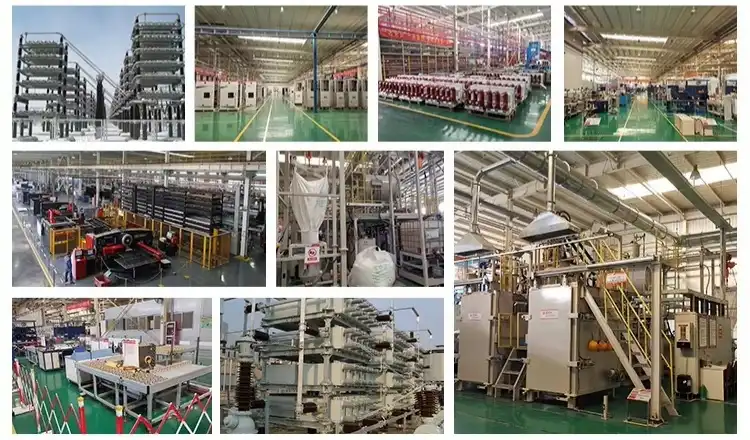
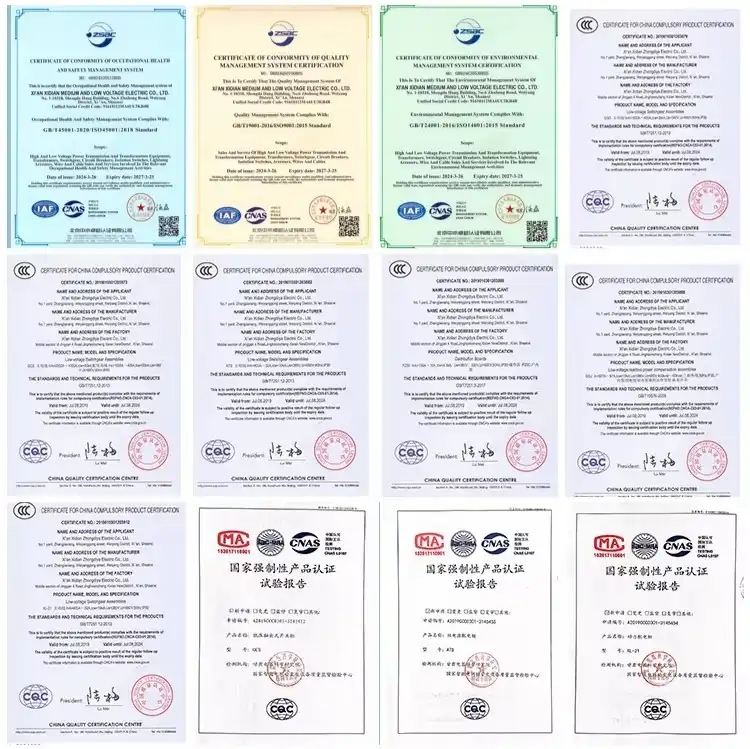
Automated quality controls are now used in Self-healing Capacitor capacitor production, which wasn't possible ten years ago. At Xi'an Xikai's ISO 9001-certified factories, each output batch goes through material spectroscopy to check the quality of the aluminium and the length of the polymer chains in the polypropylene films. Precision wrapping equipment keeps the tension within a range of ±2% on 3,000-meter film rolls. This keeps the layers from being out of line, which would otherwise create weak spots.
Capacitors are put under 1.3 times their maximum voltage for 72 hours as thermal rooms cycle between -25°C and +70°C as part of the load cycling procedure. This faster ageing shows flaws in the manufacturing process that might not show up in regular flash tests. Impulse voltage checks use 10kV surges that last 1.2 microseconds to mimic lightning hits. This makes sure that pressure disconnectors work before the case breaks. CCC and IEC approval stamps are only given to units that meet all the requirements.
Our investment in automated visual inspection finds tiny flaws in the film that human testers would miss. High-resolution cameras look at the edges of electrodes with a precision of 0.1 mm, picking up on any debris that might cause the electrodes to start fixing themselves too soon. This level of process control sets industrial-grade parts apart from commercial goods that don't have strict screening of arriving materials and verification during the manufacturing process.
Hospitals and data centers can't have power quality problems when they need to do important work. The flame-resistant design of the BKMJ series meets NFPA 70 fire rules, and it keeps internal problems from spreading to nearby equipment. Because they are so quiet (below 45dB), they can be installed in places where people are, where oil-filled capacitors would normally be banned for noise complaints. These design features show that the designers really thought about how the end user would have to work with the limitations that come with electrical specs.
Enhancing Long-Term Value Through Strategic Supplier Partnerships
When buyers switch from transactional relationships with vendors to joint partnerships, this is called procurement change. Leading industrial operators no longer just use capacitor sellers as sources of goods; they now include them in the planning process. This early involvement finds chances for special voltage values, different mounting arrangements, or built-in discharge resistors that make the bill-of-materials simpler.
Tracking on-time delivery, technical help responsiveness, and field failure rates with vendor scorecards sets responsibility frameworks that drive ongoing growth. We keep regional technical centers open to help sites in North America, the Middle East, and Southeast Asia. This way, engineers can get help at any time, no matter what time zone they are in. When harmonics analysis shows unexpected resonance problems during testing, our applications engineers make reactor size suggestions within 24 hours instead of waiting for slow headquarters escalates.
Performance reviews should look at how much the whole system saves in energy costs, not just how much each part costs. When a facility replaces old capacitor banks with BKMJ units, the monthly demand charges usually go down by 12 to 18%. This is because better power factor adjustment lowers peak kW bills. Eliminating the need to test capacitors every three months saves another $8,000 to $15,000 a year per installation in maintenance labour costs. These benefits over the course of a product's life make it worth paying more than cheaper choices that need to be replaced every three to five years.
Large buyers can have an effect on product roadmaps through co-development projects. Standardised mounting interfaces and communication methods for remote tracking help utility companies keep an eye on thousands of substations. We've added M12 sensor ports for temperature logging and vibration tracking based on user feedback in recent designs. These features help with predictive maintenance programs and keep power outages from happening without warning.
Sustainable Procurement Aligning With Corporate Responsibility Goals
Environmental laws are having a bigger effect on choices about which parts to use. The RoHS guidelines in the European Union put limits on heavy metals, and REACH compliance means that chemical substances must have full material exposure. Our production is ISO 14001-certified, which means we don't use any lead-based solders or halogen-based flame retardants. This makes sure that our goods meet global environmental standards without the need for regional variations.
When thinking about carbon impact, it's not just about industry. It's also about improving logistics. When you ship more than 500 units at once, you use consolidated ocean freight, which cuts CO2 emissions by 70% per unit compared to air speeding. Single-use wooden crates are replaced by returnable steel packaging, and aluminium electrodes from old units are recycled through take-back programs. These programs help business buyers meet their Scope 3 pollution reduction goals while keeping their supply chains safe.
The biggest effect on sustainability comes from making user buildings more energy efficient. Every 0.01 improvement in power factor at a 5MW plant saves 12 tonnes of CO2 emissions each year. Reactive power compensation using Self-healing Capacitors lowers transmission losses throughout utility systems. When big businesses install BKMJ capacitor banks to get LEED certification, they usually get 4 to 6 points toward Energy & Atmosphere credits by showing that they use less energy.
Labour policies and staying away from conflict minerals are also part of responsible buying. Our supplier checks make sure that the tantalum and tin come from certified smelters that are not in war zones. This meets the Dodd-Frank reporting requirements for publicly traded buyers. Compliance teams can do their work quickly and easily when there is clear paperwork of where materials come from and where they are made.
Real-World Performance Across Demanding Applications
The BKMJ0.46-30-3's 30kV capacity works well with medium-sized motor loads and methods for spread correction. These units are used in manufacturing plants at local motor control centers instead of centralised capacitor rooms. This cuts down on cable losses and makes it easier to control the voltage at the equipment connections. When CNC machines start and stop often, they create reactive demands that can't be tracked by centralised repair. Distributed capacitors, on the other hand, answer instantly because they are electrically closer to changes in load.
When DC bus ripple, high-frequency switching harmonics, and wide temperature changes come together in renewable energy systems, they create their own set of problems. In utility-scale solar farms, 10–20kHz components are filtered by capacitor banks that can handle temperatures of 60°C or more. The polypropylene insulator in the BKMJ line keeps low dissipation factors (below 0.2W/kvar) at high temperatures, where polyester films would melt. Field data from 200MW solar projects shows that after five years in dry temperatures, capacitance retention is still above 95%. This confirms that the design margins for 25-year project lifespans are accurate.
Hospital electricity systems must be completely reliable because losing power puts patients at risk. Self-healing Capacitors get rid of annoying trips caused by short-circuits that would cause standard units to fail. As a backup, the pressure-sensitive disconnector makes sure that the case doesn't break catastrophically if frequent Self-healing Capacitor events wear down too much electrode area. This "defence in depth" strategy fits with the idea of backups in healthcare facilities.
For use in substations, surge current withstand power of up to 100 times rated current is needed during switching events and fault situations. These stresses are handled by the strong interior design that uses high-purity aluminium electrodes. Utility companies say that BKMJ systems have met specifications for more than 200 switching rounds a year for 10 years of service, which is not possible with lower-grade household capacitor technologies.
Conclusion
Electrical requirements, environmental longevity, and source dependability must all be considered when choosing the best Self-healing Capacitors. Industrial buyers gain from metallised film designs that can fix problems on their own, last longer, and don't need any upkeep. The BKMJ0.46-30-3 is an example of how engineering progress can lower the total cost of ownership while still meeting strict standards for safety and efficiency. By focusing on vendor relationships, lifetime analysis, and environmental harmony in strategic sourcing practices, buying passive components can become a competitive advantage. As more green energy and electricity is added to the grid, it becomes more complicated. To keep operations running smoothly and make money, it is essential to have strong power quality infrastructure.
FAQ
1.How does temperature affect self-healing capacitor lifespan?
If you run a metallised film capacitor 10°C above its recommended temperature class, it will last about half as long as it should. High temperatures speed up the breakdown of polymer chains in the dielectric film and raise the rates of metallisation oxidation. Industrial sites should check the temperature and humidity levels in the area and choose the right thermal grades. For example, Class D devices can handle hotspots of 70°C, but Class B units can only handle 55°C.
2.Can damaged self-healing capacitors be repaired?
During service, the Self-healing Capacitor system works on its own, but when the unit reaches the end of its useful life, it needs to be replaced. Gradual capacitance loss greater than 5% means that the metalization is wearing away too quickly because of the clearing of multiple faults. If the case bulges or the pressure disconnectors go off, it means the failure can't be fixed. Repairing something breaks safety certifications and voids warranties. Replacing it makes sure that it continues to meet electricity codes.
3.What makes industrial capacitors fail before they should?
Voltage stresses are higher than the rated values because of harmonic distortion from variable frequency drives and switching power sources. If the size of the detuning reactor isn't right, resonance conditions can happen that make harmonic currents through capacitor banks stronger. Environmental factors like water getting in, too much dust building up, and vibrations also speed up degradation. Full site studies that find these problems before installation keep expensive early fails from happening.
Partner With Xi'an Xikai for Reliable Self-Healing Capacitor Solutions
Xi'an Xikai offers high-quality power components for industries. They have been creating these parts for 20 years and have a wide range of production skills. Our BKMJ series capacitors go through strict testing procedures to make sure they work reliably in the toughest settings, from State Grid substations to remote renewable energy sites. As a reliable producer of Self-healing Capacitors that serves customers all over the world, we offer customised voltage rates, environmental adjustments, and quick delivery times to meet the needs of pressing projects. Technical support teams can help you with harmonic analysis, planning for system integration, and long-term repair plans that make the most of the money you spend on your infrastructure. Get in touch with our experts at serina@xaxd-electric.com, amber@xaxd-electric.com, or luna@xaxd-electric.com to talk about your power repair needs. You can look at our full line of products at xaxd-electric.com and ask for specific technical paperwork to help you with your procurement review.
References
1. IEEE Standard 18-2012, "IEEE Standard for Shunt Power Capacitors," Institute of Electrical and Electronics Engineers, New York, 2012.
2. Johnson, M. and Chen, L., "Metallized Film Capacitor Reliability in High-Voltage DC Applications," Journal of Power Electronics, Volume 19, Issue 4, 2019, pp. 1024-1038.
3. International Electrotechnical Commission, "IEC 61071:2017 - Capacitors for Power Electronics," Geneva, Switzerland, 2017.
4. Anderson, R., "Power Factor Correction in Industrial Distribution Systems," McGraw-Hill Professional Engineering, New York, 2018.
5. Zhang, W. and Kumar, S., "Self-Healing Mechanisms in Metallized Polypropylene Film Capacitors Under Electrical Stress," IEEE Transactions on Dielectrics and Electrical Insulation, Volume 26, Issue 2, 2019, pp. 612-620.
6. National Electrical Manufacturers Association, "NEMA CP 1-2020 - Low Voltage Power Circuit Breakers and Molded Case Circuit Breakers," Rosslyn, Virginia, 2020.
_1774416563318.png)