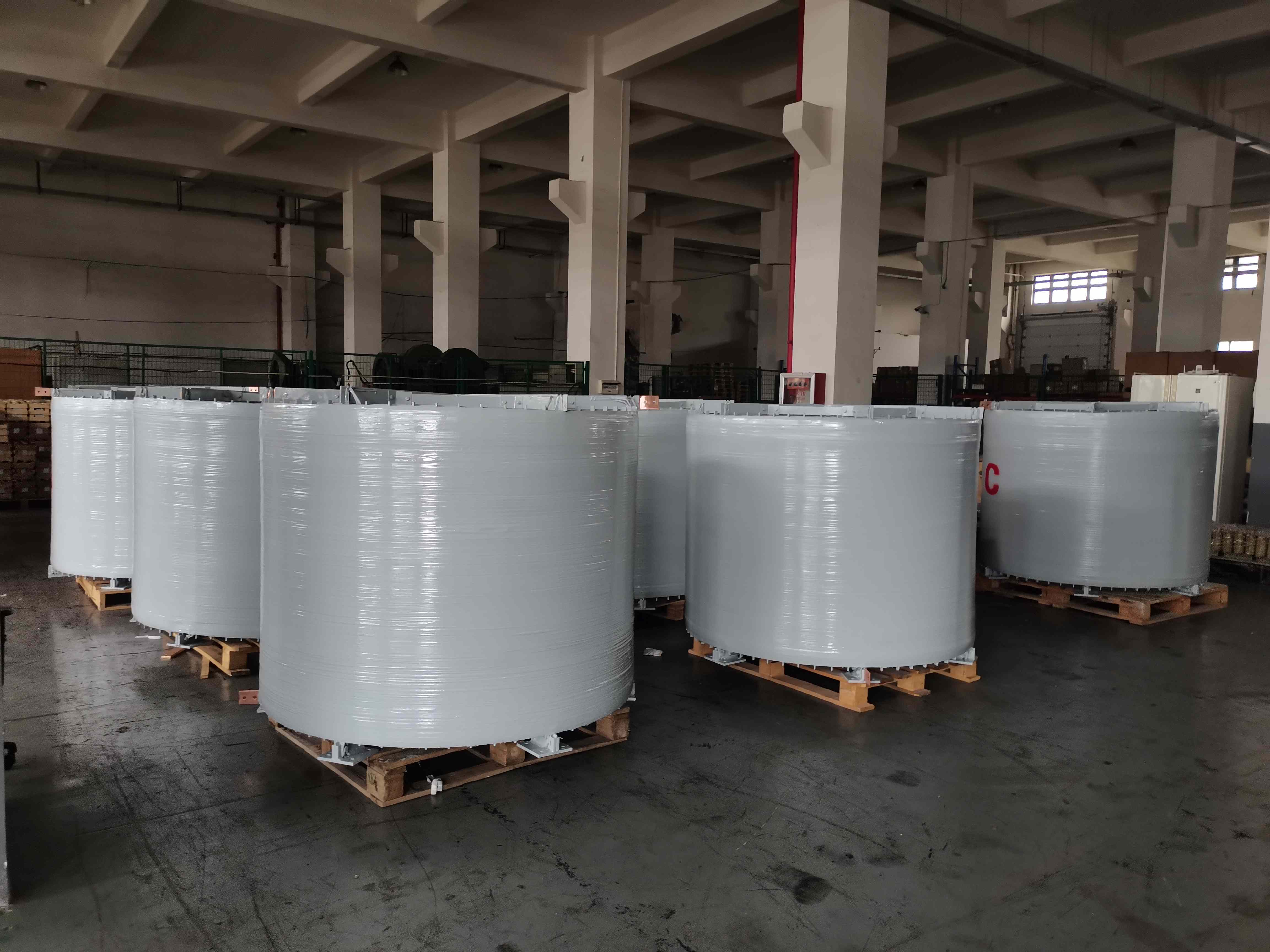
How Does a Dry-type Air Core Reactor Improve Grid Stability?
2026-09-16 17:24:47
Modern power grids carry enormous responsibility. As renewable energy sources multiply and industrial loads grow more unpredictable, maintaining voltage stability has become one of the most pressing engineering challenges of our time. A dry-type air core reactor addresses this challenge directly. By introducing controlled inductive reactance into the system, it suppresses capacitive overvoltage, absorbs reactive power surges, and keeps transmission voltages within safe operating bands — all without oil, iron cores, or the maintenance burdens those materials bring.


Understanding Dry-Type Air Core Reactors and Their Role in Grid Stability
What Makes the Air-Core Design Distinct
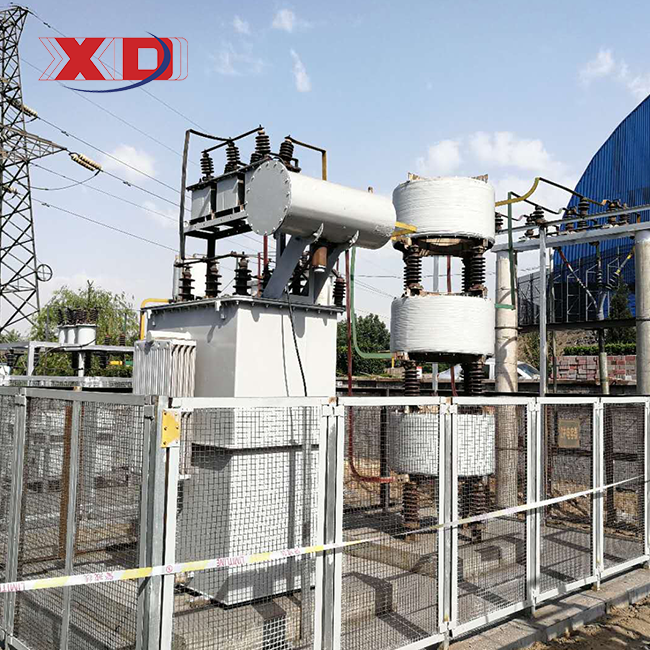
A dry-type air core reactor does not have any magnetic material in its core like iron-core options do. A purely inductive field is created through the air by the winding, which is usually made up of precision-wound aluminum conductors enclosed in a fiberglass-epoxy matrix. This completely gets rid of magnetic saturation, which means that inductance stays linear no matter how big the current is. For 110 kV to 500 kV substation engineers, that linearity is not just a nice-to-have; it's what makes correct reactive power adjustment possible.
In most cases, insulation classes hit Class F (155°C) or Class H (180°C), which gives thermal headroom that oil-filled units can't match in small outdoor setups. Silicone or polyurethane coatings that are resistant to UV light and water are applied to the outside. These coatings can handle salt fog, industrial pollution, and temperature changes from -40°C to +50°C. Limits on temperature rise, impulse voltage withstand levels, and allowable loss tolerances are set by IEC 60076-6 and IEEE C57.16 compliance. This gives procurement engineers a clear technical standard when they evaluate providers.
How Reactive Power Compensation Stabilizes Voltage
A lot of capacitive charging electricity is made by long transmission lines that are above ground and above ground. Without compensation, this current raises the voltage at the receiving end well above what it should be. This is called the Ferranti effect, and it can damage equipment and make protections not work right. That extra reactive power is taken in by a shunt-connected dry-type air core reactor, which brings the voltage back within the acceptable range. The Xi'an Xikai BKGKL type is designed to work across long-distance transmission lines by connecting in parallel on the low-voltage side of 500 kV, 220 kV, and 110 kV substations.
Key Applications in High-Voltage Power Grid Systems
Reactive Compensation, Fault Current Limiting, and Harmonic Control
The main job of a dry-type air core reactor is to compensate reactive power, but it can also be used for a lot of other things.
In these main usage situations, this technology gives the grid a measured benefit:
- Current-limiting protection: When connected in series with feeders or bus sections, the reactor lowers the possible short-circuit current to a level where existing circuit breakers can safely stop it. This is especially important when grid expansion raises fault levels above what older equipment can handle. This happens a lot in Belt and Road building projects where load growth is faster than switchgear updates.
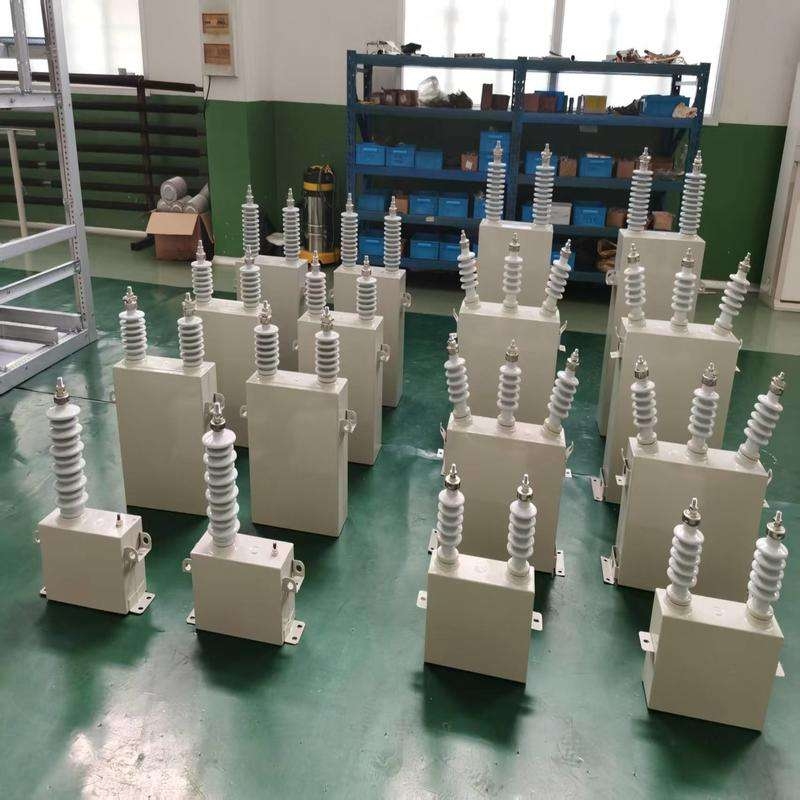
- Harmonic filtering: When dry-type air core reactor is paired with capacitor banks, it creates tuned LC filters that lower 5th, 7th, and higher-order harmonics that are made by arc furnaces, variable-frequency drives, and renewable energy inverters. The air-core design can handle sudden changes in frequency without heating up the core, which is what breaks down iron-core units over time.
- SVC and FACTS integration: Accurate linearity of inductance is a must in thyristor-controlled reactor (TCR) configurations inside Static Var Compensators. Any saturation changes the firing-angle-to-reactive-power relationship, which makes dynamic voltage regulation less effective. The air-core form is the standard for SVC setups around the world because it has zero-saturation.
These three situations cover most of the grid stability problems that EPC companies are having right now. The BKGKL dry-type air core reactor can support all three. Its modular design lets it be scaled from a single unit to a bank of fifteen on the same project, which is the same number of units usually bought for 110–330 kV substation contracts.
Comparing Dry-Type Air Core Reactors with Alternative Technologies
Performance and Safety Against Oil-Filled Reactors
Shunt reactors that are submerged in oil pose a fire and environmental risk. One failure in containment can pollute the soil, cause arc-flash events, and need expensive cleanup. That type of risk is completely gone with the dry-type air core reactor. It was built without using SF6 or oil, which is in line with stricter environmental rules in both domestic State Grid procurement standards and international EPC contracts.
In terms of the total cost of ownership, when there is no oil, samples for dissolved gas analysis (DGA), oil filtering processes, and fixing leaks are not needed. Maintenance is limited to checking the surface on a regular basis, making sure that electrical connections are torqued correctly, and cleaning the insulation. These are chores that can be measured in hours per year instead of days.
Stray Magnetic Field: The Design Consideration Every Engineer Must Address
Every engineer has to think about stray magnetic fields when they design things. Stray field management is a real installation limitation because the air-core shape lets the magnetic flux go beyond the winding border. If minimum separation lengths are not kept, induced eddy current heating can happen in the magnetic clearance zone on metal fences, control wire trays, and reinforced concrete buildings. As part of their technical documentation, responsible reactor manufacturers should include site-specific clearance diagrams. This should be made clear in the procurement specifications. Xi'an Xikai solves this problem by sending pre-designed magnetic clearance instructions with every BKGKL unit.
Procurement Guide for the BKGKL Dry-Type Air Core Shunt Reactor
Technical Validation, Environmental Adaptation, and Certification
It's not enough to just compare standard rates when looking for a dry-type air core reactor for a 110–330 kV substation project. The following factors consistently separate a safe source from a problematic one:
- Type test reports: Check the type test reports to make sure that the exact design family was used for the lightning impulse withstand voltage (BIL), temperature rise, and short-circuit mechanical withstand tests, not a substitute unit. IEC 60076-6 spells out the whole set.
- Partial discharge performance: High-quality units show PD values below 10 pC, which means there are no insulation gaps that lead to dielectric failure. Before being sent out, every unit on the BKGKL production line goes through 100% impedance checking and partial discharge testing.
- Dynamic and thermal stability ratings: For fault current scenarios, make sure that dry-type air core reactor's rated short-circuit withstand current and duration match the protection coordination study for the substation. The annual load profile must also match the thermal stability under long-term overload.
- Outdoor weatherproofing: For projects that need to be waterproof outside, there are desert-rated configurations (with IP55 enclosure options), seismic-resistant designs for Zone 4 areas, and IoT-enabled monitoring variants.
- Certifications: ISO 9001 and ISO 14001 quality management credentials, as well as the 3C China Compulsory Certification, show that the process is thorough. Marks like CE and GOST-R help international EPC bids.
These requirements together make up the technical gate that separates qualified manufacturers of dry-type air core reactors from suppliers of standard units. Xi'an Xikai has sent more than 10,000 units to more than 30 countries, which can be used as confirmed project references for high-level power purchases.
Future Trends in Dry-Type Air Core Reactor Technology
Advanced Materials, Precision Manufacturing, and IoT-Enabled Monitoring
The efficiency cap keeps getting higher thanks to material science. New cycloaliphatic epoxy formulas make coatings last longer than 30 years, even in high-UV desert settings. This lowers the cost of replacement over the lifetimes. Automated precision winding machines make the consistency of inductance better by reducing tolerance bands to well below the ±3% inductance accuracy that IEC 60076-6 allows.
The way these dry-type air core reactors work in substation control systems is changing because of the smart grid interface. IoT-enabled BKGKL versions let you check temperature, partial discharge, and vibration in real time, sending information straight to substation SCADA systems. With this remote visibility, maintenance goes from being a planned task to being based on conditions, which increases service intervals and decreases unplanned outages. That operational intelligence is really useful for EPC contractors who are in charge of multiple sites along Belt and Road corridors.

Conclusion
As a result of precisely controlled reactive power compensation, reliable current limitation, and effective harmonic filtering, a dry-type air core reactor helps keep the grid stable. It is a good choice for 110–500 kV transformer projects because it has a linear inductance, a strong shielding system, and is made without oil. Xi'an Xikai's BKGKL series combines these features into a platform that has been used in the field and meets both Chinese State Grid needs and foreign EPC standards. When engineers and project managers look at shunt reactor specs, confirmed type test data, application engineering support, and a history of global deployment all work together to make a solid case for buying.
FAQ
1. What minimum magnetic clearance does a dry-type air core reactor require?
Because the shape of the air-core lets stray flux spread outward, the manufacturer's site-specific rules must be followed for minimum clearance lengths to metal structures like fences, cable trays, and rebar. When these distances are ignored, eddy current heating happens in metalwork nearby. Each BKGKL unit from Xi'an Xikai comes with a clearance plan.
2. How does maintenance differ from an oil-filled shunt reactor?
A dry-type air core reactor mostly needs visual and mechanical maintenance, like checking the coating on the surface, making sure the connection torque is correct, and cleaning the insulator. There is no need to take oil samples, do DGA analyzes, or fix leaks, which greatly reduces the time needed for annual maintenance.
3. What short-circuit withstand standards apply to the BKGKL reactor?
The BKGKL series is tested according to IEC 60076-6, which sets the rules for how well it can handle dynamic and thermal short-circuits. Type test results show that the unit can handle certain fault currents without the windings deforming.
Partner with Xi'an Xikai for Your Next Substation Project
Xi'an Xikai offers dry-type air core reactor solutions that have been tested in the field and are designed for 110–500 kV substation environments. Our BKGKL line has IEC 60076-6 compliance, verified type test documents, and configurable layouts that can be used in a variety of ways, from IoT-monitored units to designs that can withstand earthquakes. As a reliable provider with more than 10,000 units in use around the world, we can help you with every step of your project, from scientific design to commissioning. Talk to our engineering team right away: serina@xaxd-electric.com | amber@xaxd-electric.com | luna@xaxd-electric.com.

References
1. IEC 60076-6: Power Transformers — Part 6: Reactors, International Electrotechnical Commission, 2007.
2. IEEE C57.16: IEEE Standard Requirements, Terminology, and Test Code for Dry-Type Air-Core Series-Connected Reactors, Institute of Electrical and Electronics Engineers, 2011.
3. Hingorani, N. G., & Gyugyi, L. Understanding FACTS: Concepts and Technology of Flexible AC Transmission Systems, IEEE Press, 2000.
4. Acha, E., Fuerte-Esquivel, C. R., Ambriz-Pérez, H., & Angeles-Camacho, C. FACTS: Modelling and Simulation in Power Networks, John Wiley & Sons, 2004.
5. Zhang, X.-P., Rehtanz, C., & Pal, B. Flexible AC Transmission Systems: Modelling and Control, Springer, 2012.
6. Glover, J. D., Sarma, M. S., & Overbye, T. J. Power Systems Analysis and Design, 6th ed., Cengage Learning, 2017.