What is a Low Voltage Shunt Capacitor and How Does it Work?
2026-09-07 17:16:31
A Low Voltage shunt Capacitor is a passive electrical device installed parallel to power distribution networks, designed to supply reactive power compensation in systems operating below 1,000 volts. These capacitors store electrical energy in an electrostatic field and release it when needed, correcting power factor imbalances caused by inductive loads such as motors, transformers, and compressors. By reducing reactive current flow, they minimize energy losses, stabilize voltage levels, and improve overall system efficiency—making them indispensable in industrial automation, commercial infrastructure, and renewable energy installations.


Understanding Low Voltage Shunt Capacitors
What Defines a Shunt Capacitor in Power Systems?
Shunt capacitors connect across the load or distribution bus, unlike series capacitors, which are in line with circuit wires. In motor-driven situations with slow power factors, they inject reactive power, which is crucial. These devices can take 250V to 525V and perhaps 2,000V, unlike transmission grid capacitors beyond 1kV.
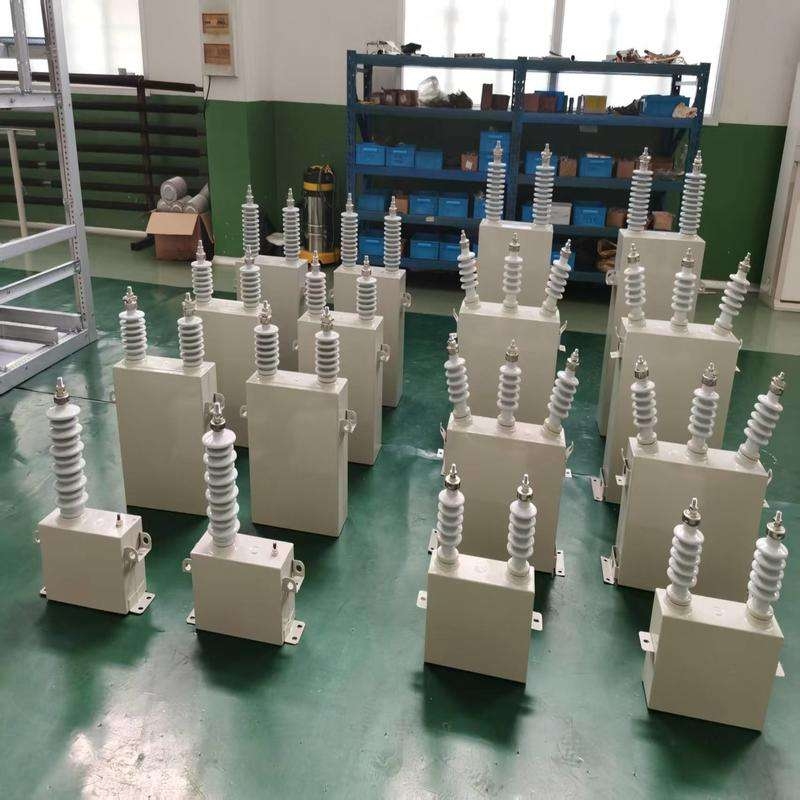
Buildings employ metallized polypropylene material coiled into cylinders or rectangles. Terminals may connect to three-phase or single-phase systems depending on kvar rating and network setup. A grounding bolt ensures safety, and potting materials like PU glue keep electronics dry and stable, which is crucial for dusty or temperature-sensitive installations.
Core Operating Principles Behind Reactive Power Compensation
To create magnetic fields, inductive loads use reactive power, which makes current lag voltage and lowers the power factor. In response, a shunt capacitor provides leading reactive current, which cancels out the lag. When inductive reactive power (QL) and capacitive reactive power (QC) meet, the net reactive demand goes down. This means that utilities and building managers don't have to pay fines for having a bad power factor.
Modern versions, like the 400V BKMJ0.46-30-3 type, have a self-healing mechanism that makes them even more reliable. When there is voltage stress on the dielectric film, the metalized electrodes around the defect evaporate right away. This separates the fault zone within milliseconds. This automatic repair process stops failures from spreading and keeps the machine running without any help from a person. This helps it last for more than 100,000 operational hours.
Common Types Used in Industrial and Commercial Settings
When room is limited, cylindrical capacitors are the most common type of installation. Because they are small and light, and can be mounted in modules, they are easy to add to existing capacitor banks, especially in automatic power factor correction (APFC) panels. For centralized distribution boards in factories, square or rectangular shapes are better because they offer higher kvar scores per area.
Data centers and hospitals that must meet fire safety requirements benefit from dry-type PU glue devices. Oil-filled capacitors are rare at low voltages but used in older heat-exhausting systems. Detuned reactor-coupled designs may aid in harmonic-rich environments like VFDs and LED lights. Adding a reactor to the capacitor prevents resonance while maintaining reactive compensation.
Benefits and Applications of Low Voltage Shunt Capacitors
Power Factor Correction and Energy Savings
Reactive current may be lowered by 40% by increasing power factor from 0.7 to 0.95. This reduces I²R losses in transformers and wires. A 30kvar capacitor bank that balances inductive loads in a 400V network saves thousands of kWh each year, lowering energy expenditures. Many regional systems charge extra for power factors below 0.9. Shunt capacitors eliminate these expenses and liberate transformer capacity for loads.
A key measure of performance, the dissipation factor, stays below 0.2W/kvar in high-quality units. This low loss rate makes sure that very little heat is lost, even when the machine is running all the time. This meets energy efficiency standards like EN 50530 and helps green building certifications like LEED. Savings on energy and maintenance over the course of a ten-year service life often more than triple the initial investment.
Practical Deployment Across Industries
APFC systems in factories that switch manufacturing lines on and off employ these devices to modify response. CNC machines, welding equipment, and conveyor motors change inductive needs. Capacitors banks transition stages to maintain power factor stability during load profile changes. Having the ability to tolerate surge currents up to 100 times the maximum capacity protects against short-term occurrences like motor startup or faults.
Renewable energy systems like solar farms and wind substations face inverter-induced harmonics and sporadic production. The inverter works and follows grid code because Low Voltage shunt Capacitor units stabilise voltage at the point of common coupling (PCC). PU resin pots and IP54-rated enclosures can withstand Southeast Asia's tropical humidity and Middle East dust storms.
Shopping malls and office skyscrapers benefit from quiet operation—sound levels below 45dB don't upset customers. Insurance companies demand flame-resistant cases that fulfil NFPA 70 fire rules. Small cases are simple to conceal in rooftop electrical rooms or machinery spaces. Old systems become more efficient with new capacitors without large infrastructural upgrades.
Operational Excellence Through Reduced Maintenance
Self-healing technology eliminates the need for frequent inspections of previous film-foil systems that are more likely to fail catastrophically. When the unit has issues, the pressure-sensitive disconnector kicks on and securely disconnects it before the casing breaks or the temperature rises. This fail-safe design reduces unplanned downtime, which is crucial for continuous sectors like steel mills and petrochemicals.
Reduced electrical stress on upstream elements extends gadget life. When reactive loads are compensated locally, transformer, switchgear, and cable currents drop. It slows insulation deterioration and thermal ageing. Longer inspection cycles and replacement intervals reduce maintenance expenses. Some operators believe capacitor banks last 15 years with minimal maintenance.
Comparing Low Voltage Shunt Capacitors with Other Capacitor Solutions
Functional Differences Between Shunt and Series Configurations
Series capacitors directly in transmission lines reduce long-distance inductive reactance. Only hundreds-kilometer-long high-voltage transmission networks achieve this. Voltage increases across capacitor terminals due to their placement, requiring additional safety measures. Shunt capacitors in parallel to loads don't lose voltage compared to the system bus. These are safer and easy to describe.
Regional grid reactive corrections are handled by substations and utility-scale buildings with over 1kV high voltage capacitors. They have larger size, weight, and safety requirements such outside bushings and seismic bracing than low voltage units for facility-level distribution. Importantly, procurement managers must recognise that using high-voltage units in industrial panels is illegal and adds unnecessary complexity.
Evaluating Efficiency and Cost Against Industry Leaders
Sites that value digital monitoring will like Schneider Electric's Prisma capacitor lines' modular APFC systems with powerful controllers. Siemens employs closely connected reactor-capacitor systems to reduce harmonics. These are used in semiconductor and auto manufacturing with several VFDs. ABB's capacitor range targets emerging markets with limited budgets and strict environmental regulations with low cost and sturdy housing.
Its basic characteristics and customisable options set the 400V Self-healing Capacitor BKMJ0.46-30-3 apart from the competition. Global brands pay more due to outdated support networks, however this model has the same technical performance (IEC 60831 compliance, tangent delta < 0.0005, and 72-hour load cycling-proven thermal stability) at a lower price for volume purchases. Shipping durations are cut to four weeks for orders of 200 to 2,000 units, which helps manage just-in-time manufacturing schedules.
Safety and Technical Considerations for Procurement
Plant acceptance tests assess insulation integrity by delivering 2.15 times maximum voltage from terminal to terminal for 10 seconds. Known as voltage proof testing. A capacitance range of -5% to +10% ensures that the actual kvar output fits the network's compensation demands, preventing under- or over-correction. Tangent delta tests detect film breakdown; results over 0.0005 indicate early thermal ageing and necessitate quality check rejection.
Overpressure disconnectors must disable internal arcing before the case breaks. This safety criteria was verified by destructive type testing. Distributors that handle repeat orders struggle with capacitance drift between production runs, which makes systems less dependable and inventory management tougher. ISO 9001-certified manufacturing methods guarantee batch consistency. International projects that must comply with many countries require IEC and CCC certification examinations.
Installation, Maintenance, and Best Practices
Step-by-Step Installation Guidance for Engineering Teams
Site evaluations begin with power quality assessments. These surveys measure power factor, harmonic content, and load characteristics. Engineers use QC = P × (tan φ₁ - tan φ₂) to calculate kvar capacity, where P is active power and φ represents initial and target power factor angles. Rating capacitors requires voltage tolerance. In a 400V network with swings from 380V to 440V, 480V or 525V units are required to prevent premature failure.
Grounding bolts and wall-mount brackets are fully set up, making installation simpler in congested panel locations. To avoid contact resistance and hotspots, terminals are wired according to colour-coded indications and busbar connections are torqued to manufacturer specifications. Circuit breakers and fuses must accommodate capacitor inrush. Switching currents may reach 100 times their steady-state values in milliseconds, hence time-current curves prevent false trips.
We switch on each capacitor separately during commissioning to monitor voltage increase and inrush transients. Thermal imaging reveals odd temperature patterns that may indicate device issues, while capacitance meters compare actual output to nameplate values. APFC regulates match load dynamics. The system is flexible without cycling contacts due to switching limitations and time delays.
Routine Maintenance Tasks to Prevent Failures
Every three months, cases are visually inspected for cracks, water ingress, and bulging that indicates pressure. Infrared thermography should indicate terminal temperatures within 10°C of room temperature. Unless they do, connections are slack and require retorqueing. Annual capacitance measurements illustrate how things are breaking down; a 5% reduction from the initial values indicates the item is nearing its end of life and should be replaced.
Dielectric losses below 0.0005 are acceptable for Low Voltage shunt Capacitor metallized film designs when measured by precision bridges for tangent delta testing. Voltage proof tests are normally done at commissioning, although they may be repeated after an overvoltage incident like lightning or switching spikes. APFC contactors wear out from repeated on-and-off switching. Cracking or erosion in contacts is checked every six months before compensation ends.
Environmental considerations impact maintenance frequency. Thermal scans should be done every two months in installations over 40°C since heat accelerates potting material chemical breakdown. Humid coastal locations need moisture ingress checks around terminal seals and bushing contacts. To prevent fastener wear, examine shake-prone areas such near heavy equipment or building beams.
Optimizing Return on Investment Through Lifecycle Management
APFC controllers' predictive analytics software monitors operating temperatures, switching cycles, and capacitance drift, delivering repair notifications before severe issues arise. Data-driven repairs are planned rather than done as they break. This reduces emergencies and work stoppage. Using past performance data to guide procurement cycles helps keep replacement orders under budget and prevents hasty, costly acquisitions.
After following installation and maintenance instructions, a 10-year guarantee covers you financially if anything breaks down early. Launching reports, test certifications, and service logs support guarantee claims and demonstrate correct inspections. Long-term support suppliers provide skilled assistance and replacement parts even when product lines evolve.
Energy monitoring systems calculate benefits by comparing pre- and post-installation data. ROI is calculated from monthly demand charge and energy consumption savings. The ROI for industrial projects is generally under three years. Environmental advantages including fewer grid losses and a reduced carbon footprint align with corporations' sustainability aims, while residents of energy-saving areas may get utility rebates or tax credits.
Procurement Guide: Buying Low Voltage Shunt Capacitors for Your Business
Key Technical Specifications to Evaluate
The rated voltage selection accounts for the largest system voltage variations and adds 10–15% over nominal values for safety. Capacity ratings in kvar must match reactive load demands from power factor correction studies, and there should be opportunity for expansion as facilities add equipment. Area grid specifications need 50Hz or 60Hz frequency compatibility. International users find dual-rated devices simpler to inventory.
Enclosure grade determines environmental security (IP20 for interior panels, IP54 for hostile settings). Heat and chemical resistance depend on pot materials. PU resin resists moisture and is flexible at high and low temperatures. Their size makes them difficult to incorporate into existing infrastructure. Only 242 mm tall units fit standard panel levels, although bespoke cases may accommodate space concerns.
IEC 60831, CCC, and regional certification ensures product acceptance worldwide. Voltage evidence, capacitance tolerance, and tangent delta test records verify factory quality control. Traceability via serial numbers and batch codes helps manage warranties and recalls in rare cases of widespread faults.
Assessing Supplier Reliability and Support Services
On-time fulfilment rates exceeding 95% indicate solid supply systems that can accommodate monthly demand. Production capacity matters when transitioning from 200-unit pilot orders to 2,000-unit runs. Dedicated capacitor winding lines and in-house testing facilities allow factories to react quicker than assemblers using outsourced parts.
After-sales support for the Low Voltage shunt Capacitor includes professional guidance on application-specific issues including harmonic reduction and APFC controller setup. Support teams for Asian markets that reply quickly via email, phone, or WeChat may handle problems without language or time zone issues. Providing 10–15-year replacement parts eliminates obsolescence concerns. For additional supply planning, this is crucial.
ISO 9001 and ISO 14001 certifications demonstrate a commitment to quality and the environment. Procurement or outside organisations evaluate factories to see how people are handled, where supplies originate from, and how well test equipment is calibrated. Supplier customisation options including capacitance values, mounting configurations, and enclosure materials allow you to satisfy project demands outside the catalogue.
Balancing Cost, Delivery, and Bulk Purchasing Benefits
Economics of scale determine unit price. Orders of 2,000 pieces get 15-20% reductions compared to small-batch purchases, which affects project costs. Net 30 or 60-day payment durations influence cash flows, and letters of credit are utilised for overseas agreements requiring a bank as a middleman. The EXW or DDP Incoterms of goods effect landing costs and customs clearance.
Four weeks from order confirmation to shipping is within construction plans when planned beforehand. Rush orders cost more and may not meet quality standards, which is bad for critical infrastructure. Suppliers keep frequently requested models near customers via consignment inventory programs. Emergency replenishing is faster without sacrificing bulk-buying savings.
The purchase price is merely portion of ownership costs. Installation labour, commissioning resources, and product maintenance are further expenditures. Due to downtime and emergency repairs, capacitors that fail typically wipe out the original savings. Long-term partnerships with suppliers that give professional training, application creation, and support are more valuable than transactional price competition.

Conclusion
When procurement managers and facility engineers know how to choose, install, and maintain Low Voltage shunt Capacitor units, they can improve power quality, cut costs, and make equipment last longer. Self-healing technology, sturdy enclosures, and standard specifications—like those found in the 400V BKMJ0.46-30-3—address the main issues of batch consistency and supply stability that are important for competitive manufacturing. Reactive power compensation goes from being a simple buy to a strategic asset that drives long-term industry performance through strategic supplier relationships that balance technical skill, cost efficiency, and responsive support.
FAQ
1. What primary functions do these capacitors serve in industrial power systems?
To fix the missing power factor caused by inductive loads, shunt capacitors add leading reactive current. This cuts down on energy waste and utility fees. They keep the voltage stable when the load changes, and they free up transformer power for useful work.
2. Can capacitor specifications be customized for specialized industrial needs?
Manufacturers can meet orders for non-standard capacitance values, fixing brackets, or container materials that can handle high temperatures or environments that are corrosive. Different network setups can be handled by custom voltage ratings and harmonic-filtering reactor pairs.
3. How often should maintenance inspections occur to minimize operational disruptions?
Visual checks every three months and electricity tests once a year are enough for most setups. In harsh environments or for important processes, thermal imaging and tangent delta measurements should be done every six months to find early signs of wear and tear before they affect production.
Partner with Xi'an Xikai for Superior Power Quality Solutions
Work with Xi'an Xikai, a reliable Low Voltage shunt Capacitor supplier with 20 years of engineering excellence, to make your facility more efficient. Our 400V Self-healing Capacitor BKMJ0.46-30-3 blends standard dependability with easy modification. It is made by ISO-certified factories and ships within four weeks. Our expert teams give application-specific advice to make sure the best performance, whether they're handling high-frequency procurement cycles or tackling complex harmonic environments. For personalized advice and low bulk prices, email serina@xaxd-electric.com, amber@xaxd-electric.com, or luna@xaxd-electric.com. At xaxd-electric.com, you can find full details.

References
1. Institute of Electrical and Electronics Engineers, "IEEE Standard for Shunt Power Capacitors," IEEE Std 18-2012, Revision of IEEE Std 18-2002.
2. International Electrotechnical Commission, "IEC 60831-1: Shunt Power Capacitors of the Self-Healing Type for A.C. Systems Having a Rated Voltage Up to and Including 1000 V – Part 1: General – Performance, Testing and Rating – Safety Requirements – Guide for Installation and Operation," 2014.
3. Chapman, Stephen J., "Electric Machinery Fundamentals," Fifth Edition, McGraw-Hill Education, 2012, Chapter 7: Power Factor Correction and Capacitor Applications.
4. Das, J.C., "Power System Analysis: Short-Circuit Load Flow and Harmonics," Second Edition, CRC Press, 2011, Section 12.4: Reactive Power Compensation Using Shunt Capacitors.
5. Sankaran, C., "Power Quality," CRC Press, 2002, Chapter 5: Power Factor Correction and Capacitor Bank Design in Industrial Facilities.
6. Glover, J. Duncan et al., "Power System Analysis and Design," Sixth Edition, Cengage Learning, 2017, Section 5.3: Shunt Capacitor Compensation in Distribution Networks.
_1774324496045.png)